
Analiza danych
Analiza danych jest ekscytującą dyscypliną, która umożliwia zrozumienie pewnych zjawisk, uzyskanie wglądu i wiedzy na podstawie surowych danych. Pojęcie to oznacza dokładnie przetwarzanie danych za pomocą technik matematycznych i statystycznych w celu uzyskania cennych wniosków, podjęcia ważnych decyzji i opracowania przydatnych produktów. Termin ten wywodzi się od angielskiego data science, często traktowanego jako synonim takich terminów, jak analityka biznesowa, badania operacyjne, business intelligence, wywiad konkurencyjny, analiza i modelowanie danych, a także pozyskiwanie wiedzy. Dzięki takim technologiom, jak języki Python czy R, platformy Hadoop i Spark masz szansę wyciągnąć maksimum wniosków, dostrzec szanse na rozwój swojej organizacji albo przewidzieć i zapobiec zagrożeniom.
Jiri Pik, Sourav Ghosh
Creating an effective system to automate your trading can help you achieve two of every trader’s key goals; saving time and making money. But to devise a system that will work for you, you need guidance to show you the ropes around building a system and monitoring its performance. This is where Hands-on Financial Trading with Python can give you the advantage.This practical Python book will introduce you to Python and tell you exactly why it’s the best platform for developing trading strategies. You’ll then cover quantitative analysis using Python, and learn how to build algorithmic trading strategies with Zipline using various market data sources.Using Zipline as the backtesting library allows access to complimentary US historical daily market data until 2018. As you advance, you will gain an in-depth understanding of Python libraries such as NumPy and pandas for analyzing financial datasets, and explore Matplotlib, statsmodels, and scikit-learn libraries for advanced analytics.As you progress, you’ll pick up lots of skills like time series forecasting, covering pmdarima and Facebook Prophet.By the end of this trading book, you will be able to build predictive trading signals, adopt basic and advanced algorithmic trading strategies, and perform portfolio optimization to help you get —and stay—ahead of the markets.
Shammunul Islam
Managing spatial data has always been challenging and it's getting more complex as the size of data increases. Spatial data is actually big data and you need different tools and techniques to work your way around to model and create different workflows. R and QGIS have powerful features that can make this job easier.This book is your companion for applying machine learning algorithms on GIS and remote sensing data. You’ll start by gaining an understanding of the nature of spatial data and installing R and QGIS. Then, you’ll learn how to use different R packages to import, export, and visualize data, before doing the same in QGIS. Screenshots are included to ease your understanding.Moving on, you’ll learn about different aspects of managing and analyzing spatial data, before diving into advanced topics. You’ll create powerful data visualizations using ggplot2, ggmap, raster, and other packages of R. You’ll learn how to use QGIS 3.2.2 to visualize and manage (create, edit, and format) spatial data. Different types of spatial analysis are also covered using R. Finally, you’ll work with landslide data from Bangladesh to create a landslide susceptibility map using different machine learning algorithms.By reading this book, you’ll transition from being a beginner to an intermediate user of GIS and remote sensing data in no time.
Tim Pulver
MQ Telemetry Transport (MQTT) is a lightweight messaging protocol for smart devices that can be used to build exciting, highly scalable Internet of Things (IoT) projects.This book will get you started with a quick introduction to the concepts of IoT and MQTT and explain how the latter can help you build your own internet-connected prototypes. As you advance, you’ll gain insights into how microcontrollers communicate, and you'll get to grips with the different messaging protocols and techniques involved. Once you are well-versed with the essential concepts, you’ll be able to put what you’ve learned into practice by building three projects from scratch, including an automatic pet food dispenser and a smart e-ink to-do display. You’ll also discover how to present your own prototypes professionally. In addition to this, you'll learn how to use technologies from third-party web service providers, along with other rapid prototyping technologies, such as laser cutting, 3D printing, and PCB production.By the end of this book, you’ll have gained hands-on experience in using MQTT to build your own IoT prototypes.
Stefan Jansen
The explosive growth of digital data has boosted the demand for expertise in trading strategies that use machine learning (ML). This book enables you to use a broad range of supervised and unsupervised algorithms to extract signals from a wide variety of data sources and create powerful investment strategies.This book shows how to access market, fundamental, and alternative data via API or web scraping and offers a framework to evaluate alternative data. You’ll practice the ML work?ow from model design, loss metric definition, and parameter tuning to performance evaluation in a time series context. You will understand ML algorithms such as Bayesian and ensemble methods and manifold learning, and will know how to train and tune these models using pandas, statsmodels, sklearn, PyMC3, xgboost, lightgbm, and catboost. This book also teaches you how to extract features from text data using spaCy, classify news and assign sentiment scores, and to use gensim to model topics and learn word embeddings from financial reports. You will also build and evaluate neural networks, including RNNs and CNNs, using Keras and PyTorch to exploit unstructured data for sophisticated strategies.Finally, you will apply transfer learning to satellite images to predict economic activity and use reinforcement learning to build agents that learn to trade in the OpenAI Gym.
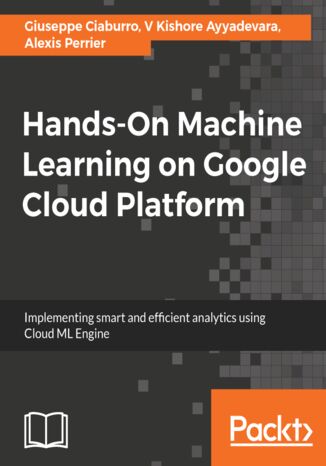
Giuseppe Ciaburro, V Kishore Ayyadevara, Alexis Perrier,...
Google Cloud Machine Learning Engine combines the services of Google Cloud Platform with the power and flexibility of TensorFlow. With this book, you will not only learn to build and train different complexities of machine learning models at scale but also host them in the cloud to make predictions.This book is focused on making the most of the Google Machine Learning Platform for large datasets and complex problems. You will learn from scratch how to create powerful machine learning based applications for a wide variety of problems by leveraging different data services from the Google Cloud Platform. Applications include NLP, Speech to text, Reinforcement learning, Time series, recommender systems, image classification, video content inference and many other. We will implement a wide variety of deep learning use cases and also make extensive use of data related services comprising the Google Cloud Platform ecosystem such as Firebase, Storage APIs, Datalab and so forth. This will enable you to integrate Machine Learning and data processing features into your web and mobile applications.By the end of this book, you will know the main difficulties that you may encounter and get appropriate strategies to overcome these difficulties and build efficient systems.
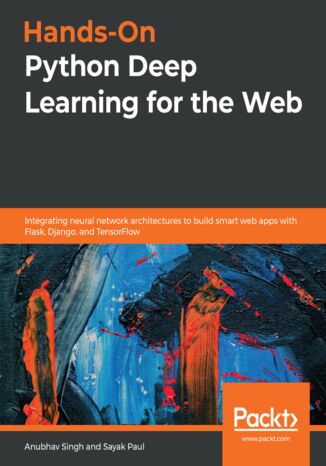
Anubhav Singh, Sayak Paul
When used effectively, deep learning techniques can help you develop intelligent web apps. In this book, you'll cover the latest tools and technological practices that are being used to implement deep learning in web development using Python.Starting with the fundamentals of machine learning, you'll focus on DL and the basics of neural networks, including common variants such as convolutional neural networks (CNNs). You'll learn how to integrate them into websites with the frontends of different standard web tech stacks. The book then helps you gain practical experience of developing a deep learning-enabled web app using Python libraries such as Django and Flask by creating RESTful APIs for custom models. Later, you'll explore how to set up a cloud environment for deep learning-based web deployments on Google Cloud and Amazon Web Services (AWS). Next, you'll learn how to use Microsoft's intelligent Emotion API, which can detect a person's emotions through a picture of their face. You'll also get to grips with deploying real-world websites, in addition to learning how to secure websites using reCAPTCHA and Cloudflare. Finally, you'll use NLP to integrate a voice UX through Dialogflow on your web pages.By the end of this book, you'll have learned how to deploy intelligent web apps and websites with the help of effective tools and practices.
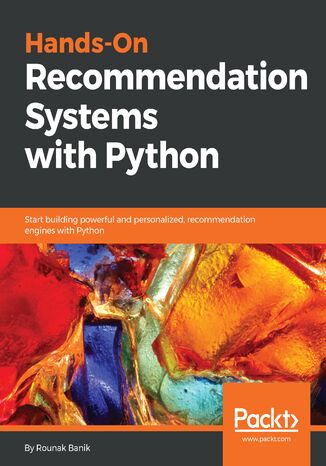
Rounak Banik
Recommendation systems are at the heart of almost every internet business today; from Facebook to Net?ix to Amazon. Providing good recommendations, whether it's friends, movies, or groceries, goes a long way in defining user experience and enticing your customers to use your platform.This book shows you how to do just that. You will learn about the different kinds of recommenders used in the industry and see how to build them from scratch using Python. No need to wade through tons of machine learning theory—you'll get started with building and learning about recommenders as quickly as possible..In this book, you will build an IMDB Top 250 clone, a content-based engine that works on movie metadata. You'll use collaborative filters to make use of customer behavior data, and a Hybrid Recommender that incorporates content based and collaborative filtering techniques With this book, all you need to get started with building recommendation systems is a familiarity with Python, and by the time you're fnished, you will have a great grasp of how recommenders work and be in a strong position to apply the techniques that you will learn to your own problem domains.
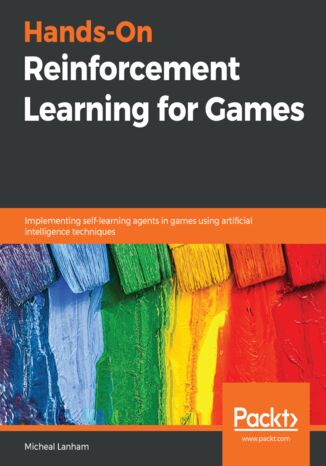
Micheal Lanham
With the increased presence of AI in the gaming industry, developers are challenged to create highly responsive and adaptive games by integrating artificial intelligence into their projects. This book is your guide to learning how various reinforcement learning techniques and algorithms play an important role in game development with Python.Starting with the basics, this book will help you build a strong foundation in reinforcement learning for game development. Each chapter will assist you in implementing different reinforcement learning techniques, such as Markov decision processes (MDPs), Q-learning, actor-critic methods, SARSA, and deterministic policy gradient algorithms, to build logical self-learning agents. Learning these techniques will enhance your game development skills and add a variety of features to improve your game agent’s productivity. As you advance, you’ll understand how deep reinforcement learning (DRL) techniques can be used to devise strategies to help agents learn from their actions and build engaging games.By the end of this book, you’ll be ready to apply reinforcement learning techniques to build a variety of projects and contribute to open source applications.