
Uczenie maszynowe
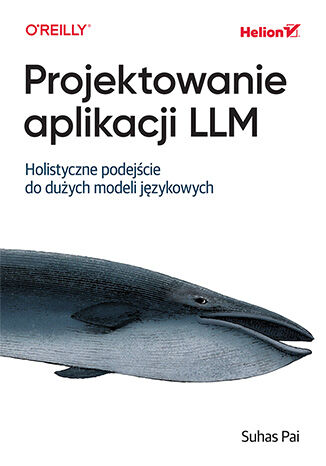
Projektowanie aplikacji LLM. Holistyczne podejście do dużych modeli językowych
Suhas Pai
Duże modele językowe przeniknęły do wielu dziedzin techniki uważa się je za skuteczne narzędzia do rozwiązywania szerokiej gamy problemów. Coraz więcej przedsiębiorstw korzysta z ich potencjału w celu własnego rozwoju. Jednak przekształcenie prototypów w funkcjonalne aplikacje bywa złożone i skomplikowane. To wyjątkowe opracowanie zawiera wszystkie ważne koncepcje w dziedzinie LLM! Madhav Singhal, CEO, AutoComputer W tej praktycznej książce opisano wszelkie niezbędne narzędzia, techniki i rozwiązania, których potrzebujesz do tworzenia użytecznych produktów wykorzystujących potęgę modeli językowych. Na początku zdobędziesz wiedzę o budowie modelu językowego. Następnie poznasz różne sposoby zastosowania modeli językowych, czy to poprzez bezpośrednie zapytania do modelu, czy też poprzez jego dostrajanie. Zrozumiesz ograniczenia LLM, takie jak halucynacje i problemy z rozumowaniem, a także dowiesz się, jak sobie z nimi poradzić. Znajdziesz tu również omówienie paradygmatów zastosowań, takich jak generowanie wspomagane wyszukiwaniem (RAG) czy agenty. Z tą książką: przygotujesz zbiory danych do treningu i dostrajania modeli zrozumiesz architekturę transformera zaadaptujesz wstępnie wytrenowane modele do własnych potrzeb poznasz skuteczne techniki optymalizacji i adaptacji dziedzinowej dowiesz się, jak integrować modele językowe z zewnętrznymi środowiskami i źródłami danych Gorąco polecam tę książkę! Megan Risdal, Kaggle (Google) To mistrzowski kurs budowania zaawansowanych systemów AI! Jay Alammar, autor książek
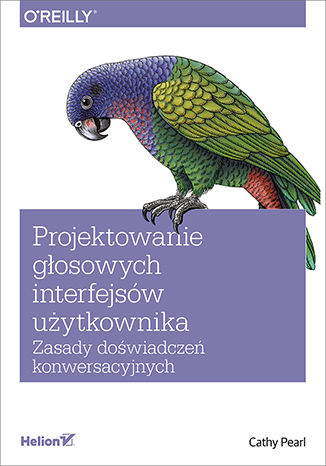
Projektowanie głosowych interfejsów użytkownika. Zasady doświadczeń konwersacyjnych
Cathy Pearl
Możliwość porozmawiania ze swoim komputerem od lat rozpalała wyobraźnię inżynierów, użytkowników i... artystów. Jak się okazało, sprawa nie jest - i nigdy nie była - oczywista: rozumienie naturalnej mowy to skomplikowany proces. Języki, którymi posługują się ludzie, są bowiem przepełnione subtelnościami i niejednoznacznością, a ich zrozumienie wymaga znajomości kontekstu. Intensywny rozwój technologii VUI doprowadził do tego, że komputer wykonujący polecenia głosowe nie jest niczym nadzwyczajnym. Wciąż jednak sporo można w tej dziedzinie poprawić. Szczególnie ważne wydaje się wzięcie pod uwagę wrażeń użytkownika: interfejs VUI, który jest uciążliwy dla odbiorcy, nie podaje potrzebnych informacji lub podaje zupełnie nieprzydatne, będzie użytkowany z niechęcią albo wcale. W tym przewodniku znajdziesz przegląd najważniejszych zasad projektowania interfejsów głosowych, a także opis narzędzi służących do tego celu. Poza najbardziej podstawowymi informacjami o mechanizmach rozpoznawania głosu omówiono złożone strategie rozumienia języka naturalnego, analizę nastroju, zbieranie danych oraz techniki przekształcania tekstu w mowę. W książce wyczerpująco opisano zagadnienia wydajności interfejsu VUI: dowiesz się, co na tę wydajność wpływa i w jaki sposób można ją podnieść. Przedstawiono również problematykę systemów sterowanych głosowo, takich jak asystenty domowe czy interfejsy projektowane dla samochodów. Z przewodnika skorzystają zarówno menedżerowie oraz projektanci biznesowi, jak i projektanci interfejsów VUI, niezależnie od tego, czy samodzielnie piszą swoje VUI, czy korzystają z istniejących platform. W książce: kluczowe koncepcje projektów interfejsów głosowych wizualne reprezentacje interfejsów głosowych technologie rozpoznawania mowy metody testowania aplikacji głosowych poprawa wydajności aplikacji głosowych rzeczywiste przykłady interfejsów głosowych
Python 3 for Machine Learning. Harness the Power of Python for Advanced Machine Learning Projects
Mercury Learning and Information, Oswald Campesato
This book introduces basic Python 3 programming concepts related to machine learning. The first four chapters provide a fast-paced introduction to Python 3, NumPy, and Pandas. The fifth chapter covers fundamental machine learning concepts. The sixth chapter dives into machine learning classifiers, such as logistic regression, k-NN, decision trees, random forests, and SVMs. The final chapter includes material on natural language processing (NLP) and reinforcement learning (RL). Keras-based code samples supplement the theoretical discussion.The course begins with Python basics, including conditional logic, loops, functions, and collections. It then explores data manipulation with NumPy and Pandas. The journey continues with an introduction to machine learning, focusing on essential concepts and classifiers. Advanced topics like NLP and RL are covered, ensuring a comprehensive understanding of machine learning.These concepts are crucial for developing machine learning applications. This book transitions readers from basic Python programming to advanced machine learning techniques, blending theory with practical skills. Appendices for regular expressions, Keras, and TensorFlow 2, along with companion files, enhance learning, making this an essential resource for mastering Python and machine learning.
Giuseppe Bonaccorso, Rajalingappaa Shanmugamani
This Learning Path is your complete guide to quickly getting to grips with popular machine learning algorithms. You'll be introduced to the most widely used algorithms in supervised, unsupervised, and semi-supervised machine learning, and learn how to use them in the best possible manner. Ranging from Bayesian models to the MCMC algorithm to Hidden Markov models, this Learning Path will teach you how to extract features from your dataset and perform dimensionality reduction by making use of Python-based libraries. You'll bring the use of TensorFlow and Keras to build deep learning models, using concepts such as transfer learning, generative adversarial networks, and deep reinforcement learning. Next, you'll learn the advanced features of TensorFlow1.x, such as distributed TensorFlow with TF clusters, deploy production models with TensorFlow Serving. You'll implement different techniques related to object classification, object detection, image segmentation, and more. By the end of this Learning Path, you'll have obtained in-depth knowledge of TensorFlow, making you the go-to person for solving artificial intelligence problemsThis Learning Path includes content from the following Packt products:• Mastering Machine Learning Algorithms by Giuseppe Bonaccorso• Mastering TensorFlow 1.x by Armando Fandango• Deep Learning for Computer Vision by Rajalingappaa Shanmugamani
Dr. Joshua Eckroth
Artificial Intelligence (AI) is the newest technology that’s being employed among varied businesses, industries, and sectors. Python Artificial Intelligence Projects for Beginners demonstrates AI projects in Python, covering modern techniques that make up the world of Artificial Intelligence.This book begins with helping you to build your first prediction model using the popular Python library, scikit-learn. You will understand how to build a classifier using an effective machine learning technique, random forest, and decision trees. With exciting projects on predicting bird species, analyzing student performance data, song genre identification, and spam detection, you will learn the fundamentals and various algorithms and techniques that foster the development of these smart applications. In the concluding chapters, you will also understand deep learning and neural network mechanisms through these projects with the help of the Keras library.By the end of this book, you will be confident in building your own AI projects with Python and be ready to take on more advanced projects as you progress
Indra den Bakker
Deep Learning is revolutionizing a wide range of industries. For many applications, deep learning has proven to outperform humans by making faster and more accurate predictions. This book provides a top-down and bottom-up approach to demonstrate deep learning solutions to real-world problems in different areas. These applications include Computer Vision, Natural Language Processing, Time Series, and Robotics. The Python Deep Learning Cookbook presents technical solutions to the issues presented, along with a detailed explanation of the solutions. Furthermore, a discussion on corresponding pros and cons of implementing the proposed solution using one of the popular frameworks like TensorFlow, PyTorch, Keras and CNTK is provided. The book includes recipes that are related to the basic concepts of neural networks. All techniques s, as well as classical networks topologies. The main purpose of this book is to provide Python programmers a detailed list of recipes to apply deep learning to common and not-so-common scenarios.
Ivan Vasilev, Daniel Slater, Gianmario Spacagna, Peter...
With the surge in artificial intelligence in applications catering to both business and consumer needs, deep learning is more important than ever for meeting current and future market demands. With this book, you’ll explore deep learning, and learn how to put machine learning to use in your projects.This second edition of Python Deep Learning will get you up to speed with deep learning, deep neural networks, and how to train them with high-performance algorithms and popular Python frameworks. You’ll uncover different neural network architectures, such as convolutional networks, recurrent neural networks, long short-term memory (LSTM) networks, and capsule networks. You’ll also learn how to solve problems in the fields of computer vision, natural language processing (NLP), and speech recognition. You'll study generative model approaches such as variational autoencoders and Generative Adversarial Networks (GANs) to generate images. As you delve into newly evolved areas of reinforcement learning, you’ll gain an understanding of state-of-the-art algorithms that are the main components behind popular games Go, Atari, and Dota.By the end of the book, you will be well-versed with the theory of deep learning along with its real-world applications.
Valentino Zocca, Gianmario Spacagna, Daniel Slater, Peter...
With an increasing interest in AI around the world, deep learning has attracted a great deal of public attention. Every day, deep learning algorithms are used broadly across different industries.The book will give you all the practical information available on the subject, including the best practices, using real-world use cases. You will learn to recognize and extract information to increase predictive accuracy and optimize results.Starting with a quick recap of important machine learning concepts, the book will delve straight into deep learning principles using Sci-kit learn. Moving ahead, you will learn to use the latest open source libraries such as Theano, Keras, Google's TensorFlow, and H20. Use this guide to uncover the difficulties of pattern recognition, scaling data with greater accuracy and discussing deep learning algorithms and techniques.Whether you want to dive deeper into Deep Learning, or want to investigate how to get more out of this powerful technology, you’ll find everything inside.
Matthew Lamons, Rahul Kumar, Abhishek Nagaraja
Deep learning has been gradually revolutionizing every field of artificial intelligence, making application development easier.Python Deep Learning Projects imparts all the knowledge needed to implement complex deep learning projects in the field of computational linguistics and computer vision. Each of these projects is unique, helping you progressively master the subject. You’ll learn how to implement a text classifier system using a recurrent neural network (RNN) model and optimize it to understand the shortcomings you might experience while implementing a simple deep learning system.Similarly, you’ll discover how to develop various projects, including word vector representation, open domain question answering, and building chatbots using seq-to-seq models and language modeling. In addition to this, you’ll cover advanced concepts, such as regularization, gradient clipping, gradient normalization, and bidirectional RNNs, through a series of engaging projects.By the end of this book, you will have gained knowledge to develop your own deep learning systems in a straightforward way and in an efficient way
Python: Deeper Insights into Machine Learning. Deeper Insights into Machine Learning
John Hearty, Sebastian Raschka, David Julian
Machine learning and predictive analytics are becoming one of the key strategies for unlocking growth in a challenging contemporary marketplace. It is one of the fastest growing trends in modern computing, and everyone wants to get into the field of machine learning. In order to obtain sufficient recognition in this field, one must be able to understand and design a machine learning system that serves the needs of a project. The idea is to prepare a learning path that will help you to tackle the real-world complexities of modern machine learning with innovative and cutting-edge techniques. Also, it will give you a solid foundation in the machine learning design process, and enable you to build customized machine learning models to solve unique problems.The course begins with getting your Python fundamentals nailed down. It focuses on answering the right questions that cove a wide range of powerful Python libraries, including scikit-learn Theano and Keras.After getting familiar with Python core concepts, it’s time to dive into the field of data science. You will further gain a solid foundation on the machine learning design and also learn to customize models for solving problems.At a later stage, you will get a grip on more advanced techniques and acquire a broad set of powerful skills in the area of feature selection and feature engineering.
Python dla DevOps. Naucz się bezlitośnie skutecznej automatyzacji
Noah Gift, Kennedy Behrman, Alfredo Deza, Grig...
Ostatnia dekada zmieniła oblicze IT. Kluczowego znaczenia nabrały big data, a chmura i automatyzacja rozpowszechniły się wszędzie tam, gdzie mowa o efektywności. Inżynierowie muszą wykorzystywać zalety systemów linuksowych w codziennej praktyce, aby zapewnić należyty poziom automatyzacji swoich zadań. Do tych celów świetnie nadaje się Python. Język ten zdobywa coraz większe uznanie z uwagi na jego wszechstronność, jak również wydajność, przenaszalność i bezpieczeństwo kodu. Warto więc wykorzystywać Pythona do administrowania systemami Linux wraz z takimi narzędziami DevOps jak Docker, Kubernetes i Terraform. Dzięki tej książce dowiesz się, jak sobie z tym poradzić. Znalazło się w niej krótkie wprowadzenie do Pythona oraz do automatyzacji przetwarzania tekstu i obsługi systemu plików, a także do pisania własnych narzędzi wiersza poleceń. Zaprezentowano również przydatne narzędzia linuksowe, systemy zarządzania pakietami oraz systemy budowania, monitorowania i automatycznego testowania kodu. Zagadnienia te szczególnie zainteresują specjalistów DevOps. Ponadto zawarto tu podstawowe informacje o chmurze obliczeniowej, usługach IaC i systemach Kubernetes. Omówiono zasady uczenia maszynowego i inżynierii danych z perspektywy DevOps. Przedstawiono także kompletny przewodnik po procesach budowania, wdrażania oraz operacyjnego wykorzystywania modelu uczenia maszynowego z użyciem systemów Flask, sklearn, Docker i Kubernetes. W tej książce: wprowadzenie do Pythona automatyczne przetwarzanie tekstu oraz automatyzacja operacji na plikach automatyzacja za pomocą sprawdzonych narzędzi linuksowych chmura, infrastruktura jako kod, Kubernetes i tryb bezserwerowy uczenie maszynowe i inżynieria danych z perspektywy DevOps tworzenie i operacjonalizacja projektu uczenia maszynowego Python: tutaj ważna jest prawdziwa nowoczesność oprogramowania!
Soledad Galli
Feature engineering is invaluable for developing and enriching your machine learning models. In this cookbook, you will work with the best tools to streamline your feature engineering pipelines and techniques and simplify and improve the quality of your code.Using Python libraries such as pandas, scikit-learn, Featuretools, and Feature-engine, you’ll learn how to work with both continuous and discrete datasets and be able to transform features from unstructured datasets. You will develop the skills necessary to select the best features as well as the most suitable extraction techniques. This book will cover Python recipes that will help you automate feature engineering to simplify complex processes. You’ll also get to grips with different feature engineering strategies, such as the box-cox transform, power transform, and log transform across machine learning, reinforcement learning, and natural language processing (NLP) domains.By the end of this book, you’ll have discovered tips and practical solutions to all of your feature engineering problems.
Rheinwerk Publishing, Inc, Veit Steinkamp
This book provides a thorough introduction to Python programming designed for engineers and scientists. It begins with foundational topics like development environments and program structures, then introduces key Python libraries such as NumPy, SymPy, SciPy, Matplotlib, and VPython. Clear explanations and practical exercises help readers write efficient, well-structured code while progressing through increasingly complex projects.The content covers core programming paradigms including functions, branching, and object-oriented design, followed by numerical analysis with NumPy and symbolic math with SymPy. Detailed chapters on data visualization with Matplotlib and 3D animations with VPython enhance comprehension. Additional focus on statistical computations, Boolean algebra, and interactive GUI programming with Tkinter prepares readers for real-world applications. Each chapter ends with project tasks reinforcing hands-on learning.Throughout the book, readers build a strong skill set combining programming expertise and scientific problem-solving. By the end, they will confidently use Python’s libraries to solve diverse engineering and scientific challenges. This practical, project-based approach ensures knowledge is both solid and immediately useful in research and professional work.
Python for TensorFlow Pocket Primer. A Quick Guide to Python Libraries for TensorFlow Developers
Mercury Learning and Information, Oswald Campesato
As part of the best-selling *Pocket Primer* series, this book prepares programmers for machine learning and deep learning with TensorFlow. It begins with a quick introduction to Python, followed by chapters on NumPy, Pandas, Matplotlib, and scikit-learn. The final chapters provide TensorFlow 1.x code samples, including detailed examples for TensorFlow Dataset, crucial for TensorFlow 2.The journey starts with Python basics and progresses through essential data manipulation and visualization libraries. You'll explore machine learning fundamentals with scikit-learn before diving into TensorFlow, learning to construct data pipelines with TensorFlow Dataset APIs like map(), filter(), and batch().Understanding these concepts is vital for modern AI applications. This book transitions readers from basic programming to advanced machine learning and deep learning techniques, blending theory with practical skills. Companion files with source code enhance learning, making this an essential resource for mastering Python, machine learning, and TensorFlow.
Alexander Combs, Saurabh Chhajed, Michael Roman
Machine learning is transforming the way we understand and interact with the world around us. This book is the perfect guide for you to put your knowledge and skills into practice and use the Python ecosystem to cover key domains in machine learning. This second edition covers a range of libraries from the Python ecosystem, including TensorFlow and Keras, to help you implement real-world machine learning projects.The book begins by giving you an overview of machine learning with Python. With the help of complex datasets and optimized techniques, you’ll go on to understand how to apply advanced concepts and popular machine learning algorithms to real-world projects. Next, you’ll cover projects from domains such as predictive analytics to analyze the stock market and recommendation systems for GitHub repositories. In addition to this, you’ll also work on projects from the NLP domain to create a custom news feed using frameworks such as scikit-learn, TensorFlow, and Keras. Following this, you’ll learn how to build an advanced chatbot, and scale things up using PySpark. In the concluding chapters, you can look forward to exciting insights into deep learning and you'll even create an application using computer vision and neural networks.By the end of this book, you’ll be able to analyze data seamlessly and make a powerful impact through your projects.
Yuxi (Hayden) Liu
Python Machine Learning By Example, Third Edition serves as a comprehensive gateway into the world of machine learning (ML).With six new chapters, on topics including movie recommendation engine development with Naïve Bayes, recognizing faces with support vector machine, predicting stock prices with artificial neural networks, categorizing images of clothing with convolutional neural networks, predicting with sequences using recurring neural networks, and leveraging reinforcement learning for making decisions, the book has been considerably updated for the latest enterprise requirements.At the same time, this book provides actionable insights on the key fundamentals of ML with Python programming. Hayden applies his expertise to demonstrate implementations of algorithms in Python, both from scratch and with libraries.Each chapter walks through an industry-adopted application. With the help of realistic examples, you will gain an understanding of the mechanics of ML techniques in areas such as exploratory data analysis, feature engineering, classification, regression, clustering, and NLP.By the end of this ML Python book, you will have gained a broad picture of the ML ecosystem and will be well-versed in the best practices of applying ML techniques to solve problems.