
Uczenie maszynowe
Uczenie maszynowe (ang. machine learning) zajmuje się teorią i praktycznym zastosowaniem algorytmów analizujących dane — stanowi najciekawszą dziedzinę informatyki. Żyjemy w czasach przetwarzania olbrzymiej ilości informacji; za pomocą samouczących się algorytmów będących częścią uczenia maszynowego informacje te są przekształcane w rzeczywistą wiedzę. Dzięki licznym i potężnym bibliotekom o jawnym kodzie źródłowym, które powstały w ostatnich latach, prawdopodobnie teraz jest najlepszy czas, aby zainteresować się uczeniem maszynowym i nauczyć się wykorzystywać potężne algorytmy do wykrywania wzorców w przetwarzanych danych oraz prognozować przyszłe zdarzenia. Przykładami zastosowania Machine Learning są np. mechanizmy wyszukiwarek internetowych, GPS, autokorekta w edytorze tekstu czy boty w komunikatorach. Jedną z dziedzin uczenia maszynowego jest deep learning, podczas którego komputer uczy się procesów naturalnych dla ludzkiego mózgu (tworzy sieci neuronowe). Technologia ta jest wykorzystywana np. przy identyfikacji głosu i obrazów.
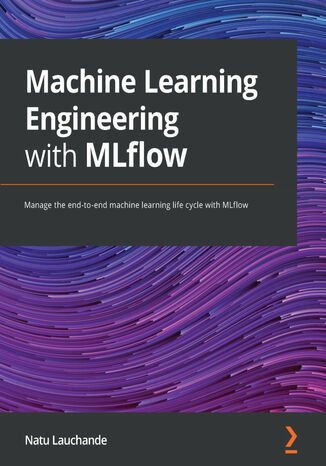
Natu Lauchande
MLflow is a platform for the machine learning life cycle that enables structured development and iteration of machine learning models and a seamless transition into scalable production environments.This book will take you through the different features of MLflow and how you can implement them in your ML project. You will begin by framing an ML problem and then transform your solution with MLflow, adding a workbench environment, training infrastructure, data management, model management, experimentation, and state-of-the-art ML deployment techniques on the cloud and premises. The book also explores techniques to scale up your workflow as well as performance monitoring techniques. As you progress, you’ll discover how to create an operational dashboard to manage machine learning systems. Later, you will learn how you can use MLflow in the AutoML, anomaly detection, and deep learning context with the help of use cases. In addition to this, you will understand how to use machine learning platforms for local development as well as for cloud and managed environments. This book will also show you how to use MLflow in non-Python-based languages such as R and Java, along with covering approaches to extend MLflow with Plugins.By the end of this machine learning book, you will be able to produce and deploy reliable machine learning algorithms using MLflow in multiple environments.
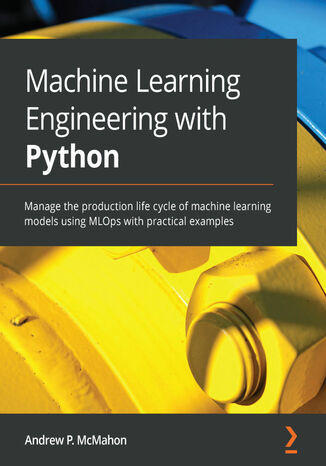
Andrew P. McMahon
Machine learning engineering is a thriving discipline at the interface of software development and machine learning. This book will help developers working with machine learning and Python to put their knowledge to work and create high-quality machine learning products and services.Machine Learning Engineering with Python takes a hands-on approach to help you get to grips with essential technical concepts, implementation patterns, and development methodologies to have you up and running in no time. You'll begin by understanding key steps of the machine learning development life cycle before moving on to practical illustrations and getting to grips with building and deploying robust machine learning solutions. As you advance, you'll explore how to create your own toolsets for training and deployment across all your projects in a consistent way. The book will also help you get hands-on with deployment architectures and discover methods for scaling up your solutions while building a solid understanding of how to use cloud-based tools effectively. Finally, you'll work through examples to help you solve typical business problems.By the end of this book, you'll be able to build end-to-end machine learning services using a variety of techniques and design your own processes for consistently performant machine learning engineering.
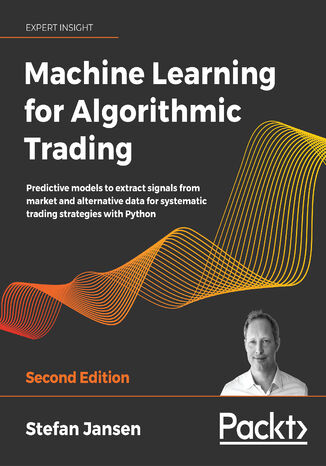
Stefan Jansen
The explosive growth of digital data has boosted the demand for expertise in trading strategies that use machine learning (ML). This revised and expanded second edition enables you to build and evaluate sophisticated supervised, unsupervised, and reinforcement learning models.This book introduces end-to-end machine learning for the trading workflow, from the idea and feature engineering to model optimization, strategy design, and backtesting. It illustrates this by using examples ranging from linear models and tree-based ensembles to deep-learning techniques from cutting edge research.This edition shows how to work with market, fundamental, and alternative data, such as tick data, minute and daily bars, SEC filings, earnings call transcripts, financial news, or satellite images to generate tradeable signals. It illustrates how to engineer financial features or alpha factors that enable an ML model to predict returns from price data for US and international stocks and ETFs. It also shows how to assess the signal content of new features using Alphalens and SHAP values and includes a new appendix with over one hundred alpha factor examples.By the end, you will be proficient in translating ML model predictions into a trading strategy that operates at daily or intraday horizons, and in evaluating its performance.
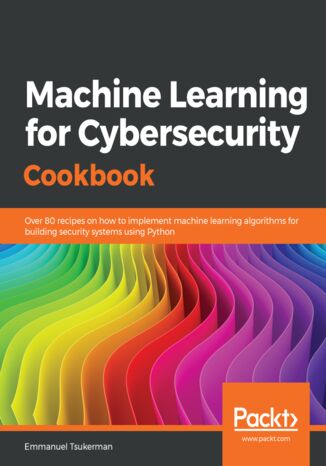
Emmanuel Tsukerman
Organizations today face a major threat in terms of cybersecurity, from malicious URLs to credential reuse, and having robust security systems can make all the difference. With this book, you'll learn how to use Python libraries such as TensorFlow and scikit-learn to implement the latest artificial intelligence (AI) techniques and handle challenges faced by cybersecurity researchers.You'll begin by exploring various machine learning (ML) techniques and tips for setting up a secure lab environment. Next, you'll implement key ML algorithms such as clustering, gradient boosting, random forest, and XGBoost. The book will guide you through constructing classifiers and features for malware, which you'll train and test on real samples. As you progress, you'll build self-learning, reliant systems to handle cybersecurity tasks such as identifying malicious URLs, spam email detection, intrusion detection, network protection, and tracking user and process behavior. Later, you'll apply generative adversarial networks (GANs) and autoencoders to advanced security tasks. Finally, you'll delve into secure and private AI to protect the privacy rights of consumers using your ML models. By the end of this book, you'll have the skills you need to tackle real-world problems faced in the cybersecurity domain using a recipe-based approach.
Jesus Salcedo
Machine learning (ML) combined with data mining can give you amazing results in your data mining work by empowering you with several ways to look at data. This book will help you improve your data mining techniques by using smart modeling techniques.This book will teach you how to implement ML algorithms and techniques in your data mining work. It will enable you to pair the best algorithms with the right tools and processes. You will learn how to identify patterns and make predictions with minimal human intervention. You will build different types of ML models, such as the neural network, the Support Vector Machines (SVMs), and the Decision tree. You will see how all of these models works and what kind of data in the dataset they are suited for. You will learn how to combine the results of different models in order to improve accuracy. Topics such as removing noise and handling errors will give you an added edge in model building and optimization.By the end of this book, you will be able to build predictive models and extract information of interest from the dataset
Allan Ramsay, Tariq Ahmad
Artificial intelligence and machine learning are the technologies of the future, and this is the perfect time to tap into their potential and add value to your business. Machine Learning for Emotion Analysis in Python helps you employ these cutting-edge technologies in your customer feedback system and in turn grow your business exponentially. With this book, you’ll take your foundational data science skills and grow them in the exciting realm of emotion analysis. By following a practical approach, you’ll turn customer feedback into meaningful insights assisting you in making smart and data-driven business decisions.The book will help you understand how to preprocess data, build a serviceable dataset, and ensure top-notch data quality. Once you’re set up for success, you’ll explore complex ML techniques, uncovering the concepts of deep neural networks, support vector machines, conditional probabilities, and more. Finally, you’ll acquire practical knowledge using in-depth use cases showing how the experimental results can be transformed into real-life examples and how emotion mining can help track short- and long-term changes in public opinion. By the end of this book, you’ll be well-equipped to use emotion mining and analysis to drive business decisions.
Machine Learning for Finance. Principles and practice for financial insiders
James Le , Jannes Klaas
Machine Learning for Finance explores new advances in machine learning and shows how they can be applied across the financial sector, including insurance, transactions, and lending. This book explains the concepts and algorithms behind the main machine learning techniques and provides example Python code for implementing the models yourself.The book is based on Jannes Klaas’ experience of running machine learning training courses for financial professionals. Rather than providing ready-made financial algorithms, the book focuses on advanced machine learning concepts and ideas that can be applied in a wide variety of ways.The book systematically explains how machine learning works on structured data, text, images, and time series. You'll cover generative adversarial learning, reinforcement learning, debugging, and launching machine learning products. Later chapters will discuss how to fight bias in machine learning. The book ends with an exploration of Bayesian inference and probabilistic programming.
Eduonix Learning Solutions
Machine Learning (ML) has changed the way organizations and individuals use data to improve the efficiency of a system. ML algorithms allow strategists to deal with a variety of structured, unstructured, and semi-structured data. Machine Learning for Healthcare Analytics Projects is packed with new approaches and methodologies for creating powerful solutions for healthcare analytics.This book will teach you how to implement key machine learning algorithms and walk you through their use cases by employing a range of libraries from the Python ecosystem. You will build five end-to-end projects to evaluate the efficiency of Artificial Intelligence (AI) applications for carrying out simple-to-complex healthcare analytics tasks. With each project, you will gain new insights, which will then help you handle healthcare data efficiently. As you make your way through the book, you will use ML to detect cancer in a set of patients using support vector machines (SVMs) and k-Nearest neighbors (KNN) models. In the final chapters, you will create a deep neural network in Keras to predict the onset of diabetes in a huge dataset of patients. You will also learn how to predict heart diseases using neural networks.By the end of this book, you will have learned how to address long-standing challenges, provide specialized solutions for how to deal with them, and carry out a range of cognitive tasks in the healthcare domain.