
Kultura i sztuka
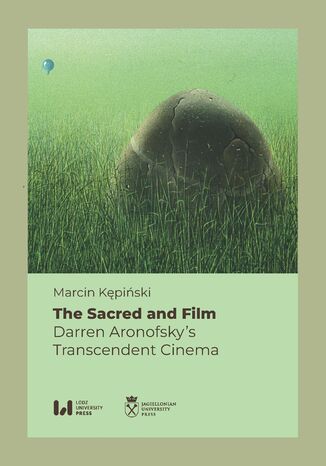
The Sacred and Film. Darren Aronofsky\'s Transcendent Cinema
Marcin Kępiński
The book about the transcendent cinema of Darren Aronofsky takes the reader on a journey through the selected filmography of this outstanding American director. A monograph devoted entirely to his extraordinary work, which among film experts and film audiences has both a group of devoted admirers and critics. A strong, even anarchist accent falls here on the type of film hero presented, living on the margins of society and consciously rejecting its normative structures. The films, as well as the literature to which the book refers, are an expression of a critical attitude towards symbolic violence and the imposition of creatively limiting cultural norms on the individual, requiring such ordering such and no other understanding and experiencing the surrounding world. An astute observer of Darren Aronofsky's work will notice the existence of metaphysical problems in it, sometimes directly directed towards religious issues. We can call this kind of cinema transcendent. This cinema is only seemingly pessimistic in its meaning. It is worth looking for mythical stories to try to hear and understand what they have to offer us. It is worth turning to transcendence and trying to express the inexpressible, also in the art of film, as does Darren Aronofsky, who wants to be a trustee of great mythical narratives. These features, so characteristic of the director, can be seen, to a greater or lesser extent, in all his films, especially those referred to in this monograph. It will be interesting for the reader who expects from contemporary cinema something more than unsophisticated entertainment and wants to go beyond its ludic dimension.
The Sea-Gull. A Play In Four Acts
Anton Pavlovich Chekhov
This is one of the most dramatic works of Chekhov. The conflict between the four main characters. Everyone has their own point of view, but who will be right in the end? Because of their conflict, everything is going to a bad spot, but can the mother really be able to bring her son or husband to the tragic end?
The Second Part of Henry the Fourth
William Shakespeare
The plot of the play is based on the struggle of King Henry IV with former allies. The Earl of Northumberland and his influential relatives, to whom the king owes a great deal to the throne, are not satisfied with their position under the new government and are rebelling. In addition to political troubles, Henry IV is tormented by problems of a personal nature: his heir Henry leads a hectic life, spending time in the company of the dissolute fat man Sir John Falstaff and his drinking companions...
The Second Part of King Henry the Sixth
William Shakespeare
The play of W. Shakespeare King Henry VI was written in 1590-1592. Its events take place during the war of England with France and at the beginning of the war of the Scarlet and White Roses, which led to a feudal anarchy and untold misfortunes. The limp, unable to rule the country, King Henry becomes a toy in the hands of his power-hungry wife Queen Margarita and her lover the Duke of Suffolk...
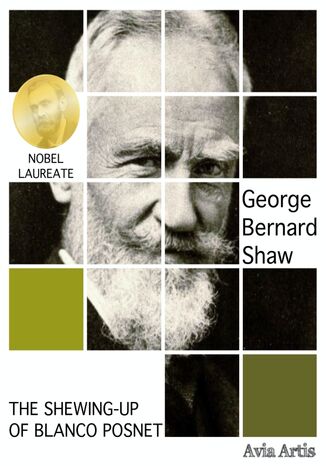
The Shewing-up of Blanco Posnet
George Bernard Shaw
“The Shewing-up of Blanco Posnet” is a play by George Bernard Shaw, an Irish playwright who became the leading dramatist of his generation, and in 1925 was awarded the Nobel Prize in Literature. Shaw claimed that "this little play is really a religious tract in dramatic form", the plot being less important than the debate about morality and divinity that occurs between the characters. He was using the folksy language and quirky insights of his principal character to explore his version of the Nietzschean concept that modern morality must move "beyond good and evil". Shaw took the view that God is a process of continual self-overcoming: "if I could conceive a god as deliberately creating something less than himself, I should class him as a cad. If he were simply satisfied with himself, I should class him as a lazy coxcomb. My god must continually strive to surpass himself." When he heard that Leo Tolstoy had shown an interest in the ideas expressed in the play, he wrote a letter to him explaining his views further.
Anton Pavlovich Chekhov
The story of a boy Egor, who goes from his home to a gymnasium located in another city. This trip is the last event before the start of a new life away from mother and familiar places. Nothing unexpected happens on the way, but at the same time, there is a constant change of landscapes and moons of Egor, meetings with new people, both ordinary and of noble origin. The boy is a witness to the life of people whose path also lies through the steppe.
William Shakespeare
Shakespeare showed us the plays in the play. In the introduction, we see that the Lord decided to play a cruel joke on a drunken brazier. They brought him to the lords house, dressed him beautifully, and assured him that past life was only a dream. And at this moment there is a troupe of actors who show the main part of the play. Unfortunately, the author did not finish the whole thing.
William Shakespeare
One of Shakespeares later plays. The plot focuses on the confrontation between the Duke of Milan, the Wizard of Prospero, and his brother Antonio. The latter, with the help of the Neapolitan king, takes power from his brother. Prospero, with his little daughter Miranda, was expelled from Milan. On a dilapidated ship they were sent to the open sea.
Aristophanes
This bold statement by Euripides is an absurd premise on which the whole game depends. Women are outraged by the image of the female as crazy, murderous and sexually depraved, and they use the Thesmophoria festival as an opportunity to discuss a suitable choice of revenge, Fearing their abilities, Euripides seeks out his tragic friend Agathon in the hope of convincing him to spy on him and become his protector at the festival a role that, of course, would require him to disguise himself as a woman.
The Third Part of King Henry the Sixth
William Shakespeare
Nowhere else has Shakespeare demonstrated his gift to turn the chronicle into a drama so vividly and visibly as in the third part of Henry VI. In the previous two plays, battle scenes are also reproduced: in the first part, the battle in France is displayed especially vividly and vividly, but only in the last play of the trilogy the playwright managed to show almost the entire course of the Rose War in two hours of presentation: from the consequences of the first battle in St. Albans in 1455 before the defeat of Queen Margarita at Tewkesbury, which happened sixteen years later.
Anton Pavlovich Chekhov
In the center of attention, as you can already guess from the very name, three sisters who dream, love and of course talk a lot about life. All of them are waiting for happiness and hope for a happy future. Chekhov was able to very well reveal the images of the sisters. Before us are three heroines with different characters, different habits, but at the same time, they received one upbringing and were very educated. The action takes place in a provincial town. With all her thoughts, the heroines rush to Moscow. It is there that they think to find their happiness and fulfill all their dreams.
The Tragedie of Anthony and Cleopatra
William Shakespeare
With a strong spirit and body, people who are ready to endure all sorts of hardships and difficulties for the sake of the cause of their whole life, their blood, their feats inscribing their names in the history of mankind, also end up being tested, which turn out to be stronger than them. And for the sake of this, a person is able to erase his entire former life overnight. This happens with Anthony, an honorary Roman who fell in love with the proud queen of Egypt. For his sake he forgot Rome and the family, and Caesar.
William Shakespeare
The focus of the great tragedy of William Shakespeare Macbeth is unreasonable ambition that turns a brave warrior and a recognized hero into an ominous killer who seized power in his hands at the cost of bloody atrocity. The play Macbeth is worth reading if only to enjoy the beautiful poetic language of the great playwright here evil, intrigue, deceit and the most base vices of humanity are served under the sauce of beautiful poetry.
The Tragedie of Othello, the Moore of Venice
William Shakespeare
It is amazing, beautiful, and the lines flow like a song. Very characteristic images, living, breathing. You empathize with all the heroes and fiercely despise Iago. This is certainly the highest skill, so clearly convey the characters in the play, without going into the descriptions, but only with randomly dropped phrases. Othello turned out to be an extremely tragic character.
William Shakespeare
The Tragedy of Coriolan the tragedy of Shakespeare, based on the ancient biographies of the semi-legendary Roman leader of the times of the Republic of Gnay Marcia Coriolanus. Heroes are alive and you can not even read who said what: everyones speech is easily distinguished. The images of the tragedy are complex and multifaceted, the problems raised in the play are deep and serious. Reading and re-reading Shakespeare you always find something new that you missed during the previous reading.
William Shakespeare
Is it about the fact that people are a flock of sheep? No, rather, how difficult it is to make the right choice without having enough information. And this topic is relevant in the current policy after two thousand years. She raises a lot of questions: Is Caesars murder a deliverance from a tyrant or a betrayal?