
Popularnonaukowe i akademickie
Kategoria "Popularnonaukowe i akademickie" w księgarni Ebookpoint.pl to skarbnica wiedzy dla wszystkich, którzy pragną poszerzać swoje horyzonty i zgłębiać tajemnice świata. Znajdziesz tutaj publikacje z różnych dziedzin nauki, od psychologii i tajemnic ludzkiego umysłu, przez ekonomię, matematykę, aż po kosmologię i zagadnienia Wszechświata. Starannie dobrane ebooki, audiobooki i książki, które w przystępny sposób tlumaczą zachodzące w świecie procesy - nie musisz być związany ze światem nauki, by zrozumieć treść publikowanych tu książek.
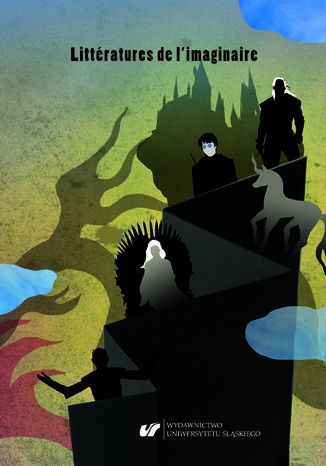
red. Katarzyna Gadomska, red. Agnieszka Loska
Pojęcie „literatura wyobrażona” (littératures de l’imaginaire) cechuje niezwykłe bogactwo, zawiera bowiem ono w sobie ogromną ilość gatunków, takich jak m.in. fantastyka, fantasy, horror, science-fiction, oraz podgatunków : dark fantasy, eco fantasy, high i low fantasy, urban fantasy, dystopia, uchronia, steampunk, cyberpunk, gore i wiele innych. Pomimo swej różnorodności, „literatura wyobrażona” długo uznawana była za twórczość masową, paraliteraturę, i nie traktowano jej jako obiekt godny badań literackich. Obecnie jednak jej rozwój, a także wielostronność i złożoność tematyczna i gatunkowa, wzbudza coraz większe zainteresowanie nie tylko wśród czytelników i miłośników gatunku, lecz również wśród krytyków i teoretyków literatury. Niniejsza publikacja, skierowana zarówno do literaturoznawców, jak i do szerszego grona odbiorców zainteresowanych tego typu literaturą, zawiera 16 artykułów w języku francuskim, w których autorzy, analizując różne gatunki i podgatunki „literatury wyobrażonej”, ukazują z różnych perspektyw jej niezwykłą heterogeniczność. Katarzyna Gadomska, dr hab., adiunkt w Instytucie Języków Romańskich i Translatoryki Uniwersytetu Śląskiego, badaczka paraliteratur francusko- i anglojęzycznych. Autorka dwóch monografii: Science-fiction et fantasy comme merveilleux contemporain (2002) oraz La prose néofantastique d’expression francaise aux XXe et XXIe siècles (2012), a także licznych artykułów, w periodykach krajowych i zagranicznych, na temat fantastyki, horroru, fantasy i science-fiction. [19.10.2012][R] Agnieszka Loska, doktor nauk humanistycznych, adiunkt w Instytucie Języków Romańskich i Translatoryki Uniwersytetu Śląskiego. Interesuje się literaturą (neo)fantastyczną francusko- i anglojęzyczną. Autorka artykułów, w periodykach krajowych i zagranicznych, na temat (neo)fantastyki, fantasy i grozy. Współredaktorka dwóch monografii wieloautorskich: Poe, Grabiński, Ray, Lovecraft. Visions, Correspondences, Transitions (Katowice 2017, wraz z K. Gadomską, współudz. A. Swoboda) oraz Le Surnaturel en littérature et au cinéma. The Supernatural in literature and cinema (Katowice 2018, wraz z K. Gadomską i A. Swobodą). [07.10.2018]
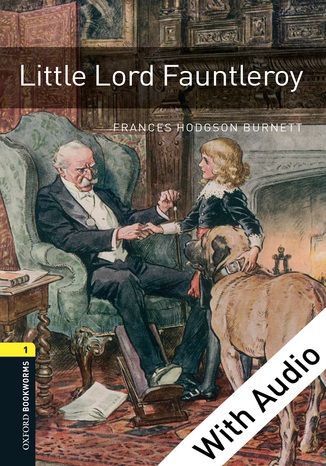
Little Lord Fauntleroy - With Audio Level 1 Oxford Bookworms Library
Burnett, Frances Hodgson
A level 1 Oxford Bookworms Library graded reader. This version includes an audio book: listen to the story as you read. Retold for Learners of English by Jennifer Bassett. Cedric Errol is seven years old. He lives with his mother in a little house in New York. They don't have much money, but mother and son are good friends. Cedric is a kind, friendly little boy, and everybody likes him. His father was English, but he is now dead, and Cedric and his mother are alone in the world. But one day a lawyer arrives from England with some very surprising news about Cedric's grandfather . . .
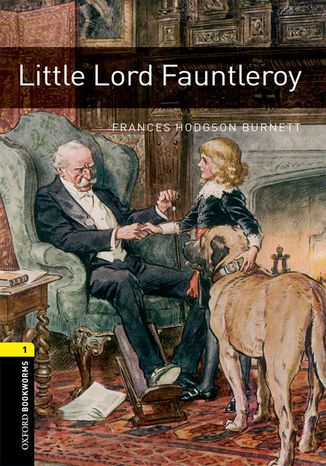
Little Lord Fauntleroy Level 1 Oxford Bookworms Library
Burnett, Frances Hodgson
A level 1 Oxford Bookworms Library graded reader. Retold for Learners of English by Jennifer Bassett. Cedric Errol is seven years old. He lives with his mother in a little house in New York. They don't have much money, but mother and son are good friends. Cedric is a kind, friendly little boy, and everybody likes him. His father was English, but he is now dead, and Cedric and his mother are alone in the world. But one day a lawyer arrives from England with some very surprising news about Cedric's grandfather . . .
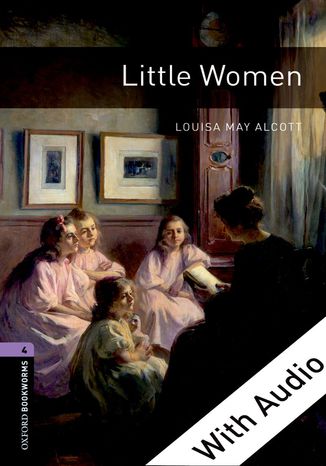
Little Women - With Audio Level 4 Oxford Bookworms Library
Alcott, Louisa May
A level 4 Oxford Bookworms Library graded reader. This version includes an audio book: listen to the story as you read. Retold for Learners of English by John Escott. When Christmas comes for the four March girls, there is no money for expensive presents and they give away their Christmas breakfast to a poor family. But there are no happier girls in America than Meg, Jo, Beth, and Amy. They miss their father, of course, who is away at the Civil War, but they try hard to be good so that he will be proud of his 'little women' when he comes home. This heart-warming story of family life has been popular for more than a hundred years.
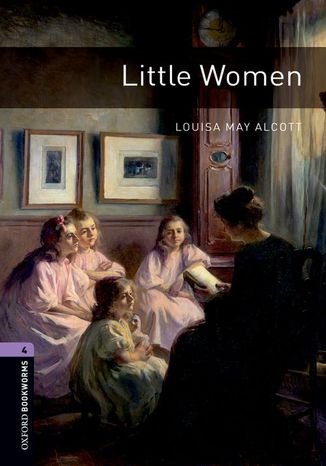
Little Women Level 4 Oxford Bookworms Library
Alcott, Louisa May
A level 4 Oxford Bookworms Library graded reader. Retold for Learners of English by John Escott When Christmas comes for the four March girls, there is no money for expensive presents and they give away their Christmas breakfast to a poor family. But there are no happier girls in America than Meg, Jo, Beth, and Amy. They miss their father, of course, who is away at the Civil War, but they try hard to be good so that he will be proud of his 'little women' when he comes home. This heart-warming story of family life has been popular for more than a hundred years.
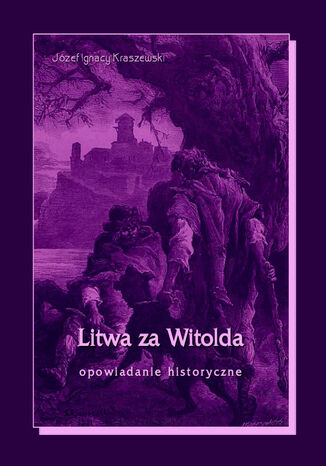
Józef Ignacy Kraszewski
Wśród weselnych, trwających jeszcze w Krakowie obrzędów, uczt, godów i turniejów, rodzina Władysława Jagiełły, jego rodzeni i stryjeczni podpisywali zrzeczenia się, zaręczenia poddaństwa i wierności, które w tym roku i następnych kilkakroć powtórzyli. Litwa połączona z Polską dawała jej hołdowników nowych: Dymitra Korybuta ks. Nowogrodu Siewierskiego, który z bojarami swej ziemi wyrzekał się wprzód przyjętego poddaństwa w. ks. Moskwy Dymitrowi! Skirgiełłę ks. połockiego i trockiego, Aleksandra-Wigunta Kiernowskiego, Wasyla Pińskiego, Włodzimierza Kijowskiego, Szymona Lingweneja ks. mścisławskiego i rządcę W. Nowogrodu, Witolda ks. naówczas podlaskiego i części Rusi Wołyńskiej, Teodora Lubartowicza książęcia włodzimierskiego, Jerzego Dowgota (?), Jerzego i Andrzeja Michałowiczów, Teodora Daniłowicza ks. ostrogskiego z bratem Michałem i wielu innych. Ci wszyscy, jeśli nie zaraz, to później nieco Polsce i jej królowi wierność zaprzysięgli bez oporu. Król Jagiełło królowej Jadwidze i panom polskim dawał zakładników na dotrzymanie paktów i wszystkiego, do czego się zobowiązywał; ci, acz mogli być przytrzymani w Krakowie, gdy raczej dla formy tylko jak przez niedowierzanie jakieś wyznaczeni byli; otrzymali zaraz pozwolenie powrotu do ziem swoich, z obowiązkiem tylko przybycia na każde zawołanie. Zakładnikami wyznaczeni i przyjęci byli: ks.ks. Skirgiełło, Witold, Michał książę Zasławski, Teodor Lubart Włodzimierski i syn Jerzego Jan ks. bełski. Gdy się to dzieje w Krakowie, a Jagiełło oddalić się z Polski dla obrony swych granic nie może; Krzyżacy, nim większe siły zebrać potrafili, wpadli tymczasem w Litwę z żołnierzem, jaki był na pogotowiu, korzystając z nieobecności króla, książąt i kraju otworem stojącego; bo panowie litewscy, zapewne z rozkazu Jagiełły, pozostali dla narady, przysposobienia ludu do chrztu i wywrotu bałwanów w Wołkowysku. Mistrz inflancki we dwa oddziały wpadł od Dźwiny na Litwę, inny oddział z Rusinów w Smoleńsku i Połocku zaciągnionych złożony, pod wodzą Andrzeja Wingolda, który świeżo Połock swój i to, czego nie miał poddał był Zakonowi; wpadł także pustoszyć w granice litewskie... Tak zaczyna się to dzieło Kraszewskiego.
Jan Widacki
Zbiór esejów na temat Litwy i jej mieszkańców. Autor - wieloletni Ambasador Rzeczpospolitej na Litwie - konfrontuje legendę Kresów, w której się wychował, z rzeczywistością, demaskując mity narosłe od wieków wokół stosunków polsko-litewskich i włączając w swą opowieść dziesiątki rozmów z Polakami żyjącymi na Litwie, Białorusi i Ukrainie.
Living and Thinking in the Postdigital World. Theories, Experiences, Explorations
Krzysztof Skonieczny, Szymon Wróbel
Living and Thinking in the Postdigital World is the result of a series of conferences organized at the Collegium Artes Liberales, University of Warsaw, as a part of the project “Technology and Socialization”. Its main aim is to interrogate the different ways in which technology – especially digital technology – shapes today’s social and political landscape in a theoretical and practical way. The book is divided into three parts. The first one concentrates on theoretical elaborations of our current situation – testing if theories of technology that we have inherited from earlier ages are suited to our current historical moment. The second part of the book is devoted to describing novel experiences allowed by digital technologies and the intertwinement between our “online” and “offline” lives. The chapters gathered in the final part endeavor a look into the future, problematizing the consequences of currently observable trends and trying to understand the workings behind various visions of what is to come. Two incontrovertible assets of the book are its interdisciplinary character and the subject that it addresses. It is not only remarkably timely, but also crucial for the changes undergone by the scientific disciplines it presents and our world as a whole. (…) One of the book’s strengths is the extremely wide exposition of the dynamic multiplicity and heterogeneity of the theories which endeavor to grasp the specificity of the technological and diagnose the changes that it brings to science and our understanding of subjectivity. The book can be read as an instructive introduction to theories of the postdigital world (…). Aleksandra Derra, Professor of Nicolaus Copernicus University in Toruń Szymon Wróbel is a full professor of philosophy at the Faculty of “Artes Liberales” of the University of Warsaw and at the Institute of Philosophy and Sociology of the Polish Academy of Sciences (IFiS PAN). He is the author of numerous books and articles scattered in various scientific journals. In 2016 IFiS PAN published his latest book Filozof i terytorium on the Warsaw School of Historians of Ideas. Currently he is the head of the experimental Techno-Humanities Lab at the Faculty of “Artes Liberales” where for several years he has been carrying out the “Technology and Socialization” project. Krzysztof Skonieczny is an assistant professor at the Faculty of “Artes Liberales”, University of Warsaw, and a member of the Techno-Humanities Lab. He is the author of Immanence and the Animal. A Conceptual Inquiry (Routledge 2020).
Living and Thinking in the Postdigital World. Theories, Experiences, Explorations
Krzysztof Skonieczny, Szymon Wróbel
Living and Thinking in the Postdigital World is the result of a series of conferences organized at the Collegium Artes Liberales, University of Warsaw, as a part of the project “Technology and Socialization”. Its main aim is to interrogate the different ways in which technology – especially digital technology – shapes today’s social and political landscape in a theoretical and practical way. The book is divided into three parts. The first one concentrates on theoretical elaborations of our current situation – testing if theories of technology that we have inherited from earlier ages are suited to our current historical moment. The second part of the book is devoted to describing novel experiences allowed by digital technologies and the intertwinement between our “online” and “offline” lives. The chapters gathered in the final part endeavor a look into the future, problematizing the consequences of currently observable trends and trying to understand the workings behind various visions of what is to come. Two incontrovertible assets of the book are its interdisciplinary character and the subject that it addresses. It is not only remarkably timely, but also crucial for the changes undergone by the scientific disciplines it presents and our world as a whole. (…) One of the book’s strengths is the extremely wide exposition of the dynamic multiplicity and heterogeneity of the theories which endeavor to grasp the specificity of the technological and diagnose the changes that it brings to science and our understanding of subjectivity. The book can be read as an instructive introduction to theories of the postdigital world (…). Aleksandra Derra, Professor of Nicolaus Copernicus University in Toruń Szymon Wróbel is a full professor of philosophy at the Faculty of “Artes Liberales” of the University of Warsaw and at the Institute of Philosophy and Sociology of the Polish Academy of Sciences (IFiS PAN). He is the author of numerous books and articles scattered in various scientific journals. In 2016 IFiS PAN published his latest book Filozof i terytorium on the Warsaw School of Historians of Ideas. Currently he is the head of the experimental Techno-Humanities Lab at the Faculty of “Artes Liberales” where for several years he has been carrying out the “Technology and Socialization” project. Krzysztof Skonieczny is an assistant professor at the Faculty of “Artes Liberales”, University of Warsaw, and a member of the Techno-Humanities Lab. He is the author of Immanence and the Animal. A Conceptual Inquiry (Routledge 2020).
Living and Thinking in the Postdigital World. Theories, Experiences, Explorations
Krzysztof Skonieczny, Szymon Wróbel
Living and Thinking in the Postdigital World is the result of a series of conferences organized at the Collegium Artes Liberales, University of Warsaw, as a part of the project “Technology and Socialization”. Its main aim is to interrogate the different ways in which technology – especially digital technology – shapes today’s social and political landscape in a theoretical and practical way. The book is divided into three parts. The first one concentrates on theoretical elaborations of our current situation – testing if theories of technology that we have inherited from earlier ages are suited to our current historical moment. The second part of the book is devoted to describing novel experiences allowed by digital technologies and the intertwinement between our “online” and “offline” lives. The chapters gathered in the final part endeavor a look into the future, problematizing the consequences of currently observable trends and trying to understand the workings behind various visions of what is to come. Two incontrovertible assets of the book are its interdisciplinary character and the subject that it addresses. It is not only remarkably timely, but also crucial for the changes undergone by the scientific disciplines it presents and our world as a whole. (…) One of the book’s strengths is the extremely wide exposition of the dynamic multiplicity and heterogeneity of the theories which endeavor to grasp the specificity of the technological and diagnose the changes that it brings to science and our understanding of subjectivity. The book can be read as an instructive introduction to theories of the postdigital world (…). Aleksandra Derra, Professor of Nicolaus Copernicus University in Toruń Szymon Wróbel is a full professor of philosophy at the Faculty of “Artes Liberales” of the University of Warsaw and at the Institute of Philosophy and Sociology of the Polish Academy of Sciences (IFiS PAN). He is the author of numerous books and articles scattered in various scientific journals. In 2016 IFiS PAN published his latest book Filozof i terytorium on the Warsaw School of Historians of Ideas. Currently he is the head of the experimental Techno-Humanities Lab at the Faculty of “Artes Liberales” where for several years he has been carrying out the “Technology and Socialization” project. Krzysztof Skonieczny is an assistant professor at the Faculty of “Artes Liberales”, University of Warsaw, and a member of the Techno-Humanities Lab. He is the author of Immanence and the Animal. A Conceptual Inquiry (Routledge 2020).