
Literatura
W kategorii literatura znajdziesz najlepsze książki, ebooki i audiobooki z całego rynku wydawniczego. Czekają na Ciebie książkowe nowości, a także bestsellery, które nie schodzą z pierwszych miejsc rankingów - mrożące krew w żyłach kryminały, literatura piękna, najlepsze reportaże, literatura young adult lub zmysłowe opowiadania erotyczne. Bez względu na to, czy wolisz tradycyjne książki, czy wybierasz czytanie ebooków, z pewnością znajdziesz tutaj coś dla siebie.
The Ghost of Down Hill & The Queen of Shebas Belt
Edgar Wallace
Best remembered for penning the screenplay for the classic film King Kong, author Edgar Wallace was an astoundingly popular luminary in the action-adventure genre in the early twentieth century. The Ghost of Down Hill is an entertaining mystery novella, based on the idea that a ghost of a monk haunts a house built on top of former holy ground. This novella has upbeat tone and surprising outcome. The Queen of Shebas Belt features the disappearance of a priceless belt supposedly worn by the Queen of Sheba. Seemingly the theft is not through want of money but an act to set up a rival in love. Wonderful entertainment and highly entertaining. If you havent discovered the joys of Wallaces mysteries there is a good place to start.

Sinclair Lewis
“The Ghost Patrol” is a book by Sinclair Lewis an American writer. In 1930, he became the first writer from the United States to receive the Nobel Prize in Literature. “The Ghost Patrol” is a short story by Sinclair Lewis. “Donald Patrick Dorgan had served forty-four years on the police force of Northernapolis, and during all but five of that time he had patrolled the Forest Park section. Don Dorgan might have been a sergeant, or even a captain, but it had early been seen at headquarters that he was a crank about Forest Park. For hither he had brought his young wife, and here he had built their shack; here his wife had died, and here she was buried. It was so great a relief in the whirl of department politics to have a man who was contented with his job that the Big Fellows were glad of Dorgan, and kept him there where he wanted to be, year after year, patrolling Forest Park.” Preview.
H.A. Cody
For the main character, his daily work became a real torment. That he told his doctor. He had to drag himself to the office every morning, and always left him tired at the end of the day. He had never experienced anything like it before. His old friend Dr. Bradbury, in whom he was sure, would give him something to build him, and in a short time he would be as good as ever. But this order to leave the forest was something that he did not expect.....

Edgar Rice Burroughs
“The Girl from Farris's“ is a novel by Edgar Rice Burroughs, an American fiction writer, who created such great characters as Tarzan and John Carter of Mars. „JUST what Mr. Doarty was doing in the alley back of Farris’s at two of a chill spring morning would have puzzled those citizens of Chicago who knew Mr. Doarty best. To a casual observer it might have appeared that Mr. Doarty was doing nothing more remarkable than leaning against a telephone pole, which in itself might have been easily explained had Mr. Doarty not been so palpably sober; but there are no casual observers in the South Side levee at two in the morning—those who are in any condition to observe at all have the eyes of ferrets. This was not the first of Mr. Doarty’s nocturnal visits to the vicinage of Farris’s. For almost a week he had haunted the neighborhood between midnight and dawn, for Mr. Doarty had determined to “get” Mr. Farris.”
Edgar Rice Burroughs
“The Girl from Hollywood“ is a novel by Edgar Rice Burroughs, an American fiction writer, who created such great characters as Tarzan and John Carter of Mars. The story alternates between the all-American Pennington family on their remote California ranch and a young Hollywood actress. The Penningtons have a beautiful estate, and affectionate relationships with their children, Custer and Eva. Custer has had an "understanding" with neighbor and childhood friend Grace Evans for a long time, but she finally confides that she wants to try being an actress before she agrees to settle down on the ranch.
The Girl of O.K. Valley. A Romance of the Okanagan
Robert Watson
Great story with an intriguing ending. Raising furry eyebrows and putting his hands on his back, rancher Jackson walked across the floor of his large, spacious kitchen. He was in one of his frequently recurring tantrums of anger-madness on petty matters.

The Girl with Green Eyes Starter Level Oxford Bookworms Library
Escott, John
A Starter level Oxford Bookworms Library graded reader. Written for Learners of English by John Escott. Greg is a porter at the Shepton Hotel in New York. When a girl with beautiful green eyes asks him for help, Greg can't say no. The girl's name is Cassie, and she says she is an artist. She tells Greg that her stepfather has her sketchbooks, and now she wants them back. Cassie says her stepfather is staying at Greg's hotel ...so what could go wrong?
E. Phillips Oppenheim
Glenlitten Manor is the home of Andrew, Marquis Glenlitten, and his lovely, tiny, vivacious French wife, Felice. On the night of a small game hunt, the unsavory Baron de Bresset is murdered and the priceless Glenlitten diamond is stolen. Who stole the necklace and killed de Bresset? The subplot around the origins of Felice, who was orphaned in a French chateau at a very young age, form an interesting side story. Suspects include Sir Richard Cotton, the famous London criminal lawyer, Sir Richard Haslam, the African colonial administrator, and Prince Charles de Seuss, the impoverished Russian nobleman. Very formulaic, with some interesting descriptions of English country house life just prior to the Great Depression.
Edith Wharton
Set in the 1920s, Glimpses of the Moon details the romantic misadventures of Nick Lansing and Susy Branch, a couple with the right connections but not much in the way of funds. They are in love and decide to marry, but realize their chances of happiness are slim without the wealth and society that their more privileged friends take for granted. Nick and Susy agree to separate when either encounters a more eligible proposition. Their conditional marriage begins to falter as Susy grows jealous of her husbands attentions to a wealthy young woman and Nick becomes increasingly disgruntled by the moral compromises arising from his wifes social negotiations. An expertly drawn portrait of two young lovers, caught between bright-eyed passion and the bitter allure of wealth.
William J. Locke
The best novel that Mr. Lock has written since he created his masterpiece. He put all his strength into it... history is a real story with a real plot, real people, real human emotions and real character development. History keeps you from beginning to end. You cannot lay it down. And over this story there is a constant play of that light humor and fantastic fun, which Mr. Locke alone among the living novelists knows how to charm his readers.

Elle Kennedy
ODKRYJ EMOCJE NA LODZIE I MIŁOŚĆ POZA TAFLĄ W WYJĄTKOWEJ SERII OFF-CAMPUS! Ona wie, jak osiągać swoje cele... Sabrina James ma zaplanowaną przyszłość: ukończyć college, dać z siebie wszystko na wydziale prawa i dostać dobrze płatną pracę w jednej z najlepszych kancelarii. Nade wszystko chce zerwać z trudną przeszłością i w tym planie z pewnością nie ma miejsca dla niesamowitego hokeisty, który wierzy w miłość od pierwszego spojrzenia. Ona może mu ofiarować co najwyżej jedną upojną noc, ale czasami jedna noc wystarczy, by życie wywróciło się do góry nogami. ...ale zasady gry się skomplikowały Tucker wierzy w siłę drużyny. Na lodowisku nie musi być ciągle w centrum uwagi, ale gdy w wieku dwudziestu dwóch lat ma zostać ojcem, nie chce grzać ławki rezerwowych. I świetnie się składa, że matka jego dziecka jest piękna, inteligentna i trzyma go w gotowości. Sęk w tym, że serce Sabriny jest szczelnie zamknięte i ognista brunetka uparcie odmawia przyjęcia jego pomocy. Jeśli pragnie spędzić życie z kobietą swoich marzeń, będzie musiał ją przekonać, że niektórych celów nie można osiągnąć bez asysty... Ta powieść pokazuje, jak wspaniałym i pojemnym emocjonalnie gatunkiem jest romans, jeśli zostanie perfekcyjnie napisany. Allaboutromance.com

Jack London
“The God of His Fathers: Tales of the Klondyke” is a book by Jack London, an American novelist. A pioneer of commercial fiction and an innovator in the genre that would later become known as science fiction. The God of His Fathers: Tales of the Klondyke is a series of short stories by Jack London. It consists of eleven moving and thrilling stories such as: The God of His Fathers, The Great Interrogation, Grit of Women or Where the Trail Forks.

The God of His Fathers and Other Stories
Jack London
A white man bought an Indian woman as a wife. Bought without any romantic feelings, bought for help. The girl did her job: cooked, fed dogs, paved the way for teams. And the point is not in servile worship of the master, but in the fact that she saw in her husband an honest and courageous man trying to save other people from hunger and cold. They hoped for him, and she, at the cost of her life, helped her husband keep her word.
The Gods and Mr. Perrin. A Tragi-Comedy
Hugh Walpole
This is a wonderful story of English school life, depicting the driving of boys and the hungry, cramped life of the masters, as well as the tragedy that captures and leads Mr. Perrin. We are set up so as not to love the school teacher Mr. Perrin, who is falling into our eyes into some kind of paranoid delusion. Nevertheless, at every step, the author deviates from the expected result, truly not letting us understand why this was not so inevitable as he drew it up to this point.
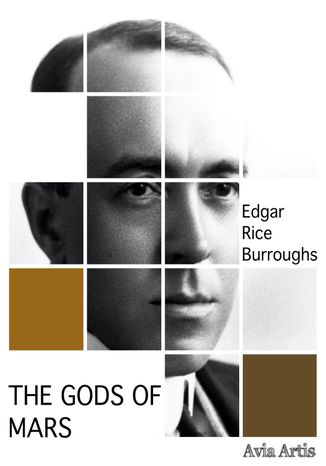
Edgar Rice Burroughs
“The Gods of Mars“ is a novel by Edgar Rice Burroughs, an American fiction writer, who created such great characters as Tarzan and John Carter of Mars. The Gods of Mars is a science fantasy novel, the second of the Barsoom series. It features the characters of John Carter and Carter's wife Dejah Thoris. Full of swordplay and daring feats, the series is considered a classic example of 20th-century pulp fiction. The story is set on Mars, imagined as a dying planet with a harsh desert environment. This vision of Mars was based on the work of the astronomer Percival Lowell, whose ideas were widely popularized in the late 19th and early 20th centuries.

Valentine Williams
Philip Clavering is a British agent using fake name James Dunlop while in Belgium. He found out that the train Berlin-Paris crashed. His boss calls and tells him that agent Charles Forrest was on this train, and Philip must find the gold box he was carrying. The woman who survived the crash is in his hotel, and he asks her if she has any information about Forrest. She is in a state of panic and loses consciousness. Returning to the lobby, he meets with Dr. Grundt, who rides upstairs to see the woman. He does not know who Grundt is. He will find out later.