
Literatura
Charles Dickens
The Chimes - a novella by Charles Dickens, an English writer who is regarded by many as the greatest novelist of the Victorian era. On New Year's Eve, Trotty, a poor elderly "ticket-porter" or casual messenger, is filled with gloom at the reports of crime and immorality in the newspapers, and wonders whether the working classes are simply wicked by nature. His daughter Meg and her long-time fiancé Richard arrive and announce their decision to marry next day.

Earl Derr Biggers
Earl Derr Biggers second Charlie Chan novel took the detective to the California desert where he uncovers the reason for the mysterious disappearance of a millionaire. Biggers was always a great romance writer who simply incorporated mystery into his books to propel the story forward. The story concerns a valuable string of pearls which is purchased by a wealthy and eccentric financier. Charlie Chan embarks on an incognito journey across the desert to find the answer to a question a question posed by a dead parrot who spoke in Chinese. Chan goes undercover to solve a complex triple intrigue of fake identity, kidnapping and murder. Charlies first trip to the mainland is a sparkling adventure full of mystery and old-fashioned romance.
The Chorus Girl and Other Stories
Anton Pavlovich Chekhov
Everything is there: a devoted wife, an unexpected admirer, an architects wayward son, an alcoholic father, an undertaker, a late secretary and a secret date. The story of a modest love that lasted until old age. Some may even want to be equal to such love.
Herbert George Wells
This story was the first work of fiction in which an explorer traverses time through the use of a man-made device a time machine rather than through magic, divine intervention, or a natural phenomenon such as sleep. HG Wellss The Chronic Argonauts, written seven years before his much more famous time travel work, The Time Machine. The mysterious Dr. Moses Nebogipfel arrives in a small Welsh town in 1887. The apprehensions of the simple rural folk eventually cause them to storm the inventors workshop in an effort to avenge perceived witchery. Nobody knows who he is or how he arrived, but his manner and his appearance soon make Dr. Nebogipfels name dreaded in the village. Nebogipfel escapes with one other person, the sympathetic Reverend Elijah Ulysses Cook, in what is later revealed to be a time machine. After having been missing for three weeks, Cook returns, aged many years older.
The Chronicles of Martin Hewitt
Arthur Morrison
Second collection of detective fiction concerning Martin Hewitt, a famous private detective whose methods closely resemble those of Sherlock Holmes. The anthology is composed of six short stories, mysteries investigated by the investigator Martin Hewitt, and narrated by his friend, Colonel Brett. An artists work is vindictively vandalized, and the artist is found murdered in his smoking room. Gold bullion totaling L10,000 mysteriously vanishes from the ill-fated steamship Nicobar as it sinks en route to Plymouth. A clerk disappears from a large London bank along with a rather substantial amount of the companys money. A lunatic Frenchman, discovered beaten and bloody in the street, screams in terror when offered a loaf of bread. The detective Martin Hewitt is on the case.

The Chronicles of Michael Danevitch of the Russian Secret Service
Dick Donovan
Dick Donovan was a pseudonym used by (Mr) Joyce Emmerson Preston Muddock (1842-1934). Muddock was also a journalist and wrote many other books. His series characters included not only Dick Donovan, the Glasgow Detective, but also Russian Secret Service agent Michael Danevitch, Vincent Trill of the Detective Service, private detective Tyler Tatlock and early forensic criminologist Fabian Field among others. The Chronicles of Michael Danevitch of the Russian Secret Service is a collection of short stories that includes 10 thrilling tales such as The mysterious disappearance of a million roubles, A modern Borgia, The strange story of an attaché, etc.
E. Phillips Oppenheim
Phillip Romilly is a poor art teacher in London, half-starved, both mentally and physically. His cousin, Douglas, has everything and even buys Beatrice, Philips fiancée. He strangles Douglas, throws him in the canal, and assumes his identity. Douglas had booked passage to America for the next day, so after a pleasant sea voyage Phillip arrives at the Waldorf Hotel in New York as Douglas Romilly. Philips career in New York is filled with incident. On his wedding day, he is arrested for the murder of his cousin, and he seems lost, but the unexpected happens to save the situation! With colorful characters this classic murder mystery truly captures 20th century English and American life, and culminates dramatically...
Anna Katharine Green
Anna Katharine Green (1846-1935), known as the Mother of the Detective Novel, is one of the first American writers of detective fiction. She was recognized for realism and well plotted story of her mystery stories. A tale of two families, betrayal, revenge, and murder, The Circular Story, written in 1902, is still an absorbing and notable work. We highly recommend this book to fans of classic detective fiction!
The Closed Book. Concerning the Secret of the Borgias
William Le Queux
These strange facts would never have been placed on record, nor would this exciting chapter of an eventful life have been written, except for two reasons: first, because the discovery I made has been declared to be of considerable importance to scientists, bibliophiles, and the world at large; and, secondly, because it is my dear wifes wish that in order to clear her in the eyes of both friends and foes nothing should be concealed, misrepresented, or withheld.

Aristophanes
The old farmer Strepsiad is in debt because of his son Fidippida, squandering money for equestrian sports. Strepsiad seeks help from a neighbor the sage of Socrates; Having come to the thought room, where Socrates teaches young people, Strepsiad asks to teach him tricky speeches and evasions, which would allow not to repay debts. But Strepsiad turns out to be unsuitable for science, and then Fidippid goes to study instead
Mary Elizabeth Braddon
The novel has two stories that at first glance seem unconnected, but most readers will be able to find out the connection. The first is about the situation of artificial inheritance. John Treverton must marry Laura Malcolm within a year or lose his inheritance. In another story, French ballerina Zaire Chico lives an absent-minded life in Parisian and London theaters. In the end, the mystery of the murder happens, and the rest of the plot focuses on that.
G.K. Chesterton
Chestertons book is a series of mysterious stories with the participation of the narrator and his friend, an eccentric ex-judge Basil Grant. Each story is about someone who belongs to the Club of Strange Merchants about who makes a living in a unique way. This is an exciting journey for every reader.
Carolyn Wells
On the eve of her wedding day, Madeleine Van Norman, a beautiful young lady who is soon to come into her family fortune is found dead, apparently stabbed with an ominous blood-stained letter opener found nearby. Who killed her the cousin who loved her but had been rejected; her fiancé, who was in love with another woman; her secretary, who loved the fiancé; the eccentric spinster who stood to inherit her property? The Clue, published in 1909, is the first book in the Detective Fleming Stone series. It falls squarely in the tradition of two favorite mystery sub-genres the Big House Mystery and the Locked Room Mystery. Detective Fleming Stone is cool and methodical, not unlike his more famous fictional contemporaries, Hercule Poirot and Sherlock Holmes. The twist is that he doesnt appear until the second half of the story.
Dick Donovan
The Clue of the Dead Hand novela features detective Peter Brodie and has a Scottish setting. It tells of a murder and a simultaneous mysterious disappearance at Corbie Hall, a strange, weird sort of place... that has an eeriness about it... calculated to make one shudder. As much a rationalized ghost story as a detective story, it also involves male impersonation.
Edgar Wallace
In this 1923 mystery by Edgar Wallace, Jesse Trasmere is thrifty and does not trust banks, so he keeps all of his money in his prison-like house. Although his nephew, Rex Lander, receives a generous allowance from his uncle, it is not enough for his extravagant lifestyle. Trasmere breaks with routine and informs his valet, Walters, that he is going out of town for a while to avoid an acquaintance from his past. One day he turns up dead, in a completely locked vault, the only clue is a pin found at the scene of the crime... A newspaper reporter helps clear the prime suspect and reveal the identity of the true killer.

Edgar Wallace
The story begins with the murder of Horace Tom Tickler, burglar, who is taken for a ride in the best Chicago fashion and then delivered to Scotland Yard in a stolen cab and all of England will be turned topsy-turvy until the clue of the silver key unmasks the ruthless murderer! Some intriguing twists, and the murderers identity is quite well hidden. With a wide range of suspects miserly rich uncle, heiress-actress, impecunious inventor, theatrical angel, inveterate gambler, even the underpaid butler this multiple murder mystery delivers. The Clue of the Silver Key was made into films and was very popular among viewers.
The Clue of the Twisted Candle
Edgar Wallace
An excellent crime novel which contains a cunning villain, love, revenge and locked room murder by the master of British thrillers. The hero John Lexman, is a mystery writer, like the author himself, and is married to a lovely woman who hides a secret. The Greek aristocrat, Remington Kara is stunningly handsome and immensely rich and he nurses an unrequited passion for Lexmans wife. When Lexman gets himself into financial problems with an Albanian moneylender, the plot begins to thicken. Kara, who is terrified of candles due to events in his shady past, is found dead and Lexman is framed for the murder. Lexmans friend T. X. Meredith, who is Scotland Yard detective, tries to prove his innocence.
Edgar Wallace
1931 Edgar Wallace novel. The story begins with following the Arranway family and various people that touch their life. Sketchley, where the Coat of Arms roadhouse stands, is a place of strange happenings. A complicated trail of theft, arson and blackmail culminates in murder at the Coat of Arms roadhouse and T. B. Collett, the crack Scotland Yard detective, must cope with a cast of stock company suspects and an incompetent local detective. Little by little you can see that pretty much everyone had a reason to kill the victim. This is a dandy story with all the Golden Age mystery elements.

Zane Grey
Georgianna Stockwell, a free-spirited young woman from the East, moves to the wilds of the Tonto Basin in Arizona and she creates a violent culture clash. She has been sent there by her parents and doctor for a change of scenery. It seems Georgianna had gotten herself lung problems due to all of her dancing and gadding about. Fortunately, her sister, Mary Stockwell is on the scene ready to take care of her younger sister and to show her how life should really be lived. But it seems Georgianna has realized something perhaps Mary has not. Men and women did not/do not stand on equal terms and this is something Zane Grey lets on that he was aware of as well by writing Georgiannas character. Cal Thurman is the love that is set aside as Georgiannas suitor. Mary and Enoch also come together in Code of the West, although without all of the bumps of Cal and Georgiannas relationship.

E. Phillips Oppenheim
This late novel of E. Phillips Oppenheim begins as the Train Bleu pulls into the railroad station in Monaco. Its a leisurely spy fiction tale set in Monaco as various members of aristocracy from different countries plus one vacationing American woman find themselves involved with international intrigue. The bulk of the book consists of members of the leisure class drinking cocktails, playing baccarat, and generally spending time in Monacos elite clubs. Oppenheims work often reflected the current political and social events he was living through. In the late 1930s, Oppenheim was living in the South of France, near Monaco, as that playground of the wealthy slowly emptied out it wealthy and royal clientele in advance of the coming war.

Charles Alden Seltzer
Charles Alden Seltzer (15 August 18759 February 1942) was an American writer. He was a prolific author of western novels, had writing credits for more than a dozen film titles, and authored numerous stories published in magazines, most prominently in Argosy. The Coming of the Law is a story of a young eastern newspaper man who goes West to a small town, and takes charge of a run-down newspaper, fights against an association of cattle rustlers for the benefit of the small ranchers, and wins. The hero is very much of a hero and manages to keep the peace and do justice without using his revolver. A little above the average of western stories, interesting, very exciting in parts and with some good local color. This is a western as only Seltzer could write it.
Edward Bulwer-Lytton
The Coming Race (1870) by Edward Bulwer-Lytton is an early science fiction novel. It offers a fascinating vision of a shadowy underworld populated by strange and beautiful creatures who closely resemble the angels described in Christian lore. These beings, known as Vril-ya, live underground, but are intending to leave their subterranean existence and conquer the world...
Robert W. Chambers
This book is one of the most popular novels by Robert William Chambers and has been translated into several other languages around the world. A casual conversation with a model for his new project forces him to test his theories about creativity, society, and love, and he discovers that other people have their own ideas about how it should all work.
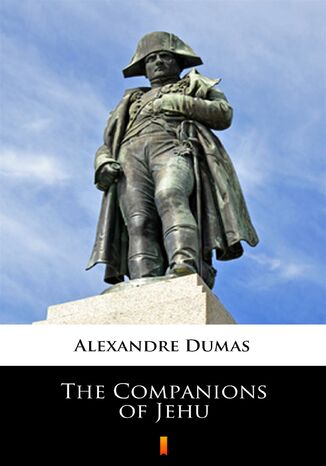
Alexandre Dumas
Set out for a rollicking good time with Alexandre Dumas (1802-1870), the renowned French author who created timeless classics such as The Three Musketeers, The Count of Monte Cristo and The Man in the Iron Mask. Les Compagnons de Jehu (The Companions of Jehu) tale is based loosely on a historical account of a band of young aristocrats-turned-highwaymen that continuously steals the money of the Directoire in order to finance the restoration of monarchy and who fought their way to freedom after being jailed on dubious charges. Packed with tragedy, political intrigues, noble heroes, love, and derring-do, this exciting historical tale constitutes a must-read for fans of Dumass work, and would make for a great addition to any bookshelf.