
Literatura
Fred M. White
There were various rumors about house No.13. There were no lights, badly painted blinds were always lowered, windows were black over the years. The feeling of loneliness and secrecy permeated the interior of No.13. Surprisingly there lived a young beautiful lady, about 20 years old. However, she was very frightened. And all this darkness was displayed on it.
The House of the Whispering Pines
Anna Katharine Green
When a woman is found dead at The Whispering Pines, not only is everyone shocked, but murder is suspected. After all, why would such a well liked young lady put an end to things, or why would anyone want to do away with her? Her vagabond of a brother is suspected, since he has every cause to wish her out of the picture. Her fiancée Elwood Ranelagh also is suspected since he no longer wished to marry her but her sister. So perplexing is the case that the local authorities call in an ace detective from the New York City police force. Sweetwaters with his weak chin and protruding nose impresses no one, until he begins uncovering disturbing new evidence. Published in 1910, this is a good old-fashioned mystery from the Golden Era of the country house genre.
William Le Queux
No second glance was needed to realise the pitiful truth. The man seated there in his fine library, with the summer sunset slanting across the red carpet from the open French windows, was blind. Since his daughter Gabrielle had been a pretty, prattling child of nine, nursing her dolly, he had never looked upon her fair face. But he was ever as devoted to her as she to him.
Fred M. White
Barnes Place the house, fascinated everyone who saw it. However, his host, Ralph Enderby, didnt care much about him and saw the house as a week-end office where he entertained his friends and weaved those business schemes which had made his name a byword amongst the City men who knew. One evening Enderby, as always was not at home. This took advantage of an attacker who tried to steal something from the safe. It turned out that it was a girl who was unhappy with the frauds of Ralph Enderby and in the safe was evidence that he wanted to ruin the life of a young woman.
Earl Derr Biggers
Charlie Chan, the first Chinese detective in literature, is modeled after Chang Apana, a real-life police detective in Honolulu. A family originally from Boston, the Winterslips, has some members living in Hawaii. You can almost feel the gentle trade winds of Hawaii during the 1920s in this classic novel by Earl Derr Biggers. One of the wealthy Winterslips living in Hawaii is murdered. A younger member of the family, John Quincy Winterslip, has been sent to Boston to check up on his Aunt Minerva and persuade her to return to Boston. He arrives in Honolulu and gets involved in the investigation and is determined to see it through to the end, before he returns to the mainland. Romantic and full of atmosphere, this is a most enjoyable read that was our first introduction to Charlie Chan.
E. Phillips Oppenheim
The six stories in Part I of this book trace the early career of Peter Benskin. He is a public school graduate with a small private income who joins the police force in London. After an early success he transfers to Scotland Yard where he becomes a detective. He is successful in solving several difficult cases but is hampered at times by his ethical feelings towards criminals who have been coerced or forced to commit crimes. He allows the innocent to escape, while he pursues the truly guilty. Part II of the book, which also consists of six stories, chronicles Benskins pursuit of and ultimate victory over a self-conceited master-criminal known only by the sobriquet Matthew.
Jack London
Human Drift is a collection of essays and short sketches by Jack London, including a number of plays and his introduction to Richard Henry Danas Two Years Before the Mast. The title essay Human Drift explores the spread of humanity on continents throughout history, as well as the predicted results and the possible end of this drift. John Griffith London, known as Jack London, was an American journalist, public figure and writer.
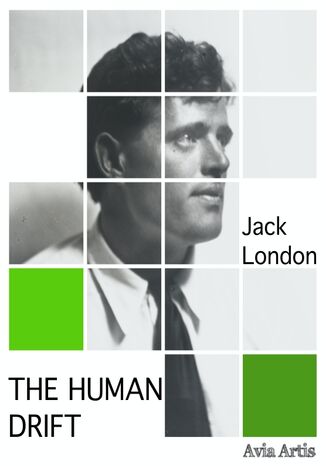
Jack London
“The Human Drift” is a book by Jack London, an American novelist. A pioneer of commercial fiction and an innovator in the genre that would later become known as science fiction. "The Human Drift" is a collection of essays and short sketches by Jack London, also including a number of plays. The collection consists of these titles: The Human Drift, Small-Boat Sailing, Four Horses and a Sailor, Nothing that Ever Came to Anything, That Dead Men Rise up Never, A Classic of the Sea, A Wicked Woman (Curtain Raiser), The Birth Mark (Sketch)