
Python
W kategorii Python zostały zebrane podręczniki poruszające tematykę programowania z zastosowaniem praktycznie niezależnego sprzętowo, dostępnego na licencji Open Source języka. Książki przedstawią Wam wszechstronności i elastyczności Pythona a także różne typy tworzenia kodu poprzez programowanie strukturalne, obiektowe czy funkcjonalne.
Nauczycie się tworzyć aplikacje sieciowe o dowolnym przeznaczeniu, komunikujące się z systemami operacyjnymi, lub korzystające z baz danych. Techniki analizy składni, przetwarzanie tekstu czy rozłożenie obciążenia programu na wiele wątków i procesów przestanie być problematyczne.
Mark Tinderholt, Armon Dadgar
As cloud technology and automation evolve, managing infrastructure as code, integrating security, and handling microservices complexity have become critical challenges. This book takes a hands-on approach to teaching Terraform, helping you build efficient cloud infrastructure using real-world scenarios and best practices.It begins with an introduction to Terraform's architecture, covering its command-line interface and HashiCorp Configuration Language. You’ll learn best practices, architectural patterns, and how to implement Terraform across virtual machines, Docker/Kubernetes, serverless environments, and cloud platforms like AWS, Azure, and GCP. The book also covers integrating Terraform into CI/CD pipelines with other technologies to automate infrastructure provisioning and management.Additional chapters focus on security, monitoring, troubleshooting, and cost optimization. You'll also gain insights into preparing for the Terraform Associate certification. By the end, you’ll have the skills to build, automate, and manage cloud infrastructure effectively.
Savaş Yildirim, Meysam Asgari- Chenaghlu
Transformer-based language models have dominated natural language processing (NLP) studies and have now become a new paradigm. With this book, you'll learn how to build various transformer-based NLP applications using the Python Transformers library.The book gives you an introduction to Transformers by showing you how to write your first hello-world program. You'll then learn how a tokenizer works and how to train your own tokenizer. As you advance, you'll explore the architecture of autoencoding models, such as BERT, and autoregressive models, such as GPT. You'll see how to train and fine-tune models for a variety of natural language understanding (NLU) and natural language generation (NLG) problems, including text classification, token classification, and text representation. This book also helps you to learn efficient models for challenging problems, such as long-context NLP tasks with limited computational capacity. You'll also work with multilingual and cross-lingual problems, optimize models by monitoring their performance, and discover how to deconstruct these models for interpretability and explainability. Finally, you'll be able to deploy your transformer models in a production environment.By the end of this NLP book, you'll have learned how to use Transformers to solve advanced NLP problems using advanced models.
Savaş Yildirim, Meysam Asgari- Chenaghlu
Transformer-based language models such as BERT, T5, GPT, DALL-E, and ChatGPT have dominated NLP studies and become a new paradigm. Thanks to their accurate and fast fine-tuning capabilities, transformer-based language models have been able to outperform traditional machine learning-based approaches for many challenging natural language understanding (NLU) problems.Aside from NLP, a fast-growing area in multimodal learning and generative AI has recently been established, showing promising results. Mastering Transformers will help you understand and implement multimodal solutions, including text-to-image. Computer vision solutions that are based on transformers are also explained in the book. You’ll get started by understanding various transformer models before learning how to train different autoregressive language models such as GPT and XLNet. The book will also get you up to speed with boosting model performance, as well as tracking model training using the TensorBoard toolkit. In the later chapters, you’ll focus on using vision transformers to solve computer vision problems. Finally, you’ll discover how to harness the power of transformers to model time series data and for predicting.By the end of this transformers book, you’ll have an understanding of transformer models and how to use them to solve challenges in NLP and CV.
Matematyka dyskretna dla praktyków. Algorytmy i uczenie maszynowe w Pythonie
Ryan T. White, Archana Tikayat Ray
Mimo że osiągnięcia matematyczne stały się podwalinami algorytmiki, wielu inżynierów nie w pełni rozumie reguły matematyki dyskretnej. Nawet jeśli nie stanowi to szczególnego problemu w codziennej pracy, w końcu okazuje się, że matematyka dyskretna jest niezbędna do osiągnięcia prawdziwej biegłości w operowaniu algorytmami i w pracy na danych. Co więcej, znajomość tej dziedziny bardzo ułatwia rozwiązywanie problemów z zakresu uczenia maszynowego. W ten sposób praktyczna biegłość w matematyce zauważalnie poprawia wyniki pracy inżynierów. Ta książka jest kompleksowym wprowadzeniem do matematyki dyskretnej, przydatnym dla każdego, kto chce pogłębić i ugruntować swoje umiejętności informatyczne. W zrozumiały sposób przedstawiono tu metody matematyki dyskretnej i ich zastosowanie w algorytmach i analizie danych, włączając w to techniki uczenia maszynowego. Zaprezentowano również zasady oceny złożoności obliczeniowej algorytmów i używania wyników tej oceny do zarządzania pracą procesora. Omówiono także sposoby przechowywania struktur grafowych, ich przeszukiwania i znajdywania ścieżek między wierzchołkami. Pokazano też, jak wykorzystać przedstawione informacje podczas posługiwania się bibliotekami Pythona, takimi jak scikit-learn i NumPy. W książce między innymi: terminologia i metody matematyki dyskretnej zastosowanie metod matematyki dyskretnej w algorytmach i analizie danych algebra Boole'a i kombinatoryka w podstawowych strukturach algorytmów rozwiązywanie problemów z dziedziny teorii grafów zadania związane z uczeniem maszynowym a matematyka dyskretna Matematyka dyskretna - poznaj, zrozum, zastosuj!
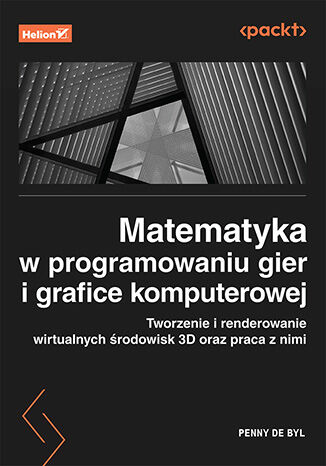
Penny de Byl
Matematyka jest niezbędna do zrozumienia reguł rządzących tworzeniem grafiki komputerowej w czasie rzeczywistym, a także zasad manipulowania obiektami i środowiskami 3D. Idealnym narzędziem ułatwiającym uchwycenie tych zależności jest język Python wraz z bibliotekami Pygame i PyOpenGL. Dzięki nim łatwo zrozumiesz, w jaki sposób komputery tworzą i wprowadzają zmiany w środowiskach trójwymiarowych. Ta książka wyjaśni Ci rolę matematyki w tworzeniu, renderowaniu i zmienianiu wirtualnych środowisk 3D, a ponadto pozwoli odkryć tajemnice najpopularniejszych dzisiaj silników gier. Za sprawą licznych praktycznych ćwiczeń zorientujesz się, co się kryje za rysowaniem linii i kształtów graficznych, stosowaniem wektorów i wierzchołków, budowaniem i renderowaniem siatek, jak również przekształcaniem wierzchołków. Nauczysz się używać kodu Pythona, a także bibliotek Pygame i PyOpenGL do budowy własnych silników. Dowiesz się też, jak tworzyć przydatne API i korzystać z nich podczas pisania własnych aplikacji. W książce między innymi: praca w Pythonie z edytorem PyCharm, bibliotekami Pygame i PyOpenGL różne polecenia rysowania z różnych graficznych API najważniejsze zagadnienia trygonometrii w odniesieniu do środowisk 3D wektory i matryce w przenoszeniu, ustawianiu kierunku i skalowaniu obiektów 3D renderowanie obiektów 3D z teksturami, kolorami, cieniami i oświetleniem przekształcanie wierzchołków w celu przyspieszenia renderowania opartego na GPU Matematyka: najlepszy sprzymierzeniec programisty i grafika!
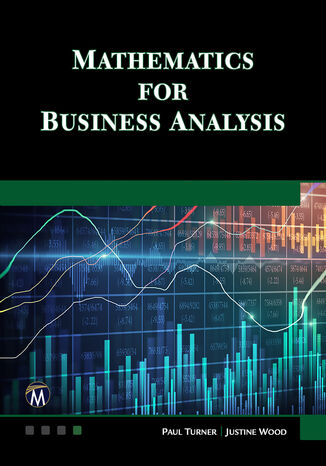
Mercury Learning and Information, Paul Turner, Justine...
This book is designed for students, faculty, and professionals, describing the role of mathematics in economics and business. Starting with the basics of numbers and advancing into complex topics like hyperreal numbers and set theory, the book builds a strong foundation of mathematical concepts. Python code is used throughout to illustrate problems numerically, making the material accessible and practical.Readers will learn about linear simultaneous equations for market equilibrium analysis and the mechanics of matrices for solving larger systems. The book covers calculus, with applications in economics, including profit maximization and factor optimization, and introduces infinitesimal methods. Chapters on differential and difference equations reveal their importance in analyzing dynamic systems, all illuminated through practical examples and images from economics and business.The course begins with fundamental mathematical concepts, advancing to complex applications in economics and business. By integrating computational understanding with Python code, the book ensures learners can tackle real-world problems. This structured approach provides the tools needed for economic analysis and business decision-making, making it an invaluable resource for anyone in these fields.
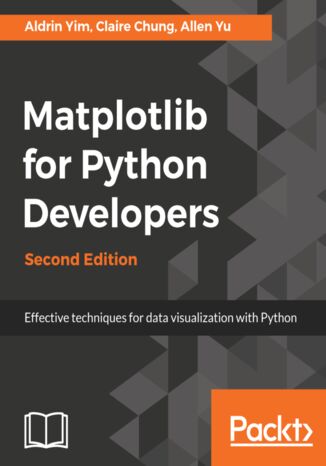
Aldrin Yim, Claire Chung, Allen Yu
Python is a general-purpose programming language increasingly being used for data analysis and visualization. Matplotlib is a popular data visualization package in Python used to design effective plots and graphs. This is a practical, hands-on resource to help you visualize data with Python using the Matplotlib library. Matplotlib for Python Developers, Second Edition shows you how to create attractive graphs, charts, and plots using Matplotlib. You will also get a quick introduction to third-party packages, Seaborn, Pandas, Basemap, and Geopandas, and learn how to use them with Matplotlib. After that, you’ll embed and customize your plots in third-party tools such as GTK+3, Qt 5, and wxWidgets. You’ll also be able to tweak the look and feel of your visualization with the help of practical examples provided in this book. Further on, you’ll explore Matplotlib 2.1.x on the web, from a cloud-based platform using third-party packages such as Django. Finally, you will integrate interactive, real-time visualization techniques into your current workflow with the help of practical real-world examples.By the end of this book, you’ll be thoroughly comfortable with using the popular Python data visualization library Matplotlib 2.1.x and leveraging its power to build attractive, insightful, and powerful visualizations.
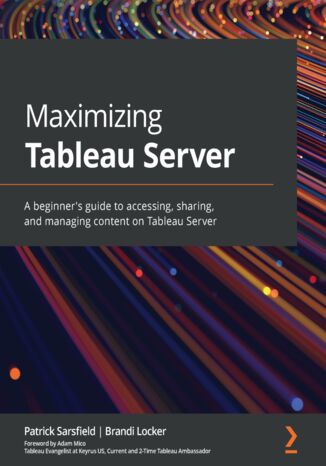
Patrick Sarsfield, Brandi Locker
Tableau Server is a business intelligence application that provides a centralized location to store, edit, share, and collaborate on content, such as dashboards and curated data sources. This book gets you up and running with Tableau Server to help you increase end-user engagement for your published work as well as reduce or eliminate redundant tasks.You’ll explore Tableau Server's structure and how to get started by connecting, publishing content, and navigating the software interface. Next, you’ll learn when and how to update the settings of your content at various levels to best utilize Tableau Server’s features. You’ll understand how to interact with the Tableau Server interface to locate, sort, filter, manage and customize content. Later, the book shows you how to leverage other valuable features that enable you and your audience to share, download, and interact with content on Tableau Server. As you progress, you’ll cover principles to increase the performance of your published content. All along, the book shows you how to navigate, interact with, and use Tableau Server with the help of engaging examples and best practices shared by recognized Tableau professionals.By the end of this Tableau book, you’ll have a solid understanding of how to use Tableau Server to manage content, automate tasks, and increase end-user engagement.
Marwan Alsabbagh
MicroPython is an open source implementation of Python 3 that runs in embedded environments. With MicroPython, you can write clean and simple Python code to control hardware instead of using complex low-level languages such as C and C++. This book guides you through all the major applications of the MicroPython platform to build and program projects that use microcontrollers.This MicroPython book covers recipes that will help you experiment with the programming environment and hardware programmed in MicroPython. You'll find tips and techniques for building a variety of objects and prototypes that can sense and respond to touch, sound, position, heat, and light. This book will take you through the uses of MicroPython with a variety of popular input devices and sensors. You'll learn techniques to handle time delays and sensor readings, and apply advanced coding techniques to create complex projects. As you advance, you'll deal with Internet of Things (IoT) devices and integration with other online web services. In addition to this, you'll use MicroPython to make music with bananas and create portable multiplayer video games that incorporate sound and light animations into the gameplay.By the end of this book, you'll have mastered the tips and tricks to troubleshoot your development problems and take your MicroPython project to the next level.
Jacob Beningo
With the increasing complexity of embedded systems seen over the past few years, developers are looking for ways to manage them easily by solving problems without spending a lot of time on finding supported peripherals. MicroPython is an efficient and lean implementation of the Python 3 programming language, which is optimized to run on microcontrollers. MicroPython Projects will guide you in building and managing your embedded systems with ease.This book is a comprehensive project-based guide that will help you build a wide range of projects and give you the confidence to design complex projects spanning new areas of technology such as electronic applications, automation devices, and IoT applications. While building seven engaging projects, you'll learn how to enable devices to communicate with each other, access and control devices over a TCP/IP socket, and store and retrieve data. The complexity will increase progressively as you work on different projects, covering areas such as driver design, sensor interfacing, and MicroPython kernel customization.By the end of this MicroPython book, you'll be able to develop industry-standard embedded systems and keep up with the evolution of the Internet of Things.
Bhavik Merchant, Christopher Webb
This book comprehensively covers every layer of Power BI, from the report canvas to data modeling, transformations, storage, and architecture.Developers and architects working with any area of Power BI will be able to put their knowledge to work with this practical guide to design and implement at every stage of the analytics solution development process. This book is not only a unique collection of best practices and tips, but also provides you with a hands-on approach to identifying and fixing common performance issues.Complete with explanations of essential concepts and practical examples, you’ll learn about common design choices that affect performance and consume more resources and how to avoid these problems. You’ll grasp the general architectural issues and settings that broadly affect most solutions. As you progress, you’ll walk through each layer of a typical Power BI solution, learning how to ensure your designs can handle scale while not sacrificing usability. You’ll focus on the data layer and then work your way up to report design. We will also cover Power BI Premium and load testing.By the end of this Power BI book, you’ll be able to confidently maintain well-performing Power BI solutions with reduced effort and know how to use freely available tools and a systematic process to monitor and diagnose performance problems.
Devin Knight, Erin Ostrowsky, Mitchell Pearson, Bradley...
This revised edition has been fully updated to reflect the latest enhancements to Power BI. It includes a new chapter dedicated to dataflow, and covers all the essential concepts such as installation, designing effective data models, as well as building basic dashboards and visualizations to help you and your organization make better business decisions.You’ll learn how to obtain data from a variety of sources and clean it using Power BI Query Editor. You’ll then find out how you can design your data model to navigate and explore relationships within it and build DAX formulas to make your data easier to work with. Visualizing your data is a key element in this book, and you’ll get to grips rapidly with data visualization styles and enhanced digital storytelling techniques. In addition, you will acquire the skills to build your own dataflows, understand the Common Data Model, and automate data flow refreshes to eradicate data cleansing inefficiency.This guide will help you understand how to administer your organization's Power BI environment so that deployment can be made seamless, data refreshes can run properly, and security can be fully implemented.By the end of this Power BI book, you’ll have a better understanding of how to get the most out of Power BI to perform effective business intelligence.
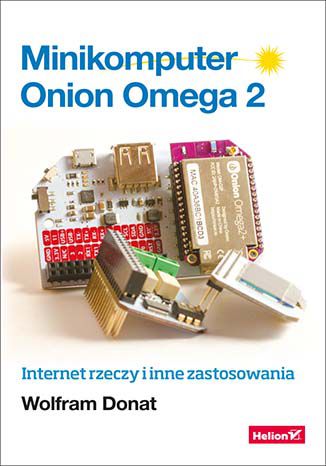
Minikomputer Onion Omega 2. Internet rzeczy i inne zastosowania
Wolfram Donat
Minikomputer Onion Omega 2 jest jedną z ciekawszych propozycji na rynku małych urządzeń jednopłytkowych (SBC). Został opracowany do zastosowań w internecie rzeczy. Działa pod kontrolą jednej z odmian Linuksa, systemu OpenWrt. Ma niewielkie rozmiary (43x26x10 mm), jego procesor MIPS pracuje z częstotliwością 580 MHz, może obsłużyć pamięć RAM do 256 MB i czytnik kart SD. Radzi sobie z kilkoma różnymi protokołami łączności, dzięki czemu bez trudu można go podłączyć do zwykłego komputera i komunikować się z nim za pomocą konsoli wyświetlanej w przeglądarce. Możliwości "cebuli" można łatwo rozszerzać za pomocą dostępnych płytek i modułów. To świetna propozycja dla każdego amatora elektroniki i robotyki! Ta książka jest wyjątkowo zwięzłym, a przy tym przystępnie napisanym i praktycznym podręcznikiem, dzięki któremu błyskawicznie uzyskasz wiedzę potrzebną do uruchomienia minikomputera Onion Omega 2 i rozpoczęcia pracy. Aby wykonać opisane tu projekty, potrzebujesz minikomputera Omega 2, modułu zasilającego, rozszerzenia przekaźnikowego i rozszerzenia z ekranem OLED. Przyda się też podstawowa znajomość Linuksa i Pythona. Dzięki książce w krótkim czasie poszerzysz horyzonty, zdobędziesz kilka nowych umiejętności, nauczysz się pracy z komponentami sprzętowymi - i będziesz gotów, by w pełni samodzielnie przygotować i wykonać kolejne projekty z zastosowaniem tego świetnego minikomputera. Najważniejsze zagadnienia: montaż i konfiguracja minikomputera konsola Onion Omegi zastosowanie Pythona własne projekty: "Tweetująca cebula" i "Światłolub" Onion Omega 2: pasjonująca droga do internetu rzeczy!
Karthikeyan NG, Arun Padmanabhan, Matt Cole
We’re witnessing a revolution in Artificial Intelligence, thanks to breakthroughs in deep learning. Mobile Artificial Intelligence Projects empowers you to take part in this revolution by applying Artificial Intelligence (AI) techniques to design applications for natural language processing (NLP), robotics, and computer vision.This book teaches you to harness the power of AI in mobile applications along with learning the core functions of NLP, neural networks, deep learning, and mobile vision. It features a range of projects, covering tasks such as real-estate price prediction, recognizing hand-written digits, predicting car damage, and sentiment analysis. You will learn to utilize NLP and machine learning algorithms to make applications more predictive, proactive, and capable of making autonomous decisions with less human input. In the concluding chapters, you will work with popular libraries, such as TensorFlow Lite, CoreML, and PyTorch across Android and iOS platforms.By the end of this book, you will have developed exciting and more intuitive mobile applications that deliver a customized and more personalized experience to users.
Anubhav Singh, Rimjhim Bhadani
Deep learning is rapidly becoming the most popular topic in the mobile app industry. This book introduces trending deep learning concepts and their use cases with an industrial and application-focused approach. You will cover a range of projects covering tasks such as mobile vision, facial recognition, smart artificial intelligence assistant, augmented reality, and more.With the help of eight projects, you will learn how to integrate deep learning processes into mobile platforms, iOS, and Android. This will help you to transform deep learning features into robust mobile apps efficiently. You’ll get hands-on experience of selecting the right deep learning architectures and optimizing mobile deep learning models while following an application oriented-approach to deep learning on native mobile apps. We will later cover various pre-trained and custom-built deep learning model-based APIs such as machine learning (ML) Kit through Firebase. Further on, the book will take you through examples of creating custom deep learning models with TensorFlow Lite. Each project will demonstrate how to integrate deep learning libraries into your mobile apps, right from preparing the model through to deployment.By the end of this book, you’ll have mastered the skills to build and deploy deep learning mobile applications on both iOS and Android.
V Kishore Ayyadevara, Yeshwanth Reddy
Deep learning is the driving force behind many recent advances in various computer vision (CV) applications. This book takes a hands-on approach to help you to solve over 50 CV problems using PyTorch1.x on real-world datasets.You’ll start by building a neural network (NN) from scratch using NumPy and PyTorch and discover best practices for tweaking its hyperparameters. You’ll then perform image classification using convolutional neural networks and transfer learning and understand how they work. As you progress, you’ll implement multiple use cases of 2D and 3D multi-object detection, segmentation, human-pose-estimation by learning about the R-CNN family, SSD, YOLO, U-Net architectures, and the Detectron2 platform. The book will also guide you in performing facial expression swapping, generating new faces, and manipulating facial expressions as you explore autoencoders and modern generative adversarial networks. You’ll learn how to combine CV with NLP techniques, such as LSTM and transformer, and RL techniques, such as Deep Q-learning, to implement OCR, image captioning, object detection, and a self-driving car agent. Finally, you'll move your NN model to production on the AWS Cloud.By the end of this book, you’ll be able to leverage modern NN architectures to solve over 50 real-world CV problems confidently.