
Python
W kategorii Python zostały zebrane podręczniki poruszające tematykę programowania z zastosowaniem praktycznie niezależnego sprzętowo, dostępnego na licencji Open Source języka. Książki przedstawią Wam wszechstronności i elastyczności Pythona a także różne typy tworzenia kodu poprzez programowanie strukturalne, obiektowe czy funkcjonalne.
Nauczycie się tworzyć aplikacje sieciowe o dowolnym przeznaczeniu, komunikujące się z systemami operacyjnymi, lub korzystające z baz danych. Techniki analizy składni, przetwarzanie tekstu czy rozłożenie obciążenia programu na wiele wątków i procesów przestanie być problematyczne.
Big Data on Kubernetes. A practical guide to building efficient and scalable data solutions
Neylson Crepalde
In today's data-driven world, organizations across different sectors need scalable and efficient solutions for processing large volumes of data. Kubernetes offers an open-source and cost-effective platform for deploying and managing big data tools and workloads, ensuring optimal resource utilization and minimizing operational overhead. If you want to master the art of building and deploying big data solutions using Kubernetes, then this book is for you.Written by an experienced data specialist, Big Data on Kubernetes takes you through the entire process of developing scalable and resilient data pipelines, with a focus on practical implementation. Starting with the basics, you’ll progress toward learning how to install Docker and run your first containerized applications. You’ll then explore Kubernetes architecture and understand its core components. This knowledge will pave the way for exploring a variety of essential tools for big data processing such as Apache Spark and Apache Airflow. You’ll also learn how to install and configure these tools on Kubernetes clusters. Throughout the book, you’ll gain hands-on experience building a complete big data stack on Kubernetes.By the end of this Kubernetes book, you’ll be equipped with the skills and knowledge you need to tackle real-world big data challenges with confidence.
Tiago Antao
Bioinformatics is an active research field that uses a range of simple-to-advanced computations to extract valuable information from biological data.This book covers next-generation sequencing, genomics, metagenomics, population genetics, phylogenetics, and proteomics. You'll learn modern programming techniques to analyze large amounts of biological data. With the help of real-world examples, you'll convert, analyze, and visualize datasets using various Python tools and libraries.This book will help you get a better understanding of working with a Galaxy server, which is the most widely used bioinformatics web-based pipeline system. This updated edition also includes advanced next-generation sequencing filtering techniques. You'll also explore topics such as SNP discovery using statistical approaches under high-performance computing frameworks such as Dask and Spark.By the end of this book, you'll be able to use and implement modern programming techniques and frameworks to deal with the ever-increasing deluge of bioinformatics data.
Tiago Antao
Bioinformatics is an active research field that uses a range of simple-to-advanced computations to extract valuable information from biological data, and this book will show you how to manage these tasks using Python.This updated third edition of the Bioinformatics with Python Cookbook begins with a quick overview of the various tools and libraries in the Python ecosystem that will help you convert, analyze, and visualize biological datasets. Next, you'll cover key techniques for next-generation sequencing, single-cell analysis, genomics, metagenomics, population genetics, phylogenetics, and proteomics with the help of real-world examples. You'll learn how to work with important pipeline systems, such as Galaxy servers and Snakemake, and understand the various modules in Python for functional and asynchronous programming. This book will also help you explore topics such as SNP discovery using statistical approaches under high-performance computing frameworks, including Dask and Spark. In addition to this, you’ll explore the application of machine learning algorithms in bioinformatics.By the end of this bioinformatics Python book, you'll be equipped with the knowledge you need to implement the latest programming techniques and frameworks, empowering you to deal with bioinformatics data on every scale.
Darko Medin
This book leverages the author’s decade-long experience in biostatistics and data science to simplify the practical use of biostatistics with Python. The chapters show you how to clean and describe your data effectively, setting a solid foundation for accurate analysis and proficiency in biostatistical inference to help you draw meaningful conclusions from your data through hypothesis testing and effect size analysis.The book walks you through predictive modeling to harness the power of Python to create robust predictive analytics that can drive your research and professional projects forward. You'll explore clinical biostatistics, learn how to design studies, conduct survival analysis, and synthesize evidence from multiple studies with meta-analysis – skills that are crucial for making informed decisions based on comprehensive data reviews. The concluding chapters will enhance your ability to analyze biological variables, enabling you to perform detailed and accurate data analysis for biological research. This book's unique blend of biostatistics and Python helps you find practical solutions that make complex concepts easy to grasp and apply.By the end of this biostatistics book, you’ll have moved from theoretical knowledge to practical experience, allowing you to perform biostatistical analysis confidently and accurately.
Oscar Baechler, Xury Greer
Blender is a powerful 3D creation package that supports every aspect of the 3D pipeline. With this book, you'll learn about modeling, rigging, animation, rendering, and much more with the help of some interesting projects.This practical guide, based on the Blender 2.83 LTS version, starts by helping you brush up on your basic Blender skills and getting you acquainted with the software toolset. You’ll use basic modeling tools to understand the simplest 3D workflow by customizing a Viking themed scene. You'll get a chance to see the 3D modeling process from start to finish by building a time machine based on provided concept art. You will design your first 2D character while exploring the capabilities of the new Grease Pencil tools. The book then guides you in creating a sleek modern kitchen scene using EEVEE, Blender’s new state-of-the-art rendering engine. As you advance, you'll explore a variety of 3D design techniques, such as sculpting, retopologizing, unwrapping, baking, painting, rigging, and animating to bring a baby dragon to life.By the end of this book, you'll have learned how to work with Blender to create impressive computer graphics, art, design, and architecture, and you'll be able to use robust Blender tools for your design projects and video games.
Martin Yanev
Unlock the power of AI in your applications with ChatGPT with this practical guide that shows you how to seamlessly integrate OpenAI APIs into your projects, enabling you to navigate complex APIs and ensure seamless functionality with ease.This new edition is updated with key topics such as OpenAI Embeddings, which’ll help you understand the semantic relationships between words and phrases. You’ll find out how to use ChatGPT, Whisper, and DALL-E APIs through 10 AI projects using the latest OpenAI models, GPT-3.5, and GPT-4, with Visual Studio Code as the IDE. Within these projects, you’ll integrate ChatGPT with frameworks and tools such as Flask, Django, Microsoft Office APIs, and PyQt. You’ll get to grips with NLP tasks, build a ChatGPT clone, and create an AI code bug-fixing SaaS app. The chapters will also take you through speech recognition, text-to-speech capabilities, language translation, generating email replies, creating PowerPoint presentations, and fine-tuning ChatGPT, along with adding payment methods by integrating the ChatGPT API with Stripe.By the end of this book, you’ll be able to develop, deploy, and monetize your own groundbreaking applications by harnessing the full potential of ChatGPT APIs.
Building AI Intensive Python Applications. Create intelligent apps with LLMs and vector databases
Rachelle Palmer, Ben Perlmutter, Ashwin Gangadhar, Nicholas...
The era of generative AI is upon us, and this book serves as a roadmap to harness its full potential. With its help, you’ll learn the core components of the AI stack: large language models (LLMs), vector databases, and Python frameworks, and see how these technologies work together to create intelligent applications.The chapters will help you discover best practices for data preparation, model selection, and fine-tuning, and teach you advanced techniques such as retrieval-augmented generation (RAG) to overcome common challenges, such as hallucinations and data leakage. You’ll get a solid understanding of vector databases, implement effective vector search strategies, refine models for accuracy, and optimize performance to achieve impactful results. You’ll also identify and address AI failures to ensure your applications deliver reliable and valuable results. By evaluating and improving the output of LLMs, you’ll be able to enhance their performance and relevance.By the end of this book, you’ll be well-equipped to build sophisticated AI applications that deliver real-world value.
Jan Lukavský
Apache Beam is an open source unified programming model for implementing and executing data processing pipelines, including Extract, Transform, and Load (ETL), batch, and stream processing.This book will help you to confidently build data processing pipelines with Apache Beam. You’ll start with an overview of Apache Beam and understand how to use it to implement basic pipelines. You’ll also learn how to test and run the pipelines efficiently. As you progress, you’ll explore how to structure your code for reusability and also use various Domain Specific Languages (DSLs). Later chapters will show you how to use schemas and query your data using (streaming) SQL. Finally, you’ll understand advanced Apache Beam concepts, such as implementing your own I/O connectors.By the end of this book, you’ll have gained a deep understanding of the Apache Beam model and be able to apply it to solve problems.
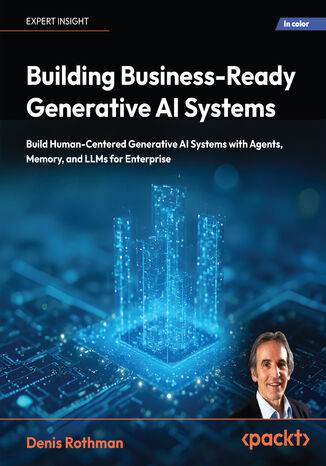
Denis Rothman
Standalone LLMs no longer deliver sufficient business value on their own. This guide moves beyond basic chatbots, showing you how to build agentic, ChatGPT-grade systems capable of sophisticated semantic and sentiment analysis, powered by context engineering.You'll design AI controller architectures with multi-user memory retention to dynamically adapt your system to diverse user and system inputs. You'll architect a Retrieval-Augmented Generation system with Pinecone to combine instruction-driven scenarios. Through context engineering, you’ll minimize token usage, maximize response quality, and create systems that reason across complex tasks with precision. You'll enhance your system’s intelligence with multimodal capabilities—image generation, voice interactions, and machine-driven reasoning—leveraging Chain-of-Thought and context chaining to address cross-domain automation challenges. You'll also integrate OpenAI’s suite and DeepSeek-R1 without disrupting your existing GenAISys ecosystem.With context engineering as the backbone, every step becomes a deliberate act of shaping model behavior. Your GenAISys will apply neuroscience-inspired insights to marketing strategies, predict human mobility, integrate smoothly into human workflows, and connect to live external data, all wrapped in a polished, investor-ready interface.
François Voron
FastAPI is a web framework for building APIs with Python 3.6 and its later versions based on standard Python-type hints. With this book, you’ll be able to create fast and reliable data science API backends using practical examples.This book starts with the basics of the FastAPI framework and associated modern Python programming language concepts. You'll be taken through all the aspects of the framework, including its powerful dependency injection system and how you can use it to communicate with databases, implement authentication and integrate machine learning models. Later, you’ll cover best practices relating to testing and deployment to run a high-quality and robust application. You’ll also be introduced to the extensive ecosystem of Python data science packages. As you progress, you’ll learn how to build data science applications in Python using FastAPI. The book also demonstrates how to develop fast and efficient machine learning prediction backends and test them to achieve the best performance. Finally, you’ll see how to implement a real-time face detection system using WebSockets and a web browser as a client.By the end of this FastAPI book, you’ll have not only learned how to implement Python in data science projects but also how to maintain and design them to meet high programming standards with the help of FastAPI.
Will Girten
With so many tools to choose from in today’s data engineering development stack as well as operational complexity, this often overwhelms data engineers, causing them to spend less time gleaning value from their data and more time maintaining complex data pipelines. Guided by a lead specialist solutions architect at Databricks with 10+ years of experience in data and AI, this book shows you how the Delta Live Tables framework simplifies data pipeline development by allowing you to focus on defining input data sources, transformation logic, and output table destinations.This book gives you an overview of the Delta Lake format, the Databricks Data Intelligence Platform, and the Delta Live Tables framework. It teaches you how to apply data transformations by implementing the Databricks medallion architecture and continuously monitor the data quality of your pipelines. You’ll learn how to handle incoming data using the Databricks Auto Loader feature and automate real-time data processing using Databricks workflows. You’ll master how to recover from runtime errors automatically.By the end of this book, you’ll be able to build a real-time data pipeline from scratch using Delta Live Tables, leverage CI/CD tools to deploy data pipeline changes automatically across deployment environments, and monitor, control, and optimize cloud costs.
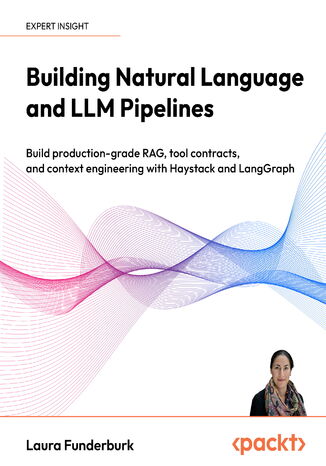
Laura Funderburk
Modern LLM applications often break in production due to brittle pipelines, loose tool definitions, and noisy context. This book shows you how to build production-ready, context-aware systems using Haystack and LangGraph. You’ll learn to design deterministic pipelines with strict tool contracts and deploy them as microservices. Through structured context engineering, you’ll orchestrate reliable agent workflows and move beyond simple prompt-based interactions. You'll start by understanding LLM behavior—tokens, embeddings, and transformer models—and see how prompt engineering has evolved into a full context engineering discipline. Then, you'll build retrieval-augmented generation (RAG) pipelines with retrievers, rankers, and custom components using Haystack’s graph-based architecture. You’ll also create knowledge graphs, synthesize unstructured data, and evaluate system behavior using Ragas and Weights & Biases. In LangGraph, you’ll orchestrate agents with supervisor-worker patterns, typed state machines, retries, fallbacks, and safety guardrails. By the end of the book, you’ll have the skills to design scalable, testable LLM pipelines and multi-agent systems that remain robust as the AI ecosystem evolves.*Email sign-up and proof of purchase required
Abdulazeez
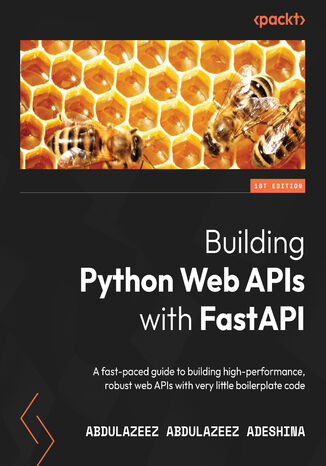
RESTful web services are commonly used to create APIs for web-based applications owing to their light weight and high scalability. This book will show you how FastAPI, a high-performance web framework for building RESTful APIs in Python, allows you to build robust web APIs that are simple and intuitive and makes it easy to build quickly with very little boilerplate code.This book will help you set up a FastAPI application in no time and show you how to use FastAPI to build a REST API that receives and responds to user requests. You’ll go on to learn how to handle routing and authentication while working with databases in a FastAPI application. The book walks you through the four key areas: building and using routes for create, read, update, and delete (CRUD) operations; connecting the application to SQL and NoSQL databases; securing the application built; and deploying your application locally or to a cloud environment.By the end of this book, you’ll have developed a solid understanding of the FastAPI framework and be able to build and deploy robust REST APIs.
Jalem Raj Rohit
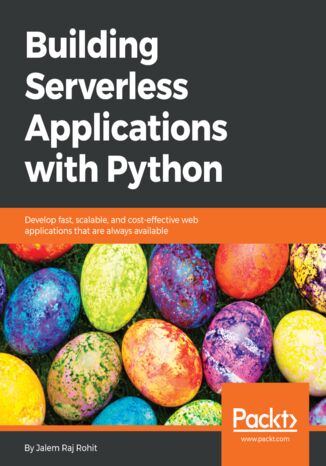
Serverless architectures allow you to build and run applications and services without having to manage the infrastructure. Many companies have adopted this architecture to save cost and improve scalability. This book will help you design serverless architectures for your applications with AWS and Python.The book is divided into three modules. The first module explains the fundamentals of serverless architecture and how AWS lambda functions work. In the next module, you will learn to build, release, and deploy your application to production. You will also learn to log and test your application. In the third module, we will take you through advanced topics such as building a serverless API for your application. You will also learn to troubleshoot and monitor your app and master AWS lambda programming concepts with API references. Moving on, you will also learn how to scale up serverless applications and handle distributed serverless systems in production.By the end of the book, you will be equipped with the knowledge required to build scalable and cost-efficient Python applications with a serverless framework.
Abdulwahid Abdulhaque Barguzar
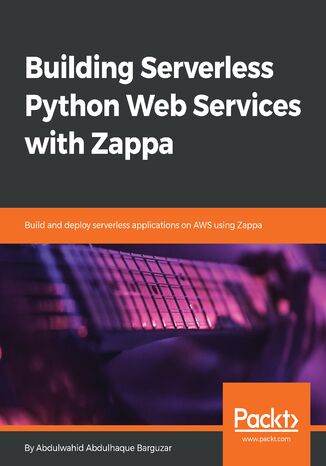
Serverless applications are becoming very popular these days, not just because they save developers the trouble of managing the servers, but also because they provide several other benefits such as cutting heavy costs and improving the overall performance of the application.This book will help you build serverless applications in a quick and efficient way. We begin with an introduction to AWS and the API gateway, the environment for serverless development, and Zappa. We then look at building, testing, and deploying apps in AWS with three different frameworks--Flask, Django, and Pyramid. Setting up a custom domain along with SSL certificates and configuring them with Zappa is also covered. A few advanced Zappa settings are also covered along with securing Zappa with AWS VPC.By the end of the book you will have mastered using three frameworks to build robust and cost-efficient serverless apps in Python.
Clean Code in Python. Refactor your legacy code base
Mariano Anaya
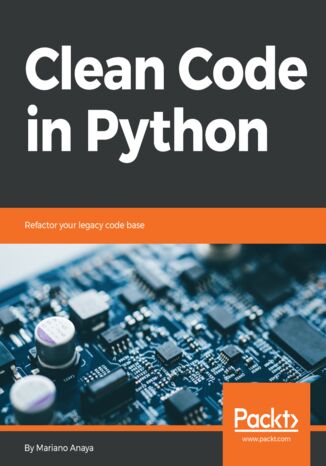
Python is currently used in many different areas such as software construction, systems administration, and data processing. In all of these areas, experienced professionals can find examples of inefficiency, problems, and other perils, as a result of bad code. After reading this book, readers will understand these problems, and more importantly, how to correct them. The book begins by describing the basic elements of writing clean code and how it plays an important role in Python programming. You will learn about writing efficient and readable code using the Python standard library and best practices for software design. You will learn to implement the SOLID principles in Python and use decorators to improve your code. The book delves more deeply into object oriented programming in Python and shows you how to use objects with descriptors and generators. It will also show you the design principles of software testing and how to resolve software problems by implementing design patterns in your code. In the final chapter we break down a monolithic application to a microservice one, starting from the code as the basis for a solid platform. By the end of the book, you will be proficient in applying industry approved coding practices to design clean, sustainable and readable Python code.