
Python
W kategorii Python zostały zebrane podręczniki poruszające tematykę programowania z zastosowaniem praktycznie niezależnego sprzętowo, dostępnego na licencji Open Source języka. Książki przedstawią Wam wszechstronności i elastyczności Pythona a także różne typy tworzenia kodu poprzez programowanie strukturalne, obiektowe czy funkcjonalne.
Nauczycie się tworzyć aplikacje sieciowe o dowolnym przeznaczeniu, komunikujące się z systemami operacyjnymi, lub korzystające z baz danych. Techniki analizy składni, przetwarzanie tekstu czy rozłożenie obciążenia programu na wiele wątków i procesów przestanie być problematyczne.
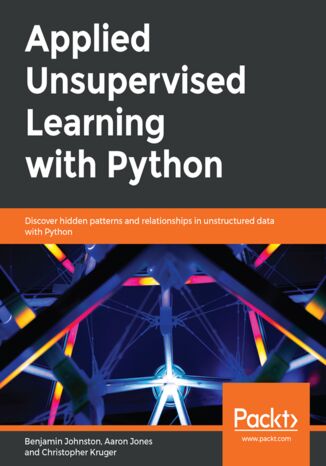
Benjamin Johnston, Aaron Jones , Christopher Kruger
Unsupervised learning is a useful and practical solution in situations where labeled data is not available.Applied Unsupervised Learning with Python guides you in learning the best practices for using unsupervised learning techniques in tandem with Python libraries and extracting meaningful information from unstructured data. The book begins by explaining how basic clustering works to find similar data points in a set. Once you are well-versed with the k-means algorithm and how it operates, you’ll learn what dimensionality reduction is and where to apply it. As you progress, you’ll learn various neural network techniques and how they can improve your model. While studying the applications of unsupervised learning, you will also understand how to mine topics that are trending on Twitter and Facebook and build a news recommendation engine for users. Finally, you will be able to put your knowledge to work through interesting activities such as performing a Market Basket Analysis and identifying relationships between different products.By the end of this book, you will have the skills you need to confidently build your own models using Python.
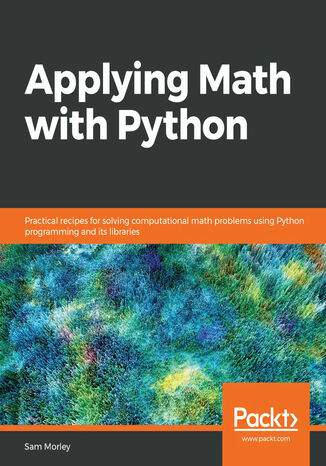
Sam Morley
Python, one of the world's most popular programming languages, has a number of powerful packages to help you tackle complex mathematical problems in a simple and efficient way. These core capabilities help programmers pave the way for building exciting applications in various domains, such as machine learning and data science, using knowledge in the computational mathematics domain.The book teaches you how to solve problems faced in a wide variety of mathematical fields, including calculus, probability, statistics and data science, graph theory, optimization, and geometry. You'll start by developing core skills and learning about packages covered in Python’s scientific stack, including NumPy, SciPy, and Matplotlib. As you advance, you'll get to grips with more advanced topics of calculus, probability, and networks (graph theory). After you gain a solid understanding of these topics, you'll discover Python's applications in data science and statistics, forecasting, geometry, and optimization. The final chapters will take you through a collection of miscellaneous problems, including working with specific data formats and accelerating code.By the end of this book, you'll have an arsenal of practical coding solutions that can be used and modified to solve a wide range of practical problems in computational mathematics and data science.
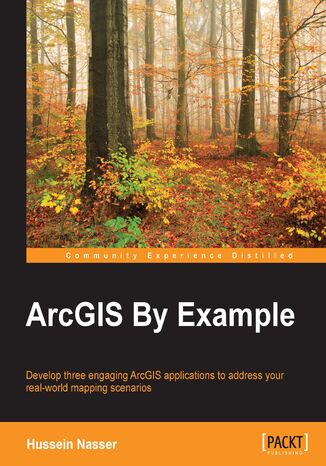
Hussein Nasser
ArcGIS is a geographic information system (GIS) for working with maps and geographic information. It is considered the turnkey solution to creating and sharing interactive maps. ArcGIS is designed to work the way you work. With nothing to install and set up, ArcGIS helps you make your work productive from day one.The book covers the design and development of three ArcGIS applications to guide the readers in crafting their own GIS solution as per their requirements. The book begins by giving you a refresher on the concepts of ArcGIS. Without wasting any time, you’ll begin with developing your first ArcGIS application. You will be developing a cell tower analysis tool. Following this, you will be guided through mapping signal strength and real - time manoeuvring in your GIS system. You will then move on to the second application of the book: a restaurant mapping system. The application will allow tourists to browse restaurants on a map, according to their preferences. Next, you will learn how to work with reviews and ratings and also cover some of the advanced searching options offered by ArcGIS. You will then make use of advanced ArcObjects to develop your third application: an excavation planning manager. The book will conclude by teaching you how work out excavation cost calculations and also saving and retrieving your excavation designs.
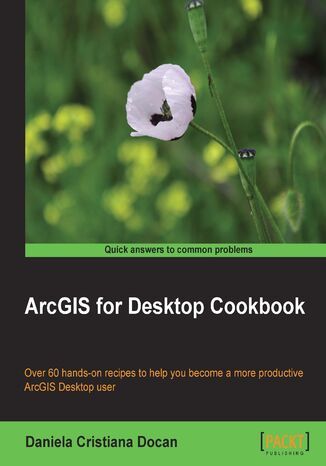
Daniela C Docan
This book is a good companion to get you quickly acquainted with everything you need to increase your productivity with the ArcGIS Desktop.It would be helpful to have a bit of familiarity with basic GIS concepts.If you have no previous experience with ArcGIS, this book will still be helpful for you because it will help you catch up to the acquainted users from a practical point of view.
Tripp Corbin, GISP
ArcGIS is Esri's catalog of GIS applications with powerful tools for visualizing, maintaining, and analyzing data. ArcGIS makes use of the modern ribbon interface and 64-bit processing to increase the speed and efficiency of using GIS. It allows users to create amazing maps in both 2D and 3D quickly and easily. If you want to gain a thorough understanding of the various data formats that can be used in ArcGIS Pro and shared via ArcGIS Online, then this book is for you. Beginning with a refresher on ArcGIS Pro and how to work with projects, this book will quickly take you through recipes about using various data formats supported by the tool. You will learn the limits of each format, such as Shapefiles, Geodatabase, and CAD files, and learn how to link tables from outside sources to existing GIS data to expand the amount of data that can be used in ArcGIS. You'll learn methods for editing 2D and 3D data using ArcGIS Pro and how topology can be used to ensure data integrity. Lastly the book will show you how data and maps can be shared via ArcGIS Online and used with web and mobile applications.
Architektura aplikacji w Pythonie. TDD, DDD i rozwój mikrousług reaktywnych
Harry Percival, Bob Gregory
Architektura aplikacji w Pythonie. TDD, DDD i rozwój mikrousług reaktywnych Python zyskuje coraz większą popularność i jest wykorzystywany do tworzenia bardzo różnych aplikacji, jednak projektowanie dużych, niezawodnych systemów w tym języku bywa wyzwaniem. Rozwijanie złożonych systemów o wysokiej jakości wymaga zastosowania odpowiedniej architektury. Trudno w Pythonie stosować takie wysokopoziomowe wzorce projektowe jak architektura sześciokątna, architektura oparta na zdarzeniach czy wzorce zalecane dla projektowania dziedzinowego (DDD). Sytuacji nie poprawia również to, że klasyczna literatura dotycząca metod zarządzania złożonością aplikacji zawiera przykłady kodu napisanego w Javie lub C#. Programiści Pythona często więc uznają takie książki za mało przydatne w swojej pracy. Ten praktyczny przewodnik przybliży projektantom pracującym w Pythonie sprawdzone wzorce architektury, które ułatwiają zapanowanie nad złożonością aplikacji i pozwalają najlepiej wykorzystać zestawy testów. Prezentację poszczególnych wzorców architektury oparto na przykładowej, stopniowo rozbudowywanej aplikacji. Podejście to pozwoliło na pokazanie zalet metodyki TDD. Z kolei w rozdziałach poświęconych modelowaniu dziedzinowemu zwrócono uwagę na unikanie jakichkolwiek zależności zewnętrznych przy równoczesnym zapewnieniu integralności danych. Wśród ciekawszych koncepcji warto wskazać wykorzystywanie zdarzeń w roli wzorca integracji usług w architekturze mikrousługowej. Niejako przy okazji zaprezentowano praktyczne strony stosowania kilku frameworków i technologii Pythona, między innymi Flask, SQLAlchemy, pytest, Docker i Redis. W tej książce między innymi: modelowanie dziedzinowe i stosowanie wzorców DDD jednostki, obiekty wartości i agregaty w architekturze domenowej tworzenie modeli bez zbędnych zależności zdarzenia, polecenia i szyna wiadomości wzorce architektury zdarzeniowej i mikrousług reaktywnych Architektura nowoczesnych aplikacji w Pythonie: rozwiązania dla poważnych systemów!
ArcPy and ArcGIS. Automating ArcGIS for Desktop and ArcGIS Online with Python - Second Edition
Silas Toms, Jerry Davis, Dara OBeirne
ArcGIS allows for complex analyses of geographic information. The ArcPy module is used to script these ArcGIS analyses, providing a productive way to perform geo-analyses and automate map production.The second edition of the book focuses on new Python tools, such as the ArcGIS API for Python. Using Python, this book will guide you from basic Python scripting to advanced ArcPy script tools.This book starts off with setting up your Python environment for ArcGIS automation. Then you will learn how to output maps using ArcPy in MXD and update feature class in a geodatabase using arcpy and ArcGIS Online. Next, you will be introduced to ArcREST library followed by examples on querying, updating and manipulating ArcGIS Online feature services. Further, you will be enabling your scripts in the browser and directly interacting with ArcGIS Online using Jupyter notebook. Finally, you can learn ways to use of ArcPy to control ArcGIS Enterprise and explore topics on deployments, data quality assurances, data updates, version control, and editing safeguards.By the end of the book, you will be equipped with the knowledge required to create automated analysis with administration reducing the time-consuming nature of GIS.
Silas Toms
If you are a GIS student or professional who needs an understanding of how to use ArcPy to reduce repetitive tasks and perform analysis faster, this book is for you. It is also a valuable book for Python programmers who want to understand how to automate geospatial analyses.
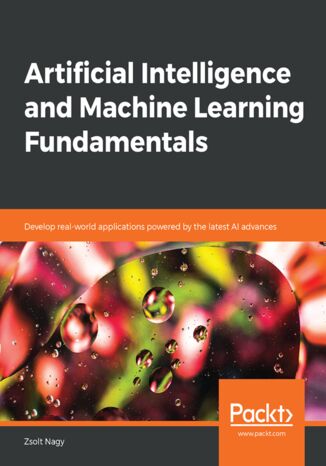
Zsolt Nagy
Machine learning and neural networks are pillars on which you can build intelligent applications. Artificial Intelligence and Machine Learning Fundamentals begins by introducing you to Python and discussing AI search algorithms. You will cover in-depth mathematical topics, such as regression and classification, illustrated by Python examples.As you make your way through the book, you will progress to advanced AI techniques and concepts, and work on real-life datasets to form decision trees and clusters. You will be introduced to neural networks, a powerful tool based on Moore's law.By the end of this book, you will be confident when it comes to building your own AI applications with your newly acquired skills!
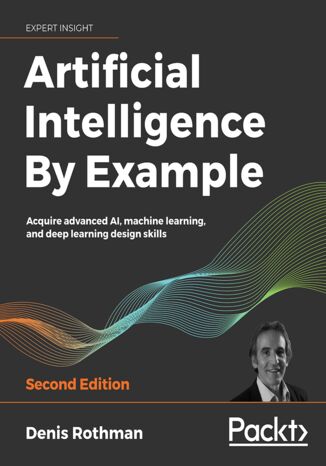
Denis Rothman
AI has the potential to replicate humans in every field. Artificial Intelligence By Example, Second Edition serves as a starting point for you to understand how AI is built, with the help of intriguing and exciting examples.This book will make you an adaptive thinker and help you apply concepts to real-world scenarios. Using some of the most interesting AI examples, right from computer programs such as a simple chess engine to cognitive chatbots, you will learn how to tackle the machine you are competing with. You will study some of the most advanced machine learning models, understand how to apply AI to blockchain and Internet of Things (IoT), and develop emotional quotient in chatbots using neural networks such as recurrent neural networks (RNNs) and convolutional neural networks (CNNs).This edition also has new examples for hybrid neural networks, combining reinforcement learning (RL) and deep learning (DL), chained algorithms, combining unsupervised learning with decision trees, random forests, combining DL and genetic algorithms, conversational user interfaces (CUI) for chatbots, neuromorphic computing, and quantum computing.By the end of this book, you will understand the fundamentals of AI and have worked through a number of examples that will help you develop your AI solutions.
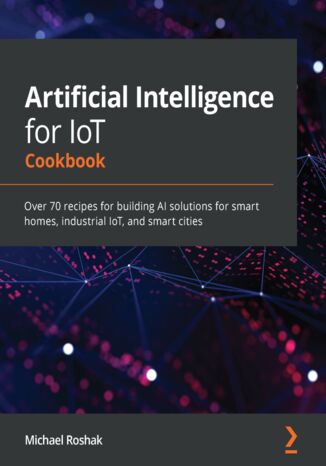
Michael Roshak
Artificial intelligence (AI) is rapidly finding practical applications across a wide variety of industry verticals, and the Internet of Things (IoT) is one of them. Developers are looking for ways to make IoT devices smarter and to make users’ lives easier. With this AI cookbook, you’ll be able to implement smart analytics using IoT data to gain insights, predict outcomes, and make informed decisions, along with covering advanced AI techniques that facilitate analytics and learning in various IoT applications.Using a recipe-based approach, the book will take you through essential processes such as data collection, data analysis, modeling, statistics and monitoring, and deployment. You’ll use real-life datasets from smart homes, industrial IoT, and smart devices to train and evaluate simple to complex models and make predictions using trained models. Later chapters will take you through the key challenges faced while implementing machine learning, deep learning, and other AI techniques, such as natural language processing (NLP), computer vision, and embedded machine learning for building smart IoT systems. In addition to this, you’ll learn how to deploy models and improve their performance with ease.By the end of this book, you’ll be able to package and deploy end-to-end AI apps and apply best practice solutions to common IoT problems.
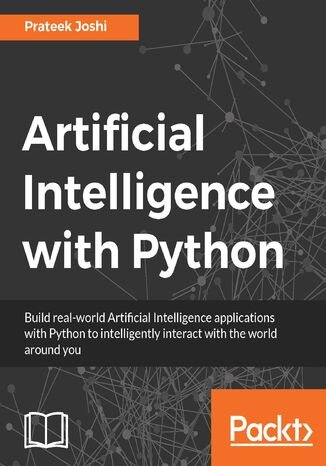
Prateek Joshi
Artificial Intelligence is becoming increasingly relevant in the modern world. By harnessing the power of algorithms, you can create apps which intelligently interact with the world around you, building intelligent recommender systems, automatic speech recognition systems and more.Starting with AI basics you'll move on to learn how to develop building blocks using data mining techniques. Discover how to make informed decisions about which algorithms to use, and how to apply them to real-world scenarios. This practical book covers a range of topics including predictive analytics and deep learning.
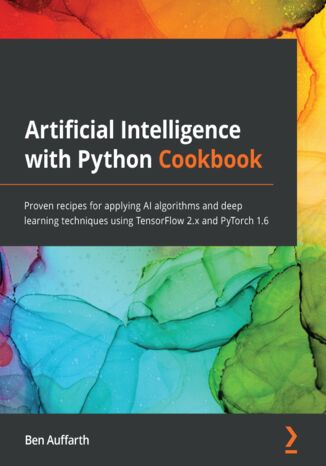
Ritesh Kumar, Ben Auffarth
Artificial intelligence (AI) plays an integral role in automating problem-solving. This involves predicting and classifying data and training agents to execute tasks successfully. This book will teach you how to solve complex problems with the help of independent and insightful recipes ranging from the essentials to advanced methods that have just come out of research.Artificial Intelligence with Python Cookbook starts by showing you how to set up your Python environment and taking you through the fundamentals of data exploration. Moving ahead, you’ll be able to implement heuristic search techniques and genetic algorithms. In addition to this, you'll apply probabilistic models, constraint optimization, and reinforcement learning. As you advance through the book, you'll build deep learning models for text, images, video, and audio, and then delve into algorithmic bias, style transfer, music generation, and AI use cases in the healthcare and insurance industries. Throughout the book, you’ll learn about a variety of tools for problem-solving and gain the knowledge needed to effectively approach complex problems.By the end of this book on AI, you will have the skills you need to write AI and machine learning algorithms, test them, and deploy them for production.
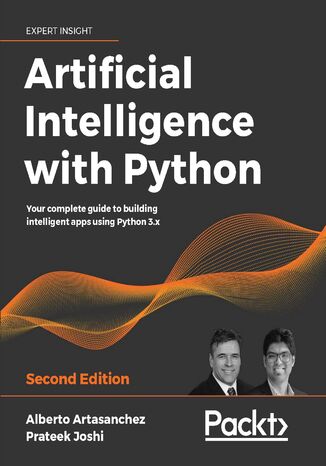
Alberto Artasanchez, Prateek Joshi
Artificial Intelligence with Python, Second Edition is an updated and expanded version of the bestselling guide to artificial intelligence using the latest version of Python 3.x. Not only does it provide you an introduction to artificial intelligence, this new edition goes further by giving you the tools you need to explore the amazing world of intelligent apps and create your own applications.This edition also includes seven new chapters on more advanced concepts of Artificial Intelligence, including fundamental use cases of AI; machine learning data pipelines; feature selection and feature engineering; AI on the cloud; the basics of chatbots; RNNs and DL models; and AI and Big Data.Finally, this new edition explores various real-world scenarios and teaches you how to apply relevant AI algorithms to a wide swath of problems, starting with the most basic AI concepts and progressively building from there to solve more difficult challenges so that by the end, you will have gained a solid understanding of, and when best to use, these many artificial intelligence techniques.
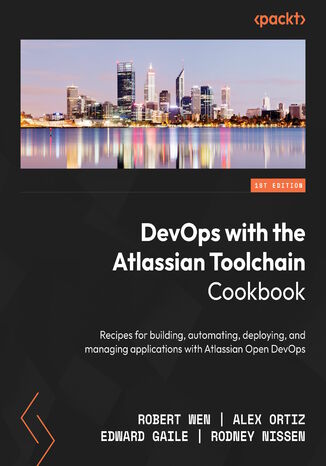
Robert Wen, Alex Ortiz, Edward Gaile, Rodney...
Implementing DevOps practices and toolchains for automated testing and deployment can accelerate product development with minimal errors in the production environment. However, creating DevOps toolchains by integrating tools from various vendors presents challenges for both administrators and developers. Written by four well-known experts from the Atlassian community, this book addresses the complexities of DevOps toolchain creation and integration by leveraging Atlassian’s Open DevOps solution.Starting with a holistic overview of the DevOps and Atlassian Open DevOps solution, you’ll learn to integrate Jira with other tools. You’ll then find out how to create and integrate a CI/CD pipeline in Bitbucket for automated testing and deployment to Docker containers. With step-by-step guidance, you’ll connect Jira and Bitbucket with other tools, such as Snyk for security and SonarQube for testing, to form an extensive toolchain. You’ll also learn how Compass uses CheckOps for observability and how to use Confluence for documentation and reporting. Finally, you’ll leverage Opsgenie’s ChatOps functionality to enhance collaboration between developers and operations teams.By the end of this book, you’ll be able to establish your DevOps toolchain by integrating Atlassian tools to automate and optimize the software development lifecycle and beyond.
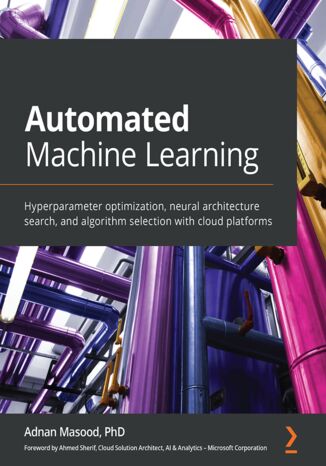
Adnan Masood
Every machine learning engineer deals with systems that have hyperparameters, and the most basic task in automated machine learning (AutoML) is to automatically set these hyperparameters to optimize performance. The latest deep neural networks have a wide range of hyperparameters for their architecture, regularization, and optimization, which can be customized effectively to save time and effort.This book reviews the underlying techniques of automated feature engineering, model and hyperparameter tuning, gradient-based approaches, and much more. You'll discover different ways of implementing these techniques in open source tools and then learn to use enterprise tools for implementing AutoML in three major cloud service providers: Microsoft Azure, Amazon Web Services (AWS), and Google Cloud Platform. As you progress, you’ll explore the features of cloud AutoML platforms by building machine learning models using AutoML. The book will also show you how to develop accurate models by automating time-consuming and repetitive tasks in the machine learning development lifecycle.By the end of this machine learning book, you’ll be able to build and deploy AutoML models that are not only accurate, but also increase productivity, allow interoperability, and minimize feature engineering tasks.