
Python
W kategorii Python zostały zebrane podręczniki poruszające tematykę programowania z zastosowaniem praktycznie niezależnego sprzętowo, dostępnego na licencji Open Source języka. Książki przedstawią Wam wszechstronności i elastyczności Pythona a także różne typy tworzenia kodu poprzez programowanie strukturalne, obiektowe czy funkcjonalne.
Nauczycie się tworzyć aplikacje sieciowe o dowolnym przeznaczeniu, komunikujące się z systemami operacyjnymi, lub korzystające z baz danych. Techniki analizy składni, przetwarzanie tekstu czy rozłożenie obciążenia programu na wiele wątków i procesów przestanie być problematyczne.
Pietro Libro, Artem Lajko
This book covers actionable GitOps practices for automated, secure Kubernetes deployments with industry-tested scenarios. You’ll be able to leverage GitOps to tackle cloud-native software delivery challenges, such as preventing data drifts between systems and Git repositories, and ensuring rapid, error-free deployments.The book introduces GitOps core concepts and principles and then delves into integrating version control and GitOps tools such as Argo CD, Flux CD, Helm, and Kustomize with Kubernetes. You’ll learn about scaling GitOps across multiple clusters, architectural designs for efficient cloud-native operations, and the cultural transformation needed to support GitOps adoption within an organization. As you progress, you’ll be able to automate infrastructure and implement CI/CD processes on OpenShift, MS Azure, and AWS platforms using GitOps, Terraform, OpenTofu, and Argo CD. You’ll also explore examples and best practices for integrating observability, enhancing security, managing financial operations (FinOps), and future trends such as AI and sustainability in GitOps.By the end of this book, you’ll have gained the skills you need to apply GitOps strategies for robust Kubernetes and cloud deployments, thereby boosting your productivity and efficiency.
Implementowanie Czystej Architektury w Pythonie
Sebastian Buczyński
Zaawansowane programowanie zaczyna się tam, gdzie kończy się framework Praca programisty wydaje się dziś znacznie prostsza niż kilkanaście lat temu. Wydaje się taka, ponieważ ma on dostęp do niezliczonych bibliotek przypisanych do języków programowania. Gdy pojawia się problem, sięga do biblioteki ― i po sprawie. Problem rozwiązany, zgadza się? I tak, i nie. Owszem, w wypadku prostych projektów wystarczy bazowa znajomość zasad programowania, podstawowa znajomość danego języka i wiedza na temat tego, co zawiera konkretna biblioteka. Tak jednak działa to jedynie przy nieskomplikowanych aplikacjach. Bez wątpienia dziś łatwiej zacząć programować i szybciej można uzyskać mierzalne efekty, ale... ...prawdziwe programowanie zaczyna się poziom wyżej. Na etapie większych projektów. Bo duże systemy, niezależnie od języka, w jakim zostały napisane, zawsze są trudne ― zarówno w rozwijaniu, jak i w utrzymaniu. Książka, którą trzymasz w ręku, została napisana ze świadomością tej programistycznej prawdy. Adresowana do średnio zaawansowanych programistów zajmujących się rozwojem aplikacji internetowych, stanowi kompletny przewodnik po implementacji czystej architektury. Znajdziesz tu także opisy wielu technik, które pomogą Ci zapanować nad projektami rozwijanymi od dłuższego czasu, takich jak strategia testowania czy modularyzacja. Dzięki ich opanowaniu będzie Ci o wiele łatwiej dbać o poprawność funkcjonowania systemów, nad którymi sprawujesz programistyczną pieczę.
Infrastructure as Code with Pulumi. Streamlining Cloud Deployments Using Code
Adora Nwodo
Infrastructure Automation with Pulumi is your ultimate guide to mastering infrastructure as code across multi-cloud environments. This comprehensive resource walks you through setting up Pulumi, deploying across major cloud providers, and confidently scaling complex architectures. Starting with the fundamentals of infrastructure as code, you'll set up Pulumi, learn its core concepts like resources, stacks, and state management, and build your first infrastructure projects. As you progress, you'll explore advanced techniques for deploying on AWS, Azure, Google Cloud, and Kubernetes. You'll also integrate Pulumi into CI/CD pipelines for continuous deployment and automate cloud infrastructure management. You'll dive deep into Pulumi's provider ecosystem, tackle real-world challenges like multi-region, multi-cloud, and hybrid deployments, and ensure compliance using Policy as Code techniques. With practical examples, real-world scenarios, and hands-on exercises, you'll gain the skills to confidently build scalable, secure, and efficient cloud infrastructure using Pulumi. By the end of this book, you'll have mastered Pulumi's advanced capabilities, applied best practices for maintainable and testable infrastructure code, and be ready to migrate existing projects from other IaC tools to Pulumi seamlessly.
Matthew Topol, Wes McKinney
Apache Arrow is an open source, columnar in-memory data format designed for efficient data processing and analytics. This book harnesses the author’s 15 years of experience to show you a standardized way to work with tabular data across various programming languages and environments, enabling high-performance data processing and exchange.This updated second edition gives you an overview of the Arrow format, highlighting its versatility and benefits through real-world use cases. It guides you through enhancing data science workflows, optimizing performance with Apache Parquet and Spark, and ensuring seamless data translation. You’ll explore data interchange and storage formats, and Arrow's relationships with Parquet, Protocol Buffers, FlatBuffers, JSON, and CSV. You’ll also discover Apache Arrow subprojects, including Flight, SQL, Database Connectivity, and nanoarrow. You’ll learn to streamline machine learning workflows, use Arrow Dataset APIs, and integrate with popular analytical data systems such as Snowflake, Dremio, and DuckDB. The latter chapters provide real-world examples and case studies of products powered by Apache Arrow, providing practical insights into its applications.By the end of this book, you’ll have all the building blocks to create efficient and powerful analytical services and utilities with Apache Arrow.
Inteligentna sieć. Algorytmy przyszłości. Wydanie II
Douglas McIlwraith, Haralambos Marmanis, Dmitry Babenko
Określenie „inteligentna sieć” może przywodzić na myśl futurystyczną wizję maszyn przejmujących kontrolę nad światem i niszczących ludzkość, jednak w rzeczywistości jest związane z rozwojem technologii. Związane jest z powstawaniem oprogramowania, które potrafi się uczyć i reagować na zachowania użytkowników. Oznacza też projektowanie i implementację inteligencji maszynowej. Inteligentna sieć rozwija się tu i teraz — znajomość zagadnień uczenia maszynowego i budowy inteligentnych algorytmów staje się bardzo potrzebna inżynierom oprogramowania! Niniejsza książka jest przeznaczona dla osób, które chcą projektować inteligentne algorytmy, a przy tym mają podstawy z zakresu programowania, matematyki i statystyki. Przedstawiono tu schematy projektowe i praktyczne przykłady rozwiązań. Opisano algorytmy, które przetwarzają strumienie danych pochodzące z internetu, a także systemy rekomendacji i klasyfikowania danych za pomocą algorytmów statystycznych, sieci neuronowych i uczenia głębokiego. Mimo że przyswojenie tych zagadnień wymaga wysiłku, bardzo ułatwi implementację nowoczesnych, inteligentnych aplikacji! W tej książce między innymi: wprowadzenie do problemów algorytmów inteligentnych systemy rekomendacji i filtrowanie kolaboratywne wykorzystanie regresji logistycznej do wykrywania oszustw uczenie głębokie, uczenie na żywo i renesans sieci neuronowych podejmowanie decyzji perspektywy inteligentnej sieci Inteligentny algorytm wyławia perły w strumieniach danych! Dr Douglas McIlwraith jest ekspertem w dziedzinie uczenia maszynowego. Zajmuje się analizą danych w londyńskiej agencji reklamowej. Prowadził badania w dziedzinach systemów rozproszonych, robotyki i zabezpieczeń. Dr Haralambos Marmanis jest pionierem w obszarze technik uczenia maszynowego w rozwiązaniach przemysłowych. Od 25 lat rozwija profesjonalne oprogramowanie. Dmitry Babenko projektuje złożone systemy dla firm z takich branż, jak bankowość, ubezpieczenia, zarządzanie łańcuchem dostaw i analityka biznesowa.
Abha Belorkar , Sharath Chandra Guntuku ,...
With so much data being continuously generated, developers, who can present data as impactful and interesting visualizations, are always in demand. Interactive Data Visualization with Python sharpens your data exploration skills, tells you everything there is to know about interactive data visualization in Python.You'll begin by learning how to draw various plots with Matplotlib and Seaborn, the non-interactive data visualization libraries. You'll study different types of visualizations, compare them, and find out how to select a particular type of visualization to suit your requirements. After you get a hang of the various non-interactive visualization libraries, you'll learn the principles of intuitive and persuasive data visualization, and use Bokeh and Plotly to transform your visuals into strong stories. You'll also gain insight into how interactive data and model visualization can optimize the performance of a regression model.By the end of the course, you'll have a new skill set that'll make you the go-to person for transforming data visualizations into engaging and interesting stories.
Colin Dow
Renowned for its versatility, affordability, and active community support, Raspberry Pi is at the forefront of IoT development. Unlock the vast potential of Raspberry Pi and Raspberry Pi Pico by learning how to develop practical projects with this updated edition of Internet of Things Programming Projects.Written by an expert programmer who’s worked for some of Canada’s largest companies, this book starts with foundational concepts and practical exercises such as building a basic weather indicator, and gradually progressed toward more complex projects. You’ll get to grips with coding nuances and web service integrations that will help you create a sophisticated IoT robot car equipped with motor control, wireless communication, and sensor amalgamation. The book also explores LoRa technology, a game-changer for long-range, low-power communication in your projects, and delves into robot car development by implementing the Robot Operating System (ROS) for advanced control and coordination.Through clear, step-by-step instructions and insightful explanations, you’ll gain the skills and confidence to develop innovative IoT solutions for real-world applications. By the end of the book, you’ll have mastered the intricacies of IoT programming, from harnessing Raspberry Pi's capabilities to seamlessly integrating external components.
Colin Dow
The Internet of Things (IOT) has managed to attract the attention of researchers and tech enthusiasts, since it powerfully combines classical networks with instruments and devices.In Internet of Things Programming Projects, we unleash the power of Raspberry Pi and Python to create engaging projects. In the first part of the book, you’ll be introduced to the Raspberry Pi, learn how to set it up, and then jump right into Python programming. Then, you’ll dive into real-world computing by creating a“Hello World” app using flash LEDs.As you make your way through the chapters, you’ll go back to an age when analog needle meters ruled the world of data display. You’ll learn to retrieve weather data from a web service and display it on an analog needle meter, and build a home security system using the Raspberry Pi. The next project has a modern twist, where we employ the Raspberry Pi to send a signal to a web service that will send you a text when someone is at the door. In the final project, you take what you've learned from the previous two projects and create an IoT robot car that you can use to monitor what your pets are up to when you are away.By the end of this book, you will be well versed in almost every possible way to make your IoT projects stand out.
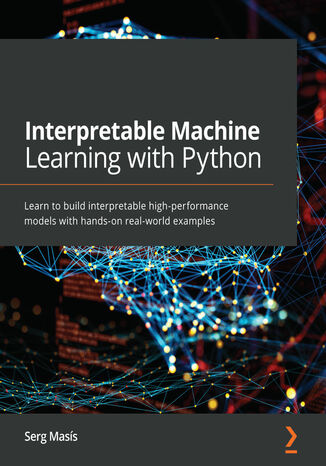
Serg Masís
Do you want to gain a deeper understanding of your models and better mitigate poor prediction risks associated with machine learning interpretation? If so, then Interpretable Machine Learning with Python deserves a place on your bookshelf.We’ll be starting off with the fundamentals of interpretability, its relevance in business, and exploring its key aspects and challenges. As you progress through the chapters, you'll then focus on how white-box models work, compare them to black-box and glass-box models, and examine their trade-off. You’ll also get you up to speed with a vast array of interpretation methods, also known as Explainable AI (XAI) methods, and how to apply them to different use cases, be it for classification or regression, for tabular, time-series, image or text. In addition to the step-by-step code, this book will also help you interpret model outcomes using examples. You’ll get hands-on with tuning models and training data for interpretability by reducing complexity, mitigating bias, placing guardrails, and enhancing reliability. The methods you’ll explore here range from state-of-the-art feature selection and dataset debiasing methods to monotonic constraints and adversarial retraining.By the end of this book, you'll be able to understand ML models better and enhance them through interpretability tuning.
Introduction to Algorithms. A Comprehensive Guide for Beginners: Unlocking Computational Thinking
Cuantum Technologies LLC
Begin your journey into the fascinating world of algorithms with this comprehensive course. Starting with an introduction to the basics, you will learn about pseudocode and flowcharts, the fundamental tools for representing algorithms. As you progress, you'll delve into the efficiency of algorithms, understanding how to evaluate and optimize them for better performance. The course will also cover various basic algorithm types, providing a solid foundation for further exploration.You will explore specific categories of algorithms, including search and sort algorithms, which are crucial for managing and retrieving data efficiently. You will also learn about graph algorithms, which are essential for solving problems related to networks and relationships. Additionally, the course will introduce you to the data structures commonly used in algorithms.Towards the end, the focus shifts to algorithm design techniques and their real-world applications. You will discover various strategies for creating efficient and effective algorithms and see how these techniques are applied in real-world scenarios. By the end of the course, you will have a thorough understanding of algorithmic principles and be equipped with the skills to apply them in your technical career.
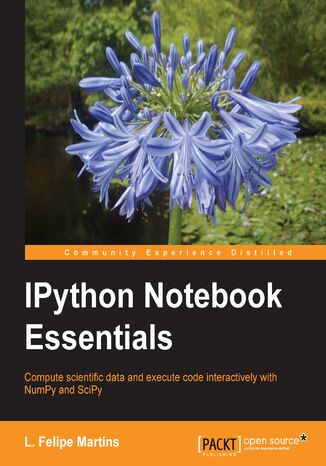
Luiz Felipe Martins
If you are a professional, student, or educator who wants to learn to use IPython Notebook as a tool for technical and scientific computing, visualization, and data analysis, this is the book for you. This book will prove valuable for anyone that needs to do computations in an agile environment.

Jak analizować dane z biblioteką Pandas. Praktyczne wprowadzenie. Wydanie II
Daniel Y. Chen
Wprawny analityk potrafi się posługiwać zbiorami danych o wysokiej dynamice i różnorodności. Działanie to ułatwia biblioteka open source Pandas, która pozwala, przy użyciu języka Python, zrealizować niemal każde zadanie wymagające analizy danych. Pandas może pomóc w zapewnieniu wiarygodności danych, wizualizowaniu ich pod kątem efektywnego podejmowania decyzji i analizowaniu wielu zbiorów danych. Oto drugie, zaktualizowane i uzupełnione wydanie przewodnika po bibliotece Pandas. Dzięki tej przystępnej książce nauczysz się w pełni korzystać z możliwości oferowanych przez bibliotekę, nawet jeśli dopiero zaczynasz przygodę z analizą danych w Pythonie. Naukę rozpoczniesz z użyciem rzeczywistego zbioru danych, aby wkrótce rozwiązywać złożone problemy danologii, takie jak obsługa brakujących danych, stosowanie regularyzacji czy też używanie metod nienadzorowanego uczenia maszynowego do odnajdywania podstawowej struktury w zbiorze danych. Pracę z poszczególnymi zagadnieniami ułatwia to, że zostały one zilustrowane prostymi, ale praktycznymi przykładami. W książce: importowanie i eksportowanie danych, przygotowywanie ich zbiorów tworzenie wykresów za pomocą bibliotek matplotlib, seaborn i Pandas konwersja typów danych skalowanie operacji przetwarzania danych zaawansowane możliwości biblioteki Pandas powiązane z datami i czasem dopasowywanie modeli liniowych przy użyciu bibliotek statsmodels i scikit-learn Analizuj zbiory danych i odkrywaj ukrytą w nich wiedzę!
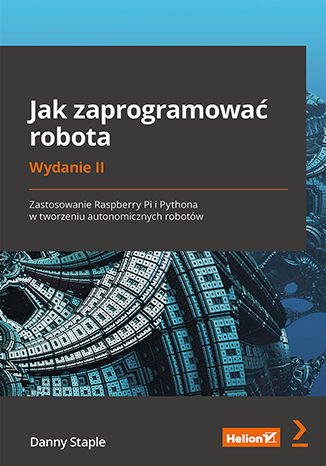
Danny Staple
Coraz więcej złożonych, powtarzalnych zadań powierzamy automatom. Inteligentny robot nigdy się nie znudzi, nie zmęczy i będzie cały czas pracował z zadaną prędkością. Zapewnia nam to odpowiednią wydajność i bardzo dużą dokładność wykonywanych czynności. Oczywiście aby osiągnąć te korzyści, najpierw trzeba robota zbudować i zaprogramować. Warto spróbować własnych sił w tej materii. Wiedza o programowaniu autonomicznych robotów jest coraz cenniejsza na rynku pracy, a samo budowanie robotów i ich programowanie może być niesamowicie interesującym hobby! Ta książka stanowi przystępne wprowadzenie do świata projektantów i budowniczych robotów. Dzięki niej dowiesz się, jak wybrać potrzebne podzespoły, jak je ze sobą połączyć i jak wykorzystywać poszczególne urządzenia wejścia i wyjścia. Posłużysz się w tym celu płytką Raspberry Pi i kompatybilnymi z nią podzespołami. Następnie napiszesz w Pythonie kod, dzięki któremu wzbogacisz swojego robota o sztuczną inteligencję i połączysz się z nim przez Wi-Fi za pomocą smartfonu. Zdobędziesz również wiedzę, w jaki sposób realizować bardziej złożone projekty z zakresu robotyki, a także przygotujesz się, aby zwizualizować, zaprojektować, zbudować i zaprogramować robota według własnego pomysłu. Z tą książką: skonfigurujesz Raspberry Pi pod kątem zbudowania robota ze sztuczną inteligencją podłączysz silniki i czujniki do Raspberry Pi zaprogramujesz inteligentnego robota wykorzystasz technologie rozpoznawania mowy i przetwarzania obrazu nauczysz się sterowania robotem ze sztuczną inteligencją przez Wi-Fi za pomocą smartfonu zaczniesz samodzielnie projektować i budować roboty Zbuduj i zaprogramuj inteligentnego robota!
Języki i paradygmaty programowania. Teoria i praktyka
Feliks Kurp
Czym w rzeczywistości jest programowanie? I jak zacząć programować? Oprogramowanie jest dziś praktycznie wszędzie, a programiści od dawna należą do najbardziej poszukiwanych specjalistów. Na podstawie napisanego przez nich kodu funkcjonują już nie tylko komputery i smartfony. Oprogramowanie steruje sprzętami domowymi, telewizorem czy lodówką. W ramach tak zwanego internetu rzeczy wiele urządzeń technicznych komunikuje się między sobą bez udziału człowieka. Gwałtownie rozwija się sztuczna inteligencja, wymagająca specjalistycznego oprogramowania. Nie dziwi więc, że jego rozwój ciągle przyspiesza. W obliczu tych faktów odpowiedź na pytanie, jakiego języka programowania warto się nauczyć, jest trudna. Nawet dla osoby, która wie, w jaki sposób zamierza w przyszłości korzystać ze swoich informatycznych umiejętności. Autor książki proponuje nieco inne podejście do nauki programowania. Zachęca do zapoznania się z podstawowymi własnościami i możliwymi zastosowaniami kilku odległych od siebie, ale niezwykle ważnych aktualnie języków programowania, takich jak Python, Java SE, JavaScript i Prolog. W trakcie ich poznawania czytelnicy będą mieli okazję zgłębić filozofię programowania, a równocześnie zdobywać praktyczne umiejętności programistyczne na podstawowym poziomie. Starannie dobrany kod pokazuje możliwe zastosowania wybranych języków programowania. Pomoc w nauce stanowią też zadania do samodzielnego rozwiązania.
Ivo Balbaert
The release of Julia 1.0 is now ready to change the technical world by combining the high productivity and ease of use of Python and R with the lightning-fast speed of C++. Julia 1.0 programming gives you a head start in tackling your numerical and data problems. You will begin by learning how to set up a running Julia platform, before exploring its various built-in types. With the help of practical examples, this book walks you through two important collection types: arrays and matrices. In addition to this, you will be taken through how type conversions and promotions work. In the course of the book, you will be introduced to the homo-iconicity and metaprogramming concepts in Julia. You will understand how Julia provides different ways to interact with an operating system, as well as other languages, and then you'll discover what macros are. Once you have grasped the basics, you’ll study what makes Julia suitable for numerical and scientific computing, and learn about the features provided by Julia. By the end of this book, you will also have learned how to run external programs. This book covers all you need to know about Julia in order to leverage its high speed and efficiency for your applications.
Kivy Blueprints. Build your very own app-store-ready, multi-touch games and applications with Kivy!
Mark Vasilkov
This book is intended for programmers who are comfortable with the Python language and who want to build desktop and mobile applications with rich GUI in Python with minimal hassle. Knowledge of Kivy is not strictly required—every aspect of the framework is described when it's first used.
Kivy Cookbook. Enhance your skills in developing multi-touch applications with Kivy
Hugo Solis
Kivy is an open-source Python library for rapid development of applications that make use of innovative user interfaces, such as multi-touch apps. It is a promising Python framework to develop UI and UX apps in a cross-platform environment, under the Python philosophy.Kivy Cookbook is a practical book that will guide you through the Kivy framework to develop apps and get your apps ready for distribution in App Store and Android devices.You will start off with installing Kivy and building your interfaces. You will learn how to work the accelerometer and create custom events. Then, you will understand how to use the basics, buttons, labels and text inputs and manipulate the widget tree. Next, you will be able to work with manipulating instructions, create an atlas and layouts. Moving on, you will learn packing for Windows and packing for iOS, and use TestDrive.By the end of the book, you will have learnt in detail the relevant features and tools in Kivy and how to create portable packages to distribute your apps in the most used platforms.
LangChain in your Pocket. LangChain Essentials: From Basic Concepts to Advanced Applications
Mehul Gupta
LangChain in your Pocket offers a detailed exploration into the LangChain framework, designed to enhance your skills in developing sophisticated language understanding models and applications. This book begins with the basics, introducing you to the fundamental concepts of LangChain through a simple Hello World example. As you progress, you'll delve into various LangChain modules, learning how to create agents, manage memory, and utilize output parsers effectively.The journey continues as you explore the RAG Framework, vector databases, and their applications in natural language processing, providing you with the tools to tackle common NLP problems efficiently. The book also addresses critical aspects of working with large language models (LLMs), such as prompt engineering, handling hallucinations, and evaluating model outputs. Advanced topics like autonomous AI agents and the integration of LangSmith and LangServe are covered, giving you a holistic view of what you can achieve with LangChain.By the end of this book, you will not only understand the technical aspects of LangChain but also how to apply these principles in real-world scenarios, making it an essential resource for anyone looking to advance their capabilities in AI and language processing.
Julien Simon
Amazon SageMaker enables you to quickly build, train, and deploy machine learning models at scale without managing any infrastructure. It helps you focus on the machine learning problem at hand and deploy high-quality models by eliminating the heavy lifting typically involved in each step of the ML process. This second edition will help data scientists and ML developers to explore new features such as SageMaker Data Wrangler, Pipelines, Clarify, Feature Store, and much more.You'll start by learning how to use various capabilities of SageMaker as a single toolset to solve ML challenges and progress to cover features such as AutoML, built-in algorithms and frameworks, and writing your own code and algorithms to build ML models. The book will then show you how to integrate Amazon SageMaker with popular deep learning libraries, such as TensorFlow and PyTorch, to extend the capabilities of existing models. You'll also see how automating your workflows can help you get to production faster with minimum effort and at a lower cost. Finally, you'll explore SageMaker Debugger and SageMaker Model Monitor to detect quality issues in training and production.By the end of this Amazon book, you'll be able to use Amazon SageMaker on the full spectrum of ML workflows, from experimentation, training, and monitoring to scaling, deployment, and automation.

Learn Apache Mesos. A beginner's guide to scalable cluster management and deployment
Manuj Aggarwal
Apache Mesos is an open source cluster manager that provides efficient resource isolation and sharing across distributed applications or frameworks. This book will help you build a strong foundation of Mesos' capabilities along with practical examples to support the concepts explained throughout the book.Learn Apache Mesos dives straight into how Mesos works. You will be introduced to the distributed system and its challenges and then learn how you can use Mesos and its framework to solve data problems. You will also gain a full understanding of Mesos' internal mechanisms and get equipped to use Mesos and develop applications. Furthermore, this book lets you explore all the steps required to create highly available clusters and build your own Mesos frameworks. You will also cover application deployment and monitoring.By the end of this book, you will have learned how to use Mesos to make full use of machines and how to simplify data center maintenance.
Christoffer Noring, Dan Wahlin
Learn Model Context Protocol with Python introduces developers, architects, and AI practitioners to the transformative capabilities of Model Context Protocol (MCP), an emerging protocol designed to standardize, distribute, and scale AI-driven applications. Through the lens of a practical project, the book tackles the modern challenges of resource management, client-server interaction, and deployment at scale.Drawing from Christoffer's expertise as a published author and tutor at the University of Oxford, you’ll explore the components of MCP and how they streamline server and client development. Next, you’ll progress from building robust backends and integrating LLMs into intelligent clients to interacting with servers via tools such as Claude for desktop and Visual Studio Code agents. The chapters help you understand how to describe the capabilities of hosts, clients, and servers, facilitating better interoperability, easier integration, and clearer communication between different components.The book also covers security best practices and building for the cloud, ensuring that you're ready to deploy your MCP-based apps. Each chapter enables you to develop hands-on skills for building and operating MCP-based agentic apps. The Python primer at the end rounds out the practical toolkit, making this book essential for any team building AI-native applications today.
Greg Moss
Odoo is management software that contains a set of open source enterprise management applications that help you modernize your business.Completely revised and updated, this comprehensive Odoo guide is a fourth edition of Working with Odoo. This book begins with an introduction to Odoo and helps you set up Odoo Online in your system. You'll learn how to start a new company database in Odoo and the basics of Odoo sales management. You will explore customer relationship management in Odoo and its importance in a modern business environment. Moving on, you'll learn how to install the purchasing application, set up suppliers, and begin purchasing and receiving products in Odoo. Next, you'll learn how to use the MRP module to create, process, and schedule the manufacturing and production order. Once you get to grips with the basic applications, you'll uncover how to customize Odoo to meet the specific needs of your business. You'll learn some advanced techniques for searching and finding information, and you'll be taken through business intelligence in Odoo. Towards the end of the book, you'll go in-depth into Odoo's architecture and learn to use Odoo's API to integrate with other applications. By the end of the book, you'll be ready to use Odoo to build enterprise applications and set up the functional requirements for your business.
Cody Jackson
Python is a cross-platform language used by organizations such as Google and NASA. It lets you work quickly and efficiently, allowing you to concentrate on your work rather than the language. Based on his personal experiences when learning to program, Learn Programming in Python with Cody Jackson provides a hands-on introduction to computer programming utilizing one of the most readable programming languages–Python. It aims to educate readers regarding software development as well as help experienced developers become familiar with the Python language, utilizing real-world lessons to help readers understand programming concepts quickly and easily. The book starts with the basics of programming, and describes Python syntax while developing the skills to make complete programs. In the first part of the book, readers will be going through all the concepts with short and easy-to-understand code samples that will prepare them for the comprehensive application built in parts 2 and 3. The second part of the book will explore topics such as application requirements, building the application, testing, and documentation. It is here that you will get a solid understanding of building an end-to-end application in Python. The next part will show you how to complete your applications by converting text-based simulation into an interactive, graphical user interface, using a desktop GUI framework. After reading the book, you will be confident in developing a complete application in Python, from program design to documentation to deployment.
Philipp Kats, David Katz
Python is the most widely used programming language for building data science applications. Complete with step-by-step instructions, this book contains easy-to-follow tutorials to help you learn Python and develop real-world data science projects. The “secret sauce” of the book is its curated list of topics and solutions, put together using a range of real-world projects, covering initial data collection, data analysis, and production.This Python book starts by taking you through the basics of programming, right from variables and data types to classes and functions. You’ll learn how to write idiomatic code and test and debug it, and discover how you can create packages or use the range of built-in ones. You’ll also be introduced to the extensive ecosystem of Python data science packages, including NumPy, Pandas, scikit-learn, Altair, and Datashader. Furthermore, you’ll be able to perform data analysis, train models, and interpret and communicate the results. Finally, you’ll get to grips with structuring and scheduling scripts using Luigi and sharing your machine learning models with the world as a microservice.By the end of the book, you’ll have learned not only how to implement Python in data science projects, but also how to maintain and design them to meet high programming standards.