
Python
Omar Khedher
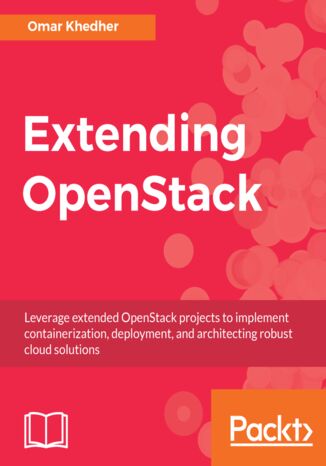
OpenStack is a very popular cloud computing platform that has enabled several organizations during the last few years to successfully implement their Infrastructure as a Service (IaaS) platforms. This book will guide you through new features of the latest OpenStack releases and how to bring them into production straightaway in an agile way.It starts by showing you how to expand your current OpenStack setup and how to approach your next OpenStack Data Center generation deployment. You will discover how to extend your storage and network capacity and also take advantage of containerization technology such as Docker and Kubernetes in OpenStack. Additionally, you'll explore the power of big data as a Service terminology implemented in OpenStack by integrating the Sahara project. This book will teach you how to build Hadoop clusters and launch jobs in a very simple way. Then you'll automate and deploy applications on top of OpenStack. You will discover how to write your own plugin in the Murano project. The final part of the book will go through best practices for security such as identity, access management, and authentication exposed by Keystone in OpenStack. By the end of this book, you will be ready to extend and customize your private cloud based on your requirements.
Luca Zavarella
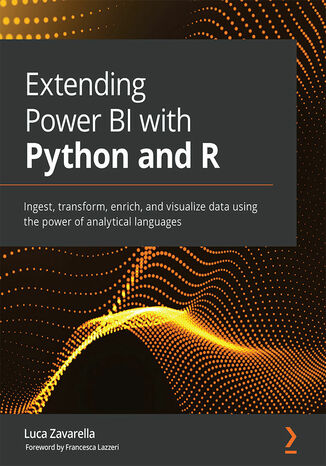
Python and R allow you to extend Power BI capabilities to simplify ingestion and transformation activities, enhance dashboards, and highlight insights. With this book, you'll be able to make your artifacts far more interesting and rich in insights using analytical languages.You'll start by learning how to configure your Power BI environment to use your Python and R scripts. The book then explores data ingestion and data transformation extensions, and advances to focus on data augmentation and data visualization. You'll understand how to import data from external sources and transform them using complex algorithms. The book helps you implement personal data de-identification methods such as pseudonymization, anonymization, and masking in Power BI. You'll be able to call external APIs to enrich your data much more quickly using Python programming and R programming. Later, you'll learn advanced Python and R techniques to perform in-depth analysis and extract valuable information using statistics and machine learning. You'll also understand the main statistical features of datasets by plotting multiple visual graphs in the process of creating a machine learning model.By the end of this book, you’ll be able to enrich your Power BI data models and visualizations using complex algorithms in Python and R.
Luca Zavarella, Rajat Talwar
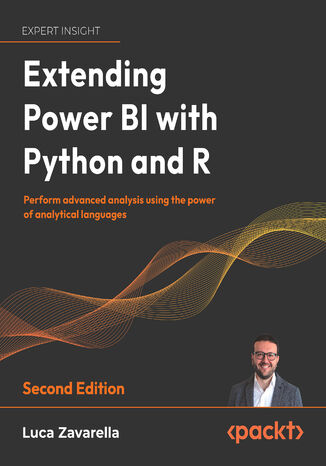
The latest edition of this book delves deep into advanced analytics, focusing on enhancing Python and R proficiency within Power BI. New chapters cover optimizing Python and R settings, utilizing Intel's Math Kernel Library (MKL) for performance boosts, and addressing integration challenges. Techniques for managing large datasets beyond available RAM, employing the Parquet data format, and advanced fuzzy matching algorithms are explored. Additionally, it discusses leveraging SQL Server Language Extensions to overcome traditional Python and R limitations in Power BI. It also helps in crafting sophisticated visualizations using the Grammar of Graphics in both R and Python.This Power BI book will help you master data validation with regular expressions, import data from diverse sources, and apply advanced algorithms for transformation. You'll learn how to safeguard personal data in Power BI with techniques like pseudonymization, anonymization, and data masking. You'll also get to grips with the key statistical features of datasets by plotting multiple visual graphs in the process of building a machine learning model. The book will guide you on utilizing external APIs for enrichment, enhancing I/O performance, and leveraging Python and R for analysis.You'll reinforce your learning with questions at the end of each chapter.
Cuantum Technologies LLC
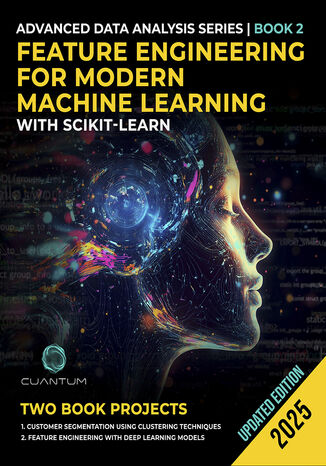
Feature engineering is essential for building robust predictive models. This book delves into practical techniques for transforming raw data into powerful features using Scikit-Learn. You'll explore automation, deep learning integrations, and advanced topics like feature selection and model evaluation. Learn to handle real-world data challenges, enhance accuracy, and streamline your workflows.Through hands-on projects, readers will gain practical experience with techniques such as clustering, pipelines, and feature selection, applied to domains like retail and healthcare. Step-by-step instructions ensure a comprehensive learning journey, from foundational concepts to advanced automation and hybrid modeling approaches.By combining theory with real-world applications, the book equips data professionals with the tools to unlock the full potential of machine learning models. Whether working with structured datasets or integrating deep learning features, this guide provides actionable insights to tackle any data transformation challenge effectively.
Finanse i Python. Łagodne wprowadzenie do teorii finansów
Yves Hilpisch
Finanse i Python. Łagodne wprowadzenie do teorii finansów Rozwój technologii i dostęp do danych finansowych stały się ogromnym ułatwieniem w korzystaniu z globalnych rynków finansowych. Jeśli zechcesz, możesz szybko zacząć przygodę na przykład z handlem algorytmicznym. Wystarczy, że masz niewielkie pojęcie o matematyce, programowaniu i ekonomii. Niestety, nieliczne programy nauczania o finansach integrują ze sobą te trzy dziedziny. Tymczasem koncepcje matematyczne wspaniale ułatwiają zrozumienie pojęć z zakresu inżynierii finansowej, a wczesne włączanie ćwiczeń programistycznych pozwala na znaczne zwiększenie efektywności takiej edukacji. Dzięki tej praktycznej, przystępnie napisanej książce szybko zrozumiesz podstawy teorii finansów, modelowania danych finansowych i zastosowania Pythona w finansach obliczeniowych. Znajdziesz tu systematyczne wprowadzenie do inżynierii finansowej, handlu algorytmicznego czy zarządzania aktywami. Zdobędziesz umiejętności tworzenia w Pythonie programów, które ułatwią Ci rozwiązywanie takich problemów jak ustalanie składu portfeli inwestycyjnych zgodnie z nowoczesną teorią portfela, a także wycena opcji i innych instrumentów pochodnych. Jeśli zajmujesz stanowisko kierownicze w branży finansowej, z pewnością przyda Ci się wiedza o zastosowaniu Pythona w finansach. Jeśli już biegle kodujesz w Pythonie, łatwiej skorzystasz ze swoich umiejętności w tworzeniu przydatnych aplikacji z zakresu inżynierii finansowej. W książce między innymi: matematyczne podstawy teorii finansów i programowania w Pythonie modele ekonomiczne i modelowanie danych finansowych zastosowanie Pythona w obliczeniach związanych z finansami wycena, podejmowanie decyzji, równowaga i alokacja aktywów zastosowanie bibliotek i narzędzi Pythona w modelowaniu finansowym Teoria finansów? Z Pythonem to dziecinnie proste!
Joel Perras
Flask is a small but powerful web development framework for Python. Though Flask is termed a micro-framework, it is no way lacking in functionality; there are many extensions available to Flask which helps it to function at the same level as other large frameworks such as Django and Ruby on Rails.This book will demonstrate how to develop a series of web application projects with the Python web micro-framework, and leverage extensions and external Python libraries and APIs to extend the development of a variety of larger and more complex web applications.The book will start by explaining Python’s Virtualenv library and how to create and switch between multiple virtual environments. You’ll first build an SQL database-backed application, which will use Flask-WTF, Flask-SQLAlchemy, Jinja templates, and other methods. Next you’ll move on to a timeline application, built using concepts including pytest-Flask, the Blinker package, data modelling for user timelines, exception handling, and creating and organizing CLI tools.Moving on, you’ll discover how to implement a photo timeline application where you’ll explore topics such as writing and running celery tasks, API error handling and testing, and Werkzeug middlewares.Finally, the book walks you through creating an application which fetches data from GitHub and stores it locally. You will also learn how to install and configure Flask-Click extension.
Shalabh Aggarwal
If you are a web developer who wants to learn more about developing applications in Flask and scale them with industry-standard practices, this is the book for you. This book will also act as a handy tool if you are aware of Flask's major extensions and want to make the best use of them.It is assumed that you have knowledge of Python and a basic understanding of Flask. If you are completely new to Flask, reading the book from the first chapter and going forward will help in getting acquainted with Flask as you go ahead.
Shalabh Aggarwal
Flask, the lightweight Python web framework, is popular thanks to its powerful modular design that lets you build scalable web apps. With this recipe-based guide, you’ll explore modern solutions and best practices for Flask web development.Updated to the latest version of Flask and Python 3, this second edition of Flask Framework Cookbook moves away from some of the old and obsolete libraries and introduces new recipes on cutting-edge technologies. You’ll discover different ways of using Flask to create, deploy, and manage microservices. This Flask Python book starts by covering the different configurations that a Flask application can make use of, and then helps you work with templates and learn about the ORM and view layers. You’ll also be able to write an admin interface and get to grips with debugging and logging errors. Finally, you’ll learn a variety of deployment and post-deployment techniques for platforms such as Apache, Tornado, and Heroku.By the end of this book, you’ll have gained all the knowledge you need to confidently write Flask applications and scale them using standard industry practices.