
Python
W kategorii Python zostały zebrane podręczniki poruszające tematykę programowania z zastosowaniem praktycznie niezależnego sprzętowo, dostępnego na licencji Open Source języka. Książki przedstawią Wam wszechstronności i elastyczności Pythona a także różne typy tworzenia kodu poprzez programowanie strukturalne, obiektowe czy funkcjonalne.
Nauczycie się tworzyć aplikacje sieciowe o dowolnym przeznaczeniu, komunikujące się z systemami operacyjnymi, lub korzystające z baz danych. Techniki analizy składni, przetwarzanie tekstu czy rozłożenie obciążenia programu na wiele wątków i procesów przestanie być problematyczne.
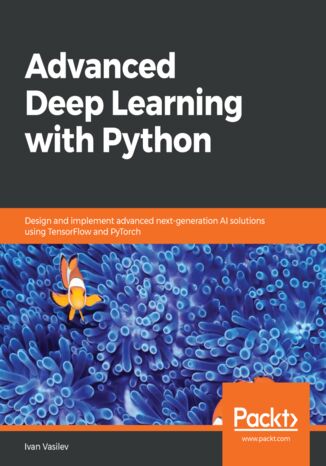
Ivan Vasilev
In order to build robust deep learning systems, you’ll need to understand everything from how neural networks work to training CNN models. In this book, you’ll discover newly developed deep learning models, methodologies used in the domain, and their implementation based on areas of application. You’ll start by understanding the building blocks and the math behind neural networks, and then move on to CNNs and their advanced applications in computer vision. You'll also learn to apply the most popular CNN architectures in object detection and image segmentation. Further on, you’ll focus on variational autoencoders and GANs. You’ll then use neural networks to extract sophisticated vector representations of words, before going on to cover various types of recurrent networks, such as LSTM and GRU. You’ll even explore the attention mechanism to process sequential data without the help of recurrent neural networks (RNNs). Later, you’ll use graph neural networks for processing structured data, along with covering meta-learning, which allows you to train neural networks with fewer training samples. Finally, you’ll understand how to apply deep learning to autonomous vehicles.By the end of this book, you’ll have mastered key deep learning concepts and the different applications of deep learning models in the real world.
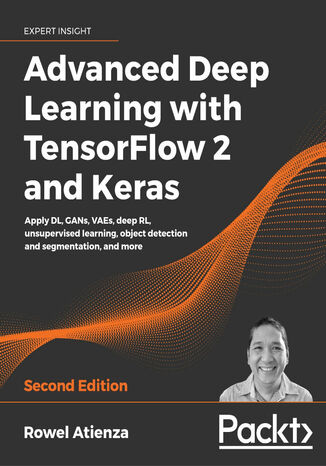
Rowel Atienza
Advanced Deep Learning with TensorFlow 2 and Keras, Second Edition is a completely updated edition of the bestselling guide to the advanced deep learning techniques available today. Revised for TensorFlow 2.x, this edition introduces you to the practical side of deep learning with new chapters on unsupervised learning using mutual information, object detection (SSD), and semantic segmentation (FCN and PSPNet), further allowing you to create your own cutting-edge AI projects.Using Keras as an open-source deep learning library, the book features hands-on projects that show you how to create more effective AI with the most up-to-date techniques.Starting with an overview of multi-layer perceptrons (MLPs), convolutional neural networks (CNNs), and recurrent neural networks (RNNs), the book then introduces more cutting-edge techniques as you explore deep neural network architectures, including ResNet and DenseNet, and how to create autoencoders. You will then learn about GANs, and how they can unlock new levels of AI performance.Next, you’ll discover how a variational autoencoder (VAE) is implemented, and how GANs and VAEs have the generative power to synthesize data that can be extremely convincing to humans. You'll also learn to implement DRL such as Deep Q-Learning and Policy Gradient Methods, which are critical to many modern results in AI.
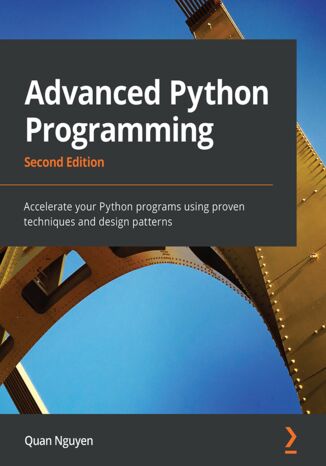
Quan Nguyen
Python's powerful capabilities for implementing robust and efficient programs make it one of the most sought-after programming languages.In this book, you'll explore the tools that allow you to improve performance and take your Python programs to the next level.This book starts by examining the built-in as well as external libraries that streamline tasks in the development cycle, such as benchmarking, profiling, and optimizing. You'll then get to grips with using specialized tools such as dedicated libraries and compilers to increase your performance at number-crunching tasks, including training machine learning models.The book covers concurrency, a major solution to making programs more efficient and scalable, and various concurrent programming techniques such as multithreading, multiprocessing, and asynchronous programming.You'll also understand the common problems that cause undesirable behavior in concurrent programs.Finally, you'll work with a wide range of design patterns, including creational, structural, and behavioral patterns that enable you to tackle complex design and architecture challenges, making your programs more robust and maintainable.By the end of the book, you'll be exposed to a wide range of advanced functionalities in Python and be equipped with the practical knowledge needed to apply them to your use cases.
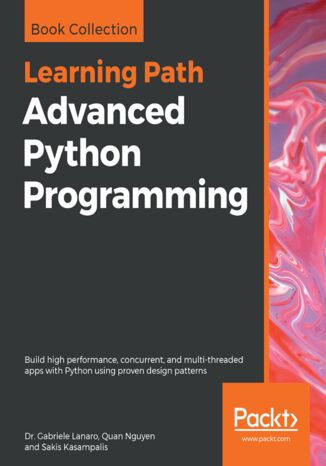
Dr. Gabriele Lanaro, Quan Nguyen , Sakis...
This Learning Path shows you how to leverage the power of both native and third-party Python libraries for building robust and responsive applications. You will learn about profilers and reactive programming, concurrency and parallelism, as well as tools for making your apps quick and efficient. You will discover how to write code for parallel architectures using TensorFlow and Theano, and use a cluster of computers for large-scale computations using technologies such as Dask and PySpark. With the knowledge of how Python design patterns work, you will be able to clone objects, secure interfaces, dynamically choose algorithms, and accomplish much more in high performance computing.By the end of this Learning Path, you will have the skills and confidence to build engaging models that quickly offer efficient solutions to your problems.This Learning Path includes content from the following Packt products:• Python High Performance - Second Edition by Gabriele Lanaro• Mastering Concurrency in Python by Quan Nguyen• Mastering Python Design Patterns by Sakis Kasampalis
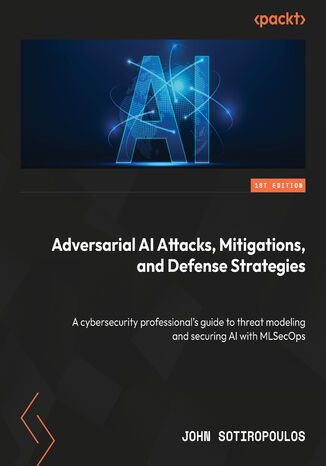
John Sotiropoulos
Adversarial attacks trick AI systems with malicious data, creating new security risks by exploiting how AI learns. This challenges cybersecurity as it forces us to defend against a whole new kind of threat. This book demystifies adversarial attacks and equips you with the skills to secure AI technologies. Learn how to defend AI and LLM systems against manipulation and intrusion through adversarial attacks such as poisoning, trojan horses, and model extraction, leveraging DevSecOps, MLOps, and other methods to secure systems.This is a comprehensive guide to AI security, combining structured frameworks with practical examples to help you identify and counter adversarial attacks. Part 1 introduces the foundations of AI and adversarial attacks. Parts 2, 3, and 4 cover key attack types, showing how each is performed and how to defend against them. Part 5 presents secure-by-design AI strategies, including threat modeling, MLSecOps, and guidance aligned with OWASP and NIST. The book concludes with a blueprint for maturing enterprise AI security based on NIST pillars, addressing ethics and safety under Trustworthy AI.By the end of this book, you’ll be able to develop, deploy, and secure AI systems against the threat of adversarial attacks effectively.*Email sign-up and proof of purchase required
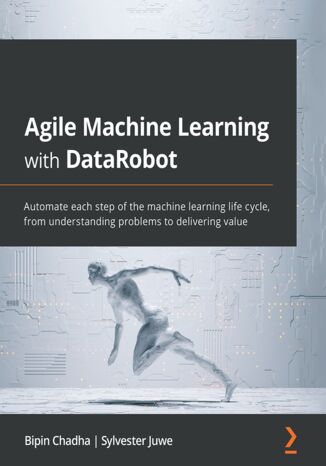
Bipin Chadha, Sylvester Juwe
DataRobot enables data science teams to become more efficient and productive. This book helps you to address machine learning (ML) challenges with DataRobot's enterprise platform, enabling you to extract business value from data and rapidly create commercial impact for your organization.You'll begin by learning how to use DataRobot's features to perform data prep and cleansing tasks automatically. The book then covers best practices for building and deploying ML models, along with challenges faced while scaling them to handle complex business problems. Moving on, you'll perform exploratory data analysis (EDA) tasks to prepare your data to build ML models and ways to interpret results. You'll also discover how to analyze the model's predictions and turn them into actionable insights for business users. Next, you'll create model documentation for internal as well as compliance purposes and learn how the model gets deployed as an API. In addition, you'll find out how to operationalize and monitor the model's performance. Finally, you'll work with examples on time series forecasting, NLP, image processing, MLOps, and more using advanced DataRobot capabilities.By the end of this book, you'll have learned to use DataRobot's AutoML and MLOps features to scale ML model building by avoiding repetitive tasks and common errors.
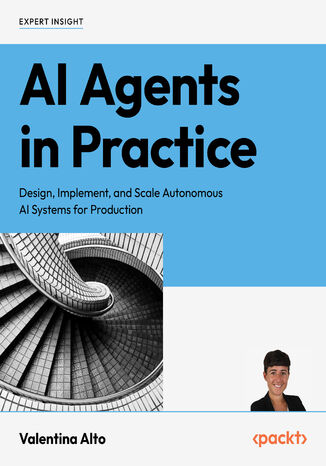
AI Agents in Practice. Design, implement, and scale autonomous AI systems for production
Valentina Alto
As AI agents evolve to take on complex tasks and operate autonomously, you need to learn how to build these next-generation systems. Author Valentina Alto brings practical, industry-grounded expertise in AI Agents in Practice to help you go beyond simple chatbots and create AI agents that plan, reason, collaborate, and solve real-world problems using large language models (LLMs) and the latest open-source frameworks.In this book, you'll get a comparative tour of leading AI agent frameworks such as LangChain and LangGraph, covering each tool's strengths, ideal use cases, and how to apply them in real-world projects. Through step-by-step examples, you’ll learn how to construct single-agent and multi-agent architectures using proven design patterns to orchestrate AI agents working together. Case studies across industries will show you how AI agents drive value in real-world scenarios, while guidance on responsible AI will help you implement ethical guardrails from day one. The chapters also set the stage with a brief history of AI agents, from early rule-based systems to today's LLM-driven autonomous agents, so you understand how we got here and where the field is headed.By the end of this book, you'll have the practical skills, design insights, and ethical foresight to build and deploy AI agents that truly make an impact.
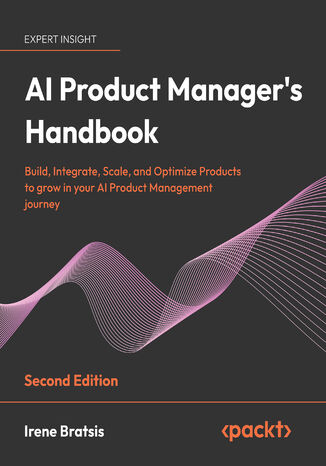
Irene Bratsis
AI is rapidly transforming product management, presenting new challenges and business opportunities. As AI-driven solutions become more complex, product managers must bridge the gap between technological capabilities and business needs. This book provides a detailed roadmap for successfully building and maintaining AI-driven products, serving as an indispensable companion on your journey to becoming an effective AI product manager. In this second edition, you'll find fresh insights into generative AI, and responsible AI practices with the most relevant tools for building AI-powered products.Authored by a leading AI product expert with years of hands-on experience in developing and managing AI solutions, this guide translates complex AI concepts into actionable strategies. Whether you're an aspiring AI PM or an experienced professional, this book offers a structured approach to defining AI product vision, leveraging data effectively, and aligning AI with business objectives. With new case studies and refined frameworks, this edition provides deeper insights into ethical AI, cross-functional collaboration, and deployment challenges.By the end of this book, you’ll be equipped with the knowledge to drive AI product success with key techniques for identifying AI opportunities and managing risks in a rapidly evolving landscape.*Email sign-up and proof of purchase required