
Algorytmy
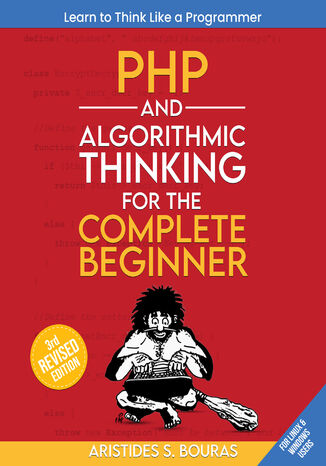
Aristides Bouras
Begin your journey into PHP programming and algorithmic thinking with a structured, detailed course that takes you from understanding the basic components of a computer to mastering complex decision control and loop structures. Each chapter builds on the previous one, starting with an introduction to how computers work and gradually progressing to more complex topics like decision control structures, loop structures, arrays, and subprograms.You'll start with foundational concepts such as variables, constants, and operators, before diving into more advanced topics like manipulating strings, handling input and output, and developing complex mathematical expressions. The course emphasizes practical application, guiding you through the use of Visual Studio Code, integrated development environments, and essential software packages.By the end of this book, you will have a solid understanding of PHP programming and algorithmic thinking, enabling you to write efficient code, develop your own subprograms, and utilize various control structures and arrays effectively. This course is tailored for beginners, ensuring a smooth learning curve with tips, tricks, and exercises to reinforce your knowledge, and prepare you with the necessary skills needed to be a programmer.
Piramidy, szyszki i inne konstrukcje algorytmiczne
Maciej Sysło
Odkryj niesamowity świat algorytmiki! Naucz się definiować i opisywać problemy Poznaj metody analizy problemów i znajdowania ich rozwiązań Dowiedz się, jak realizować algorytmy za pomocą komputera Całym otaczającym nas światem rządzą ścisłe reguły, choć nie zawsze wydaje się to takie oczywiste, a dostrzeżenie istniejących prawidłowości wymaga analitycznego spojrzenia i pewnego doświadczenia. Jeszcze większego doświadczenia i głębszej wiedzy wymaga definiowanie tych zasad i zapisywanie ich w postaci prostych ciągów operacji określanych mianem algorytmów. Wbrew pozorom nie jest to jednak umiejętność nie do zdobycia, a znajdowanie rozwiązań problemów spotykanych w codziennym życiu jest zajęciem niezwykle rozwijającym intelektualnie i… może okazać się świetną zabawą! Łatwo się o tym przekonać, czytając książkę Piramidy, szyszki i inne konstrukcje algorytmiczne. Prezentuje ona rzeczywiste problemy oraz sposoby ich analizowania dla wypracowania odpowiednich algorytmów, za pomocą których problemy te mogą zostać skutecznie rozwiązane, a także implementacje tych rozwiązań z wykorzystaniem komputerów. Ta niewielka książeczka umożliwia łatwe rozpoczęcie opracowywania metod praktycznego radzenia sobie z różnego rodzaju sytuacjami problemowymi, które spotyka się w codziennym życiu i stanowi doskonałe uzupełnienie książki Algorytmy napisanej przez tego samego autora. Znajdziesz w niej: Przykłady algorytmów w otaczającym nas świecie Rozwiązania typowych problemów logicznych i matematycznych Analizowanie, przeszukiwanie i porządkowanie zbiorów danych Zastosowanie rekurencji w praktyce Przenoszenie algorytmów na język zrozumiały dla komputerów Znajduj skuteczne rozwiązania niewielkim kosztem!
Practical Machine Learning Cookbook. Supervised and unsupervised machine learning simplified
Vikram Chandra Jha, Atul Tripathi
Machine learning has become the new black. The challenge in today’s world is the explosion of data from existing legacy data and incoming new structured and unstructured data. The complexity of discovering, understanding, performing analysis, and predicting outcomes on the data using machine learning algorithms is a challenge. This cookbook will help solve everyday challenges you face as a data scientist. The application of various data science techniques and on multiple data sets based on real-world challenges you face will help you appreciate a variety of techniques used in various situations.The first half of the book provides recipes on fairly complex machine-learning systems, where you’ll learn to explore new areas of applications of machine learning and improve its efficiency. That includes recipes on classifications, neural networks, unsupervised and supervised learning, deep learning, reinforcement learning, and more.The second half of the book focuses on three different machine learning case studies, all based on real-world data, and offers solutions and solves specific machine-learning issues in each one.
Programming Fundamentals Using MATLAB. Master the Basics and Beyond of MATLAB Programming
Mercury Learning and Information, Michael Weeks
This book introduces MATLAB syntax and environment, ideal for beginners with no programming background. The first four chapters cover basic programming concepts, computing terminology, MATLAB syntax, control structures, operators, arrays, and matrices. Next, the book explores grouping data, working with files, creating images, building graphical user interfaces, experimenting with sound, and debugging. The final chapters present case studies on using MATLAB with tools like Arduino, Linux, Git, and Mex, essential for basic programming knowledge.Understanding MATLAB is crucial for data analysis and technical computing. This book transitions readers from basics to advanced topics, blending theoretical knowledge with practical applications. Companion files with code and four-color figures enhance learning, making this an essential resource for mastering MATLAB.
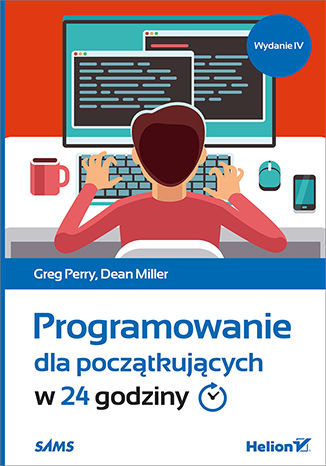
Programowanie dla początkujących w 24 godziny. Wydanie IV
Greg Perry, Dean Miller
Warto nauczyć się programowania! Poza stworzeniem sobie możliwości znalezienia ciekawej i dobrze płatnej pracy czy pasjonującego hobby umiejętność programowania bywa niezwykle przydatna w rozwiązywaniu różnych problemów. Paleta języków programowania i narzędzi programistycznych jest niezwykle szeroka i praktycznie każdy znajdzie coś dla siebie. Zanim to jednak nastąpi, trzeba zdobyć trochę wiedzy i umiejętności. Ale bez obaw! W nauce programowania najtrudniejszy bywa pierwszy krok, jednak ta książka sprawi, że wykonasz go bez trudu i dumnie wkroczysz w świat kodowania! To kolejne wydanie lubianego samouczka, dzięki któremu w ramach 24 godzinnych lekcji przyswoisz solidne podstawy programowania. Zrozumiesz, jak działają programy, i nauczysz się reguł stosowanych przez profesjonalistów przy ich projektowaniu. Dowiesz się, jak wygląda świat programistów i na czym dokładnie polega programowanie w korporacjach. Znajdziesz tutaj także wprowadzenie do kilku najpopularniejszych języków programowania, co pozwoli na ich porównanie i ułatwi wybór języka do dalszej nauki. Każdy z 24 rozdziałów zawiera materiał, który można opanować w ciągu godziny. Naukę ułatwiają instrukcje krok po kroku, quizy, ćwiczenia i praktyczne przykłady. Dzięki tej książce zdobędziesz najlepsze podstawy, aby stać się dobrym programistą. Przygotujesz się też do świadomego kształtowania swojej dalszej ścieżki zawodowej! W książce między innymi: przygotowanie narzędzi do pracy - sprzęt i oprogramowanie podstawowe aspekty programowania i projektowania programów algorytmy, interaktywność, zmienne, funkcje debugowanie kodu programowanie obiektowe i korzystanie z baz danych planowanie kariery programisty Zacznij programować. Najlepiej od razu!
Projektowanie oprogramowania dla zupełnie początkujących. Owoce programowania. Wydanie V
Tony Gaddis
Programowanie to nie tylko umiejętność pisania kodu oraz organizowania go w funkcje, procedury i moduły. Nawet najbardziej finezyjne języki i najnowocześniejsze paradygmaty programowania nie zapewnią sukcesu, jeśli projekt aplikacji jest nieprzemyślany, a jej logice brakuje... logiki. Z drugiej strony poświęcenie odrobiny czasu na stworzenie dobrego projektu sprawi, że praca nad pisaniem kodu będzie łatwiejsza, sama aplikacja będzie pracować lepiej i bardziej niezawodnie, a późniejsze modyfikacje i rozwój oprogramowania przysporzą mniej problemów. Jeśli planujesz napisać swoją pierwszą aplikację, sięgnij po tę książkę. Aby zrozumieć zawartą w niej treść, nie trzeba znać żadnego języka programowania. Pokazano tu, jak działają programy i jak można z ich wykorzystaniem rozwiązywać konkretne zadania. Wiedza o zasadach projektowania jest przekazywana za pomocą pseudokodu i schematów blokowych. Omówiono zarówno podstawowe zagadnienia, takie jak typy danych, zmienne, funkcje, jak i nieco bardziej zaawansowane: programowanie obiektowe, tworzenie graficznych interfejsów użytkownika i pisanie programów sterowanych zdarzeniami. W tym wydaniu książki wprowadzono wiele poprawek i uzupełnień, dotyczących między innymi języków Java, Python i C++ oraz programowania aplikacji dla urządzeń mobilnych. Dzięki tej książce dowiesz się: jak działa komputer, czym są programy i do czego służą dane z jakich modułów i struktur składają się programy oraz jak działają funkcje w jaki sposób pracuje się na plikach oraz czym jest przetwarzanie tekstu czym jest rekurencja i do czego można ją wykorzystać czym się różni programowanie proceduralne od obiektowego Bez dobrego projektu zawiedzie najlepszy kod!
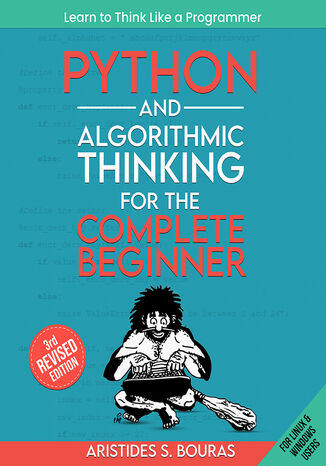
Aristides Bouras
This course is meticulously designed to take beginners on a journey through the fascinating world of Python programming and algorithmic thinking. The initial chapters lay a strong foundation, starting with the basics of how computers operate, moving into Python programming, and familiarizing learners with integrated development environments like IDLE and Visual Studio Code.Further, the course delves into essential programming constructs such as variables, constants, input/output handling, and operators. You'll gain practical experience with trace tables, sequence control structures, and decision control structures through comprehensive exercises and examples. The curriculum emphasizes hands-on learning with chapters dedicated to manipulating numbers, strings, and understanding complex mathematical expressions. By mastering these concepts, you'll be well-prepared to tackle more advanced topics.The final chapters introduce you to object-oriented programming and file manipulation, rounding out your skill set. Throughout the course, practical tips and tricks are provided to enhance your coding efficiency and problem-solving skills. By the end of this course, you will have a robust understanding of Python programming and the ability to apply algorithmic thinking to solve real-world problems.
Benjamin Baka
Data structures allow you to organize data in a particular way efficiently. They are critical to any problem, provide a complete solution, and act like reusable code. In this book, you will learn the essential Python data structures and the most common algorithms. With this easy-to-read book, you will be able to understand the power of linked lists, double linked lists, and circular linked lists. You will be able to create complex data structures such as graphs, stacks and queues. We will explore the application of binary searches and binary search trees. You will learn the common techniques and structures used in tasks such as preprocessing, modeling, and transforming data. We will also discuss how to organize your code in a manageable, consistent, and extendable way. The book will explore in detail sorting algorithms such as bubble sort, selection sort, insertion sort, and merge sort. By the end of the book, you will learn how to build components that are easy to understand, debug, and use in different applications.