
Naukowe i akademickie
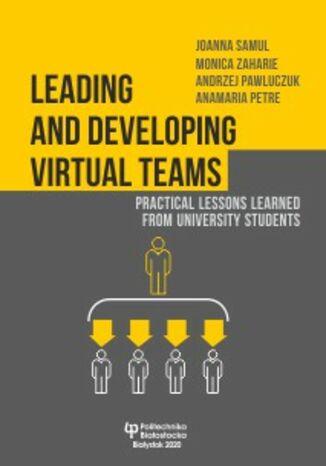
Leading and developing virtual teams. Practical lessons learned from university students
Joanna Samul, Monica Zaharie, Andrzej Pawluczuk, Anamaria...
This book features the competences and skills that the university students as future leaders should acquire in order to work in virtual teams. Virtual teams have become the basic unit for many organizations. Combined work using different technology, places, time zones, persons of different cultures requires knowledge and skills to lead this team. Unreflective teaching methods can cause a lower level of efficiency and effectiveness. The gap knowledge about todays students’ skills of virtual work may be interesting for university lecturers to improve the quality of university leadership programs, and also for HR practitioners to develop managerial competences. This book focuses on leading and developing virtual teams in the process of shaping their competence for the new (prospects) organizational requirements. The effective strategies and clever techniques to improve leadership and management skills are needed in the virtual environment. The premise of this book is to pay attention how to lead and develop virtual teams by providing more directed tips to improve the quality of a university program and thereby develop effective leaders within their organization. The better the leadership, the better the virtual teams.
Andrzej Rokita, Katerina Mouratidou, Angela Magnanini, Evgen...
Children learn best when their minds and bodies are actively engaged. This book discusses education as a movement-based process that nurtures curiosity, develops cooperation and brings joy to learning. It also supports children with concentration problems and children with special educational needs. Movement can become a natural and meaningful part of classroom learning. The book presents seven innovative methods developed as part of the Learning by Moving programme. Each chapter combines theoretical reflection with practical application, offering teachers insights, examples and appropriate tools for combining movement with learning. Dzieci najlepiej uczą się, gdy ich umysły i ciała są aktywnie zaangażowane. Niniejsza książka przedstawia edukację jako proces oparty na ruchu, który pielęgnuje ciekawość, rozwija współpracę i daje radość z nauki. Wspomaga także dzieci z problemami koncentracji oraz dzieci ze specjalnymi potrzebami edukacyjnymi. Ruch może stać się naturalną i znaczącą częścią nauki w klasie. Książka zawiera siedem innowacyjnych metod opracowanych w ramach programu Learning by Moving. Każdy rozdział łączy refleksję teoretyczną z praktycznym zastosowaniem, oferując nauczycielom spostrzeżenia, przykłady i odpowiednie narzędzia pozwalające połączyć ruch z nauką.
Wojciech Żagan
Na przełomie ostatnich kilkunastu lat, a w zasadzie na przełomie XX i XXI wieku, dokonała się w technice świetlnej rewolucja w zakresie źródeł światła. Pojawiły się diody elektroluminescencyjne (LED-y), choć wcześniej już znane, jednak musiały odbyć "kwarantannę" rozwojową, aby osiągnąć pełną dojrzałość aplikacyjną w szeroko rozumianym oświetleniu elektrycznym. Nie bez wpływu na wkraczanie LED-ów w obszar techniki świetlnej były też działania prawne, które w sposób administracyjny spowodowały praktycznie zakończenie ery żarowych źródeł światła. Obecnie mamy tak ukształtowaną świadomość społeczeństw, głównie w Europie, że nie tylko energooszczędność, ale także racjonalność, nowoczesność w oświetleniu elektrycznym musi się kojarzyć z wykorzystywaniem LED-ów. Obserwując rozchwianie informacyjne na temat diod elektroluminescencyjnych, autorzy niniejszej monografii, na podstawie wieloletniej obserwacji i badań naukowych postanowili stworzyć dzieło, które rzetelnie i rozważnie przedstawi szerokie spojrzenie na diody elektroluminescencyjne, na ich możliwości wykorzystania w szeroko rozumianej technice świetlnej. W pracy przedstawiono LED-y z perspektywy ich wytwarzania, cech fotometrycznych, kolorymetrycznych i użytkowych a także zaprezentowano spojrzenie aplikacyjne na te źródła w różnych typowych obszarach wykorzystywania elektrycznych źródeł światła. Podano dość wnikliwe spojrzenie na problem zasilania i sterowania światłem przez te źródła a także na kwestię powiązania właściwości użytkowych oraz cech foto- i kolorymetrycznych z termicznymi warunkami pracy. Mając świadomość szybkiego rozwoju technologicznego elektroluminescencyjnych źródeł światła, autorzy pracy potraktowali przekazywany materiał w formie otwartej, zakładając możliwość dalszych udoskonaleń, odkrycia nowych możliwości itp.
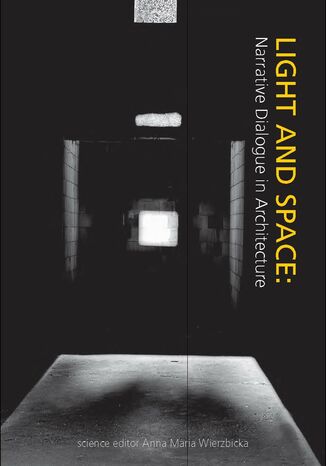
LIGHT AND SPACE: Narrative Dialogue in Architecture
Anna Maria Wierzbicka (red. nauk.)
Light constitutes the fundamental carrier of meaning in semantic architecture. From the biblical act of creation, in which the separation of light from darkness gives a cosmological structure to reality, to contemporary sacred realizations, it performs both a material and a symbolic role. As an attribute of God - the One who illuminates the darkness-light becomes at once a witness and the creator of the sacred, imparting dynamism to the transformations of form and matter within the sacred space. This publication presents an interdisciplinary analysis of the role of natural light in contemporary sacred architecture. The authors-architects, researchers in architectural semiotics, and a theologian-trace the historical evolution of lighting solutions: from early Christian basilicas and the mysticism of Gothic stained-glass windows, through Renaissance dome lanterns and Baroque dramatic illumination, to the purist concepts of modernism and postmodern searches for architectural form. At the center of attention remains light as a key element of architectural narrative, which, depending on the epoch, shapes an atmosphere of contemplation, emphasizes liturgical orientation, and integrates sacred space with the rhythm of the cosmos.
Linguistic and Cultural Aspects of Specialised Translation
Andrzej Łyda, Iwona Sikora, Marta Wiśniowska, Marek...
Linguistic and Cultural Aspects of Specialised Translation. A Textbook for the Students of Business English is a practical course in translation from English to Polish and from Polish to English. It has grown out of a need to run a course of specialised translation for students of Business English at Częstochowa University of Technology. However, even if this textbook is aimed at this particular group of language and translation students, we believe that this volume has lot to offer to students of translation in other fields. We base our belief in the usefulness of this volume to any translation student on the fact that the primary focus of all chapters is on the question of the language – culture relationship. This relationship is uniquely represented by each individual language and difficult to reproduce in any other language. In other words, this textbook is about translation of culture and culture-bound terms, which poses a perennial problem of translators in all areas of their activity. This volume consists of twelve chapters and has been designed to fit into a standard Polish academic timetable lasting one semester. Some chapters may require more than 90 minutes of seminar time; others are likely to take less time. Generally, the structure of most chapters follows the same pattern. After an exposition of a translational problem, there comes a practice section, in which students are asked to solve the problem. Although each chapter is accompanied with a key, not every exercise is answered; some exercises allow individual students more freedom to provide a solution and others serve as a material for an in-class discussion. The examples used in the book cover a wide range of topics ranging from business proper to film studies, and are tuned to suit the level of beginner translation students.
Liryka ks. Jana Twardowskiego. Spotkanie ze św. Teresą z Lisieux
Alicja Mazan-Mazurkiewicz
Książka zawiera nowy kontekst interpretacyjny twórczości lirycznej Jana Twardowskiego. Świętej Teresie, spośród wszystkich postaci wymienionych z imienia, poświęcony jest najdłuższy jej fragment. U schyłku XX i w początkach wieku XXI ta powszechnie znana w Kościele katolickim święta odkrywana jest ponownie; żywotny i aktualny okazuje się jej wkład w rozwój europejskiej kultury. Inspiracja terezjańska pozwala inaczej niż dotąd odczytać twórczość polskiego poety, cieszącą się ogromnym powodzeniem czytelniczym. Autorkę ma szeroką wiedzę z zakresu dziejów chrześcijańskiej duchowości kształtującej całą kulturę europejską, źródeł i żywotnych nurtów teologii, w szczególności zaś nurtu karmelitańskiego, w który swój oryginalny wkład wniosła św. Teresa od Dzieciątka Jezus. Nie ogranicza się do korzystania z metod wybranej szkoły interpretacyjnej, ale potrafi korzystać ze zdobyczy różnych teoretyków „literackiej sakrologii” w zależności od tego, jakie potrzeby odsłaniają się w trakcie badania konkretnego materiału literackiego. Praca ukazuje świetny warsztat literaturoznawczy, dodatkowo wzbogacony poprzez znajomość teoretycznej refleksji nad metodologią badania obecności sacrum w literaturze.
Monika Kucner
Monografia Moniki Kucner poświęcona jest tematowi dla wielu fascynującemu, a dotychczas nigdy szerzej niebadanemu i nieopisanemu w publikacjach. Jest to cenna inicjatywa przybliżenia czytelnikowi polskiemu twórczości niemieckojęzycznych łodzian XIX i XX w., tym bardziej że Autorka nie traci z pola widzenia wielokulturowości miasta, uwzględniając także aspekty żydowskie i polskie. Monika Kucner jest kompletną badaczką literatury; co dokumentują liczne publikacje z tego zakresu, nie dziwi więc, że ta książka jest dziełem szczególnym, nie tylko ze względu na wybór tematu, ale też na dobrze przemyślany sposób jego prezentacji, podparty warsztatem badawczym i umiejętnościami formułowania swoich przemyśleń na piśmie.
Literatura prze-pisana. Od "Hamleta" do slashu
Agnieszka Izdebska, Danuta Szajnert
Formuły „literatura prze-pisana” używa się przede wszystkim do określenia tych spośród praktyk intertekstualnych, w których: 1) aktywizowane są inne niż punktowe odniesienia do cudzych wypowiedzi, czyli takie, w których semantycznej i często ideologicznej rewaloryzacji poddawane są większe całości tekstowe; 2) są to odniesienia skonkretyzowane, co wyróżnia je spośród relacji „przyrodzonych” anonimowej przestrzeni dyskursywnej; 3) prze-pisuje się nie tylko teksty literackie, którym przysługuje szczególny status kulturowy; 4) last but not least, jeśli prze-pisane ma coś wspólnego z kopią (z przepisanym), to musi to być tzw. kopia twórcza, rezultat twórczego czytania (odpowiednio oglądania), rezultat odsłaniający (re)kreacyjną rolę kopisty i jego usytuowania względem miejsca i czasu, w którym powstał oryginał. Książka dotyczy prze-pisywania, czyli szczególnej postaci literackiego, i nie tylko literackiego, recyklingu – czytania/interpretowania/pisania od nowa (ale też przekształcania w obrazy, widowiska, gry komputerowe i inne teksty intersemiotyczne funkcjonujące w kulturze cyfrowej) tego, co już zostało napisane. Autorki artykułów starają się w mniejszym lub większym stopniu wyeksponować sprawczą rolę rzeczywistości kulturowej, w której pre-teksty – traktowane jako część innej przestrzeni historycznej – są prze-pisywane. Publikacja stanowi interesującą diagnozę nie tylko szczególnych relacji intertekstualnych, ale też związków literatury ze światem.
Logiczna problematyka czynu i sprawstwa
Mateusz Klinowski
Książka jest przystępnym wprowadzeniem w problematykę filozofii czynu i sprawstwa, widzianą z perspektywy badań logicznych. Autor stawia w niej tezę, że to badania logiczne powinny być punktem wyjścia do analizy sprawstwa i pojęć pokrewnych. Następnie stosuje jeden z rachunków logicznych do rozstrzygnięcia kilku szczegółowych zagadnień dyskutowanych w literaturze przedmiotu. Pracę traktować można jako przyczynek do wykorzystania narzędzi formalnych pomocnych w zrozumieniu pojęć używanych w naukach społecznych.
Logistics Challenges: Global and Local Approaches
Beata Ślusarczyk (red.)
The monograph, titled Logistics Challenges: Global and Local Approaches, is the result of scientific meetings and discussions held during the Global Conference on Logistics (GCoL2024). The aim of the Global Conference on Logistics was to disseminate the latest research findings and achievements of scholars at an international forum, as well as to discuss current issues in the fields of logistics and management. This monograph presents a multifaceted perspective on the challenges and opportunities of contemporary logistics, showcasing both scientific research and practical solutions in this field. It is divided into three parts, each focusing on different but complementary aspects of modern logistics: advanced technologies and innovations, sustainable development, and the economics of transport and logistics. The first part, Modern Technologies and Innovations in Logistics, explores the role of innovative technologies such as Artificial Intelligence (AI), the Internet of Things (IoT), and Web 4.0 technologies in enhancing the efficiency and adaptability of logistics processes. This section includes analyses of AI applications in inventory management, highlighting the benefits of neural networks and machine learning. The authors discuss the development of IT systems, such as SDP3, aimed at optimizing transport in production processes. Additionally, the significance of logistics clusters in Poland is examined, emphasizing their role as catalysts for innovation through collaboration, technology development, and integrated networks of enterprises. The chapters in this part provide invaluable insights into the role of technology in increasing logistics competitiveness and adaptability to changing market conditions. The second part, Sustainable Development and Logistics Process Optimization, focuses on the role of logistics in achieving sustainable development goals and optimizing processes in response to environmental and economic challenges. A key topic is the decarbonization of transport, requiring significant CO2 emission reductions by 2050. The authors present decarbonization scenarios for Poland, emphasizing the need for new technologies and regulatory frameworks. They also highlight the "milkrun" concept, which enhances operational efficiency by integrating supply and return processes. An important aspect of this part is the analysis of CSR practices in the logistics sector, covering sustainable development objectives in environmental, social, and governance areas. Practical examples and studies underscore the necessity of an integrated logistics approach that combines innovation with environmental responsibility. The third part, Transport and Logistics Economics, addresses economic and strategic aspects of logistics and transport. One of the discussed topics is the formation of freight rates in the face of rising operational costs, such as fuel prices and road tolls. These analyses rely on the Total Cost of Ownership (TCO) methodology, indicating cost optimization directions for transport companies. Another key issue is the impact of autonomous vehicles on supply chains in Europe, considering economic savings and increased efficiency. The authors also examine the significance of information exchange standards, such as EDI, GS1, and XML, in market forecasting and operational risk reduction. These standards enable faster data exchange, improved transparency, and better disruption management in supply chains. The final chapters in this section focus on integrating technological innovations with renewable energy sources in construction, highlighting logistics' potential contributions to sustainable practices. The monograph Logistics Challenges: Global and Local Approaches serves as a valuable resource for researchers, practitioners, and students interested in contemporary logistics challenges.
Lojalność pracowników współczesnych organizacji. Istota i elementy składowe
Ilona Świątek-Barylska
Lojalność pracowników należy do zagadnień w znacznej mierze pozostających jeszcze poza obszarem współczesnej refleksji naukowej. Dotyczy to zwłaszcza opracowań w formie zwartej na temat jej istoty, genezy, ewolucji, mechanizmów, wymiarów i modeli. Przedstawiona monografia ma istotne znaczenie dla wypełnienia tej luki informacyjnej. Autorka charakteryzuje lojalność pracowników nie tylko jako ich zachowania i postawy, ale także odkrywa jej ścisłe powiązania z wartościami zatrudnionych jako uczestników organizacji. Ukazuje również oddziaływanie otoczenia organizacyjnego na lojalność pracowników współczesnych organizacji. Jak zmieniała się istota lojalności pracowniczej w pespektywie czasu? Jaki jest jej współczesny obraz w teorii i w praktyce? I wreszcie, w jakim kierunku będzie przekształcać się lojalność pracownicza w organizacjach przyszłości? – to podstawowe pytania, na które odpowiada Autorka w niniejszej publikacji. O wartości poznawczej monografii świadczą również badania empiryczne, które pozwoliły na zidentyfikowanie elementów współczesnej lojalności oraz zbudowanie modelu proponowanego do stosowania w przestrzeni organizacji. Usytuowanie rozważań o lojalności pracowników na gruncie dyskusji dotyczącej zasobów ludzkich organizacji stworzyło podstawy do przełamania, dominującego dotychczas w literaturze naukowej i badaniach empirycznych, podejścia do lojalności pracowniczej opartego na lojalności klientów. Oba ujęcia są bowiem odmienne, choć równie istotne dla organizacji funkcjonujących w konkurencyjnym otoczeniu.

Low-voltage electrical installations
Zbigniew Skibko
This script is dedicated primarily to students of an engineering degree, studying at the Faculty of Electrical Engineering of the Bialystok University of Technology, carrying out laboratory exercises under the Erasmus + program. The thematic scope of the script includes exercises related to the construction and operation of power installations and equipment, as well as exercises associated with the testing of the effects of current flow by electrical power equipment. Each of the exercises comprises a theoretical part, in which the information necessary to understand and solve the problem of the exercise, the description of the test stand, the research program and the needed information that should be included in the student report have been presented.
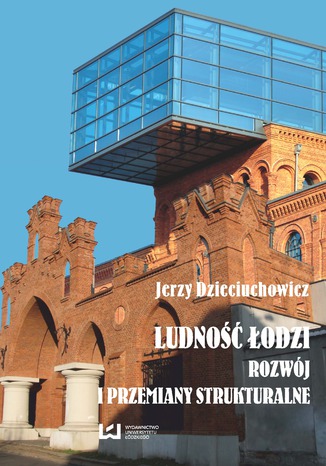
Ludność Łodzi - rozwój i przemiany strukturalne
Jerzy Dzieciuchowicz
Przedmiotem opracowania jest rozwój ludności Łodzi oraz przemiany jej struktur demograficzno-społecznych i przestrzennych od powstania miasta do czasów współczesnych. Analizą objęto pięć okresów: 1) do 1820 r., 2) lata 1820–1918, 3) lata 1918–1945, 4) lata 1945–1989 oraz 5) po 1989 r. Pokazano prawidłowości rządzące dynamiką, strukturą i zmiennością przestrzenną ludności Łodzi w warunkach specyficznych dla danych okresów. Opisano też kierunki dotychczasowego rozwoju demograficznego i zmiany w strukturze ludności miasta, a także ich ważniejsze konsekwencje. Zwrócono w szczególności na głęboki regres demograficzny oraz zmiany struktury demograficznej i społeczno-zawodowej ludności, generowane przez transformację systemową, w tym zwłaszcza na proces starzenia demograficznego ludności. Omówiono perspektywy demograficzne Łodzi, z uwzględnieniem zarówno uwarunkowań, jak i konsekwencji przewidywanego, dużego ubytku ludności miasta. Książka może zainteresować studentów i pracowników naukowych zajmujących się problemami geograficznymi, historycznymi, demograficznymi, socjologicznymi i ekonomicznymi dotyczącymi Łodzi. Może być ono również przydatna dla osób związanych z urbanistyką, planowaniem, polityką oraz gospodarką przestrzenną Łodzi.
Ludwik Fleck - mikrobiolog i filozof
Maria Ciesielska, Paweł Jarnicki
Autorzy starali się przybliżyć sylwetkę Ludwika Flecka jako mikrobiologa i serologa, a także jako filozofa nauki. Wierzymy, że przedstawienie pierwszej pozwoli lepiej zrozumieć tę drugą. Wiadomo, że Ludwik Fleck był filozofującym mikrobiologiem. Czas i miejsce, w których przyszło mu żyć, sprawiły, że zajął się medycyną. Mikrobiologiczna strona jego dorobku jest swoistym zapisem historii jego czasów, a jednocześnie zagadnienia serologiczne i mikrobiologiczne, którymi się zajmował, nie pozostały przecież bez wpływu na stworzoną przez niego filozofię nauki. Dorobek mikrobiologiczny i serologiczny Ludwika Flecka nie wzbudził dotąd zainteresowania większości badaczy Flecka. Działo się tak z pewnością dlatego, że wiedza w naukach medycznych szybko się dezaktualizuje (z tego względu np. współczesnych immunologów nie interesują teksty historyczne), ale także dlatego, że do zrozumienia jego niefilozoficznych tekstów nie wystarczy współczesne wykształcenie medyczne, trzeba mieć też sporą wiedzę historyczną. W przeciwieństwie do wielu filozofów nauki Ludwik Fleck był czynnym naukowcem, który swoją teorię budował nie tylko na podstawie lektury tekstów innych autorów i badaniach historycznych, ale głównie na fundamencie własnych doświadczeń, co jest bardzo ważną cechą jego twórczości.
Ludzie-Przedsiębiorstwa-Instytucje. Wielowymiarowość współczesnego zarządzania organizacjami
Felicjan Bylok, Ewelina Krzyżowska, Tomasz Odzimek (red.)
Niniejsza publikacja poświęcona jest wielowymiarowości zarządzania organizacjami i stanowi wieloaspektową i interdyscyplinarną debatę nad czynnikami determinującymi zarządzanie organizacjami na poziomie indywidualnym, wewnątrzorganizacyjnym oraz międzyorganizacyjnym. Monografia jest wynikiem prac badaczy biorących udział w trzech konferencjach organizowanych przez Katedrę Socjologii Stosowanej i Zarządzania Zasobami Ludzkimi Politechniki Częstochowskiej, tj.: 12th International Conference of Management "Sustainability - Security - Quality", Częstochowa 15-16 czerwca 2023 r., "Człowiek w organizacji - nowe trendy w zarządzaniu zasobami ludzkimi", Olsztyn 28-29 września 2023 r. oraz "Ludzie - przedsiębiorstwa - instytucje. Współdziałanie i współdzielenie się w relacjach społecznych i gospodarczych", Częstochowa 19-20 października 2023 r. Przedkładana monografia z pewnością dostarczy inspirującego materiału do refleksji oraz przyczyni się do lepszego zrozumienia zmian zachodzących w otoczeniu i wpływających na procesy zarządzania organizacjami. Zainteresuje nie tylko badaczy z obszaru nauk o zarządzaniu, socjologii i psychologii, lecz także praktyków - menedżerów i decydentów na różnych szczeblach, odpowiedzialnych za kształtowanie polityki gospodarczej.

Lustro weneckie. Biennale - Międzynarodowe Wystawy Architektoniczne
Sławomir Gzell
Opracowanie dotyczy wystaw architektonicznych weneckiego Biennale architektonicznego. Książka nie jest jednak typową chronologiczną kroniką tych spotkań, ponieważ według Autora, nie sposób ich opisać jako jednej wielkiej całości, a ponadto nie wydaje się to celowe. W efekcie powstał metaforyczny zbiór refleksji na temat architektury, poprzedzony komentarzem dotyczącym - "lustra weneckiego". "Podobnie jest z wystawami architektonicznymi weneckiego Biennale. Oglądamy eksponaty, oceniamy je, opisujemy, zapamiętujemy albo i nie, a jednocześnie, zwłaszcza my architekci, przeglądamy się w nich - w cudzych osiągnięciach - i możemy porównywać od razu prezentację i powidoki własnych prac. To porównywanie jest nie uniknione, bo po to zresztą wystawy te są organizowane. Obejrzyj i przymierz się do tego co oglądasz, oceniaj i ucz się, podziwiaj i zazdrość. Dziś jesteś z tej strony lustra, ale pożądaj miejsca po drugiej stronie. Tak to chyba działa, albo powinno działać."