Naukowe i akademickie
Marian Gieras, Rafał porowski
Skrypt zawiera treści będące przedmiotem nauczania w ramach Laboratorium Spalania prowadzonego na Wydziale Mechaniki Energetyki i Lotnictwa Politechniki Warszawskiej. Książka zawiera się z 7 rozdziałów, z których każdy dotyczy odrębnego ćwiczenia realizowanego przez studentów podczas zajęć. Zekres merytoryczny skryptu obejmuje: diagnostykę oraz wizualizację procesów spalania, gazowe płomienie dyfuzyjne i kinetyczne, stabilizację płomienia, temperaturę zapłonu cieczy, ciśnienie wybuchu paliw gazowych i ciekłych, propagancję płomienia pyłowego oraz temperaturowe granice palności cieczy palnych.
Laboratorium sygnałów, modulacji i systemów
Mateusz Malanowski
Skrypt jest przeznaczony dla uczestników przedmiotu Sygnały, modulacje i systemy (SYMSE), prowadzonego na trzecim semestrze na Wydziale Elektroniki i Technik Informacyjnych Politechniki Warszawskiej, ale może być także wykorzystywany na innych uczelniach i wydziałach. W opracowaniu omówiono pięć ćwiczeń laboratoryjnych ściśle powiązanych z treścią wykładu. Dotyczą one: szeregu Fouriera, badania analogowych układów liniowych, próbkowania sygnałów i ich odtwarzania z probek, badania dyskretnych układów liniowych oraz stabilności układów analogowych i modulacji.
Laboratory of Combustion Engines Theory
Dmytro Samoilenko
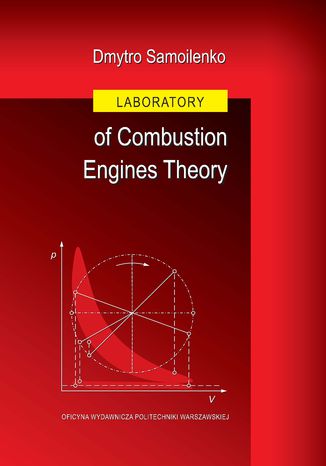
The present work will be devoted to the study of how the technical problems related to the design of combustion engines could be solved based on the fundamental laws of thermodynamics. Practical examples of how to use thermodynamics for describing physical phenomena and mathematical simulations of heat exchange processes in the combustion engines will be presented. All the well-known solutions used in the vehicles engineering and related to the fundamental theory of combustion engines are presented in the current work. These solutions are piston compressors (used as an auxiliary equipment or external compressors in turbocharger assistance system), automobile air conditioning systems and internal combustion engines. Special attention will be paid to the theory, fundamental processes analysis (based on empirical tests results) and in the case of internal combustion engines - to the influence of harmful substances contained in the exhaust gas on the environment.
Laboratory of Construction Machinery
Paweł Ciężkowski
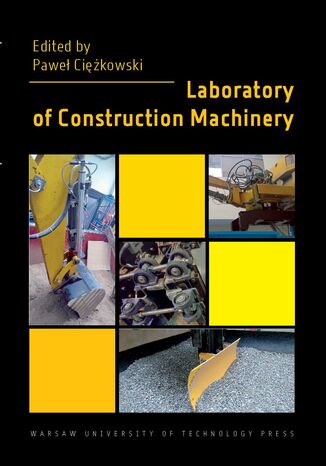
In this script, the laboratory exercises presented are divided into two groups. In the fi rst group, the authors describe the stands and test methods to determine the basic strength parameters of soils and rocks. The stands discussed allow students to become familiar with model processes of interaction of construction machinery tools with geomaterials and road surface materials (asphalt, concrete). The model investigations are concerned with elementary rock fragmentation processes and the interaction of crushing tools in the milling process of road surfaces. Exercises on machine-based crushing processes will be presented. Within this group of exercises, students will become familiar with the construction and operation of various types of crushers (cone, impact, jaw). The exercises will include studies of: a) the influence of the type of crusher on the shape and grain size of the product obtained, b) the influence of the outlet gap setting on the forces, energy consump-tion and effi ciency of the crushing process, c) the infl uence of the shape of jaw crusher crushing plates on the parameters of the crushing process. The second group of exercises deals with construction and transport machinery, their construction and operation. The exercises are aimed with the problems of interaction of tools with the soil. On the laboratory stand "soil channel", exercises will be presented to study the interaction of model tools of earth-moving construction machinery such as: loader bucket blade, excavator, scraper basket. The exercises will include the determination of cutting forces and work and the determina-tion of deformation mechanisms. The soil channel described in the paper allows students to fami-liarise themselves with the interaction of the driving system with the ground. The exercises will include determining the characteristics of the interaction of the crawler with the ground, investiga-ting changes in the tractive force of the machine as a function of slippage and the weight of the machine. Within the laboratory, exercises will be performed on a unique stand of a single-head hydraulic backhoe excavator, whose control and data acquisition system is fully automated. By performing the exercise on the single-head excavator, students will study selected methods for calculating cutting forces, the eff ect of excavator bucket shape and digging trajectory on cutting forces. The next stand is a rotating mechanism, where students can familiarise themselves with the properties of hydraulic drive systems using a hydraulic piston motor as an example, and the influence of the gain of individual controller components on system properties and speed control error. The script also includes a stand to learn about a typical PLC structure and the programme structure and programming method. Information on the theory of vibratory conveyor of granular materials is also presented in this study.
LaTeX dla niecierpliwych. Część pierwsza. Wydanie drugie poprawione i uzupełnione
Zofia Walczak
Książka będzie przydatna dla studentów kierunków ścisłych przygotowujących swoje prace licencjackie lub magisterskie, a także pracowników naukowych stających przed koniecznością dostarczenia złożonego w LATEX-u artykułu do czasopisma naukowego. LATEX jest językiem niskiego poziomu, posiada ok. 300 pierwotnych sekwencji sterują-cych, które nie są rozkładalne na prostsze funkcje. Rozumie ok. 900 sekwencji sterują-cych zbudowanych z sekwencji pierwotnych. Są one częścią wbudowanego słownika i możliwe jest budowanie z nich makr i wygodnego interfejsu użytkownika. Obecnie używany, standardowy format LATEX-a powstał w 1994 r.
Leading and developing virtual teams. Practical lessons learned from university students
Joanna Samul, Monica Zaharie, Andrzej Pawluczuk, Anamaria...
This book features the competences and skills that the university students as future leaders should acquire in order to work in virtual teams. Virtual teams have become the basic unit for many organizations. Combined work using different technology, places, time zones, persons of different cultures requires knowledge and skills to lead this team. Unreflective teaching methods can cause a lower level of efficiency and effectiveness. The gap knowledge about todays students’ skills of virtual work may be interesting for university lecturers to improve the quality of university leadership programs, and also for HR practitioners to develop managerial competences. This book focuses on leading and developing virtual teams in the process of shaping their competence for the new (prospects) organizational requirements. The effective strategies and clever techniques to improve leadership and management skills are needed in the virtual environment. The premise of this book is to pay attention how to lead and develop virtual teams by providing more directed tips to improve the quality of a university program and thereby develop effective leaders within their organization. The better the leadership, the better the virtual teams.
Andrzej Rokita, Katerina Mouratidou, Angela Magnanini, Evgen...
Children learn best when their minds and bodies are actively engaged. This book discusses education as a movement-based process that nurtures curiosity, develops cooperation and brings joy to learning. It also supports children with concentration problems and children with special educational needs. Movement can become a natural and meaningful part of classroom learning. The book presents seven innovative methods developed as part of the Learning by Moving programme. Each chapter combines theoretical reflection with practical application, offering teachers insights, examples and appropriate tools for combining movement with learning. Dzieci najlepiej uczą się, gdy ich umysły i ciała są aktywnie zaangażowane. Niniejsza książka przedstawia edukację jako proces oparty na ruchu, który pielęgnuje ciekawość, rozwija współpracę i daje radość z nauki. Wspomaga także dzieci z problemami koncentracji oraz dzieci ze specjalnymi potrzebami edukacyjnymi. Ruch może stać się naturalną i znaczącą częścią nauki w klasie. Książka zawiera siedem innowacyjnych metod opracowanych w ramach programu Learning by Moving. Każdy rozdział łączy refleksję teoretyczną z praktycznym zastosowaniem, oferując nauczycielom spostrzeżenia, przykłady i odpowiednie narzędzia pozwalające połączyć ruch z nauką.