Architektura
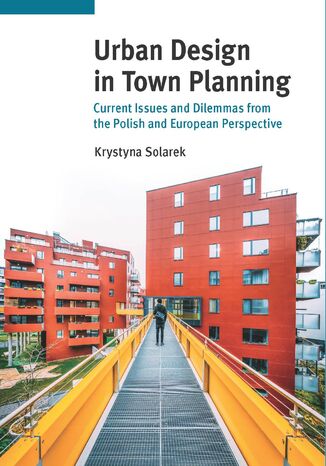
Urban Design in Town Planning. Current Issues and Dilemmas from the Polish and European Perspective
Krystyna Solarek
Cities have become the habitat for more than half of the world's population. Cities are not only a desirable location for life activities but also the subject of great interest, scientific research and social activities as well as everyday fascinations. However, it can be observed that the more we talk about cities and their planning - about sustainable development, eco-development, new technologies, smart cities, participatory planning and various new urban policies, etc., the less space there is to deal with the topic of urban design. Indeed, urban design will not solve all city problems, but one must be aware that all city problems will not be solved without urban design. It is evident that city is as a complex, dynamic open system shows great possibilities of self-regulation and self-organization. However, people have been trying to influence this system for centuries through planning. The formation of certain rules and deepening knowledge of the functioning of urban organisms certainly contribute to improving quality, in this case the quality of life in cities. The organization is not an end in itself, but a tool for getting certain collective values. Town planners and urban designers, based on the broad knowledge they have, are probably the closest to achieving the assumed results (Mironowicz 2013). Urban design as an occupation is relatively new, but historically it has usually played a significant role in forming cities. Urban design, although it did not have that name yet, has for centuries been one of the most important arts - the one that has most strongly affected the lives of successive generations that has survived to this day - whether in a transformed or unchanged form, or in memory and historical records. In the simplest terms urban design is a link between architecture and spatial planning - a part of spatial planning with the basics and approach of architecture. This is a field where not all architects and few town-planners feel good and competent. It is art, technique, skill and process, as a result of which spatial structures are shaped. It gives them form, function and character appropriate to the scale of the study or document. Urban designs, as the saved projects, no matter how long they were prepared, usually "last" only for a moment. But this does not mean that they do not matter to the development of cities. On the contrary - they change into land development plans, strategies and action programs, or projects for the specific areas, sometimes they are only an inspiration or hint for municipal authorities, and at other times the basis for creating master plans or a picture that allows participants to check the ideas presented. Among the various projects or competition urban concepts, the possibility of implementation usually has one vision - the others remain the experience of the designers or an inspiration for those who had the opportunity to look at them. Despite the apparent elusiveness of this "being", which is the urban design, it has a key impact on the formation of spatial structure cities. This book doesn't offer any detailed guideline of urban design, arranging the streets, squares and buildings that make up the public face of towns and cities. It is only to show how important it is to shape city structure using urban design, where it is possible, so as to build urban developments which are both structurally and functionally harmonious, logical, friendly, resilient, rational and... beautiful. This has been man's desire since the very beginning and today it's important to recall this with the reflection on the role and range of urban design in the times of participatory culture of the information era. The book is also intended to show where urban designs are the most useful today and what priorities can guide their creation if they are to be consistent with contemporary postulates. The study also draws attention to the biggest problems, difficulties and challenges that relate to design in the era of participation, parameterization, globalization and uncertainty. Most analyzes end with questions, although I try to answer some of them myself, without any certainty as to whether they are correct. The study also shows where, in a fascinating and broad urban theme, urban designers can find a place for themselves - how to translate new ideas and postulates for urban design. I would like to draw attention to some current issues and dilemmas of urban design related to both new models of economic development, features and needs of contemporary societies, as well as new planning tools. The lack of creative foundations for regional planning, the disappearance of urban design in local planning, and the underestimation of urban design in the education of architects and town planners are particularly noticeable in Poland, but also visible in other countries. And yet temporary problems, also those related to the impediments to the implementation of urban design, will probably end sometime. We must therefore prepare for the fact that urban design will still be needed. That's why this publication seems to be important. The specificity of European cities and planning traditions have led me to narrow the field of analysis, therefore I do not discuss the urban problems of the whole world, the more so as the urbanization phenomena occurring, for example, in Asia or America, are very complicated. Nevertheless, I do make reference to selected world trends in urban planning. I devote a lot of space to the problems of urban design in Poland, which are partly convergent with those that concern other post-socialist countries, although much concerns only Polish specifics. I hope that showing them in the European context will bring this topic closer to those who do not know the realities of Polish spatial planning, and, on the other hand, that it will help Polish readers to see how and under what conditions urban design can be applied. The presented study consists of three main parts. Since I consider doubts, dilemmas and challenges related to urban design in the contemporary world, their titles are formulated as questions - such the questions that many urban designers ask in their professional work: "What is Urban Design?", "What to Design?" and "How to Design?". In the first part of the monograph I present various approaches to the topic of urban design, its status and role in shaping the spatial structure of cities. The second part of the book titled "What to Design" shows how different scales and ranges are related to urban design but, above all, draws attention to those topics that are currently the most up-to-date when undertaking planning studies. Therefore, it does not cover all the areas of activity dealt with by city planners, and some of them are only approximated by other considerations (for example, the issue of housing has not been separated, only included in some other thematic groups). In the third part, I consider the current new tasks for urban planners caused by civilizational changes, including social and technological changes, and the possible approaches to design in this situation, including using new techniques and tools. The book is dedicated to urbanists - scientists, designers and planners - not only Polish ones. It is also for all, who have contemporary city in mind, as it is a voice in a discussion about problems and challenges, some of which are universal. It is for those who do not know the Polish planning system nor Poland in general - so as they can expand their knowledge and awareness as well as convince themselves that we can participate in various joint activities. The book is also dedicated to Polish recipients - so that they will feel that we are participating in a joint project for shaping European cities, and although we do not always have success (because a lot has to change), we can not give up learning and teaching others, motivating and improving urban designers' workshop - it may be useful again. In some parts of this book, I have developed threads that appeared in my earlier publications, which has been provided in the text with relevant information, but it mainly consists of new content. I have used my over 25 years of experience in urban design and town planning, but I have also based my research on the city structure and its individual problems. This influenced the subjective selection of illustrations and examples - the ones that I know best, including some of my own studies, prevail in the book.
Urbanistyka w gospodarowaniu przestrzenią
Jan Maciej Chmielewski
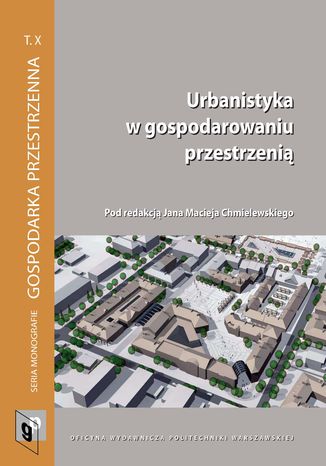
Tom X serii monografii naukowych Wydziału Geodezji i Kartografii Politechniki Warszawskiej "Gospodarka Przestrzenna" W monografii omówiono tematy dotyczące suburbanizacji, chaosu przestrzennego oraz wpływu inwestycji publicznych związanych z gospodarką odpadami na przestrzeń współczesnego miasta. Ponadto przedstawiono zagadnienia związane z wartościami kulturowymi i urbanistycznymi okresu międzywojennego. Opracowanie stanowi przyczynek do badań w obszarze gospodarki przestrzennej i równocześnie utwierdza znaczenie w nich nauk technicznych, w tym Geodezji i Kartografii.
Henryk Grzegorz Sabiniak
Informacje zawarte w książce obejmują wytyczne dotyczące projektowania instalacji wentylacyjnych. Zamieszczono w niej podstawowe parametry powietrza, opis zjawisk termodynamicznych dotyczących powietrza, wzory obliczeniowe określające wielkości przewodów wentylacyjnych, wymagań ich szczelności i wytrzymałości, sposobów prowadzenia i mocowania. Opisano elementy instalacji wentylacyjnych, ich konstrukcje i funkcje. Bardzo szczegółowo przedstawiono metody i urządzenia do odzyskiwania energii cieplnej z usuwanego (zużytego) powietrza. Rozważania teoretyczne poparto licznymi przykładami projektowo-obliczeniowymi. Książka jest przeznaczona dla studentów studiujących przede wszystkim na kierunkach inżynierii środowiska i bezpieczeństwa pracy. Może być także pomocna dla studentów kierunków budownictwa, architektury i inżynierii procesowej.
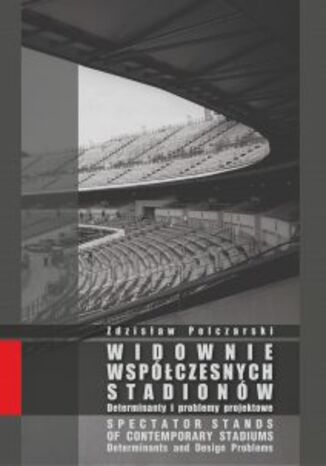
WIDOWNIE WSPÓŁCZESNYCH STADIONÓW. Determinanty i problemy projektowe
Zdzisław Pelczarski
Niniejsze wydanie książki w wersji elektronicznej jest wznowieniem jej wyczerpanego nakładu z roku 2009. Nie różni się ono układem i zakresem merytorycznym od wydania pierwszego, gdyż – pomimo upływu dziewięciu lat – zawarte w tamtym wydaniu treści są nadal aktualne. W przeciągu tego czasu, co prawda, powstało w Polsce kilka dużych stadionów piłkarskich oraz zakończony został ostatni etap przebudowy wielofunkcyjnego Stadionu Śląskiego, a w skali globalnej zbudowano pokaźną liczbę nowych stadionów o podobnej randze i wielkości. Realizacje te nie wniosły jednak istotnego postępu w dziedzinie projektowania samej widowni. Prezentowana praca jest podsumowaniem wieloletnich, praktycznych doświadczeń autora w dziedzinie projektowania i realizacji wielkich widowni, w tym - jednej z największych funkcjonujących w Polsce - widowni Stadionu Śląskiego. Jest zbiorem własnych studiów i badań, towarzyszących procesowi projektowo-inwestycyjnemu etapowej przebudowy tego obiektu w latach 1994-2007, w którym to przedsięwzięciu autor pełnił funkcje generalnego projektanta. W swej podstawowej części stanowi ona kontynuację i rozwinięcie rozważań na temat teorii projektowania wielkich widowni, publikowanych przez współprojektanta pierwotnej formy Stadionu Śląskiego (1956), architekta Juliana Brzuchowskiego. Publikacje te – a ostatnia miała miejsce w roku 1982 – były dotychczas jedynym, szerzej rozpowszechnionym, rodzimym źródłem wiedzy z tej dziedziny.
Agnieszka Starzyk
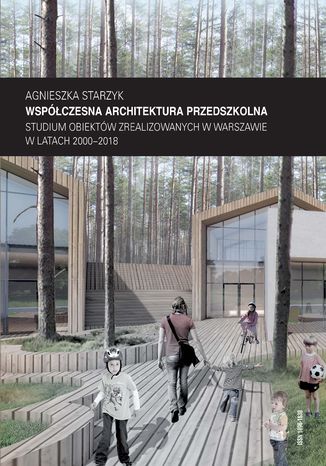
Głównym celem badawczym monografii było wykazanie nowych tendencji kształtowania współczesnej architektury przedszkolnej w zakresie rozwiązań formalnych i funkcjonalno-przestrzennych wpływających na technologię pracy przedszkola oraz na procesy opiekuńcze, wychowawcze i edukacyjne. Opracowanie składa się z pięciu rozdziałów. We wstępie przedstawiono motywację podjęcia tematu, sprecyzowano przedmiot, zakres i cel badań, określono metody, narzędzia i kryteria badawcze, opisano stan badań, a także zdefiniowano podstawowe terminy. W rozdziale 2 omówiono badania dotyczące współczesnych tendencji formalno-estetycznych, funkcjonalno-przestrzennych oraz prośrodowiskowych w kontekście architektury przeznaczonej dla dzieci. Rozdział 3 podzielono na dwa powiązane ze sobą obszary tematyczne - Architekturę przedszkolną w Europie i na świecie oraz Architekturę przedszkolną w Polsce. W obu podrozdziałach przeanalizowano zarys dziejów wychowania przedszkolnego, zarys historii architektury przedszkolnej oraz współczesne tendencje kształtowania architektury przedszkolnej. W podrozdziale dotyczącym Polski dodatkowo poddano analizie prawodawstwo w zakresie obiektów wychowania przedszkolnego oraz zmienność założeń funkcjonalno-przestrzennych w latach 1918-2018. W rozdziale 4 omówiono badania ilościowe i jakościowe przeprowadzone w formie badań terenowych, ankietowych oraz swobodnych wywiadów z dyrektorkami przedszkoli. Rozdział 5. zawiera wnioski, rekomendacje i omówienie wyzwań przyszłości. Bogaty materiał badawczy i dokumentacyjny pozwolił na wyciągnięcie wniosków dotyczących kształtowania współczesnej architektury przedszkolnej z myślą o głównym odbiorcy (dziecku) i innych użytkownikach. Wynikiem badań są rekomendacje w formie autorskiej listy kontrolnej (narzędzie badawcze do oceny jakościowej) w zakresie kształtowania współczesnych obiektów przedszkolnych.
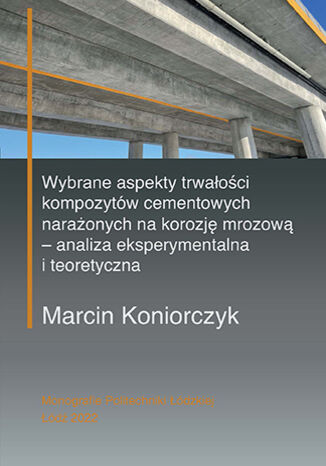
Marcin Koniorczyk
Przedstawiona praca zawiera wyniki badań dotyczące mrozowej degradacji kompozytów o matrycy cementowej. Badania prowadzone były na Politechnice Łódzkiej od ponad 10 lat. Problemy dotyczące opisu zamarzania wody w materiałach budowlanych oraz jego wpływ na ich trwałość są niezwykle istotne z inżynierskiego punktu widzenia, dlatego wciąż stanowią jeden z czołowych tematów badawczych w dziedzinie trwałości konstrukcji budowlanych. Autor poruszył wybrane zagadnienia analizy doświadczalnej oraz modelowania numerycznego zamarzania wody w kompozytach o matrycy cementowej. Najważniejszym osiągnięciem przedstawionym w pracy jest próba probabilistycznej analizy procesu zniszczenia mrozowego betonów. Zgodnie z zapisami CEB-FIB Model Code 2010 stan graniczny nośności jest przekroczony, jeżeli prawdopodobieństwo wystąpienia uszkodzeń i utraty własności mechanicznych betonu wskutek cyklicznego zamarzania jest większe niż wartość graniczna tego prawdopodobieństwa.
Wybrane zagadnienia z budownictwa ogólnego
Jakub Miszczak, Iwona Szer, Elżbieta Habiera-Waśniewska, Monika...
Książka dotyczy obowiązujących przepisów w obszarze budownictwa, w szczególności zasad projektowania, budowy, utrzymania i rozbiórki obiektów budowlanych. Kluczowym elementem jest zapewnienie bezpieczeństwa w procesie budowlanym, co regulowane jest przez przepisy Prawa budowlanego, szczególnie art. 5, który określa wymagania dotyczące projektowania, budowy i użytkowania obiektów. Autorzy podkreślają znaczenie wspomagania komputerowego w projektowaniu, jednak odpowiedzialność za ewentualne błędy spoczywa na projektantach, a nie twórcach oprogramowania. Książka skierowana jest do początkujących projektantów, studentów oraz osób odpowiedzialnych za utrzymanie obiektów budowlanych.
Zamek w Działdowie. Dzieje budowlane i problemy konserwatorskie
Wojciech Wółkowski
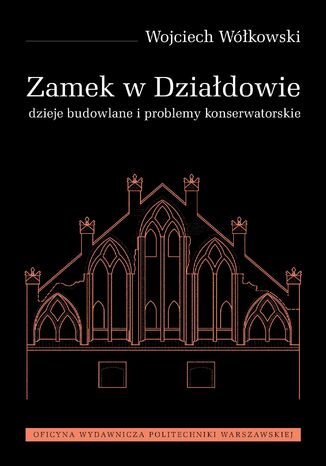
Po ponad stu latach od podjęcia idei przywrócenia do życia działdowskiego zamku dobiegły końca prace restauratorskie przy głównym skrzydle i jego murach. Prowadzone ostatnio roboty były znakomitą okazją do przyjrzenia się elementom budowli zwykle niedostępnym dla badaczy, do których dostęp możliwy będzie dopiero przy okazji kolejnego kapitalnego remontu budowli. Jest to więc dobry moment do podsumowań dotychczasowych badań nad dziejami budowlanymi zamku. Prezentowana książka nie jest pierwszą publikacją na temat zamku działdowskiego. Jest jednak pierwszą, która koncentruje się na jego architekturze i jej dziejach. Skupia się wyłącznie na faktach związanych bezpośrednio z przemianami architektury i oddziaływującej na nią funkcji obiektu w różnych okresach dziejowych. Jej zadaniem nie jest bowiem opisywanie szeroko pojętego i niezwykle ciekawego kontekstu społecznego czy politycznego w jakim funkcjonował zamek, dlatego nie znajdzie w niej czytelnik informacji biograficznych o osobach mniej lub bardziej związanych z zamkiem (o ile nie mają one wpływu na jego architekturę) czy też opisów wydarzeń politycznych, czy społecznych, dziejących się w zamkowych murach.