
Angielski
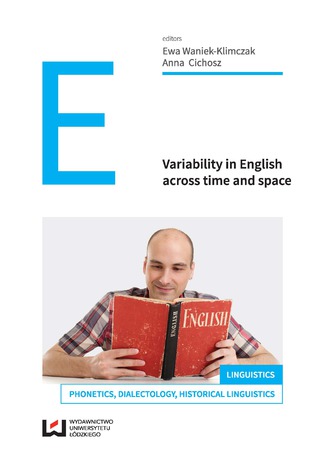
Variability in English across time and space
Ewa Waniek-Klimczak, Anna Cichosz
Synchronic variability in the area of phonetics, phonology, vocabulary, morphology and syntax is a natural feature of any language, including English. The existence of competing variants is in itself a fascinating phenomenon, but it is also a prerequisite for diachronic changes. This volume is a collection of studies which investigate variability from a contemporary and historical perspective, in both native and non-native varieties of English. The topics include Middle English spelling variation, lexical differences between Middle English dialects, Late Middle and Early Modern English forms of address, Middle English negation patterns, the English used by Polish immigrants living in London, lexical fixedness in native and non-native English used by Polish learners, and the phenomenon of phonetic imitation in Polish learners of English. The book should be of interest to anyone interested in English linguistics, especially English phonetics and phonology as well as history of English, historical dialectology and pragmatics.
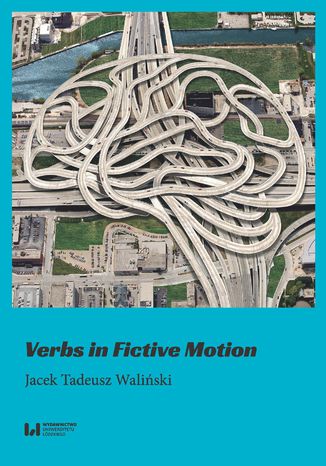
Jacek Tadeusz Waliński
This book presents a corpus-based study of verbs used in expressions of fictive motion, which refers to the cognitive-linguistic phenomenon of describing material objects incapable of movement in terms of motion over their configuration in space. The study focuses specifically on the category of coextension paths, which are used to describe the form, orientation, or location of a spatially extended object in terms of a path over the object’s extent. The analysis, carried out using the British National Corpus, indicates that in English only a fraction of motion verbs are used consistently to express coextension paths, and that some of them are used for this purpose far more systematically than others. A holographic image of structuring coextension paths that emerges from the linguistic data indicates that whereas directional motion verbs tend to be used in fictive motion to express bounded paths, directions, and routes, verbs of motion manner are employed to specify shapes constituting subjective counterparts of spatial contours of actual motion. Moreover, depending on the particular use and the wider linguistic context, certain coextension path expressions can be interpreted as a result of conceptual blending, which fuses multiple facets of motion via a common communicative platform established dynamically in discourse. From the perspective of the analysis, these interpretations are not mutually irreconcilable. The evocation of a particular conceptualization triggered by the semantic attributes conflated in a verb and its satellites is likely to depend not only on individual comprehension strategies, but also on the degree of cultural-linguistic conventionalization of certain fictive motion patterns established through the processes of language acquisition and social transfer.
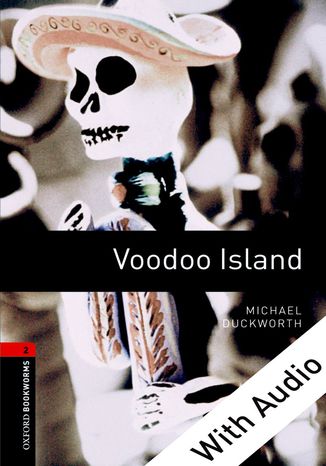
Voodoo Island - With Audio Level 2 Oxford Bookworms Library
Duckworth, Michael
A level 2 Oxford Bookworms Library graded reader. This version includes an audio book: listen to the story as you read. Written for Learners of English by Michael Duckworth. Mr James Conway wants to make money. He wants to build new houses and shops - and he wants to build them on an old graveyard, on the island of Haiti. There is only one old man who still visits the graveyard; and Mr Conway is not afraid of one old man. But the old man has friends - friends in the graveyard, friends who lie dead, under the ground. And when Mr Conway starts to build his houses, he makes the terrible mistake of disturbing the sleep of the dead . . .
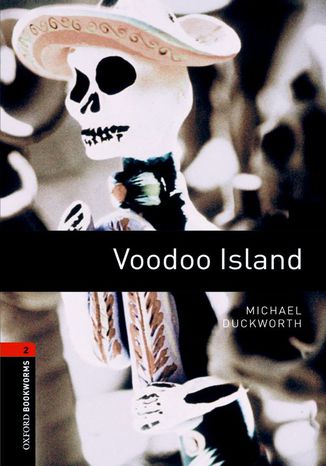
Voodoo Island Level 2 Oxford Bookworms Library
Duckworth, Michael
A level 2 Oxford Bookworms Library graded readers. Written for Learners of English by Michael Duckworth Mr James Conway wants to make money. He wants to build new houses and shops - and he wants to build them on an old graveyard, on the island of Haiti. There is only one old man who still visits the graveyard; and Mr Conway is not afraid of one old man. But the old man has friends - friends in the graveyard, friends who lie dead, under the ground. And when Mr Conway starts to build his houses, he makes the terrible mistake of disturbing the sleep of the dead . . .
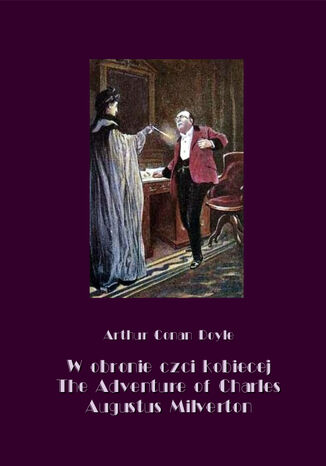
W obronie czci kobiecej. The Adventure of Charles Augustus Milverton
Arthur Conan Doyle
Książka w dwóch wersjach językowych: polskiej i angielskiej. A dual Polish-English language edition. Holmes powiadamia Watsona, że lady Ewa Blackwell, narzeczona lorda Dovercourt, jest prześladowana przez Milvertona, zwanego królem szantażystów. Osobnik ten żąda od niej dużej sumy pieniędzy w zamian listy miłosne lady do jej kochanka grożąc, że w przeciwnym razie ujawni je, co doprowadzi do zerwania zaręczyn. Detektyw poproszony został o wynegocjowanie obniżenia ceny okupu do wysokości, którą lady Ewa byłaby w stanie spłacić, Milverton jest jednak nieugięty. Wyjaśnia, że planuje kilka podobnych spraw i zamierza w ten sposób zastraszyć inne ofiary, które przestaną go lekceważyć. Oburzony tupetem szantażysty Holmes chce go zrewidować, tamten pokazuje jednak, że ma broń i dodaje naiwnością byłoby sądzić, że noszę takie papiery przy sobie. Na pytanie doktora, czy taki proceder jest bezkarny, detektyw wyjaśnia, że należałoby pozwać szantażystę do sądu i udowodnić mu wymuszenie, co oznaczałoby upublicznienie sprawy, czego ofiary starają się uniknąć. (za Wikipedią).
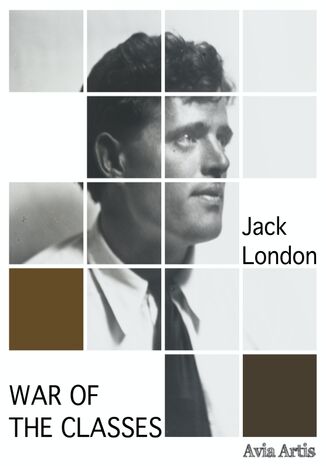
Jack London
“War of the Classes” is a book by Jack London, an American novelist. A pioneer of commercial fiction and an innovator in the genre that would later become known as science fiction. War of the Classes is a series of essays by Jack London. The collection consists of these titles: The Class Struggle, The Tramp, The Scab, The Question of the Maximum,A Review, Wanted: A New Land of Development, How I Became a Socialist.
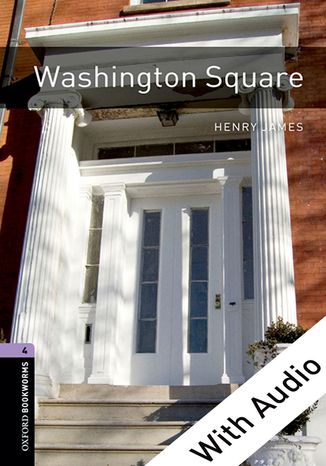
Washington Square - With Audio Level 4 Oxford Bookworms Library
James, Henry
A level 4 Oxford Bookworms Library graded reader. This version includes an audio book: listen to the story as you read. Retold for Learners of English by Kieran McGovern. When a handsome young man begins to court Catherine Sloper, she feels she is very lucky. She is a quiet, gentle girl, but neither beautiful nor clever; no one had ever admired her before, or come to the front parlour of her home in Washington Square to whisper soft words of love to her. But in New York in the 1840s young ladies are not free to marry where they please. Catherine must have her father's permission, and Dr Sloper is a rich man. One day Catherine will have a fortune of 30,000 dollars a year . . .
Washington Square Level 4 Oxford Bookworms Library
James, Henry
A level 4 Oxford Bookworms Library graded readers. Retold for Learners of English by Kieran McGovern When a handsome young man begins to court Catherine Sloper, she feels she is very lucky. She is a quiet, gentle girl, but neither beautiful nor clever; no one had ever admired her before, or come to the front parlour of her home in Washington Square to whisper soft words of love to her. But in New York in the 1840s young ladies are not free to marry where they please. Catherine must have her father's permission, and Dr Sloper is a rich man. One day Catherine will have a fortune of 30,000 dollars a year . . .
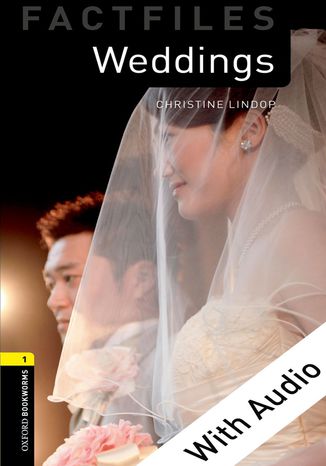
Weddings - With Audio Level 1 Factfiles Oxford Bookworms Library
Lindop, Christine
A level 1 Factfiles Oxford Bookworms Library graded reader. This version includes an audio book: listen to the story as you read. Written for Learners of English by Christine Lindop. 'The bride wore a long white dress, with flowers in her hair. After the wedding, there was a party, and people gave presents to the bride and groom.' This wedding was nearly two thousand years ago, in Rome. Some things don't change. But some things do. Today you can have a wedding on a mountain, or under the sea, or 'Elvis' can sing for you. And different things happen in different places. Little birds made of paper, small trees, money in the bride's shoe, and lots of noise - they are all important for weddings somewhere. Welcome to the wonderful world of weddings!
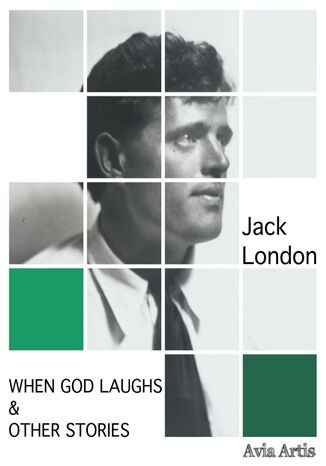
When God Laughs & Other Stories
Jack London
“When God Laughs & Other Stories” is a book by Jack London, an American novelist. A pioneer of commercial fiction and an innovator in the genre that would later become known as science fiction. When God Laughs & Other Stories is a series of short stories by Jack London. It consists of twelve moving and thrilling stories such as: When God Laughs, A Wicked Woman, Make Westing or The Curious Fragment.
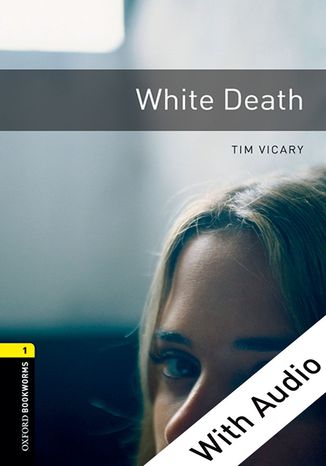
White Death - With Audio Level 1 Oxford Bookworms Library
Vicary, Tim
A level 1 Oxford Bookworms Library graded reader. This version includes an audio book: listen to the story as you read. Written for Learners of English by Tim Vicary. Sarah Harland is nineteen, and she is in prison. At the airport, they find heroin in her bag. So, now she is waiting to go to court. If the court decides that it was her heroin, then she must die. She says she did not do it. But if she did not, who did? Only two people can help Sarah: her mother, and an old boyfriend who does not love her now. Can they work together? Can they find the real criminal before it is too late?
White Death Level 1 Oxford Bookworms Library
Vicary, Tim
A level 1 Oxford Bookworms Library graded readers. Written for Learners of English by Tim Vicary Sarah Harland is nineteen, and she is in prison. At the airport, they find heroin in her bag. So, now she is waiting to go to court. If the court decides that it was her heroin, then she must die. She says she did not do it. But if she did not, who did? Only two people can help Sarah: her mother, and an old boyfriend who does not love her now. Can they work together? Can they find the real criminal before it is too late?
Jack London
“White Fang” is a book by Jack London, an American novelist. A pioneer of commercial fiction and an innovator in the genre that would later become known as science fiction. White Fang is the name of the book's eponymous character, a wild wolfdog. The story details White Fang's journey to domestication in Yukon Territory and the Northwest Territories during the 1890s Klondike Gold Rush. It is a companion novel (and a thematic mirror) to London's best-known work, The Call of the Wild, which is about a kidnapped, domesticated dog embracing his wild ancestry to survive and thrive in the wild.
Fyodor Dostoyevsky
White Nights - a short story by Fyodor Dostoyevsky, a Russian novelist, philosopher and short story writer. Many literary critics rate him as one of the greatest psychological novelists in world literature. Like many of Dostoyevsky's stories, "White Nights" is told in the first person by a nameless narrator. The narrator is a young man living in Saint Petersburg who suffers from loneliness. He gets to know and falls in love with a young woman, but the love remains unrequited.
Widmo przeszłości. The Mystery of Cloomber
Arthur Conan Doyle
Książka w dwóch wersjach językowych: polskiej i angielskiej. Widmo przeszłości, czy też Tajemnica Cloomber - The Mystery of Cloomber to powieść brytyjskiego autora Sir Arthura Conan Doyle'a. Narratorem jest John Fothergill West, Szkot, który przeprowadził się z rodziną z Edynburga do Wigtownshire, aby opiekować się majątkiem przyrodniego brata swojego ojca, Williama Farintosha. W pobliżu ich rezydencji, Branksome, znajduje się Cloomber Hall, przez wiele lat nieużytkowany. W końcu jednak zamieszkuje w nim John Berthier Heatherstone, służący ongiś w armii indyjskiej. Generał Heatherstone jest znerwicowany do tego stopnia, że wpada w obłęd. W miarę rozwoju opowieści staje się jasne, że jego obawy są związane z niektórymi ludźmi w Indiach, których w jakiś sposób obraził. W jego obecności ludzie słyszą dziwny dźwięk, podobny do pobrzmiewania dzwonka, który jest bardzo niemiły. Co roku jego obłęd osiąga apogeum około piątego października, po czym jego lęki na chwilę ustępują. Po pewnym czasie w zatoce dochodzi do rozbicia się statku, a wśród ocalałych jest trzech buddyjskich mnichów, którzy weszli na statek z Kurrachee To jednak nie jest koniec tej dziwnej historii...
George Bernard Shaw
“Widowers' Houses” is a play by George Bernard Shaw, an Irish playwright who became the leading dramatist of his generation, and in 1925 was awarded the Nobel Prize in Literature. Widowers' Houses was the first play by George Bernard Shaw to be staged. This is one of three plays Shaw published as Plays Unpleasant in 1898. They were termed "unpleasant" because they were intended, not to entertain their audiences – as the traditional Victorian theatre was expected to – but to raise awareness of social problems and to censure exploitation of the labouring class by the unproductive rich. The other plays in the group are The Philanderer and Mrs. Warren's Profession.