
Bazy danych
Ali Madani
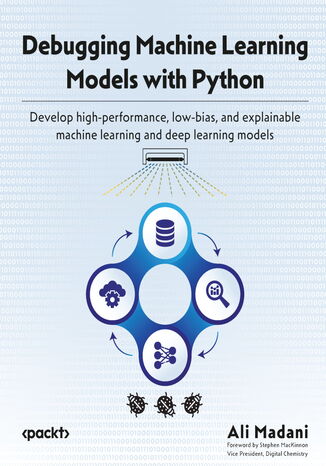
Debugging Machine Learning Models with Python is a comprehensive guide that navigates you through the entire spectrum of mastering machine learning, from foundational concepts to advanced techniques. It goes beyond the basics to arm you with the expertise essential for building reliable, high-performance models for industrial applications. Whether you're a data scientist, analyst, machine learning engineer, or Python developer, this book will empower you to design modular systems for data preparation, accurately train and test models, and seamlessly integrate them into larger technologies.By bridging the gap between theory and practice, you'll learn how to evaluate model performance, identify and address issues, and harness recent advancements in deep learning and generative modeling using PyTorch and scikit-learn. Your journey to developing high quality models in practice will also encompass causal and human-in-the-loop modeling and machine learning explainability. With hands-on examples and clear explanations, you'll develop the skills to deliver impactful solutions across domains such as healthcare, finance, and e-commerce.
Delphi 2007 dla WIN32 i bazy danych
Marian Wybrańczyk
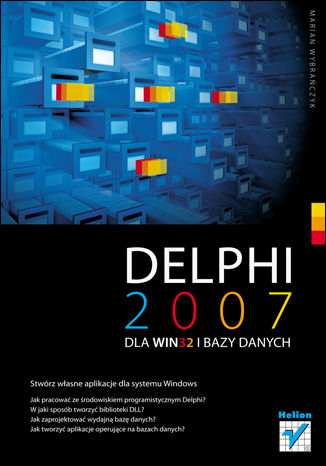
Stwórz własne aplikacje dla systemu Windows Jak pracować ze środowiskiem programistycznym Delphi? W jaki sposób tworzyć biblioteki DLL? Jak zaprojektować wydajną bazę danych? Jak tworzyć aplikacje operujące na bazach danych? Wśród wszystkich środowisk programistycznych umożliwiających tworzenie aplikacji Delphi jest jednym z najbardziej znanych i popularnych. To narzędzie, obecne na rynku od ponad dwunastu lat, cieszy się zasłużonym uznaniem twórców oprogramowania -- dzięki sporym możliwościom, ogromnej bibliotece komponentów i czytelnej składni języka Object Pascal, będącego podstawą tego środowiska. Najnowsza wersja Delphi, oznaczona symbolem RAD Studio 2007, nie tylko umożliwia tworzenie "klasycznych" aplikacji dla Windows, opartych o Windows API, ale także udostępnia kontrolki platformy .NET. Książka "Delphi 2007 dla WIN32 i bazy danych" to podręcznik opisujący zasady tworzenia aplikacji dla systemu Windows w najnowszej wersji Delphi. Przedstawia ona techniki tworzenia aplikacji bazodanowych w oparciu o mechanizmy Windows API i kontrolki VCL. Czytając ją, poznasz komponenty, jakie Delphi oferuje programiście, i dowiesz się, jak korzystać z nich we własnych aplikacjach. Opanujesz mechanizmy komunikacji z niemal wszystkimi systemami zarządzania bazami danych dostępnymi na rynku. Przeczytasz także o tworzeniu wersji instalacyjnych napisanych przez siebie aplikacji. Interfejs użytkownika Delphi 2007 Komponenty dostępne w Delphi Przetwarzanie grafiki Korzystanie z komponentów VCL Aplikacje wielowątkowe Tworzenie bibliotek DLL Operacje na plikach Obsługa dokumentów XML Projektowanie bazy danych i struktury tabel Komunikacja z bazami danych Mechanizmy blokowania rekordów Tworzenie wersji instalacyjnych aplikacji Wykorzystaj możliwości najnowszej wersji środowiska programistycznego, które zrewolucjonizowało proces tworzenia aplikacji!
Matjaz B Juric, Sven Bernhardt, Danilo Schmiedel,...
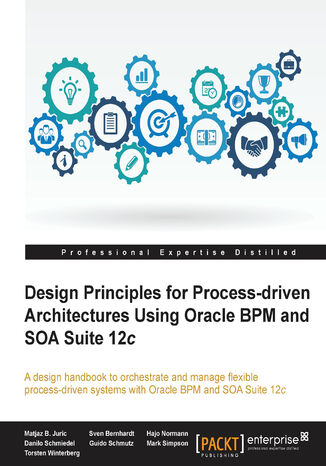
This book is intended for BPM and SOA architects, analysts, developers, and project managers who are responsible for, or involved in, business process development, modelling, monitoring, or the implementation of composite, process-oriented applications. The principles are relevant for the design of on-premise and cloud solutions.
Designing Machine Learning Systems with Python. Key design strategies to create intelligent systems
David Julian, Vahid Mirjalili
Machine learning is one of the fastest growing trends in modern computing. It has applications in a wide range of fields, including economics, the natural sciences, web development, and business modeling. In order to harness the power of these systems, it is essential that the practitioner develops a solid understanding of the underlying design principles.There are many reasons why machine learning models may not give accurate results. By looking at these systems from a design perspective, we gain a deeper understanding of the underlying algorithms and the optimisational methods that are available. This book will give you a solid foundation in the machine learning design process, and enable you to build customised machine learning models to solve unique problems. You may already know about, or have worked with, some of theoff-the-shelf machine learning models for solving common problems such as spam detection or movie classification, but to begin solving more complex problems, it is important to adapt these models to your own specific needs. This book will give you this understanding and more.
Quan Ha Le, Marcelo Diaz
PostgreSQL is an open-source object-relational database management system (DBMS) that provides enterprise-level services, including high performance and scalability. This book is a collection of unique projects providing you with a wealth of information relating to administering, monitoring, and testing PostgreSQL. The focus of each project is on both the development and the administrative aspects of PostgreSQL.Starting by exploring development aspects such as database design and its implementation, you’ll then cover PostgreSQL administration by understanding PostgreSQL architecture, PostgreSQL performance, and high-availability clusters. Various PostgreSQL projects are explained through current technologies such as DevOps and cloud platforms using programming languages like Python and Node.js. Later, you’ll get to grips with the well-known database API tool, PostgREST, before learning how to use popular PostgreSQL database testing frameworks. The book is also packed with essential tips and tricks and common patterns for working seamlessly in a production environment. All the chapters will be explained with the help of a real-world case study on a small banking application for managing ATM locations in a city.By the end of this DBMS book, you’ll be proficient in building reliable database solutions as per your organization's needs.
Andrew Jones, Kevin Hu
Despite the passage of time and the evolution of technology and architecture, the challenges we face in building data platforms persist. Our data often remains unreliable, lacks trust, and fails to deliver the promised value.With Driving Data Quality with Data Contracts, you’ll discover the potential of data contracts to transform how you build your data platforms, finally overcoming these enduring problems. You’ll learn how establishing contracts as the interface allows you to explicitly assign responsibility and accountability of the data to those who know it best—the data generators—and give them the autonomy to generate and manage data as required. The book will show you how data contracts ensure that consumers get quality data with clearly defined expectations, enabling them to build on that data with confidence to deliver valuable analytics, performant ML models, and trusted data-driven products.By the end of this book, you’ll have gained a comprehensive understanding of how data contracts can revolutionize your organization’s data culture and provide a competitive advantage by unlocking the real value within your data.
Uchit Hamendra Vyas
If you are an intermediate to advanced DynamoDB developer looking to learn the best practices associated with efficient data modeling, this book is for you.
Tanmay Deshpande
AWS DynamoDB is an excellent example of a production-ready NoSQL database. In recent years, DynamoDB has been able to attract many customers because of its features like high-availability, reliability and infinite scalability. DynamoDB can be easily integrated with massive data crunching tools like Hadoop /EMR, which is an essential part of this data-driven world and hence it is widely accepted. The cost and time-efficient design makes DynamoDB stand out amongst its peers. The design of DynamoDB is so neat and clean that it has inspired many NoSQL databases to simply follow it.This book will get your hands on some engineering best practices DynamoDB engineers use, which can be used in your day-to-day life to build robust and scalable applications. You will start by operating with DynamoDB tables and learn to manipulate items and manage indexes. You will also discover how to easily integrate applications with other AWS services like EMR, S3, CloudSearch, RedShift etc. A couple of chapters talk in detail about how to use DynamoDB as a backend database and hosting it on AWS ElasticBean. This book will also focus on security measures of DynamoDB as well by providing techniques on data encryption, masking etc.By the end of the book you’ll be adroit in designing web and mobile applications using DynamoDB and host it on cloud.