
Bazy danych
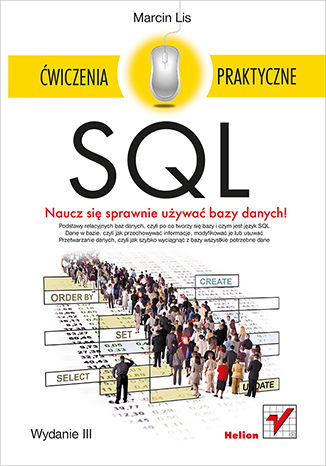
SQL. Ćwiczenia praktyczne. Wydanie III
Marcin Lis
Naucz się sprawnie używać bazy danych! Podstawy relacyjnych baz danych, czyli po co tworzy się bazy i czym jest język SQL Dane w bazie, czyli jak przechowywać informacje, modyfikować je lub usuwać Przetwarzanie danych, czyli jak szybko wyciągnąć z bazy wszystkie potrzebne dane Relacyjnych baz danych używa się w większości instytucji. Nie sposób dziś prowadzić jakiejkolwiek działalności komercyjnej bez bazy klientów, dostawców czy wykazu podatków. Często jednak efektywna obsługa takiej bazy wykracza poza kwalifikacje przeciętnego pracownika, który wykorzystuje zaledwie ułamek jej mocy. Ta książka może to zmienić! Znajdziesz w niej informacje, jak grupować określone dane, co ułatwi Ci wykonanie rzetelnej analizy działalności Twojej firmy. Dzięki temu przewodnikowi wykorzystasz w swojej pracy potencjał bazy danych i nauczysz się z nią współpracować. Książka ta, wydana w cenionej serii „Ćwiczenia Praktyczne”, pozwoli Ci szybko zapoznać się zarówno z podstawami działania relacyjnych baz danych, jak i z bardziej zaawansowanymi zagadnieniami, takimi jak funkcje agregujące czy transakcje. Znajdziesz tu wszystkie najważniejsze kwestie związane z językiem zapytań SQL i operowaniem danymi. Odkryjesz, jak grupować dane, do czego służą podzapytania i co to są więzy integralności. Podręcznik ten, przygotowany w formie bogatego zestawu praktycznych przykładów i konkretnych ćwiczeń, pomoże Ci opanować umiejętność poruszania się po bazie danych. Praca z tabelami i umieszczanie danych w bazie Pobieranie danych, ich modyfikacja i usuwanie Złączenia i funkcje agregujące Uzyskiwanie informacji statystycznych Grupowanie danych i podzapytania Perspektywy (widoki), transakcje i więzy integralności Optymalizacja podzapytań Instalacja i podstawowa konfiguracja baz Sprawdź możliwości Twojej bazy danych!
SQL dla analityków danych. Opanuj możliwości SQL-a, aby wydobywać informacje z danych. Wydanie III
Jun Shan, Matt Goldwasser, Upom Malik, Benjamin...
Język SQL zwykle służy do pracy z bazami danych, jednak można go używać również do wydajnego przetwarzania ich wielkich zbiorów. W tym celu trzeba dobrze poznać to narzędzie. Wysiłek włożony w zrozumienie SQL-a na pewno się opłaci - dzięki analizie danych można wydobywać z nich bezcenną wiedzę, która bezpośrednio przekłada się na zyski firmy. Ta książka stanowi świetne wprowadzenie do analizy danych. Dzięki niej nauczysz się korzystać z surowych danych, nawet jeśli nie masz odpowiedniego doświadczenia. Zaczniesz od formułowania hipotez i generowania statystyk opisowych, a następnie przystąpisz do pisania zapytań w języku SQL w celu agregowania, przeliczania i łączenia danych z różnych zbiorów. Zapoznasz się też z zaawansowanymi technikami, takimi jak analiza geoprzestrzenna i analiza tekstu. W książce omówiono również profilowanie i automatyzację, które umożliwiają szybsze i wydajniejsze pobieranie informacji. To wszystko pozwoli Ci na skuteczne korzystanie z SQL-a w codziennych scenariuszach biznesowych. Najciekawsze zagadnienia: gruntowne wprowadzenie do analityki danych przygotowywanie danych do analizy optymalizacja kwerend i złożone typy danych funkcje agregujące, funkcja okna i inne metody analizy danych w SQL jak odkrywać prawdę za pomocą SQL-a SQL: spójrz na dane okiem wyszkolonego analityka!
SQL dla analityków danych. Tworzenie zbiorów danych dla początkujących
Renée M. P. Teate
Język SQL zwykle służy do pracy z bazami danych. Poprawnie napisany kod SQL przetwarza z dużą szybkością potężne zbiory danych, dlatego stanowi wymarzone narzędzie dla analityków danych. Tymczasem wielu z nich zleca wykonywanie raportów z baz czy hurtowni danych innym osobom. Taki sposób pracy jest nieefektywny - o wiele lepszym rozwiązaniem jest opanowanie języka SQL i samodzielne projektowanie oraz wyodrębnianie potrzebnych zbiorów danych. Ten przystępny przewodnik jest przeznaczony dla analityków danych, którzy chcą dobrze poznać proces tworzenia analitycznego zbioru danych i samodzielnie pisać kod niezbędny do uzyskania zamierzonego wyniku. Przedstawiono w nim składnię języka SQL oraz zasady budowania szybko działających zapytań do dużych zbiorów danych. Dokładnie wyjaśniono reguły stosowania poszczególnych instrukcji SQL, korzystania z funkcji agregujących i okienkowych, a także techniki eksploracyjnej analizy danych oraz tworzenia zbiorów danych na potrzeby raportów analitycznych. Omówiono również trudniejsze zagadnienia, takie jak zaawansowane zapytania SQL czy tworzenie zbiorów danych na potrzeby uczenia maszynowego. W książce znalazły się też fachowe porady na temat wnioskowania na podstawie danych i liczne ćwiczenia ułatwiające naukę. Najciekawsze zagadnienia: składnia SQL i projektowanie efektywnych zapytań eksploracyjna analiza danych tworzenie zbiorów danych z istniejących baz danych projektowanie zbiorów danych na potrzeby uczenia maszynowego zaawansowane elementy języka SQL tworzenie tabel i widoków do przechowywania wyników zapytań SQL: tak przygotujesz swój zbiór danych do analizy!
Jun Shan, Haibin Li, Matt Goldwasser, Upom...
SQL remains one of the most essential tools for modern data analysis and mastering it can set you apart in a competitive data landscape. This book helps you go beyond basic query writing to develop a deep, practical understanding of how SQL powers real-world decision-making. SQL for Data Analytics, Fourth Edition, is for anyone who wants to go beyond basic SQL syntax and confidently analyze real-world data. Whether you're trying to make sense of production data for the first time or upgrading your analytics toolkit, this book gives you the skills to turn data into actionable outcomes. You'll start by creating and managing structured databases before advancing to data retrieval, transformation, and summarization. From there, you’ll take on more complex tasks such as window functions, statistical operations, and analyzing geospatial, time-series, and text data. With hands-on exercises, case studies, and detailed guidance throughout, this book prepares you to apply SQL in everyday business contexts, whether you're cleaning data, building dashboards, or presenting findings to stakeholders. By the end, you'll have a powerful SQL toolkit that translates directly to the work analysts do every day. *Email sign-up and proof of purchase required
SQL for Data Analytics. Harness the power of SQL to extract insights from data - Third Edition
Jun Shan, Matt Goldwasser, Upom Malik, Benjamin...
Every day, businesses operate around the clock, and a huge amount of data is generated at a rapid pace. This book helps you analyze this data and identify key patterns and behaviors that can help you and your business understand your customers at a deep, fundamental level.SQL for Data Analytics, Third Edition is a great way to get started with data analysis, showing how to effectively sort and process information from raw data, even without any prior experience.You will begin by learning how to form hypotheses and generate descriptive statistics that can provide key insights into your existing data. As you progress, you will learn how to write SQL queries to aggregate, calculate, and combine SQL data from sources outside of your current dataset. You will also discover how to work with advanced data types, like JSON. By exploring advanced techniques, such as geospatial analysis and text analysis, you will be able to understand your business at a deeper level. Finally, the book lets you in on the secret to getting information faster and more effectively by using advanced techniques like profiling and automation.By the end of this book, you will be proficient in the efficient application of SQL techniques in everyday business scenarios and looking at data with the critical eye of analytics professional.
SQL for Data Analytics. Perform fast and efficient data analysis with the power of SQL
Upom Malik, Matt Goldwasser, Benjamin Johnston
Understanding and finding patterns in data has become one of the most important ways to improve business decisions. If you know the basics of SQL, but don't know how to use it to gain the most effective business insights from data, this book is for you.SQL for Data Analytics helps you build the skills to move beyond basic SQL and instead learn to spot patterns and explain the logic hidden in data. You'll discover how to explore and understand data by identifying trends and unlocking deeper insights. You'll also gain experience working with different types of data in SQL, including time-series, geospatial, and text data. Finally, you'll learn how to increase your productivity with the help of profiling and automation.By the end of this book, you'll be able to use SQL in everyday business scenarios efficiently and look at data with the critical eye of an analytics professional.Please note: if you are having difficulty loading the sample datasets, there are new instructions uploaded to the GitHub repository. The link to the GitHub repository can be found in the book's preface.
SQL Injection Strategies. Practical techniques to secure old vulnerabilities against modern attacks
Ettore Galluccio, Gabriele Lombari, Edoardo Caselli
SQL injection (SQLi) is probably the most infamous attack that can be unleashed against applications on the internet. SQL Injection Strategies is an end-to-end guide for beginners looking to learn how to perform SQL injection and test the security of web applications, websites, or databases, using both manual and automated techniques. The book serves as both a theoretical and practical guide to take you through the important aspects of SQL injection, both from an attack and a defense perspective.You’ll start with a thorough introduction to SQL injection and its impact on websites and systems. Later, the book features steps to configure a virtual environment, so you can try SQL injection techniques safely on your own computer. These tests can be performed not only on web applications but also on web services and mobile applications that can be used for managing IoT environments. Tools such as sqlmap and others are then covered, helping you understand how to use them effectively to perform SQL injection attacks.By the end of this book, you will be well-versed with SQL injection, from both the attack and defense perspective.
SQL. Jak osiągnąć mistrzostwo w konstruowaniu zapytań
Katarzyna Żmuda
Zaprzyjaźnij się z SQL-em! Proste zapytania i sortowanie wyników, czyli od czego zacząć poznawanie składni SQL-a Funkcje i operacje, czyli jak ułatwić sobie komunikację z bazą danych Zadania, czyli jak zdobyć i rzetelnie przetestować swoje umiejętności SQL, podstawowy język służący do komunikowania się z bazami danych, na pierwszy rzut oka nie wydaje się zbyt trudny. Ma przejrzystą składnię i sporo pomocnych funkcji, a ponadto jest elastyczny. Jest tylko jeden warunek: żeby sprawnie, szybko wyszukiwać i wyświetlać informacje z bazy danych, musimy go dobrze opanować. Nie chodzi tu tylko o samą konstrukcję zapytań, a raczej o sensowne wyłuskiwanie żądanej informacji spośród tysięcy innych, być może całkiem podobnych. Chodzi o to, by być przygotowanym na nietypowe sytuacje, umieć skonstruować skomplikowane zapytanie z wieloma warunkami i odpowiednio je doprecyzować. W tej książce znajdziesz setki ćwiczeń i zadań do samodzielnego wykonania. Wszystkie one mają jeden cel: przygotować Cię do wszechstronnej komunikacji z bazą danych i nauczyć Cię wysyłania nawet najbardziej złożonych zapytań. W każdym rozdziale znalazło się nieco teorii i mnóstwo praktyki, a zadania w kolejnych rozdziałach wymagają wiedzy z poprzednich, co pozwala na ciągłe utrwalanie całej zdobytej wiedzy. Jeśli chcesz rzetelnie i od podszewki poznać bogactwo SQL-a, ta książka z pewnością Ci w tym pomoże! Klauzula SELECT Funkcje wbudowane Złączenia Funkcje agregujące Operacje na zbiorach Podzapytania CASE, CAST i CONVERT Zadania Zacznij rozmawiać z własną bazą danych!