
Technika i mechanika

Transgraniczne przemieszczanie odpadów - co powinno być obowiązkowo w umowie
Tomasz Kaler
To kompleksowy e-book dla specjalistów ds. ochrony środowiska i osób odpowiedzialnych za gospodarkę odpadami w firmach. Publikacja szczegółowo omawia rodzaje procedur - uproszczoną i rozbudowaną - wskazując różnice, wymagania oraz sytuacje, w których należy je stosować. Wyjaśnia również kluczowe wymogi dotyczące sporządzania umów, w tym obowiązkowe zapisy, formę pisemną oraz moment ich zawarcia. E-book pomaga ograniczyć ryzyko błędów formalnych, zapewnić zgodność z przepisami oraz usprawnić procesy związane z międzynarodowym przemieszczaniem odpadów.
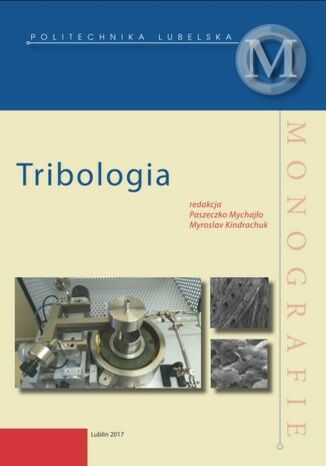
Mychajło Paszeczko, Myroslav Kindrachuk (red.)
Rozwój współczesnego przemysłu uwarunkowany jest opracowywaniem nowych innowacyjnych technologii pozwalających zwiększyć wydajność produkcji przy jednoczesnej minimalizacji jej kosztów. Szczególnego znaczenia nabierają problemy związane z niezawodnością maszyn przy jednoczesnym oszczędnym wykorzystaniu materiałów do ich wykonania.

Władysław Kryłłowicz
Skrypt, w założeniu, jest przeznaczony dla studentów kierunku Energetyka na Wydziale Mechanicznym Politechniki Łódzkiej. Może być jednak z powodzeniem stosowany na innych podobnych kierunkach i wydziałach, gdzie jest wykorzystywany podręcznik Ryszarda Chodkiewicza Ćwiczenia projektowe z turbin cieplnych. Skrypt ma pełnić rolę swoistego przewodnika po skomplikowanych zagadnieniach techniki turbin parowych. Publikacja obejmuje bowiem nie tylko tematykę dotyczącą wyłącznie przepływów, ale i zagadnienia konstrukcyjne oraz eksploatacyjne.
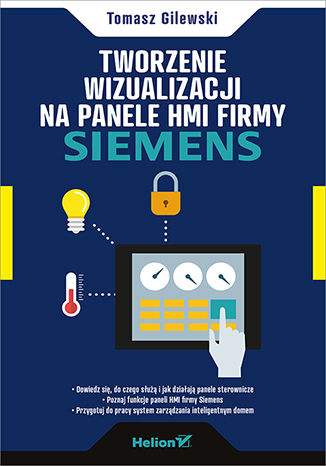
Tworzenie wizualizacji na panele HMI firmy Siemens
Tomasz Gilewski
Dowiedz się, do czego służą i jak działają panele sterownicze Poznaj funkcje paneli HMI firmy Siemens Przygotuj do pracy system zarządzania inteligentnym domem domu W kontakcie z inteligentnym domem Tak jak do komunikacji między człowiekiem i komputerem służą klawiatura i ekran, tak do porozumiewania się człowieka z linią technologiczną czy skomplikowanym systemem elektronicznym służy panel sterowniczy. W literaturze przedmiotu oraz w praktyce przemysłowej oznacza się go angielskim akronimem HMI (Human-Machine Interface). Panel, mający postać płaskiej powierzchni - dawniej z przyciskami, pokrętłami i licznikami, dziś z wyświetlaczem - pozwala odczytywać komunikaty systemu i wydawać mu polecenia, podłączać urządzenia zewnętrzne oraz wizualizować sam system w formie uproszczonego schematu graficznego. Ta książka stanowi kompleksowy kurs tworzenia wizualizacji nowoczesnych paneli dotykowych HMI firmy Siemens. Rozdział po rozdziale autor pokazuje funkcje urządzenia, które trzeba poznać, by móc efektywnie wdrożyć projekt do zarządzania inteligentnym domem. Nie oznacza to, że z podręcznika skorzystają jedynie wykonawcy tego typu systemów - aktualnie panele sterownicze znajdują się w praktycznie każdej maszynie realizującej procesy technologiczne lub produkcyjne. Bardzo wiele z nich pracuje pod panelami SIMATIC firmy Siemens. Konfiguracja i programowanie paneli HMI Praca z ekranami Tworzenie scenariuszy (receptury) Odczytywanie komunikatów (alarmy, raporty) Zarządzanie użytkownikami Łączenie większej liczby paneli Bezpieczeństwo systemu i diagnozowanie problemów

Tworzywa ceramiczne. Ćwiczenia laboratoryjne
Agnieszka Jastrzębska, Marek Kostecki, Andrzej Olszyna, Jarosław...
Skrypt jest przeznaczony przede wszystkim dla studentów wydziałów: Inżynierii Materiałowej, Chemicznego, Inżynierii Chemicznej i Procesowej, Mechatroniki oraz wydziałów mechanicznych i ma służyć w przygotowaniu się do ćwiczeń laboratoryjnych z tworzyw ceramicznych. Problematyka ćwiczeń oprócz typowych zagadnień charakteryzacji proszku oraz nanoproszku, obejmuje elementy procesu wytwarzania materiałów ceramicznych, charakteryzacje mikrostruktury oraz wybranych właściwości fizycznych. Dodatkowo w celu poszerzenia tematyki ćwiczeń w skrypcie zamieszczono elementy techniki wytwarzania tworzyw ceramicznych przeznaczonych do zastosowań biomedycznych oraz badania mięknięcia szkła i oznaczanie kąta zwilżania. Opisy ćwiczeń zawierają obszerną część teoretyczną umożliwiającą szersze spojrzenie na analizowane w ćwiczeniach zagadnienia.

Układy hydrauliczne w maszynach roboczych
Paweł Ciężkowski, Jan Maciejewski, Adam Zawadzki
W podręczniku przedstawiono informacje na temat układów hydraulicznych hydrokinetycznych i hydrostatycznych. Omówiono podstawowe elementy układów hydraulicznych stosowane w maszynach roboczych, a w szczególności: pompy i silniki hydrauliczne, cylindry, zawory, rozdzielacze i akumulatory. Opisano obiegi oleju w układach otwartych i zamkniętych oraz układy o stałej mocy, wydajności i układy typu „Load Sensing”. Przedstawiono podstawowe zabezpieczenia stosowane w układach hydrostatycznych maszyn roboczych. Podano przykłady układów hydraulicznych, w których współpracuje kilka członów napędu hydraulicznego (pomp, silników, cylindrów hydraulicznych), a także przykłady synchronizacji ruchu cylindrów hydraulicznych. W publikacji omówiono ogólne zasady sterowania i regulacji w układach hydraulicznych, a na przykładach przedstawiono różne systemy sterowania, omawiając jednocześnie elementy sterujące w układach hydraulicznych oraz układy ich połączeń w napędach hydraulicznych.
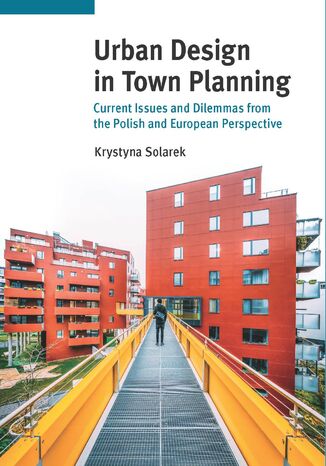
Urban Design in Town Planning. Current Issues and Dilemmas from the Polish and European Perspective
Krystyna Solarek
Cities have become the habitat for more than half of the world's population. Cities are not only a desirable location for life activities but also the subject of great interest, scientific research and social activities as well as everyday fascinations. However, it can be observed that the more we talk about cities and their planning - about sustainable development, eco-development, new technologies, smart cities, participatory planning and various new urban policies, etc., the less space there is to deal with the topic of urban design. Indeed, urban design will not solve all city problems, but one must be aware that all city problems will not be solved without urban design. It is evident that city is as a complex, dynamic open system shows great possibilities of self-regulation and self-organization. However, people have been trying to influence this system for centuries through planning. The formation of certain rules and deepening knowledge of the functioning of urban organisms certainly contribute to improving quality, in this case the quality of life in cities. The organization is not an end in itself, but a tool for getting certain collective values. Town planners and urban designers, based on the broad knowledge they have, are probably the closest to achieving the assumed results (Mironowicz 2013). Urban design as an occupation is relatively new, but historically it has usually played a significant role in forming cities. Urban design, although it did not have that name yet, has for centuries been one of the most important arts - the one that has most strongly affected the lives of successive generations that has survived to this day - whether in a transformed or unchanged form, or in memory and historical records. In the simplest terms urban design is a link between architecture and spatial planning - a part of spatial planning with the basics and approach of architecture. This is a field where not all architects and few town-planners feel good and competent. It is art, technique, skill and process, as a result of which spatial structures are shaped. It gives them form, function and character appropriate to the scale of the study or document. Urban designs, as the saved projects, no matter how long they were prepared, usually "last" only for a moment. But this does not mean that they do not matter to the development of cities. On the contrary - they change into land development plans, strategies and action programs, or projects for the specific areas, sometimes they are only an inspiration or hint for municipal authorities, and at other times the basis for creating master plans or a picture that allows participants to check the ideas presented. Among the various projects or competition urban concepts, the possibility of implementation usually has one vision - the others remain the experience of the designers or an inspiration for those who had the opportunity to look at them. Despite the apparent elusiveness of this "being", which is the urban design, it has a key impact on the formation of spatial structure cities. This book doesn't offer any detailed guideline of urban design, arranging the streets, squares and buildings that make up the public face of towns and cities. It is only to show how important it is to shape city structure using urban design, where it is possible, so as to build urban developments which are both structurally and functionally harmonious, logical, friendly, resilient, rational and... beautiful. This has been man's desire since the very beginning and today it's important to recall this with the reflection on the role and range of urban design in the times of participatory culture of the information era. The book is also intended to show where urban designs are the most useful today and what priorities can guide their creation if they are to be consistent with contemporary postulates. The study also draws attention to the biggest problems, difficulties and challenges that relate to design in the era of participation, parameterization, globalization and uncertainty. Most analyzes end with questions, although I try to answer some of them myself, without any certainty as to whether they are correct. The study also shows where, in a fascinating and broad urban theme, urban designers can find a place for themselves - how to translate new ideas and postulates for urban design. I would like to draw attention to some current issues and dilemmas of urban design related to both new models of economic development, features and needs of contemporary societies, as well as new planning tools. The lack of creative foundations for regional planning, the disappearance of urban design in local planning, and the underestimation of urban design in the education of architects and town planners are particularly noticeable in Poland, but also visible in other countries. And yet temporary problems, also those related to the impediments to the implementation of urban design, will probably end sometime. We must therefore prepare for the fact that urban design will still be needed. That's why this publication seems to be important. The specificity of European cities and planning traditions have led me to narrow the field of analysis, therefore I do not discuss the urban problems of the whole world, the more so as the urbanization phenomena occurring, for example, in Asia or America, are very complicated. Nevertheless, I do make reference to selected world trends in urban planning. I devote a lot of space to the problems of urban design in Poland, which are partly convergent with those that concern other post-socialist countries, although much concerns only Polish specifics. I hope that showing them in the European context will bring this topic closer to those who do not know the realities of Polish spatial planning, and, on the other hand, that it will help Polish readers to see how and under what conditions urban design can be applied. The presented study consists of three main parts. Since I consider doubts, dilemmas and challenges related to urban design in the contemporary world, their titles are formulated as questions - such the questions that many urban designers ask in their professional work: "What is Urban Design?", "What to Design?" and "How to Design?". In the first part of the monograph I present various approaches to the topic of urban design, its status and role in shaping the spatial structure of cities. The second part of the book titled "What to Design" shows how different scales and ranges are related to urban design but, above all, draws attention to those topics that are currently the most up-to-date when undertaking planning studies. Therefore, it does not cover all the areas of activity dealt with by city planners, and some of them are only approximated by other considerations (for example, the issue of housing has not been separated, only included in some other thematic groups). In the third part, I consider the current new tasks for urban planners caused by civilizational changes, including social and technological changes, and the possible approaches to design in this situation, including using new techniques and tools. The book is dedicated to urbanists - scientists, designers and planners - not only Polish ones. It is also for all, who have contemporary city in mind, as it is a voice in a discussion about problems and challenges, some of which are universal. It is for those who do not know the Polish planning system nor Poland in general - so as they can expand their knowledge and awareness as well as convince themselves that we can participate in various joint activities. The book is also dedicated to Polish recipients - so that they will feel that we are participating in a joint project for shaping European cities, and although we do not always have success (because a lot has to change), we can not give up learning and teaching others, motivating and improving urban designers' workshop - it may be useful again. In some parts of this book, I have developed threads that appeared in my earlier publications, which has been provided in the text with relevant information, but it mainly consists of new content. I have used my over 25 years of experience in urban design and town planning, but I have also based my research on the city structure and its individual problems. This influenced the subjective selection of illustrations and examples - the ones that I know best, including some of my own studies, prevail in the book.
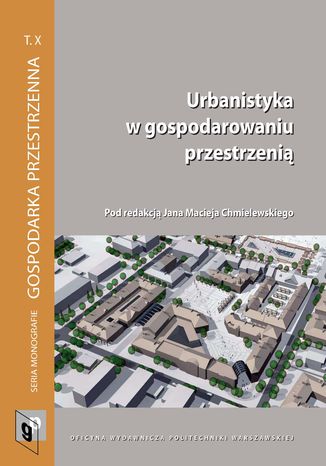
Urbanistyka w gospodarowaniu przestrzenią
Jan Maciej Chmielewski
Tom X serii monografii naukowych Wydziału Geodezji i Kartografii Politechniki Warszawskiej "Gospodarka Przestrzenna" W monografii omówiono tematy dotyczące suburbanizacji, chaosu przestrzennego oraz wpływu inwestycji publicznych związanych z gospodarką odpadami na przestrzeń współczesnego miasta. Ponadto przedstawiono zagadnienia związane z wartościami kulturowymi i urbanistycznymi okresu międzywojennego. Opracowanie stanowi przyczynek do badań w obszarze gospodarki przestrzennej i równocześnie utwierdza znaczenie w nich nauk technicznych, w tym Geodezji i Kartografii.