Ogólna budowa maszyn

17
Loading...
EBOOK

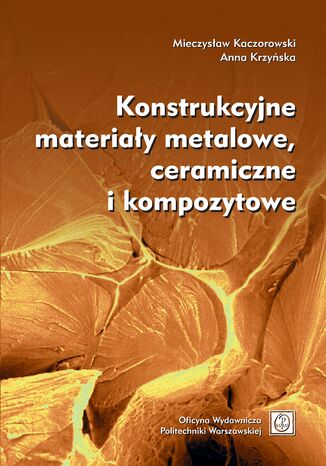
Konstrukcyjne materiały metalowe, ceramiczne i kompozytowe

Mieczysław Kaczorowski, Anna Krzyńska

Skrypt jest podzielony na cztery części. W pierwszej omówiono podstawowe właściwości materiałów, a w szczególności wiązania między atomami. W dalszej części podano podstawowe własności mechaniczne i użytkowe materiałów oraz sposoby umacniania materiałów plastycznych. Przedstawiono grupę materiałów sprężysto-plastycznych, a więc metale i ich stopy, w tym stopy żelaza i metali nieżelaznych. Kolejna część dotyczy materiałów ceramicznych, w tym struktury, jej kształtowania i właściwości użytkowych. W ostatniej części omówiono kompozyty o osnowie metalowej i ceramicznej, które nie są jeszcze tak powszechnie stosowane jak kompozyty o osnowie polimerowej. Autorzy uznali za uzasadnione wprowadzenie do drugiego wydania przynajmniej podstawowych informacji na temat metalurgii topienia najbardziej rozpowszechnionych tworzyw metalowych, jakimi są stopy żelaza z węglem, zakładając, że gruntowną wiedzę na temat procesów metalurgicznych dotyczących odlewnictwa, obróbki plastycznej oraz spawania studenci uzyskują w ramach wykładów dotyczących technik wytwarzania. Dokonano także korekty i uaktualnienia treści, a także uwzględniono uwagi zgłaszane przez studentów i wykładowców.

18
Loading...
EBOOK

Laboratorium mechaniki płynów

Lech Knap

Laboratorium mechaniki płynów

19
Loading...
EBOOK

Laboratorium podstaw napędów hydraulicznych i pneumatycznych

Michał Makowski

W skrypcie zaprezentowano ćwiczenia z podstaw napędów hydraulicznych i pneumatycznych, dotyczące: podstawowych elementów układów hydraulicznych, sterowania w układach hydraulicznych z zastosowaniem techniki proporcjonalnej, dokładności pozycjonowania tłoczyska cylindra hydraulicznego pod obciążeniem, podstawowych elementów układów pneumatycznych, charakterystyki pompy wyporowej, charakterystyki bezwymiarowej przekładni hydrokinetycznej oraz charakterystyki przekładni hydrostatycznej.

20
Loading...
EBOOK

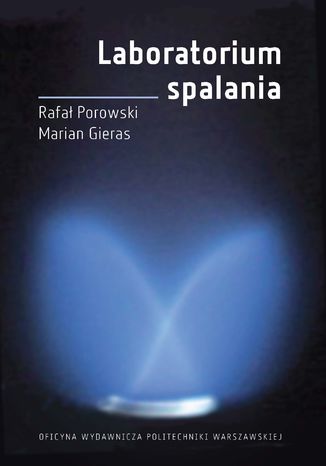
Laboratorium spalania

Marian Gieras, Rafał porowski

Skrypt zawiera treści będące przedmiotem nauczania w ramach Laboratorium Spalania prowadzonego na Wydziale Mechaniki Energetyki i Lotnictwa Politechniki Warszawskiej. Książka zawiera się z 7 rozdziałów, z których każdy dotyczy odrębnego ćwiczenia realizowanego przez studentów podczas zajęć. Zekres merytoryczny skryptu obejmuje: diagnostykę oraz wizualizację procesów spalania, gazowe płomienie dyfuzyjne i kinetyczne, stabilizację płomienia, temperaturę zapłonu cieczy, ciśnienie wybuchu paliw gazowych i ciekłych, propagancję płomienia pyłowego oraz temperaturowe granice palności cieczy palnych.

21
Loading...
EBOOK

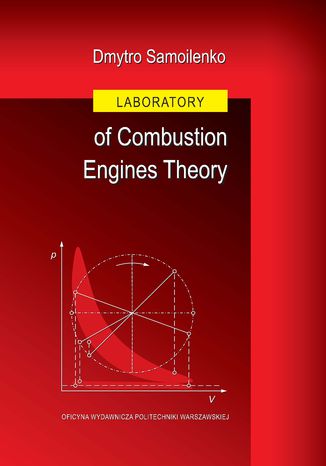
Laboratory of Combustion Engines Theory

Dmytro Samoilenko

The present work will be devoted to the study of how the technical problems related to the design of combustion engines could be solved based on the fundamental laws of thermodynamics. Practical examples of how to use thermodynamics for describing physical phenomena and mathematical simulations of heat exchange processes in the combustion engines will be presented. All the well-known solutions used in the vehicles engineering and related to the fundamental theory of combustion engines are presented in the current work. These solutions are piston compressors (used as an auxiliary equipment or external compressors in turbocharger assistance system), automobile air conditioning systems and internal combustion engines. Special attention will be paid to the theory, fundamental processes analysis (based on empirical tests results) and in the case of internal combustion engines - to the influence of harmful substances contained in the exhaust gas on the environment.

22
Loading...
EBOOK

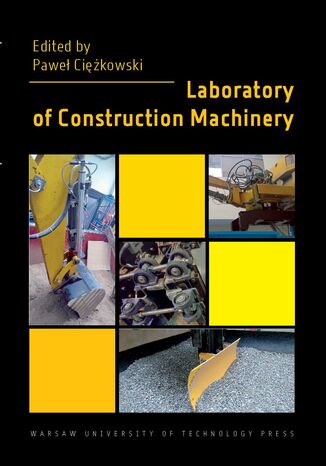
Laboratory of Construction Machinery

Paweł Ciężkowski

In this script, the laboratory exercises presented are divided into two groups. In the fi rst group, the authors describe the stands and test methods to determine the basic strength parameters of soils and rocks. The stands discussed allow students to become familiar with model processes of interaction of construction machinery tools with geomaterials and road surface materials (asphalt, concrete). The model investigations are concerned with elementary rock fragmentation processes and the interaction of crushing tools in the milling process of road surfaces. Exercises on machine-based crushing processes will be presented. Within this group of exercises, students will become familiar with the construction and operation of various types of crushers (cone, impact, jaw). The exercises will include studies of: a) the influence of the type of crusher on the shape and grain size of the product obtained, b) the influence of the outlet gap setting on the forces, energy consump-tion and effi ciency of the crushing process, c) the infl uence of the shape of jaw crusher crushing plates on the parameters of the crushing process. The second group of exercises deals with construction and transport machinery, their construction and operation. The exercises are aimed with the problems of interaction of tools with the soil. On the laboratory stand "soil channel", exercises will be presented to study the interaction of model tools of earth-moving construction machinery such as: loader bucket blade, excavator, scraper basket. The exercises will include the determination of cutting forces and work and the determina-tion of deformation mechanisms. The soil channel described in the paper allows students to fami-liarise themselves with the interaction of the driving system with the ground. The exercises will include determining the characteristics of the interaction of the crawler with the ground, investiga-ting changes in the tractive force of the machine as a function of slippage and the weight of the machine. Within the laboratory, exercises will be performed on a unique stand of a single-head hydraulic backhoe excavator, whose control and data acquisition system is fully automated. By performing the exercise on the single-head excavator, students will study selected methods for calculating cutting forces, the eff ect of excavator bucket shape and digging trajectory on cutting forces. The next stand is a rotating mechanism, where students can familiarise themselves with the properties of hydraulic drive systems using a hydraulic piston motor as an example, and the influence of the gain of individual controller components on system properties and speed control error. The script also includes a stand to learn about a typical PLC structure and the programme structure and programming method. Information on the theory of vibratory conveyor of granular materials is also presented in this study.

23
Loading...
EBOOK

Laboratory of Fluid Mechanics

Lech Knap

Laboratory of Fluid Mechanics

24
Loading...
EBOOK

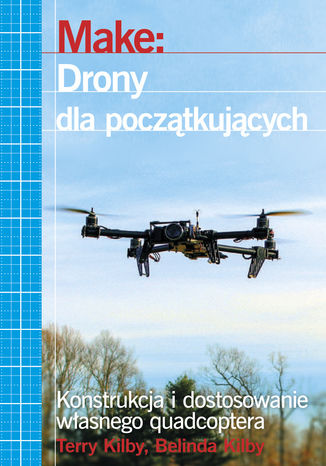
Make: Drony dla początkujących. Konstrukcja i dostosowanie własnego quadcoptera

Kilby Terry, Kilby Belinda

Drony dla początkujących Konstrukcja i dostosowanie własnego quadcoptera Terry Kilby, Belinda Kilby Chciałbyś zbudować coś, co potrafi latać? Co sądzisz o latającym robocie? Z tej książki dowiesz się, jak działają drony, jak rozwiązać niektóre inżynierskie wyzwania związane z ich konstruowaniem i jak zbudować swój własny czterowirnikowy śmigłowiec, którego można modyfikować, dostosowywać i oczywiście latać nim. Twój dron stanie się twoimi oczami na niebie i w miejscach, do których człowiek nigdy nie zdoła zajrzeć mniejszy może więcej!