
Big data
MicroStrategy Quick Start Guide. Data analytics and visualizations for Business Intelligence
Fernando Carlos Rivero Esqueda
MicroStrategy is an enterprise business intelligence application. It turns data into reports for making and executing key organization decisions. This book shows you how to implement Business Intelligence (BI) with MicroStrategy. It takes you from setting up and configuring MicroStrategy to security and administration.The book starts by detailing the different components of the MicroStrategy platform, and the key concepts of Metadata and Project Source. You will then install and configure MicroStrategy and lay down the foundations for building MicroStrategy BI solutions. By learning about objects and different object types, you will develop a strong understanding of the MicroStrategy Schema and Public Objects. With these MicroStrategy objects, you will enhance and scale your BI and Analytics solutions.Finally, you will learn about the administration, security, and monitoring of your BI solution.
Isaac A Newton
This practical cookbook covers a broad range of topics in an easy-to-understand manner. Step-by-step instructions guide you through even the most complicated of tools in Minitab. This book is great for anyone who is familiar with statistics and who wants to learn how Minitab works. Whilst you do not need to be an expert in all areas of statistics, you should understand the basics of the chapters you are interested in.

Mistrz analizy danych. Od danych do wiedzy
John W. Foreman
Nauka o danych, znana również pod nazwą data science, jest stosunkowo nową, interdyscyplinarną dziedziną, zajmującą się różnymi technikami analizy danych, ich implementacją i wykorzystywaniem do różnych celów. Zalety nauki o danych doceniają specjaliści z wielu branż: analitycy biznesowi, statystycy, architekci oprogramowania i osoby zajmujące się sztuczną inteligencją. Tak naprawdę ta dziedzina nie koncentruje się na kodowaniu i bazach danych, ale raczej na metodach wyłuskiwania z danych najróżniejszych cennych informacji. Wartość tej wiedzy niejednokrotnie okazuje się ogromna. Niniejsza książka jest przystępnym wprowadzeniem do nauki o danych. Jest przeznaczona dla osób, które chcą stosować techniki analizy danych w biznesie. Te techniki, opisane na podstawie praktycznych przypadków, to m.in. optymalizacja, prognozowanie i symulacja, a także sztuczna inteligencja, teoria grafów, analiza skupień i wykrywanie anomalii. Dzięki tej książce nie tylko zrozumiesz zasady analizowania danych, ale także nauczysz się wybierać technikę właściwą do rozwiązania danego problemu. Poznasz też techniki pracy z prototypami. Co ciekawe, niemal wszystkie opisane tu metody zostały zaprezentowane w arkuszu kalkulacyjnym. W książce opisano m.in. optymalizację za pomocą programowania liniowego i całkowitoliczbowego szereg czasowy, wykrywanie trendów i wahań sezonowych przewidywanie za pomocą wygładzania wykładniczego metodę symulacji Monte Carlo test Tukeya i lokalne czynniki odstające język R - zaawansowane techniki analizy danych Wyciśnij z danych każdą kroplę wiedzy!
MLOps with Red Hat OpenShift. A cloud-native approach to machine learning operations
Ross Brigoli, Faisal Masood
MLOps with OpenShift offers practical insights for implementing MLOps workflows on the dynamic OpenShift platform. As organizations worldwide seek to harness the power of machine learning operations, this book lays the foundation for your MLOps success. Starting with an exploration of key MLOps concepts, including data preparation, model training, and deployment, you’ll prepare to unleash OpenShift capabilities, kicking off with a primer on containers, pods, operators, and more.With the groundwork in place, you’ll be guided to MLOps workflows, uncovering the applications of popular machine learning frameworks for training and testing models on the platform.As you advance through the chapters, you’ll focus on the open-source data science and machine learning platform, Red Hat OpenShift Data Science, and its partner components, such as Pachyderm and Intel OpenVino, to understand their role in building and managing data pipelines, as well as deploying and monitoring machine learning models.Armed with this comprehensive knowledge, you’ll be able to implement MLOps workflows on the OpenShift platform proficiently.
Anubhav Singh, Rimjhim Bhadani
Deep learning is rapidly becoming the most popular topic in the mobile app industry. This book introduces trending deep learning concepts and their use cases with an industrial and application-focused approach. You will cover a range of projects covering tasks such as mobile vision, facial recognition, smart artificial intelligence assistant, augmented reality, and more.With the help of eight projects, you will learn how to integrate deep learning processes into mobile platforms, iOS, and Android. This will help you to transform deep learning features into robust mobile apps efficiently. You’ll get hands-on experience of selecting the right deep learning architectures and optimizing mobile deep learning models while following an application oriented-approach to deep learning on native mobile apps. We will later cover various pre-trained and custom-built deep learning model-based APIs such as machine learning (ML) Kit through Firebase. Further on, the book will take you through examples of creating custom deep learning models with TensorFlow Lite. Each project will demonstrate how to integrate deep learning libraries into your mobile apps, right from preparing the model through to deployment.By the end of this book, you’ll have mastered the skills to build and deploy deep learning mobile applications on both iOS and Android.
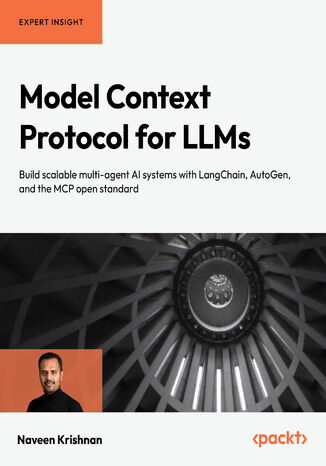
Naveen Krishnan
Modern LLM applications often fail due to weak context management, fragile tool integration, and poorly coordinated agents. To address these challenges, this book provides a practical blueprint for building reliable, scalable AI systems using the Model Context Protocol (MCP), an open standard for interoperable AI architectures.You'll explore why context is the missing layer in many AI deployments and how MCP formalizes it. Through clear explanations and practical examples, you'll design modular components such as resource providers, tool providers, gateways, and standardized interfaces. You'll also integrate MCP with LangChain, AutoGen, and RAG pipelines to build collaborative, context-aware multi-agent systems.You'll learn how to apply MCP to multimodal applications, personalization engines, and enterprise knowledge management solutions, while evaluating and benchmarking implementations for production readiness and implementing authentication, authorization, and scaling strategies for secure cloud deployments.Written by a data and AI solutions engineer with over 17 years of experience at Microsoft and Fortune 500 organizations, this guide combines architectural depth with hands-on implementation. By the end, you'll be able to design, build, and deploy secure, reusable MCP-based LLM systems that scale confidently in production.*Email sign-up and proof of purchase required
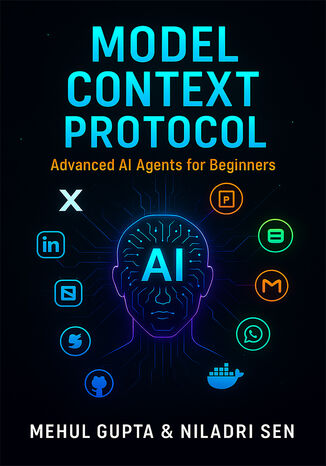
Mehul Gupta, Niladri Sen
This book offers a detailed introduction to the groundbreaking field of AI agents and Model Context Protocol (MCP). The first section delves into generative AI and large language models (LLMs), exploring how these technologies power modern AI systems. From there, the book introduces the concept of AI agents—autonomous systems capable of executing tasks with varying levels of complexity. Moving into practical applications, the book focuses on Model Context Protocol, explaining its key components and how it enables effective interaction between AI and various software tools. Each chapter offers step-by-step instructions for setting up MCP servers for popular tools like Gmail, YouTube, GitHub, and more, empowering readers to automate tasks and streamline workflows. The book concludes by addressing the future of MCP, its potential risks, and how to stay safe while using these advanced technologies. Whether you're a beginner or experienced practitioner, this guide will deepen your understanding of AI and enhance your ability to leverage cutting-edge automation in daily operations.

Modelowanie danych przy użyciu Microsoft Power BI
Markus Ehrenmueller-Jensen
Samoobsługa i hurtownia danych przedsiębiorstwa z użyciem Power BI Modelowanie danych to najczęściej pomijana funkcja w Power BI Desktop, ale to właśnie ona wyróżnia Power BI spośród innych narzędzi dostępnych na rynku. Ta praktyczna książka posłuży Ci jako przycisk szybkiego przewijania do przodu dla modelowania danych przy użyciu Power BI, modelu tabelarycznego usług Analysis Services i baz danych SQL. Służy ona jako punkt wyjścia do modelowania danych, a także pomaga odświeżyć wiedzę. Autor Markus Ehrenmueller-Jensen, założyciel Savory Data, przedstawia podstawowe koncepcje modelu semantycznego Power BI wraz z praktycznymi przykładami w językach DAX, Power Query i T-SQL. Nauczysz się: - Normalizować i denormalizować dane - Stosować najlepsze praktyki dla obliczeń, flag i wskaźników, daty i godziny, wymiarów wielokrotnego stosowania i wymiarów wolnozmiennych - Pokonywać trudności związane z binningiem, budżetem, modelami zlokalizowanymi, modelami złożonymi czy tabelami zawierającymi pary kluczy i wartości - Odkrywać i rozwiązywać problemy z wydajnością za pośrednictwem modelu danych - Pracować z tabelami, relacjami, operacjami na zbiorach, postaciami normalnymi, modelowaniem wymiarowym i procesem ETL Markus Ehrenmueller-Jensen, założyciel Savory Data, od 1994 r. pracuje jako lider projektów, trener i konsultant w obszarze inżynierii danych, analityki biznesowej i danologii. Jest inżynierem oprogramowania i profesorem w HTL Leonding (wyższa szkoła techniczna), gdzie uczy baz danych i inżynierii projektów. Posiada kilka certyfikatów Microsoft, a także tytuł Microsoft Data Platform MVP. "Ta książka to wyczerpujący samouczek omawiający temat w języku, który jest łatwy do zrozumienia, a przy tym jest dogłębny, zwięzły i dokładny. Doświadczenie Markusa w zakresie modelowania danych będzie stanowić wartość dla każdego profesjonalisty pracującego z danymi przy użyciu Power BI". -Paul Turley Microsoft Data Platform MVP
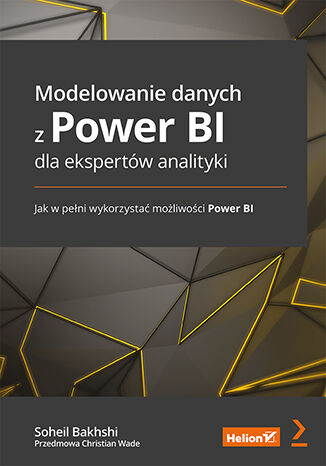
Modelowanie danych z Power BI dla ekspertów analityki. Jak w pełni wykorzystać możliwości Power BI
Soheil Bakhshi, Christian Wade
Microsoft Power BI zdobył uznanie jako idealne narzędzie do analizy, modelowania i przetwarzania złożonych zbiorów danych. Dzięki niemu można bez trudu tworzyć wyrafinowane modele danych, łączyć dane z różnych źródeł, definiować relacje między nimi, a także je kształtować i zarządzać nimi. W ten sposób uzyskuje się świetną podstawę do przygotowywania raportów oraz zestawów danych na potrzeby analityki biznesowej - a to przekłada się na bardzo konkretne korzyści. Ta książka jest znakomitym wprowadzeniem do Power BI. Dzięki niej nauczysz się modelowania danych, technik definiowania relacji oraz tworzenia modeli danych. Dowiesz się też, jak prowadzić obliczenia za pomocą funkcji modelowania. Poznasz także podstawy pisania kodu w języku DAX i korzystania z nowych funkcji modelowania danych. Stopniowo przejdziesz do bardziej zaawansowanych rozwiązań, dzięki czemu Twoje modele danych sprawdzą się nawet przy bardzo złożonych zadaniach. Poszczególne zagadnienia zilustrowano praktycznymi przykładami, które pozwolą Ci zrozumieć, jak bardzo przydatne w pokonywaniu wyzwań biznesowych są zoptymalizowane modele danych. W książce między innymi: korzystanie z wirtualnych tabel i funkcji analizy czasowej języka DAX tabele wymiarów i tabele faktów oraz ich implementacja w edytorze Power Query przygotowywanie danych do budowy schematu gwiazdy najlepsze metody przygotowywania i modelowania danych różne koncepcje modelowania danych i zmniejszania poziomu złożoności modelu Optymalny model danych - oto prawdziwa inteligencja biznesowa!
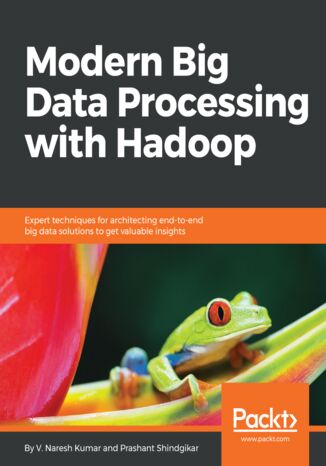
Manoj R Patil, V Naresh Kumar, Prashant...
The complex structure of data these days requires sophisticated solutions for data transformation, to make the information more accessible to the users.This book empowers you to build such solutions with relative ease with the help of Apache Hadoop, along with a host of other Big Data tools.This book will give you a complete understanding of the data lifecycle management with Hadoop, followed by modeling of structured and unstructured data in Hadoop. It will also show you how to design real-time streaming pipelines by leveraging tools such as Apache Spark, and build efficient enterprise search solutions using Elasticsearch. You will learn to build enterprise-grade analytics solutions on Hadoop, and how to visualize your data using tools such as Apache Superset. This book also covers techniques for deploying your Big Data solutions on the cloud Apache Ambari, as well as expert techniques for managing and administering your Hadoop cluster. By the end of this book, you will have all the knowledge you need to build expert Big Data systems.
Modern R Programming Cookbook. Recipes to simplify your statistical applications
Jaynal Abedin
R is a powerful tool for statistics, graphics, and statistical programming. It is used by tens of thousands of people daily to perform serious statistical analyses. It is a free, open source system whose implementation is the collective accomplishment of many intelligent, hard-working people. There are more than 2,000 available add-ons, and R is a serious rival to all commercial statistical packages. The objective of this book is to show how to work with different programming aspects of R. The emerging R developers and data science could have very good programming knowledge but might have limited understanding about R syntax and semantics. Our book will be a platform develop practical solution out of real world problem in scalable fashion and with very good understanding. You will work with various versions of R libraries that are essential for scalable data science solutions. You will learn to work with Input / Output issues when working with relatively larger dataset. At the end of this book readers will also learn how to work with databases from within R and also what and how meta programming helps in developing applications.
Manu Joseph
We live in a serendipitous era where the explosion in the quantum of data collected and a renewed interest in data-driven techniques such as machine learning (ML), has changed the landscape of analytics, and with it, time series forecasting. This book, filled with industry-tested tips and tricks, takes you beyond commonly used classical statistical methods such as ARIMA and introduces to you the latest techniques from the world of ML.This is a comprehensive guide to analyzing, visualizing, and creating state-of-the-art forecasting systems, complete with common topics such as ML and deep learning (DL) as well as rarely touched-upon topics such as global forecasting models, cross-validation strategies, and forecast metrics. You’ll begin by exploring the basics of data handling, data visualization, and classical statistical methods before moving on to ML and DL models for time series forecasting. This book takes you on a hands-on journey in which you’ll develop state-of-the-art ML (linear regression to gradient-boosted trees) and DL (feed-forward neural networks, LSTMs, and transformers) models on a real-world dataset along with exploring practical topics such as interpretability.By the end of this book, you’ll be able to build world-class time series forecasting systems and tackle problems in the real world.
Doug Bierer
MongoDB has grown to become the de facto NoSQL database with millions of users, from small start-ups to Fortune 500 companies. It can solve problems that are considered difficult, if not impossible, for aging RDBMS technologies. Written for version 4 of MongoDB, this book is the easiest way to get started with MongoDB.You will start by getting a MongoDB installation up and running in a safe and secure manner. You will learn how to perform mission-critical create, read, update, and delete operations, and set up database security. You will also learn about advanced features of MongoDB such as the aggregation pipeline, replication, and sharding. You will learn how to build a simple web application that uses MongoDB to respond to AJAX queries, and see how to make use of the MongoDB programming language driver for PHP. The examples incorporate new features available in MongoDB version 4 where appropriate.
Cyrus Dasadia
MongoDB is a high-performance and feature-rich NoSQL database that forms the backbone of the systems that power many different organizations. Packed with many features that have become essential for many different types of software professional and incredibly easy to use, this cookbook contains more than 100 recipes to address the everyday challenges of working with MongoDB.Starting with database configuration, you will understand the indexing aspects of MongoDB. The book also includes practical recipes on how you can optimize your database query performance, perform diagnostics, and query debugging. You will also learn how to implement the core administration tasks required for high-availability and scalability, achieved through replica sets and sharding, respectively. You will also implement server security concepts such as authentication, user management, role-based access models, and TLS configuration. You will also learn how to back up and recover your database efficiently and monitor server performance.By the end of this book, you will have all the information you need—along with tips, tricks, and best practices—to implement a high-performance MongoDB solution.
Russ McKendrick
This book will show you how monitoring containers and keeping a keen eye on the working of applications helps improve the overall performance of the applications that run on Docker. With the increased adoption of Docker containers, the need to monitor which containers are running, what resources they are consuming, and how these factors affect the overall performance of the system has become the need of the moment.This book covers monitoring containers using Docker's native monitoring functions, various plugins, as well as third-party tools that help in monitoring. Well start with how to obtain detailed stats for active containers, resources consumed, and container behavior. We also show you how to use these stats to improve the overall performance of the system. Next, you will learn how to use SysDig to both view your containers performance metrics in real time and record sessions to query later. By the end of this book, you will have a complete knowledge of how to implement monitoring for your containerized applications and make the most of the metrics you are collecting
Aman Singh
This book is useful for Hadoop administrators who need to learn how to monitor and diagnose their clusters. Also, the book will prove useful for new users of the technology, as the language used is simple and easy to grasp.