
Big data
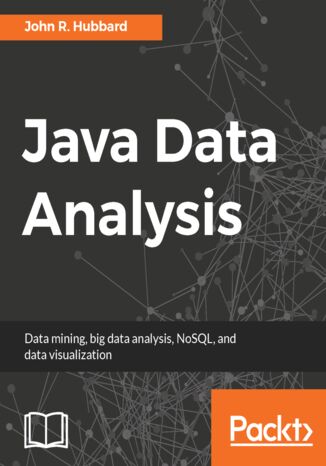
Java Data Analysis. Data mining, big data analysis, NoSQL, and data visualization
John R. Hubbard
Data analysis is a process of inspecting, cleansing, transforming, and modeling data with the aim of discovering useful information. Java is one of the most popular languages to perform your data analysis tasks.This book will help you learn the tools and techniques in Java to conduct data analysis without any hassle. After getting a quick overview of what data science is and the steps involved in the process, you’ll learn the statistical data analysis techniques and implement them using the popular Java APIs and libraries. Through practical examples, you will also learn the machine learning concepts such as classification and regression. In the process, you’ll familiarize yourself with tools such as Rapidminer and WEKA and see how these Java-based tools can be used effectively for analysis. You will also learn how to analyze text and other types of multimedia. Learn to work with relational, NoSQL, and time-series data. This book will also show you how you can utilize different Java-based libraries to create insightful and easy to understand plots and graphs.By the end of this book, you will have a solid understanding of the various data analysis techniques, and how to implement them using Java.
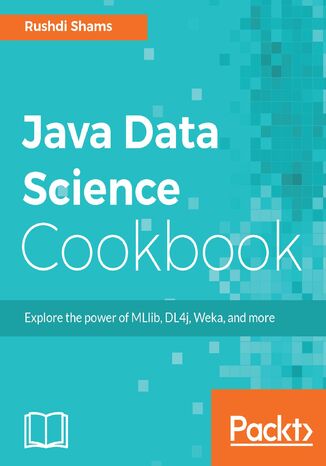
Java Data Science Cookbook. Explore the power of MLlib, DL4j, Weka, and more
Rushdi Shams
If you are looking to build data sciencemodels that are good for production,Java has come to the rescue. With the aidof strong libraries such as MLlib, Weka,DL4j, and more, you can efficientlyperform all the data science tasks youneed to.This unique book provides modernrecipes to solve your common andnot-so-common data science-relatedproblems. We start with recipes to helpyou obtain, clean, index, and search data.Then you will learn a variety of techniquesto analyze, learn from, and retrieveinformation from data. You will alsounderstand how to handle big data, learndeeply from data, and visualize data.Finally, you will work through uniquerecipes that solve your problems whiletaking data science to production, writingdistributed data science applications,and much more - things that will come inhandy at work.
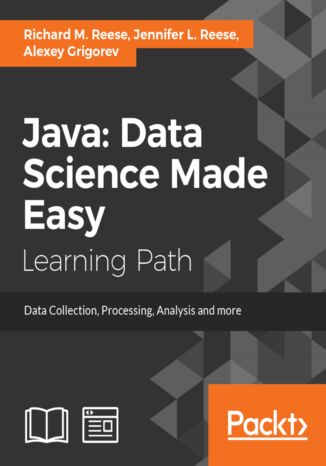
Java: Data Science Made Easy. Data collection, processing, analysis, and more
Richard M. Reese, Jennifer L. Reese, Alexey...
Data science is concerned with extracting knowledge and insights from a wide variety of data sources to analyse patterns or predict future behaviour. It draws from a wide array of disciplines including statistics, computer science, mathematics, machine learning, and data mining. In this course, we cover the basic as well as advanced data science concepts and how they are implemented using the popular Java tools and libraries.The course starts with an introduction of data science, followed by the basic data science tasks of data collection, data cleaning, data analysis, and data visualization. This is followed by a discussion of statistical techniques and more advanced topics including machine learning, neural networks, and deep learning. You will examine the major categories of data analysis including text, visual, and audio data, followed by a discussion of resources that support parallel implementation. Throughout this course, the chapters will illustrate a challenging data science problem, and then go on to present a comprehensive, Java-based solution to tackle that problem. You will cover a wide range of topics – from classification and regression, to dimensionality reduction and clustering, deep learning and working with Big Data. Finally, you will see the different ways to deploy the model and evaluate it in production settings.By the end of this course, you will be up and running with various facets of data science using Java, in no time at all.This course contains premium content from two of our recently published popular titles:- Java for Data Science- Mastering Java for Data Science
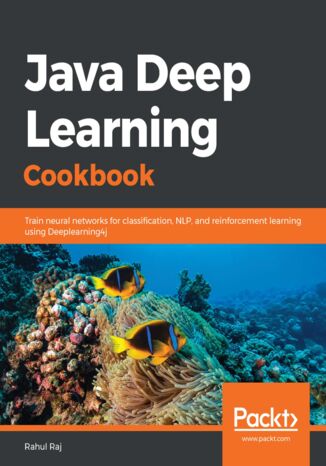
Rahul Raj
Java is one of the most widely used programming languages in the world. With this book, you will see how to perform deep learning using Deeplearning4j (DL4J) – the most popular Java library for training neural networks efficiently.This book starts by showing you how to install and configure Java and DL4J on your system. You will then gain insights into deep learning basics and use your knowledge to create a deep neural network for binary classification from scratch. As you progress, you will discover how to build a convolutional neural network (CNN) in DL4J, and understand how to construct numeric vectors from text. This deep learning book will also guide you through performing anomaly detection on unsupervised data and help you set up neural networks in distributed systems effectively. In addition to this, you will learn how to import models from Keras and change the configuration in a pre-trained DL4J model. Finally, you will explore benchmarking in DL4J and optimize neural networks for optimal results.By the end of this book, you will have a clear understanding of how you can use DL4J to build robust deep learning applications in Java.
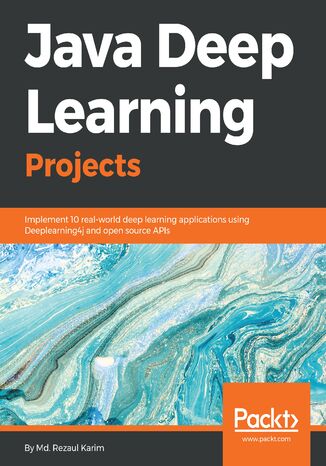
Md. Rezaul Karim
Java is one of the most widely used programming languages. With the rise of deep learning, it has become a popular choice of tool among data scientists and machine learning experts.Java Deep Learning Projects starts with an overview of deep learning concepts and then delves into advanced projects. You will see how to build several projects using different deep neural network architectures such as multilayer perceptrons, Deep Belief Networks, CNN, LSTM, and Factorization Machines.You will get acquainted with popular deep and machine learning libraries for Java such as Deeplearning4j, Spark ML, and RankSys and you’ll be able to use their features to build and deploy projects on distributed computing environments.You will then explore advanced domains such as transfer learning and deep reinforcement learning using the Java ecosystem, covering various real-world domains such as healthcare, NLP, image classification, and multimedia analytics with an easy-to-follow approach. Expert reviews and tips will follow every project to give you insights and hacks.By the end of this book, you will have stepped up your expertise when it comes to deep learning in Java, taking it beyond theory and be able to build your own advanced deep learning systems.
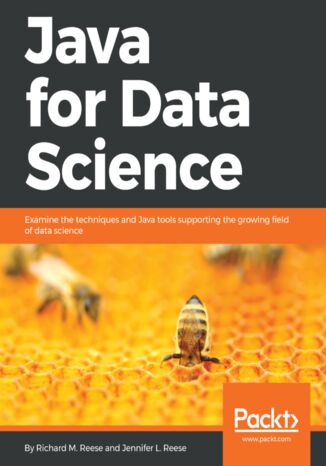
Richard M. Reese , Shilpi Saxena, Jennifer...
para 1: Get the lowdown on Java and explore big data analytics with Java for Data Science. Packed with examples and data science principles, this book uncovers the techniques & Java tools supporting data science and machine learning. Para 2: The stability and power of Java combines with key data science concepts for effective exploration of data. By working with Java APIs and techniques, this data science book allows you to build applications and use analysis techniques centred on machine learning. Para 3: Java for Data Science gives you the understanding you need to examine the techniques and Java tools supporting big data analytics. These Java-based approaches allow you to tackle data mining and statistical analysis in detail. Deep learning and Java data mining are also featured, so you can explore and analyse data effectively, and build intelligent applications using machine learning. para 4: What?s Inside ? Understand data science principles with Java support ? Discover machine learning and deep learning essentials ? Explore data science problems with Java-based solutions
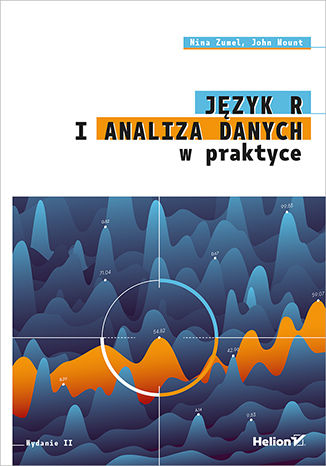
Język R i analiza danych w praktyce. Wydanie II
Nina Zumel, John Mount
Analiza danych albo nauka o danych jest interdyscyplinarną dziedziną, dzięki której hipotezy i dane przekształca się w zrozumiałe przewidywania. Predykcyjna analiza danych przynosi wymierne korzyści w wielu dziedzinach, od polityki począwszy, a na udzielaniu kredytów skończywszy. Osobą odpowiedzialną za tę magię jest analityk danych - człowiek, który zbiera i przygotowuje dane, wybiera technikę modelowania, pisze kod, weryfikuje wyniki swojej pracy, wreszcie komunikuje je interesariuszom. Jak widać, profesja analityka danych jest wyjątkowo atrakcyjna i wyjątkowo wymagająca. Aby określić umiejętności praktyczne wymagane w zawodzie analityka danych, najlepiej prześledzić realizacje konkretnych projektów z wykorzystaniem rzeczywistych danych. Ta książka jest samouczkiem prezentującym praktyczne aspekty dziesiątek technik, które wykorzystują profesjonalni analitycy danych. Główny nacisk autorzy położyli na zadania: ich zaplanowanie, przygotowanie, realizację i prezentację wyników. Dzięki praktycznemu podejściu z tej pozycji skorzystają zarówno analitycy biznesowi, jak i badacze danych. Pokazano tu, w jakich przypadkach i w jaki sposób należy stosować techniki statystyczne oraz metody uczenia maszynowego. W każdym rozdziale omówiono nowe narzędzia w kontekście rzeczywistych, praktycznych projektów. W rezultacie powstał potężny zbiór przydatnych ćwiczeń napisanych w języku R, opatrzonych wartościowymi wskazówkami, komentarzami i podpowiedziami. W książce między innymi: zasady zarządzania procesem analizy danych zadania analityka danych przekształcanie danych w celu przygotowania ich do analizy techniki statystyczne i metody uczenia maszynowego w języku R zaawansowane metody modelowania tajniki skutecznego prezentowania wyników analiz R: jesteś gotów na właściwe wyniki analizy danych?
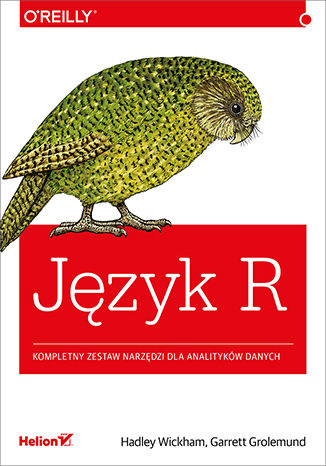
Język R. Kompletny zestaw narzędzi dla analityków danych
Hadley Wickham, Garrett Grolemund
Analiza danych jest stosunkowo młodą, interdyscyplinarną dziedziną, której celem jest wydobycie i wykorzystanie wiedzy ukrytej w surowych danych pozyskanych z różnych źródeł. Można w ten sposób zrozumieć istotę zjawisk, przewidzieć wystąpienie zdarzeń czy pozyskać informacje niedostępne w inny sposób. W wielu przypadkach wnioski wyciągnięte z analizy danych okazują się bezcenne, co doceniają profesjonaliści z licznych branż. Przygotowanie danych, przeanalizowanie ich i odpowiednie przedstawienie płynącej z nich wiedzy bywa sporym wyzwaniem, jednak dzięki takim narzędziom jak język R i związane z nim pakiety zadanie to staje się znacząco prostsze. Niniejsza książka jest przystępnie napisanym przewodnikiem po języku R i narzędziach służących do analizy danych. Zawarto tu wyczerpujące wprowadzenie do języka R, programu RStudio i tidyverse. Zaprezentowano zestaw pakietów R, które znacznie poprawiają komfort pracy podczas analizy danych. Wyjaśniono znaczenie poszczególnych etapów analizy danych: ich importowania, oczyszczania, przekształcania, modelowania, wizualizowania, a także skutecznego komunikowania wiedzy płynącej z danych. Mimo że książka dotyczy narzędzi programistycznych, skorzystają z niej nie tylko programiści. Doceni ją każdy, kto chce zyskać solidne podstawy przygotowania i analizy danych. Najważniejsze zagadnienia: przekształcanie zbiorów danych techniki analizy danych w języku R eksplorowanie danych, formułowanie i testowanie hipotez integracja opisów, kodu i wyników badań w języku R Markdown graficzna prezentacja danych z wykorzystaniem ggplot2 R — wszystko, czego potrzebujesz w profesjonalnej analizie danych!

Język R. Receptury. Analiza danych, statystyka i przetwarzanie grafiki. Wydanie II
JD Long, Paul Teetor
Język R jest potężnym narzędziem używanym w statystyce, przetwarzaniu grafiki i programowaniu statystycznym; stanowi konkurencję dla komercyjnych systemów do obliczeń tego rodzaju. Zawiera wszystkie narzędzia, których potrzebują statystycy. Równocześnie jest to specyficzny język, przez co jego użytkowanie może sprawiać problemy. Zarówno proste, jak i złożone zadania są łatwe do wykonania, jeśli tylko wiadomo, w jaki sposób je zrobić. Jeżeli jednak trzeba stopniowo dochodzić do właściwego rozwiązania, może to kosztować sporo cierpliwości i zniechęcać. Oto zbiór 275 receptur instruktażowych, z których każda pomaga w rozwiązaniu konkretnego problemu. Wszystkie zostały starannie przetestowane i wielokrotnie dowodziły swojej przydatności. Każda z omawianych receptur została poprzedzona krótkim wprowadzeniem i omówieniem zastosowanych mechanizmów działania. Nie jest to klasyczny podręcznik programowania, jednak z pewnością przyśpieszy naukę praktycznego wykorzystania możliwości R. Jeśli masz już pewne doświadczenie z tym językiem, odświeżysz swoją wiedzę i uzyskasz szerszą perspektywę. Wśród receptur znajdziesz obejmujące szeroki zakres zadania - od podstawowych operacji na danych wejściowych i wyjściowych, poprzez statystykę ogólną, aż po grafikę i regresję liniową. Dowiesz się również, jak wykorzystać język R do wizualizacji danych za pomocą ciekawych wykresów graficznych. W tej książce między innymi: przygotowywanie danych wejściowych i upraszczanie danych wyjściowych macierze, listy, wektory czynnikowe, ramki danych testy statystyczne, przedziały ufności, prawdopodobieństwa modele statystyczne z wykorzystaniem regresji liniowej i analizy wariancji stosowanie zaawansowanych technik statystycznych R: błyskawicznie osiągniesz znakomite wyniki!
Bogumił Kamiński, Przemysław Szufel
Julia, with its dynamic nature and high-performance, provides comparatively minimal time for the development of computational models with easy-to-maintain computational code. This book will be your solution-based guide as it will take you through different programming aspects with Julia.Starting with the new features of Julia 1.0, each recipe addresses a specific problem, providing a solution and explaining how it works. You will work with the powerful Julia tools and data structures along with the most popular Julia packages. You will learn to create vectors, handle variables, and work with functions. You will be introduced to various recipes for numerical computing, distributed computing, and achieving high performance. You will see how to optimize data science programs with parallel computing and memory allocation. We will look into more advanced concepts such as metaprogramming and functional programming. Finally, you will learn how to tackle issues while working with databases and data processing, and will learn about on data science problems, data modeling, data analysis, data manipulation, parallel processing, and cloud computing with Julia.By the end of the book, you will have acquired the skills to work more effectively with your data
Julia for Data Science. high-performance computing simplified
Anshul Joshi
Julia is a fast and high performing language that's perfectly suited to data science with a mature package ecosystem and is now feature complete. It is a good tool for a data science practitioner. There was a famous post at Harvard Business Review that Data Scientist is the sexiest job of the 21st century. (https://hbr.org/2012/10/data-scientist-the-sexiest-job-of-the-21st-century).This book will help you get familiarised with Julia's rich ecosystem, which is continuously evolving, allowing you to stay on top of your game.This book contains the essentials of data science and gives a high-level overview of advanced statistics and techniques. You will dive in and will work on generating insights by performing inferential statistics, and will reveal hidden patterns and trends using data mining. This has the practical coverage of statistics and machine learning. You will develop knowledge to build statistical models and machine learning systems in Julia with attractive visualizations.You will then delve into the world of Deep learning in Julia and will understand the framework, Mocha.jl with which you can create artificial neural networks and implement deep learning.This book addresses the challenges of real-world data science problems, including data cleaning, data preparation, inferential statistics, statistical modeling, building high-performance machine learning systems and creating effective visualizations using Julia.
Toomey, Nikhil Borkar, Nikhil Akki, Juan Tomás...
Jupyter has garnered a strong interest in the data science community of late, as it makes common data processing and analysis tasks much simpler. This book is for data science professionals who want to master various tasks related to Jupyter to create efficient, easy-to-share, scientific applications.The book starts with recipes on installing and running the Jupyter Notebook system on various platforms and configuring the various packages that can be used with it. You will then see how you can implement different programming languages and frameworks, such as Python, R, Julia, JavaScript, Scala, and Spark on your Jupyter Notebook. This book contains intuitive recipes on building interactive widgets to manipulate and visualize data in real time, sharing your code, creating a multi-user environment, and organizing your notebook. You will then get hands-on experience with Jupyter Labs, microservices, and deploying them on the web. By the end of this book, you will have taken your knowledge of Jupyter to the next level to perform all key tasks associated with it.
Toomey
Jupyter Notebook is a web-based environment that enables interactive computing in notebook documents. It allows you to create documents that contain live code, equations, and visualizations. This book is a comprehensive guide to getting started with data science using the popular Jupyter notebook. If you are familiar with Jupyter notebook and want to learn how to use its capabilities to perform various data science tasks, this is the book for you! From data exploration to visualization, this book will take you through every step of the way in implementing an effective data science pipeline using Jupyter. You will also see how you can utilize Jupyter's features to share your documents and codes with your colleagues. The book also explains how Python 3, R, and Julia can be integrated with Jupyter for various data science tasks.By the end of this book, you will comfortably leverage the power of Jupyter to perform various tasks in data science successfully.
Giuseppe Ciaburro
Keras 2.x Projects explains how to leverage the power of Keras to build and train state-of-the-art deep learning models through a series of practical projects that look at a range of real-world application areas. To begin with, you will quickly set up a deep learning environment by installing the Keras library. Through each of the projects, you will explore and learn the advanced concepts of deep learning and will learn how to compute and run your deep learning models using the advanced offerings of Keras. You will train fully-connected multilayer networks, convolutional neural networks, recurrent neural networks, autoencoders and generative adversarial networks using real-world training datasets. The projects you will undertake are all based on real-world scenarios of all complexity levels, covering topics such as language recognition, stock volatility, energy consumption prediction, faster object classification for self-driving vehicles, and more. By the end of this book, you will be well versed with deep learning and its implementation with Keras. You will have all the knowledge you need to train your own deep learning models to solve different kinds of problems.
Keras Deep Learning Cookbook. Over 30 recipes for implementing deep neural networks in Python
Rajdeep Dua, Manpreet Singh Ghotra
Keras has quickly emerged as a popular deep learning library. Written in Python, it allows you to train convolutional as well as recurrent neural networks with speed and accuracy.The Keras Deep Learning Cookbook shows you how to tackle different problems encountered while training efficient deep learning models, with the help of the popular Keras library. Starting with installing and setting up Keras, the book demonstrates how you can perform deep learning with Keras in the TensorFlow. From loading data to fitting and evaluating your model for optimal performance, you will work through a step-by-step process to tackle every possible problem faced while training deep models. You will implement convolutional and recurrent neural networks, adversarial networks, and more with the help of this handy guide. In addition to this, you will learn how to train these models for real-world image and language processing tasks. By the end of this book, you will have a practical, hands-on understanding of how you can leverage the power of Python and Keras to perform effective deep learning
Giuseppe Ciaburro, Sudharsan Ravichandiran, Suriyadeepan Ramamoorthy
Reinforcement learning has evolved a lot in the last couple of years and proven to be a successful technique in building smart and intelligent AI networks. Keras Reinforcement Learning Projects installs human-level performance into your applications using algorithms and techniques of reinforcement learning, coupled with Keras, a faster experimental library.The book begins with getting you up and running with the concepts of reinforcement learning using Keras. You’ll learn how to simulate a random walk using Markov chains and select the best portfolio using dynamic programming (DP) and Python. You’ll also explore projects such as forecasting stock prices using Monte Carlo methods, delivering vehicle routing application using Temporal Distance (TD) learning algorithms, and balancing a Rotating Mechanical System using Markov decision processes.Once you’ve understood the basics, you’ll move on to Modeling of a Segway, running a robot control system using deep reinforcement learning, and building a handwritten digit recognition model in Python using an image dataset. Finally, you’ll excel in playing the board game Go with the help of Q-Learning and reinforcement learning algorithms.By the end of this book, you’ll not only have developed hands-on training on concepts, algorithms, and techniques of reinforcement learning but also be all set to explore the world of AI.
Kibana 7 Quick Start Guide. Visualize your Elasticsearch data with ease
Anurag Srivastava
The Elastic Stack is growing rapidly and, day by day, additional tools are being added to make it more effective. This book endeavors to explain all the important aspects of Kibana, which is essential for utilizing its full potential.This book covers the core concepts of Kibana, with chapters set out in a coherent manner so that readers can advance their learning in a step-by-step manner. The focus is on a practical approach, thereby enabling the reader to apply those examples in real time for a better understanding of the concepts and to provide them with the correct skills in relation to the tool. With its succinct explanations, it is quite easy for a reader to use this book as a reference guide for learning basic to advanced implementations of Kibana. The practical examples, such as the creation of Kibana dashboards from CSV data, application RDBMS data, system metrics data, log file data, APM agents, and search results, can provide readers with a number of different drop-off points from where they can fetch any type of data into Kibana for the purpose of analysis or dashboarding.
Krishna Shah
Unleash the full potential of Kibana—an indispensable tool for data analysts to seamlessly explore vast datasets, uncover key insights, identify trends and anomalies, and share results. This book guides you through its user-friendly interface, interactive visualizations, and robust features, including real-time data monitoring and advanced analytics, showing you how Kibana revolutionizes your approach to navigating and analyzing complex datasets.Starting with the foundational steps of installing, configuring, and running Kibana, this book progresses systematically to explain the search and data visualization capabilities for data stored in the Elasticsearch cluster. You’ll then delve into the practical details of creating data views and optimizing spaces to better organize the analysis environment. As you advance, you'll get to grips with using the discover interface and learn how to build different types of extensive visualizations using Lens.By the end of this book, you’ll have a complete understanding of how Kibana works, helping you leverage its capabilities to build an analytics and visualization solution from scratch for your data-driven use case.
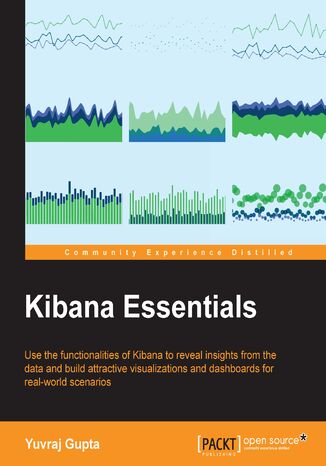
Yuvraj Gupta
Use the functionalities of Kibana to discover data and build attractive visualizations and dashboards for real-world scenariosAbout This BookPerform real-time data analytics and visualizations, on streaming data, using KibanaBuild beautiful visualizations and dashboards with simplicity and ease without any type of coding involvedLearn all the core concepts as well as detailed information about each component used in KibanaWho This Book Is ForWhether you are new to the world of data analytics and data visualization or an expert, this book will provide you with the skills required to use Kibana with ease and simplicity for real-time data visualization of streaming data.This book is intended for those professionals who are interested in learning about Kibana,its installations, and how to use it . As Kibana provides a user-friendly web page, no prior experience is required.What You Will LearnUnderstand the basic concepts of elasticsearch used in Kibana along with step by step guide to install Kibana in Windows and UbuntuExplore the functionality of all the components used in Kibana in detail, such as the Discover, Visualize, Dashboard,and Settings pagesAnalyze data using the powerful search capabilities of elasticsearchUnderstand the different types of aggregations used in Kibana for visualizationCreate and build different types of amazing visualizations and dashboards easilyCreate, save, share, embed, and customize the visualizations added to the dashboardCustomize and tweak the advanced settings of Kibana to ensure ease of useIn DetailWith the increasing interest in data analytics and visualization of large data around the globe, Kibana offers the best features to analyze data and create attractive visualizations and dashboards through simple-to-use web pages. The variety of visualizations provided, combined with the powerful underlying elasticsearch capabilities will help professionals improve their skills with this technology.This book will help you quickly familiarize yourself to Kibana and will also help you to understand the core concepts of this technology to build visualizations easily.Starting with setting up of Kibana and elasticsearch in Windows and Ubuntu, you will then use the Discover page to analyse your data intelligently. Next, you will learn to use the Visualization page to create beautiful visualizations without the need for any coding. Then, you will learn how to use the Dashboard page to create a dashboard and instantly share and embed the dashboards. You will see how to tweak the basic and advanced settings provided in Kibana to manage searches, visualizations, and dashboards. Finally, you will use Kibana to build visualizations and dashboards for real-world scenarios.You will quickly master the functionalities and components used in Kibana to create amazing visualizations based on real-world scenarios. With ample screenshots to guide you through every step, this book will assist you in creating beautiful visualizations with ease.Style and approachThis book is a comprehensive step-by-step guide to help you understand Kibana. It’s explained in an easy-to-follow style along with supporting images. Every chapter is explained sequentially , covering the basics of each component of Kibana and providing detailed explanations of all the functionalities of Kibana that appeal.
KNIME Essentials. Perform accurate data analysis using the power of KNIME
Gábor Bakos
KNIME is an open source data analytics, reporting, and integration platform, which allows you to analyze a small or large amount of data without having to reach out to programming languages like R.KNIME Essentials teaches you all you need to know to start processing your first data sets using KNIME. It covers topics like installation, data processing, and data visualization including the KNIME reporting features. Data processing forms a fundamental part of KNIME, and KNIME Essentials ensures that you are fully comfortable with this aspect of KNIME before showing you how to visualize this data and generate reports.KNIME Essentials guides you through the process of the installation of KNIME through to the generation of reports based on data. The main parts between these two phases are the data processing and the visualization. The KNIME variants of data analysis concepts are introduced, and after the configuration and installation description comes the data processing which has many options to convert or extend it. Visualization makes it easier to get an overview for parts of the data, while reporting offers a way to summarize them in a nice way.

Alberto Ferrari, Marco Russo
Kompletny przewodnik po DAX to najbardziej wyczerpujący i autorytatywny podręcznik języka Microsoft DAX w zastosowaniach BI i analityce. Podczas gdy inne książki omawiają tylko podstawy, ten przewodnik zapewnia wiedzę na poziomie eksperckim potrzebnych średnio i wysoko zaawansowanym użytkownikom Excela i profesjonalistom BI, od podstaw po innowacyjne techniki wysokiej wydajności. Dwaj czołowi konsultanci i wykładowcy Microsoft BI przedstawiają język DAX poprzez realistyczne i przydatne przykłady, prezentujące typowe obliczenia pozwalające użytkownikom od razu uzyskiwać wyniki. Alberto Ferrari i Marco Russo rozjaśniają złożone zagadnienia pokazując czytelnikom, co się dzieje pod maską silnika DAX, gdy wykonywane są wyrażenia. Ferrari i Russo starannie przechodzą przez typowe scenariusze, w których działanie DAX może być trudne do zrozumienia; pokazują, jak optymalizować modele danych, aby wyrażenia DAX były szybko wykonywane; demonstrują, jak pisać szybki i odporny kod DAX; wyjaśniają, jak usuwać wąskie gardła z istniejącego kodu. Pokazują działanie DAX zarówno w środowisku SQL Server, jak i Microsoft Excel, ułatwiając pracę bez względu na to, którą platformę Microsoft BI preferuje czytelnik.
Alberto Ferrari, Marco Russo
WYDANIE DRUGIE uzupełnione i rozszerzone Najbardziej wyczerpujący przewodnik po języku DAX, obecnie rozszerzony i uzupełniony o najnowsze funkcje i nowoczesne zalecane praktyki, prezentujący opracowany w firmie Microsoft język na potrzeby analiz biznesowych i modelowania danych. Czołowi eksperci w dziedzinie Microsoft BI pomagają opanować wszystkie elementy systemu, od funkcji tablicowych po zaawansowany kod i optymalizację modelu. Dowiedz, co naprawdę dzieje się przy wykonywaniu poleceń DAX i jak użyć tej wiedzy do pisania szybkiego i niezawodnego kodu. Wydanie to skupia się na przykładach, które można budować i uruchamiać przy użyciu bezpłatnego narzędzia Power BI Desktop i pomaga wydobyć najwięcej korzyści ze składni zmiennych (VAR) w Power BI, Excelu lub Analysis Services. Pragniesz wykorzystać wszystkie możliwości języka ? To książka, której potrzebujesz. Wykonuj skuteczną analizę danych w programach Power BI, SQL Server i Excel Poznaj podstawowe koncepcje DAX, w tym kolumny obliczane, miary i obsługę błędów Wydajnie korzystaj z zaawansowanych funkcji tablicowych Opanuj istotę kontekstów wykonania oraz funkcje CALCULATE i CALCULATETABLE Wykonuj obliczenia czasowe i oparte na niestandardowych hierarchiach Korzystaj z grup obliczeń i elementów obliczanych Używaj składni zmiennych do tworzenia bardziej czytelnego, zrozumiałego kodu Wyrażaj różnorodne nietypowe relacje, w tym relacje wiele-do-wielu i filtry dwukierunkowe Opanuj zaawansowane techniki optymalizacyjne, aby zwiększyć wydajność agregacji Optymalizuj modele danych Mierz wydajność zapytań przy użyciu DAX Studio i dowiedz się, jak optymalizować kod DAX O tej książce Dla zaawansowanych użytkowników programu Excel oraz anlityków BI używających SQL Server Analysis Services lub Power BI O autorach Marco Russo i Alberto Ferrari są współzałożycielami strony sqlbi.com, w której regularnie publikują artykuły na temat Microsoft PowerPivot, DAX, Power BI oraz SQL Server Analysis Services. Występują też na głównych międzynarodowych konferencjach, takich jak TechEd, Ignite, PASS Summit czy SQLBits. Obydwaj wykładają teorię analizy biznesowej (BI) oraz technologie Microsoft BI począwszy od roku 1999. Książki ich autorstwa obejmują Excel 2013: Budowanie modeli danych przy użyciu PowerPivot, Analyzing Data with Power BI and Power Pivot for Excel oraz Introducing Microsoft Power BI.
Alberto Ferrari i Marco Russo
Wydanie trzecie Doświadczeni eksperci Alberto Ferrari i Marco Russo pomagają opanować język DAX dla rozwiązań BI Kompletny przewodnik po DAX to autorytatywne źródło wiedzy na temat języka DAX, kluczowego dla tworzenia skutecznych miar w modelach semantycznych wykorzystywanych w Microsoft Power BI, Fabric, Analysis Services i Excelu. Dzięki wieloletniemu doświadczeniu od samego powstania Power Pivot autorzy przedstawiają kompleksowy przewodnik po unikatowych i złożonych koncepcjach DAX, co czyni go niezbędnym narzędziem każdego profesjonalisty BI. Trzecie wydanie zawiera omówienie najnowszych funkcjonalności i zapewnia ramy dla pisania wydajnego kodu, zwiększając możliwości dostosowywania obliczeń w modelach danych. Zdobędziesz umiejętności niezbędne dla zrozumienia i stosowania zaawansowanych koncepcji języka DAX, strukturyzowania kodu w funkcjach definiowanych przez użytkownika i wykorzystywania nowych kalendarzy w analizach czasowych. Poznaj fundamenalne koncepcje języka DAX i jego unikatową strukturę Opanuj stosowanie kontekstów wykonania dla usprawnienia analiz Naucz się skutecznie stosować funkcje CALCULATE i CALCULATETABLE Stosuj zmienne, aby upraszczać złożone wyrażenia DAX Wykorzystuj klasyczne i nowe funkcje analizy czasowej Używaj iteratorów do wykonywania zaawansowanych obliczeń Stosuj obliczenia wizualne, aby ulepszać interaktywność raportów Twórz i wykorzystuj grupy kalkulacji dla raportowania dynamicznego Obsługuj złożone hierarchie i relacje w modelach danych Twórz zapytania DAX dla celów testowych i rozwiązywania problemów O tej książce - Dla profesjonalistów BI i zaawansowanych użytkowników Excela, którzy pragną pogłębić swoją znajomość języka DAX i rozszerzyć swoje możliwości modelowania danych - Dla analityków danych i specjalistów IT szukających sposobów optymalizacji swoich rozwiązań w Microsoft Power BI, Fabric, Analysis Services i Excelu O autorach Alberto Ferrari i Marco Russo to uznani eksperci w dziedzinie analityki biznesowej, specjalizujący się w języku DAX i Microsoft Power BI. Jako założyciele witryny sqlbi.com, utworzyli wiodącą platformę nauki języka DAX, dzieląc się swą rozległą wiedzą. Dzięki głębokiej znajomości języka DAX stali się wpływowymi postaciami w społeczności BI i regularnie pojawiają się na prestiżowych konferencjach międzynarodowych, takich jak Microsoft Fabric Conference, PASS Summit i SQLBits. Wszystkie pliki do ćwiczeń są dostępne do pobrania ze strony MicrosoftPressStore.com/register Wymagania systemowe zawiera Wstęp do książki.

Kompletny przewodnik po Power Query (M). Opanuj wykonywanie złożonych przekształceń danych
Greg Deckler, Rick de Groot, Melissa de...
Profesjonalna analiza danych ułatwia podejmowanie opłacalnych decyzji, a przekształcanie danych jest krytycznym etapem tego procesu. Nieocenionym narzędziem dla każdego, kto chce przetwarzać dane na profesjonalnym poziomie, jest Power Query. Zdobycie wysoce zaawansowanych umiejętności wymaga dogłębnego poznania M - języka zaimplementowanego w Power Query. Dzięki temu praktycznemu przewodnikowi w pierwszej kolejności opanujesz podstawy języka M. Po zapoznaniu się z kluczowymi koncepcjami stopniowo będziesz stosować tę wiedzę do coraz bardziej zaawansowanych przekształceń danych. Zajmiesz się także takimi zagadnieniami jak optymalizacja wydajności zapytań, obsługa błędów i implementacja efektywnych technik przetwarzania danych. W każdym rozdziale znajdziesz wiele przydatnych przykładów, za sprawą których rozwiniesz umiejętności pozwalające używać Power Query do radzenia sobie z realnymi wyzwaniami i poprawiania swoich umiejętności analitycznych. Przekonasz się, że dzięki zdobytym w ten sposób umiejętnościom z łatwością zastosujesz funkcje Power Query do przekształcania danych! W książce: solidne podstawy Power Query i M funkcje służące do wykonywania złożonych przekształceń danych wartości, typy i struktury sterujące w Power Query wydajna obsługa błędów strategie optymalizacji wydajności w Power Query i M przykłady rzeczywistych scenariuszy Rozpocznij fascynującą podróż do świata zaawansowanej analizy danych!