
Big data
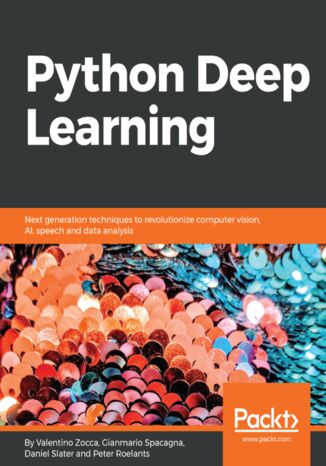
Valentino Zocca, Gianmario Spacagna, Daniel Slater, Peter...
With an increasing interest in AI around the world, deep learning has attracted a great deal of public attention. Every day, deep learning algorithms are used broadly across different industries.The book will give you all the practical information available on the subject, including the best practices, using real-world use cases. You will learn to recognize and extract information to increase predictive accuracy and optimize results.Starting with a quick recap of important machine learning concepts, the book will delve straight into deep learning principles using Sci-kit learn. Moving ahead, you will learn to use the latest open source libraries such as Theano, Keras, Google's TensorFlow, and H20. Use this guide to uncover the difficulties of pattern recognition, scaling data with greater accuracy and discussing deep learning algorithms and techniques.Whether you want to dive deeper into Deep Learning, or want to investigate how to get more out of this powerful technology, you’ll find everything inside.
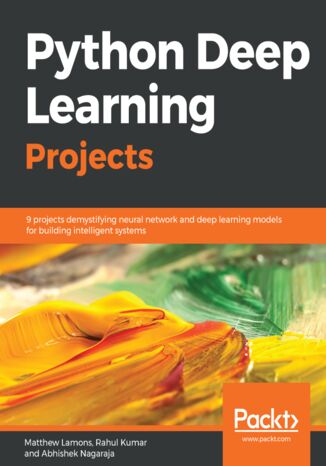
Matthew Lamons, Rahul Kumar, Abhishek Nagaraja
Deep learning has been gradually revolutionizing every field of artificial intelligence, making application development easier.Python Deep Learning Projects imparts all the knowledge needed to implement complex deep learning projects in the field of computational linguistics and computer vision. Each of these projects is unique, helping you progressively master the subject. You’ll learn how to implement a text classifier system using a recurrent neural network (RNN) model and optimize it to understand the shortcomings you might experience while implementing a simple deep learning system.Similarly, you’ll discover how to develop various projects, including word vector representation, open domain question answering, and building chatbots using seq-to-seq models and language modeling. In addition to this, you’ll cover advanced concepts, such as regularization, gradient clipping, gradient normalization, and bidirectional RNNs, through a series of engaging projects.By the end of this book, you will have gained knowledge to develop your own deep learning systems in a straightforward way and in an efficient way
Python: Deeper Insights into Machine Learning. Deeper Insights into Machine Learning
John Hearty, Sebastian Raschka, David Julian
Machine learning and predictive analytics are becoming one of the key strategies for unlocking growth in a challenging contemporary marketplace. It is one of the fastest growing trends in modern computing, and everyone wants to get into the field of machine learning. In order to obtain sufficient recognition in this field, one must be able to understand and design a machine learning system that serves the needs of a project. The idea is to prepare a learning path that will help you to tackle the real-world complexities of modern machine learning with innovative and cutting-edge techniques. Also, it will give you a solid foundation in the machine learning design process, and enable you to build customized machine learning models to solve unique problems.The course begins with getting your Python fundamentals nailed down. It focuses on answering the right questions that cove a wide range of powerful Python libraries, including scikit-learn Theano and Keras.After getting familiar with Python core concepts, it’s time to dive into the field of data science. You will further gain a solid foundation on the machine learning design and also learn to customize models for solving problems.At a later stage, you will get a grip on more advanced techniques and acquire a broad set of powerful skills in the area of feature selection and feature engineering.
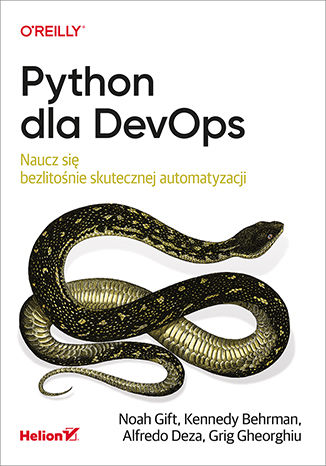
Python dla DevOps. Naucz się bezlitośnie skutecznej automatyzacji
Noah Gift, Kennedy Behrman, Alfredo Deza, Grig...
Ostatnia dekada zmieniła oblicze IT. Kluczowego znaczenia nabrały big data, a chmura i automatyzacja rozpowszechniły się wszędzie tam, gdzie mowa o efektywności. Inżynierowie muszą wykorzystywać zalety systemów linuksowych w codziennej praktyce, aby zapewnić należyty poziom automatyzacji swoich zadań. Do tych celów świetnie nadaje się Python. Język ten zdobywa coraz większe uznanie z uwagi na jego wszechstronność, jak również wydajność, przenaszalność i bezpieczeństwo kodu. Warto więc wykorzystywać Pythona do administrowania systemami Linux wraz z takimi narzędziami DevOps jak Docker, Kubernetes i Terraform. Dzięki tej książce dowiesz się, jak sobie z tym poradzić. Znalazło się w niej krótkie wprowadzenie do Pythona oraz do automatyzacji przetwarzania tekstu i obsługi systemu plików, a także do pisania własnych narzędzi wiersza poleceń. Zaprezentowano również przydatne narzędzia linuksowe, systemy zarządzania pakietami oraz systemy budowania, monitorowania i automatycznego testowania kodu. Zagadnienia te szczególnie zainteresują specjalistów DevOps. Ponadto zawarto tu podstawowe informacje o chmurze obliczeniowej, usługach IaC i systemach Kubernetes. Omówiono zasady uczenia maszynowego i inżynierii danych z perspektywy DevOps. Przedstawiono także kompletny przewodnik po procesach budowania, wdrażania oraz operacyjnego wykorzystywania modelu uczenia maszynowego z użyciem systemów Flask, sklearn, Docker i Kubernetes. W tej książce: wprowadzenie do Pythona automatyczne przetwarzanie tekstu oraz automatyzacja operacji na plikach automatyzacja za pomocą sprawdzonych narzędzi linuksowych chmura, infrastruktura jako kod, Kubernetes i tryb bezserwerowy uczenie maszynowe i inżynieria danych z perspektywy DevOps tworzenie i operacjonalizacja projektu uczenia maszynowego Python: tutaj ważna jest prawdziwa nowoczesność oprogramowania!
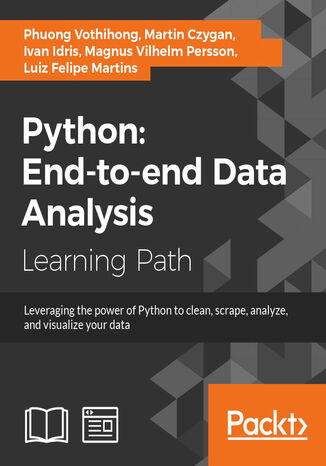
Ivan Idris, Magnus Vilhelm Persson, Luiz Felipe...
Data analysis is the process of applying logical and analytical reasoning to study each component of data present in the system. Python is a multi-domain, high-level, programming language that offers a range of tools and libraries suitable for all purposes, it has slowly evolved as one of the primary languages for data science. Have you ever imagined becoming an expert at effectively approaching data analysis problems, solving them, and extracting all of the available information from your data? If yes, look no further, this is the course you need!In this course, we will get you started with Python data analysis by introducing the basics of data analysis and supported Python libraries such as matplotlib, NumPy, and pandas. Create visualizations by choosing color maps, different shapes, sizes, and palettes then delve into statistical data analysis using distribution algorithms and correlations. You’ll then find your way around different data and numerical problems, get to grips with Spark and HDFS, and set up migration scripts for web mining. You’ll be able to quickly and accurately perform hands-on sorting, reduction, and subsequent analysis, and fully appreciate how data analysis methods can support business decision-making. Finally, you will delve into advanced techniques such as performing regression, quantifying cause and effect using Bayesian methods, and discovering how to use Python’s tools for supervised machine learning.The course provides you with highly practical content explaining data analysis with Python, from the following Packt books:1. Getting Started with Python Data Analysis.2. Python Data Analysis Cookbook.3. Mastering Python Data Analysis.By the end of this course, you will have all the knowledge you need to analyze your data with varying complexity levels, and turn it into actionable insights.
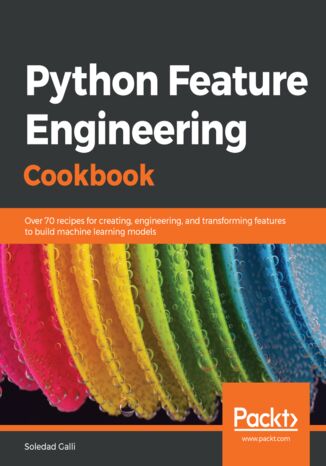
Soledad Galli
Feature engineering is invaluable for developing and enriching your machine learning models. In this cookbook, you will work with the best tools to streamline your feature engineering pipelines and techniques and simplify and improve the quality of your code.Using Python libraries such as pandas, scikit-learn, Featuretools, and Feature-engine, you’ll learn how to work with both continuous and discrete datasets and be able to transform features from unstructured datasets. You will develop the skills necessary to select the best features as well as the most suitable extraction techniques. This book will cover Python recipes that will help you automate feature engineering to simplify complex processes. You’ll also get to grips with different feature engineering strategies, such as the box-cox transform, power transform, and log transform across machine learning, reinforcement learning, and natural language processing (NLP) domains.By the end of this book, you’ll have discovered tips and practical solutions to all of your feature engineering problems.
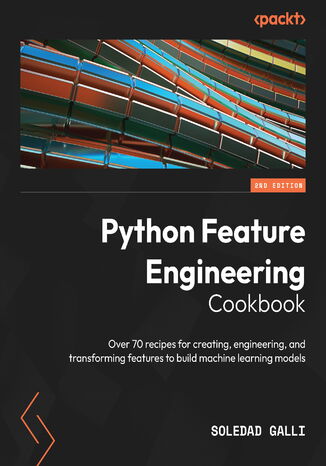
Soledad Galli
Feature engineering, the process of transforming variables and creating features, albeit time-consuming, ensures that your machine learning models perform seamlessly. This second edition of Python Feature Engineering Cookbook will take the struggle out of feature engineering by showing you how to use open source Python libraries to accelerate the process via a plethora of practical, hands-on recipes.This updated edition begins by addressing fundamental data challenges such as missing data and categorical values, before moving on to strategies for dealing with skewed distributions and outliers. The concluding chapters show you how to develop new features from various types of data, including text, time series, and relational databases. With the help of numerous open source Python libraries, you'll learn how to implement each feature engineering method in a performant, reproducible, and elegant manner.By the end of this Python book, you will have the tools and expertise needed to confidently build end-to-end and reproducible feature engineering pipelines that can be deployed into production.
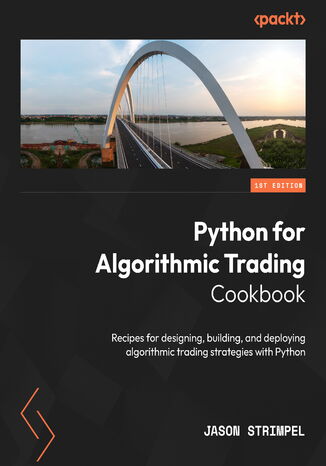
Jason Strimpel
Discover how Python has made algorithmic trading accessible to non-professionals with unparalleled expertise and practical insights from Jason Strimpel, founder of PyQuant News and a seasoned professional with global experience in trading and risk management. This book guides you through from the basics of quantitative finance and data acquisition to advanced stages of backtesting and live trading.Detailed recipes will help you leverage the cutting-edge OpenBB SDK to gather freely available data for stocks, options, and futures, and build your own research environment using lightning-fast storage techniques like SQLite, HDF5, and ArcticDB. This book shows you how to use SciPy and statsmodels to identify alpha factors and hedge risk, and construct momentum and mean-reversion factors. You’ll optimize strategy parameters with walk-forward optimization using VectorBT and construct a production-ready backtest using Zipline Reloaded. Implementing all that you’ve learned, you’ll set up and deploy your algorithmic trading strategies in a live trading environment using the Interactive Brokers API, allowing you to stream tick-level data, submit orders, and retrieve portfolio details.By the end of this algorithmic trading book, you'll not only have grasped the essential concepts but also the practical skills needed to implement and execute sophisticated trading strategies using Python.