
Big data
Justin Bozonier
Machine learning is the process of teaching machines to remember data patterns, using them to predict future outcomes, and offering choices that would appeal to individuals based on their past preferences.Machine learning is applicable to a lot of what you do every day. As a result, you can’t take forever to deliver your first iteration of software. Learning to build machine learning algorithms within a controlled test framework will speed up your time to deliver, quantify quality expectations with your clients, and enable rapid iteration and collaboration.This book will show you how to quantifiably test machine learning algorithms. The very different, foundational approach of this book starts every example algorithm with the simplest thing that could possibly work. With this approach, seasoned veterans will find simpler approaches to beginning a machine learning algorithm. You will learn how to iterate on these algorithms to enable rapid delivery and improve performance expectations.The book begins with an introduction to test driving machine learning and quantifying model quality. From there, you will test a neural network, predict values with regression, and build upon regression techniques with logistic regression. You will discover how to test different approaches to naïve bayes and compare them quantitatively, along with how to apply OOP (Object-Oriented Programming) and OOP patterns to test-driven code, leveraging SciKit-Learn.Finally, you will walk through the development of an algorithm which maximizes the expected value of profit for a marketing campaign by combining one of the classifiers covered with the multiple regression example in the book.
Mercury Learning and Information, Andres Fortino
This book leverages advanced techniques and tools in data science to extend data analysis from numeric and categorical data to textual data. Designed for business analysts, it uses a case study approach to teach skills in extracting insights from text data, supporting business decision-making. Exercises primarily use Excel and R, covering techniques from basic text analytics to sophisticated methods like topic extraction and text similarity scoring.The course begins with framing analytical questions and exploring analytical tool sets. It progresses through preparing data files, performing word frequency and keyword analysis, and conducting sentiment analysis. Advanced topics include visualizing text data, coding, named entity recognition, and topic recognition in documents. The book also covers text similarity scoring and the analysis of large datasets by sampling.Throughout this journey, readers will apply the CRISP-DM data mining standard, using companion files with numerous datasets for practical exercises. By the end, participants will have a comprehensive understanding of text analytics, enabling them to derive meaningful insights from textual data to inform business strategies.
MrExcel's Holy Macro! Books, Kasper de Jonge
This book empowers readers to build professional dashboards and reports using Power BI. Starting with the basics of dashboards and reports, it delves into preparing data for visualizations, crafting detailed reports, and designing cohesive dashboards. The book provides clear methods for sharing work efficiently within organizations, ensuring that readers understand how to convert raw data into actionable insights.Practical examples and techniques throughout the book equip professionals with the skills they need to enhance their business intelligence capabilities. Readers will discover how to structure data for clarity, develop key reporting techniques, and integrate advanced features to maximize Power BI's potential.Whether you're a beginner or looking to refine your skills, this book offers a step-by-step approach to mastering Power BI's core capabilities, ensuring a seamless transition from data to decision-making.
Dr. Chun Schiros, Supreet Kaur, Rajdeep Arora,...
AI is only as valuable as the business outcomes it enables, and this hands-on guide shows you how to make that happen. Whether you’re a technology leader launching your first AI use case or scaling production systems, you need a clear path from innovation to impact. That means aligning your AI initiatives with enterprise strategy, operational readiness, and responsible practices, and The AI Optimization Playbook gives you the clarity, structure, and insight you need to succeed.Through actionable guidance and real-world examples, you’ll learn how to build high-impact AI strategies, evaluate projects based on ROI, secure executive sponsorship, and transition prototypes into production-grade systems. You’ll also explore MLOps and LLMOps practices that ensure scalability, reliability, and governance across the AI lifecycle.But deployment is just the beginning. This book goes further to address the crucial need for Responsible AI through frameworks, compliance strategies, and transparency techniques. Written by AI experts and industry leaders, this playbook combines technical fluency with strategic perspective to bridge the business–technology divide so you can confidently lead AI transformation across the enterprise.*Email sign-up and proof of purchase required
Alex Galea, Paul Van Branteghem, Guillermina Bea...
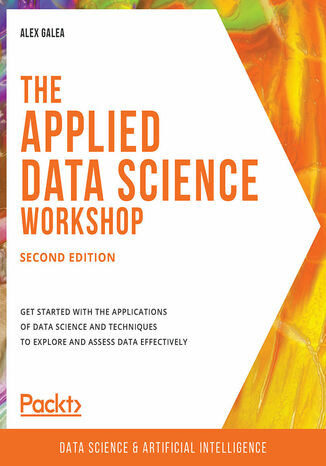
From banking and manufacturing through to education and entertainment, using data science for business has revolutionized almost every sector in the modern world. It has an important role to play in everything from app development to network security.Taking an interactive approach to learning the fundamentals, this book is ideal for beginners. You’ll learn all the best practices and techniques for applying data science in the context of real-world scenarios and examples.Starting with an introduction to data science and machine learning, you’ll start by getting to grips with Jupyter functionality and features. You’ll use Python libraries like sci-kit learn, pandas, Matplotlib, and Seaborn to perform data analysis and data preprocessing on real-world datasets from within your own Jupyter environment. Progressing through the chapters, you’ll train classification models using sci-kit learn, and assess model performance using advanced validation techniques. Towards the end, you’ll use Jupyter Notebooks to document your research, build stakeholder reports, and even analyze web performance data.By the end of The Applied Data Science Workshop, you’ll be prepared to progress from being a beginner to taking your skills to the next level by confidently applying data science techniques and tools to real-world projects.
Matt Goldwasser, Upom Malik, Benjamin Johnston, Joshua...
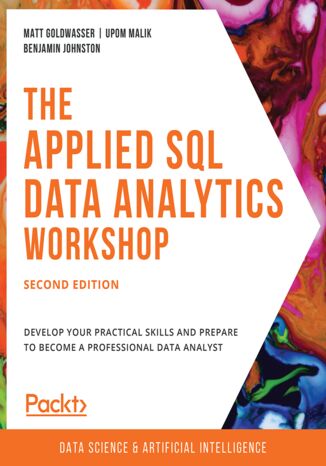
Every day, businesses operate around the clock and a huge amount of data is generated at a rapid pace. Hidden in this data are key patterns and behaviors that can help you and your business understand your customers at a deep, fundamental level. Are you ready to enter the exciting world of data analytics and unlock these useful insights?Written by a team of expert data scientists who have used their data analytics skills to transform businesses of all shapes and sizes, The Applied SQL Data Analytics Workshop is a great way to get started with data analysis, showing you how to effectively sieve and process information from raw data, even without any prior experience.The book begins by showing you how to form hypotheses and generate descriptive statistics that can provide key insights into your existing data. As you progress, you'll learn how to write SQL queries to aggregate, calculate and combine SQL data from sources outside of your current dataset. You'll also discover how to work with different data types, like JSON. By exploring advanced techniques, such as geospatial analysis and text analysis, you'll finally be able to understand your business at a deeper level. Finally, the book lets you in on the secret to getting information faster and more effectively by using advanced techniques like profiling and automation.By the end of The Applied SQL Data Analytics Workshop, you'll have the skills you need to start identifying patterns and unlocking insights in your own data. You will be capable of looking and assessing data with the critical eye of a skilled data analyst.
Harveen Singh Chadha , Luis Capelo ,...
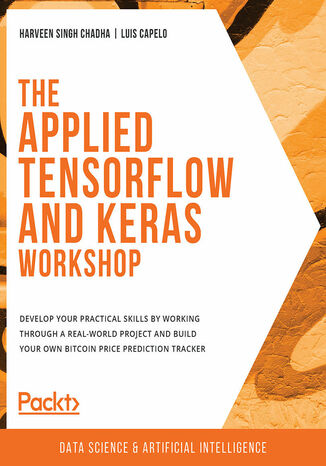
Machine learning gives computers the ability to learn like humans. It is becoming increasingly transformational to businesses in many forms, and a key skill to learn to prepare for the future digital economy.As a beginner, you’ll unlock a world of opportunities by learning the techniques you need to contribute to the domains of machine learning, deep learning, and modern data analysis using the latest cutting-edge tools.The Applied TensorFlow and Keras Workshop begins by showing you how neural networks work. After you’ve understood the basics, you will train a few networks by altering their hyperparameters. To build on your skills, you’ll learn how to select the most appropriate model to solve the problem in hand. While tackling advanced concepts, you’ll discover how to assemble a deep learning system by bringing together all the essential elements necessary for building a basic deep learning system - data, model, and prediction. Finally, you’ll explore ways to evaluate the performance of your model, and improve it using techniques such as model evaluation and hyperparameter optimization.By the end of this book, you'll have learned how to build a Bitcoin app that predicts future prices, and be able to build your own models for other projects.
Alan Bernardo Palacio
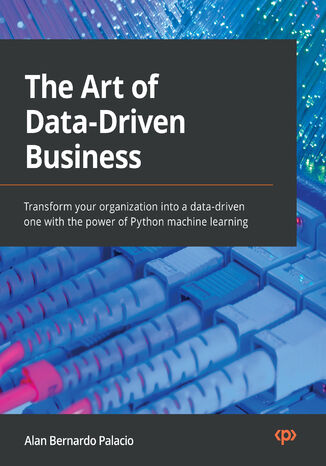
One of the most valuable contributions of data science is toward helping businesses make the right decisions. Understanding this complicated confluence of two disparate worlds, as well as a fiercely competitive market, calls for all the guidance you can get.The Art of Data-Driven Business is your invaluable guide to gaining a business-driven perspective, as well as leveraging the power of machine learning (ML) to guide decision-making in your business. This book provides a common ground of discussion for several profiles within a company.You’ll begin by looking at how to use Python and its many libraries for machine learning. Experienced data scientists may want to skip this short introduction, but you’ll soon get to the meat of the book and explore the many and varied ways ML with Python can be applied to the domain of business decisions through real-world business problems that you can tackle by yourself. As you advance, you’ll gain practical insights into the value that ML can provide to your business, as well as the technical ability to apply a wide variety of tried-and-tested ML methods.By the end of this Python book, you’ll have learned the value of basing your business decisions on data-driven methodologies and have developed the Python skills needed to apply what you’ve learned in the real world.