
Big data
Ayodele Oluleye
In today's data-centric world, the ability to extract meaningful insights from vast amounts of data has become a valuable skill across industries. Exploratory Data Analysis (EDA) lies at the heart of this process, enabling us to comprehend, visualize, and derive valuable insights from various forms of data.This book is a comprehensive guide to Exploratory Data Analysis using the Python programming language. It provides practical steps needed to effectively explore, analyze, and visualize structured and unstructured data. It offers hands-on guidance and code for concepts such as generating summary statistics, analyzing single and multiple variables, visualizing data, analyzing text data, handling outliers, handling missing values and automating the EDA process. It is suited for data scientists, data analysts, researchers or curious learners looking to gain essential knowledge and practical steps for analyzing vast amounts of data to uncover insights.Python is an open-source general purpose programming language which is used widely for data science and data analysis given its simplicity and versatility. It offers several libraries which can be used to clean, analyze, and visualize data. In this book, we will explore popular Python libraries such as Pandas, Matplotlib, and Seaborn and provide workable code for analyzing data in Python using these libraries.By the end of this book, you will have gained comprehensive knowledge about EDA and mastered the powerful set of EDA techniques and tools required for analyzing both structured and unstructured data to derive valuable insights.
Exploring GPT-3. An unofficial first look at the general-purpose language processing API from OpenAI
Steve Tingiris
Generative Pre-trained Transformer 3 (GPT-3) is a highly advanced language model from OpenAI that can generate written text that is virtually indistinguishable from text written by humans. Whether you have a technical or non-technical background, this book will help you understand and start working with GPT-3 and the OpenAI API.If you want to get hands-on with leveraging artificial intelligence for natural language processing (NLP) tasks, this easy-to-follow book will help you get started. Beginning with a high-level introduction to NLP and GPT-3, the book takes you through practical examples that show how to leverage the OpenAI API and GPT-3 for text generation, classification, and semantic search. You'll explore the capabilities of the OpenAI API and GPT-3 and find out which NLP use cases GPT-3 is best suited for. You’ll also learn how to use the API and optimize requests for the best possible results. With examples focusing on the OpenAI Playground and easy-to-follow JavaScript and Python code samples, the book illustrates the possible applications of GPT-3 in production.By the end of this book, you'll understand the best use cases for GPT-3 and how to integrate the OpenAI API in your applications for a wide array of NLP tasks.
Steven Sanderson, David Kun
– Extending Excel with Python and R is a game changer resource written by experts Steven Sanderson, the author of the healthyverse suite of R packages, and David Kun, co-founder of Functional Analytics. – This comprehensive guide transforms the way you work with spreadsheet-based data by integrating Python and R with Excel to automate tasks, execute statistical analysis, and create powerful visualizations. – Working through the chapters, you’ll find out how to perform exploratory data analysis, time series analysis, and even integrate APIs for maximum efficiency. – Both beginners and experts will get everything you need to unlock Excel's full potential and take your data analysis skills to the next level. – By the end of this book, you’ll be able to import data from Excel, manipulate it in R or Python, and perform the data analysis tasks in your preferred framework while pushing the results back to Excel for sharing with others as needed.
Luca Zavarella
Python and R allow you to extend Power BI capabilities to simplify ingestion and transformation activities, enhance dashboards, and highlight insights. With this book, you'll be able to make your artifacts far more interesting and rich in insights using analytical languages.You'll start by learning how to configure your Power BI environment to use your Python and R scripts. The book then explores data ingestion and data transformation extensions, and advances to focus on data augmentation and data visualization. You'll understand how to import data from external sources and transform them using complex algorithms. The book helps you implement personal data de-identification methods such as pseudonymization, anonymization, and masking in Power BI. You'll be able to call external APIs to enrich your data much more quickly using Python programming and R programming. Later, you'll learn advanced Python and R techniques to perform in-depth analysis and extract valuable information using statistics and machine learning. You'll also understand the main statistical features of datasets by plotting multiple visual graphs in the process of creating a machine learning model.By the end of this book, you’ll be able to enrich your Power BI data models and visualizations using complex algorithms in Python and R.
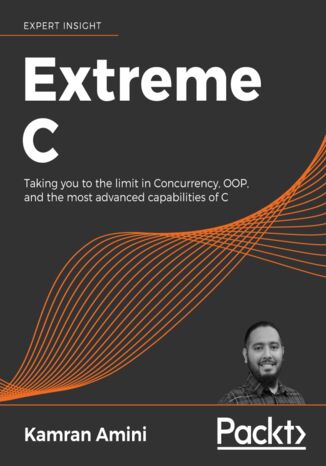
Extreme C. Taking you to the limit in Concurrency, OOP, and the most advanced capabilities of C
Kamran Amini
There’s a lot more to C than knowing the language syntax. The industry looks for developers with a rigorous, scientific understanding of the principles and practices. Extreme C will teach you to use C’s advanced low-level power to write effective, efficient systems. This intensive, practical guide will help you become an expert C programmer.Building on your existing C knowledge, you will master preprocessor directives, macros, conditional compilation, pointers, and much more. You will gain new insight into algorithm design, functions, and structures. You will discover how C helps you squeeze maximum performance out of critical, resource-constrained applications.C still plays a critical role in 21st-century programming, remaining the core language for precision engineering, aviations, space research, and more. This book shows how C works with Unix, how to implement OO principles in C, and fully covers multi-processing.In Extreme C, Amini encourages you to think, question, apply, and experiment for yourself. The book is essential for anybody who wants to take their C to the next level.
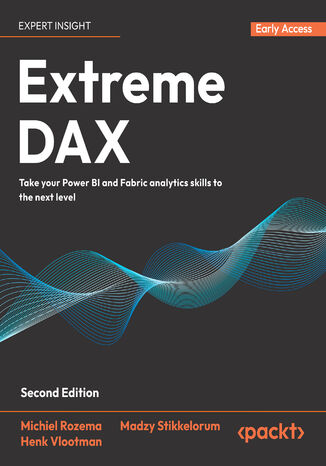
Extreme DAX. Take your Power BI and Fabric analytics skills to the next level - Second Edition
Michiel Rozema, Madzy Stikkelorum, Henk Vlootman, Jeroen...
This book helps experienced analysts unlock the full potential of DAX in Power BI and Microsoft Fabric to build scalable, production-ready analytics solutions.You’ll begin by strengthening your understanding of semantic models, data modeling, and evaluation context—the foundation of reliable analytics. Instead of isolated examples, the book uses real-world scenarios such as inventory analysis, benchmarking, and data security to show how advanced DAX calculations are applied in practice.As you progress, you’ll master advanced techniques including context transition, table functions, calculation groups, field parameters, and custom calendars. You’ll also explore analytical methods such as regression and goal-seeking to generate deeper insights from your data.With step-by-step guidance and practical PBIX examples, you’ll learn how to design efficient models, avoid common pitfalls, and implement reusable calculations. By the end, you’ll be able to create advanced DAX measures and high-performance Power BI solutions for complex analytical requirements.
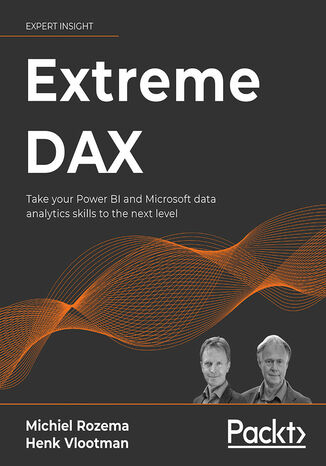
Extreme DAX. Take your Power BI and Microsoft data analytics skills to the next level
Michiel Rozema, Henk Vlootman
This book helps business analysts generate powerful and sophisticated analyses from their data using DAX and get the most out of Microsoft Business Intelligence tools.Extreme DAX will first teach you the principles of business intelligence, good model design, and how DAX fits into it all. Then, you’ll launch into detailed examples of DAX in real-world business scenarios such as inventory calculations, forecasting, intercompany business, and data security. At each step, senior DAX experts will walk you through the subtleties involved in working with Power BI models and common mistakes to look out for as you build advanced data aggregations. You’ll deepen your understanding of DAX functions, filters, and measures, and how and when they can be used to derive effective insights. You’ll also be provided with PBIX files for each chapter, so that you can follow along and explore in your own time.
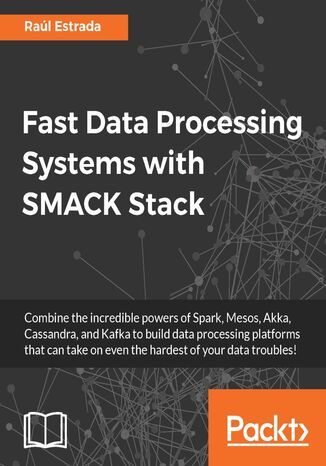
Raúl Estrada
SMACK is an open source full stack for big data architecture. It is a combination of Spark, Mesos, Akka, Cassandra, and Kafka. This stack is the newest technique developers have begun to use to tackle critical real-time analytics for big data. This highly practical guide will teach you how to integrate these technologies to create a highly efficient data analysis system for fast data processing.We’ll start off with an introduction to SMACK and show you when to use it. First you’ll get to grips with functional thinking and problem solving using Scala. Next you’ll come to understand the Akka architecture. Then you’ll get to know how to improve the data structure architecture and optimize resources using Apache Spark. Moving forward, you’ll learn how to perform linear scalability in databases with Apache Cassandra. You’ll grasp the high throughput distributed messaging systems using Apache Kafka. We’ll show you how to build a cheap but effective cluster infrastructure with Apache Mesos. Finally, you will deep dive into the different aspect of SMACK using a few case studies. By the end of the book, you will be able to integrate all the components of the SMACK stack and use them together to achieve highly effective and fast data processing.