
Big data
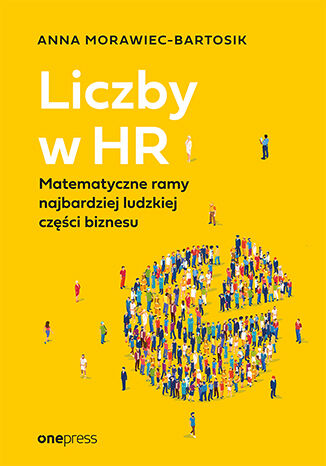
Liczby w HR. Matematyczne ramy najbardziej ludzkiej części biznesu
Anna Morawiec-Bartosik
Czy pracę działu HR da się zmierzyć? Współczesny biznes liczbami stoi. Wykresy, tabele, przetwarzanie danych, analizowanie wyników z przeszłości, prognozowanie sprzedaży, zakupów i produkcji... Większość działów w dużych przedsiębiorstwach wspiera się tym, co policzalne. Większość, ale raczej nie dział human resources. Dlaczego? Czyżby HR-owcy nie wierzyli w liczby i stawiali na intuicję? Może. A może po prostu brakuje im rzetelnych narzędzi, dzięki którym można przeanalizować dane, jakie są dostępne dla osób wyspecjalizowanych w zarządzaniu zasobami ludzkimi firmy? Do niedawna działy HR uchodziły powszechnie za najbardziej niemierzalne w przedsiębiorstwach. Ostatnio jednak ten trend się zmienia. Takie pojęcia jak data-based HR czy data-driven HR z roku na rok zyskują na popularności. Zarządzający firmami, a także sami pracownicy human resources chcą mierzyć efektywność coraz większej liczby procesów personalnych, by na podstawie uzyskanych wyników móc planować przyszłe działania. Tylko co mierzyć? Jakimi metodami to robić? Odpowiedzi na te i inne pytania związane z analityką zasobów ludzkich znajdziesz w tej książce. Ta książka pomoże Ci zbudować lub wzmocnić rolę analityki HR w Twojej firmie, pomoże także w rozwijaniu umiejętności i perspektywy analityków HR oraz przekona zarząd i biznes, że warto zainwestować czas i fundusze w rozwijanie tej części biznesu. Wskaże jasne cele analityki personalnej, przeprowadzi Cię krok po kroku przez najważniejsze aspekty liczb w HR, które będziesz mógł wykorzystać w swojej firmie. Przede wszystkim książka pomoże Ci w znalezieniu wspólnego języka z biznesem, finansami i zarządem ― a językiem tym są właśnie dane.
Prashant Kumar Mishra
Azure Synapse Analytics, which Microsoft describes as the next evolution of Azure SQL Data Warehouse, is a limitless analytics service that brings enterprise data warehousing and big data analytics together. With this book, you'll learn how to discover insights from your data effectively using this platform.The book starts with an overview of Azure Synapse Analytics, its architecture, and how it can be used to improve business intelligence and machine learning capabilities. Next, you'll go on to choose and set up the correct environment for your business problem. You'll also learn a variety of ways to ingest data from various sources and orchestrate the data using transformation techniques offered by Azure Synapse. Later, you'll explore how to handle both relational and non-relational data using the SQL language. As you progress, you'll perform real-time streaming and execute data analysis operations on your data using various languages, before going on to apply ML techniques to derive accurate and granular insights from data. Finally, you'll discover how to protect sensitive data in real time by using security and privacy features.By the end of this Azure book, you'll be able to build end-to-end analytics solutions while focusing on data prep, data management, data warehousing, and AI tasks.
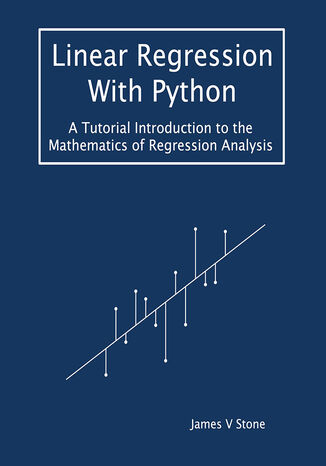
Linear Regression With Python. A Tutorial Introduction to the Mathematics of Regression Analysis
James V Stone
This book offers a detailed yet approachable introduction to linear regression, blending mathematical theory with Python-based practical applications. Beginning with fundamentals, it explains the best-fitting line, regression and causation, and statistical measures like variance, correlation, and the coefficient of determination. Clear examples and Python code ensure readers can connect theory to implementation.As the journey continues, readers explore statistical significance through concepts like t-tests, z-tests, and p-values, understanding how to assess slopes, intercepts, and overall model fit. Advanced chapters cover multivariate regression, introducing matrix formulations, the best-fitting plane, and methods to handle multiple variables. Topics such as Bayesian regression, nonlinear models, and weighted regression are explored in depth, with step-by-step coding guides for hands-on practice.The final sections tie together these techniques with maximum likelihood estimation and practical summaries. Appendices provide resources such as matrix tutorials, key equations, and mathematical symbols. Designed for both beginners and professionals, this book ensures a structured learning experience. Basic mathematical knowledge or foundation is recommended.
LLM Prompt Engineering for Developers. The Art and Science of Unlocking LLMs' True Potential
Aymen El Amri
LLM Prompt Engineering For Developers begins by laying the groundwork with essential principles of natural language processing (NLP), setting the stage for more complex topics. It methodically guides readers through the initial steps of understanding how large language models work, providing a solid foundation that prepares them for the more intricate aspects of prompt engineering.As you proceed, the book transitions into advanced strategies and techniques that reveal how to effectively interact with and utilize these powerful models. From crafting precise prompts that enhance model responses to exploring innovative methods like few-shot and zero-shot learning, this resource is designed to unlock the full potential of language model technology.This book not only teaches the technical skills needed to excel in the field but also addresses the broader implications of AI technology. It encourages thoughtful consideration of ethical issues and the impact of AI on society. By the end of this book, readers will master the technical aspects of prompt engineering & appreciate the importance of responsible AI development, making them well-rounded professionals ready to focus on the advancement of this cutting-edge technology.
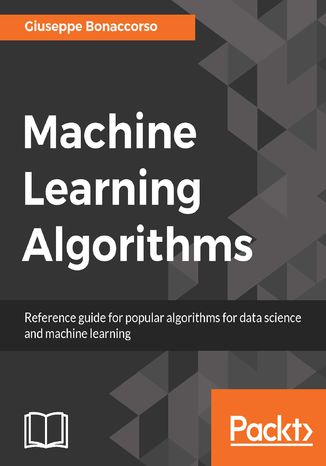
Giuseppe Bonaccorso
In this book, you will learn all the important machine learning algorithms that are commonly used in the field of data science. These algorithms can be used for supervised as well as unsupervised learning, reinforcement learning, and semi-supervised learning. The algorithms that are covered in this book are linear regression, logistic regression, SVM, naïve Bayes, k-means, random forest, TensorFlow and feature engineering.In this book, you will how to use these algorithms to resolve your problems, and how they work. This book will also introduce you to natural language processing and recommendation systems, which help you to run multiple algorithms simultaneously.On completion of the book, you will know how to pick the right machine learning algorithm for clustering, classification, or regression for your problem
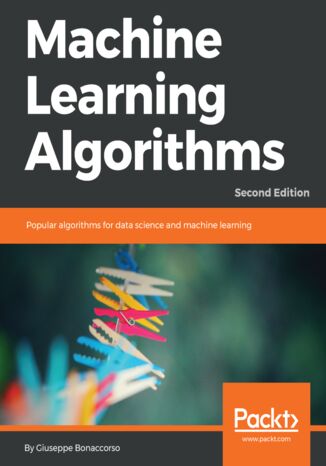
Giuseppe Bonaccorso
Machine learning has gained tremendous popularity for its powerful and fast predictions with large datasets. However, the true forces behind its powerful output are the complex algorithms involving substantial statistical analysis that churn large datasets and generate substantial insight.This second edition of Machine Learning Algorithms walks you through prominent development outcomes that have taken place relating to machine learning algorithms, which constitute major contributions to the machine learning process and help you to strengthen and master statistical interpretation across the areas of supervised, semi-supervised, and reinforcement learning. Once the core concepts of an algorithm have been covered, you’ll explore real-world examples based on the most diffused libraries, such as scikit-learn, NLTK, TensorFlow, and Keras. You will discover new topics such as principal component analysis (PCA), independent component analysis (ICA), Bayesian regression, discriminant analysis, advanced clustering, and gaussian mixture.By the end of this book, you will have studied machine learning algorithms and be able to put them into production to make your machine learning applications more innovative.
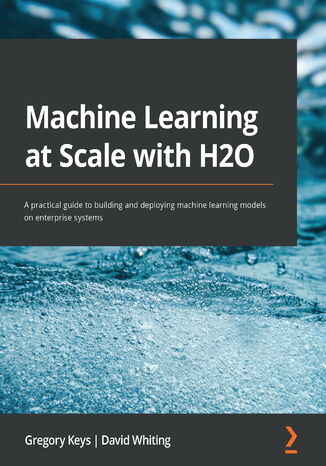
Gregory Keys, David Whiting
H2O is an open source, fast, and scalable machine learning framework that allows you to build models using big data and then easily productionalize them in diverse enterprise environments.Machine Learning at Scale with H2O begins with an overview of the challenges faced in building machine learning models on large enterprise systems, and then addresses how H2O helps you to overcome them. You’ll start by exploring H2O’s in-memory distributed architecture and find out how it enables you to build highly accurate and explainable models on massive datasets using your favorite ML algorithms, language, and IDE. You’ll also get to grips with the seamless integration of H2O model building and deployment with Spark using H2O Sparkling Water. You’ll then learn how to easily deploy models with H2O MOJO. Next, the book shows you how H2O Enterprise Steam handles admin configurations and user management, and then helps you to identify different stakeholder perspectives that a data scientist must understand in order to succeed in an enterprise setting. Finally, you’ll be introduced to the H2O AI Cloud platform and explore the entire machine learning life cycle using multiple advanced AI capabilities.By the end of this book, you’ll be able to build and deploy advanced, state-of-the-art machine learning models for your business needs.
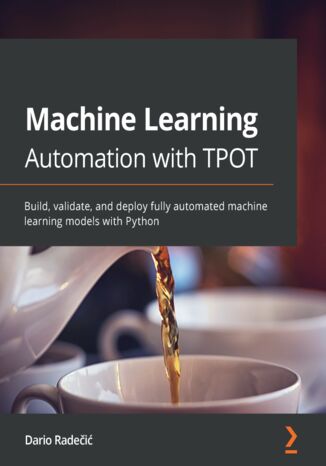
Dario Radečić
The automation of machine learning tasks allows developers more time to focus on the usability and reactivity of the software powered by machine learning models. TPOT is a Python automated machine learning tool used for optimizing machine learning pipelines using genetic programming. Automating machine learning with TPOT enables individuals and companies to develop production-ready machine learning models cheaper and faster than with traditional methods.With this practical guide to AutoML, developers working with Python on machine learning tasks will be able to put their knowledge to work and become productive quickly. You'll adopt a hands-on approach to learning the implementation of AutoML and associated methodologies. Complete with step-by-step explanations of essential concepts, practical examples, and self-assessment questions, this book will show you how to build automated classification and regression models and compare their performance to custom-built models. As you advance, you'll also develop state-of-the-art models using only a couple of lines of code and see how those models outperform all of your previous models on the same datasets.By the end of this book, you'll have gained the confidence to implement AutoML techniques in your organization on a production level.