
Big data
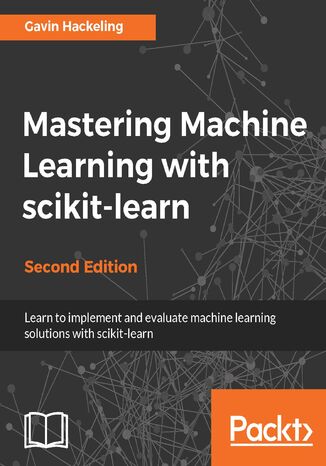
Gavin Hackeling
Machine learning is the buzzword bringing computer science and statistics together to build smart and efficient models. Using powerful algorithms and techniques offered by machine learning you can automate any analytical model.This book examines a variety of machine learning models including popular machine learning algorithms such as k-nearest neighbors, logistic regression, naive Bayes, k-means, decision trees, and artificial neural networks. It discusses data preprocessing, hyperparameter optimization, and ensemble methods. You will build systems that classify documents, recognize images, detect ads, and more. You will learn to use scikit-learn’s API to extract features from categorical variables, text and images; evaluate model performance, and develop an intuition for how to improve your model’s performance.By the end of this book, you will master all required concepts of scikit-learn to build efficient models at work to carry out advanced tasks with the practical approach.
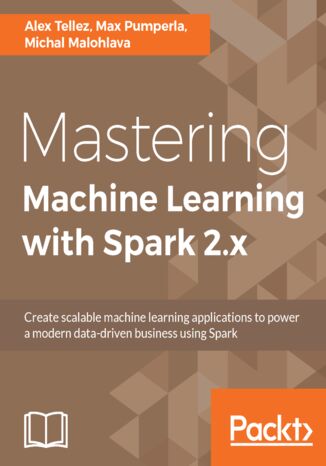
Mastering Machine Learning with Spark 2.x. Harness the potential of machine learning, through spark
Alex Tellez, Max Pumperla, Michal Malohlava
The purpose of machine learning is to build systems that learn from data. Being able to understand trends and patterns in complex data is critical to success; it is one of the key strategies to unlock growth in the challenging contemporary marketplace today. With the meteoric rise of machine learning, developers are now keen on finding out how can they make their Spark applications smarter. This book gives you access to transform data into actionable knowledge. The book commences by defining machine learning primitives by the MLlib and H2O libraries. You will learn how to use Binary classification to detect the Higgs Boson particle in the huge amount of data produced by CERN particle collider and classify daily health activities using ensemble Methods for Multi-Class Classification. Next, you will solve a typical regression problem involving flight delay predictions and write sophisticated Spark pipelines. You will analyze Twitter data with help of the doc2vec algorithm and K-means clustering. Finally, you will build different pattern mining models using MLlib, perform complex manipulation of DataFrames using Spark and Spark SQL, and deploy your app in a Spark streaming environment.
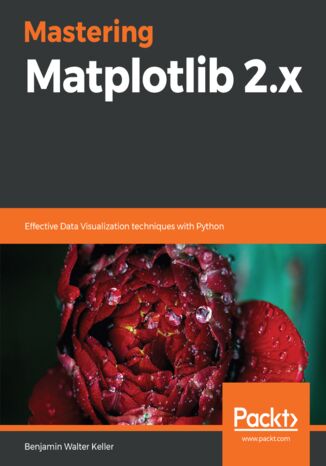
Mastering Matplotlib 2.x. Effective Data Visualization techniques with Python
Benjamin Walter Keller
In this book, you’ll get hands-on with customizing your data plots with the help of Matplotlib. You’ll start with customizing plots, making a handful of special-purpose plots, and building 3D plots. You’ll explore non-trivial layouts, Pylab customization, and more about tile configuration. You’ll be able to add text, put lines in plots, and also handle polygons, shapes, and annotations. Non-Cartesian and vector plots are exciting to construct, and you’ll explore them further in this book. You’ll delve into niche plots and visualize ordinal and tabular data. In this book, you’ll be exploring 3D plotting, one of the best features when it comes to 3D data visualization, along with Jupyter Notebook, widgets, and creating movies for enhanced data representation. Geospatial plotting will also be explored. Finally, you’ll learn how to create interactive plots with the help of Jupyter.Learn expert techniques for effective data visualization using Matplotlib 3 and Python with our latest offering -- Matplotlib 3.0 Cookbook
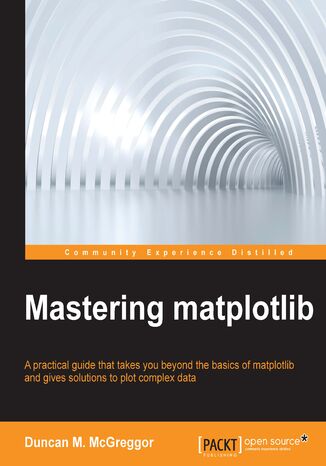
Duncan M. McGreggor
If you are a scientist, programmer, software engineer, or student who has working knowledge of matplotlib and now want to extend your usage of matplotlib to plot complex graphs and charts and handle large datasets, then this book is for you.
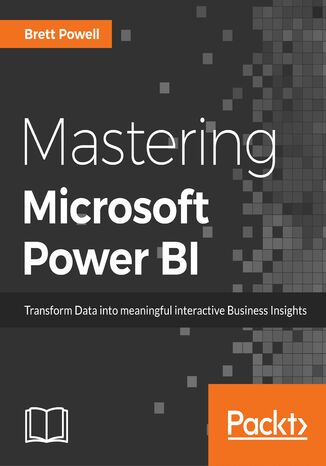
Brett Powell
This book is intended for business intelligence professionals responsible for the design and development of Power BI content as well as managers, architects and administrators who oversee Power BI projects and deployments. The chapters flow from the planning of a Power BI project through the development and distribution of content to the administration of Power BI for an organization.BI developers will learn how to create sustainable and impactful Power BI datasets, reports, and dashboards. This includes connecting to data sources, shaping and enhancing source data, and developing an analytical data model. Additionally, top report and dashboard design practices are described using features such as Bookmarks and the Power KPI visual.BI managers will learn how Power BI’s tools work together such as with the On-premises data gateway and how content can be staged and securely distributed via Apps. Additionally, both the Power BI Report Server and Power BI Premium are reviewed.By the end of this book, you will be confident in creating effective charts, tables, reports or dashboards for any kind of data using the tools and techniques in Microsoft Power BI.
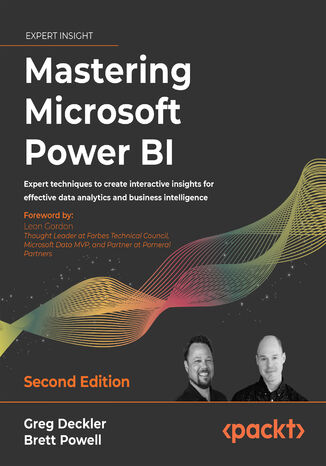
Greg Deckler, Brett Powell
Mastering Microsoft Power BI, Second Edition, provides an advanced understanding of Power BI to get the most out of your data and maximize business intelligence. This updated edition walks through each essential phase and component of Power BI, and explores the latest, most impactful Power BI features.Using best practices and working code examples, you will connect to data sources, shape and enhance source data, and develop analytical data models. You will also learn how to apply custom visuals, implement new DAX commands and paginated SSRS-style reports, manage application workspaces and metadata, and understand how content can be staged and securely distributed via Power BI apps. Furthermore, you will explore top report and interactive dashboard design practices using features such as bookmarks and the Power KPI visual, alongside the latest capabilities of Power BI mobile applications and self-service BI techniques. Additionally, important management and administration topics are covered, including application lifecycle management via Power BI pipelines, the on-premises data gateway, and Power BI Premium capacity.By the end of this Power BI book, you will be confident in creating sustainable and impactful charts, tables, reports, and dashboards with any kind of data using Microsoft Power BI.
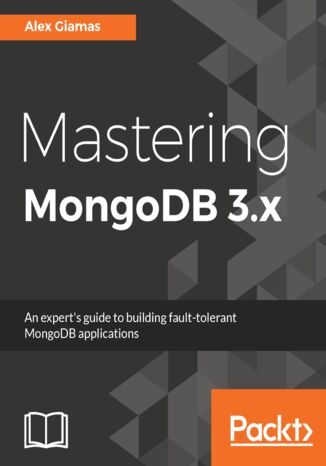
Mastering MongoDB 3.x. An expert's guide to building fault-tolerant MongoDB applications
Alex Giamas
MongoDB has grown to become the de facto NoSQL database with millions of users—from small startups to Fortune 500 companies. Addressing the limitations of SQL schema-based databases, MongoDB pioneered a shift of focus for DevOps and offered sharding and replication maintainable by DevOps teams. The book is based on MongoDB 3.x and covers topics ranging from database querying using the shell, built in drivers, and popular ODM mappers to more advanced topics such as sharding, high availability, and integration with big data sources.You will get an overview of MongoDB and how to play to its strengths, with relevant use cases. After that, you will learn how to query MongoDB effectively and make use of indexes as much as possible. The next part deals with the administration of MongoDB installations on-premise or in the cloud. We deal with database internals in the next section, explaining storage systems and how they can affect performance. The last section of this book deals with replication and MongoDB scaling, along with integration with heterogeneous data sources. By the end this book, you will be equipped with all the required industry skills and knowledge to become a certified MongoDB developer and administrator.
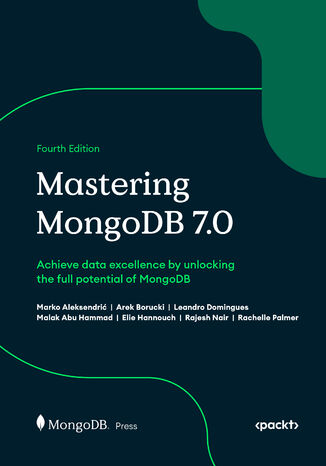
Marko Aleksendrić, Arek Borucki, Leandro Domingues, Malak...
Mastering MongoDB 7.0 explores the latest version of MongoDB, an exceptional NoSQL database solution that aligns with the needs of modern web applications. This book starts with an informative overview of MongoDB’s architecture and developer tools, guiding you through the process of connecting to databases seamlessly.This MongoDB book explores advanced queries in detail, including aggregation pipelines and multi-document ACID transactions. It delves into the capabilities of the MongoDB Atlas developer data platform and the latest features, such as Atlas Vector Search, and their role in AI applications, enabling developers to build applications with the scalability and performance that today’s organizations need. It also covers the creation of resilient search functionality using MongoDB Atlas Search. Mastering MongoDB 7.0’s deep coverage of advanced techniques encompasses everything from role-based access control (RBAC) to user management, auditing practices, and encryption across data, network, and storage layers.By the end of this book, you’ll have developed the skills necessary to create efficient, secure, and high-performing applications using MongoDB. You’ll have the confidence to undertake complex queries, integrate robust applications, and ensure data security to overcome modern data challenges.