
Big data
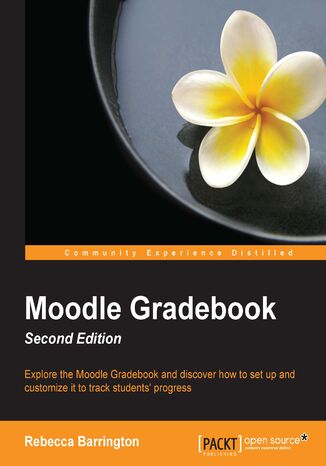
Moodle Gradebook - Second Edition. - Second Edition
Rebecca Barrington
This book is for teachers and administrators who have experience with Moodle. Basic knowledge of Moodle 2.x will be required, but no prior knowledge of grade functions is needed. This book will help you utilize the full functionality of Version 2.7.
More Excel Outside the Box. Advanced Tips, Techniques, and Tricks for Excel Power Users
MrExcel's Holy Macro! Books, Bob Umlas
This book is a treasure trove of innovative techniques for Excel enthusiasts, starting with dynamic user interface tips like using conditional formatting switches, data validation to restrict input, and creating adaptive workflows without relying on VBA.As you progress, you'll explore powerful array formulas to solve complex challenges, such as finding prime numbers, handling variable ranges, extracting numbers from text, and more. The VBA section dives deeper, introducing ways to automate tasks, manage user forms, and create dynamic solutions like filtering data, filling lists, or building single-click summary charts.The final chapters are a mix of advanced tricks, including crafting a Gantt chart with data from multiple sources, safeguarding tables, and uncovering lesser-known Excel features. Each topic is presented with clear instructions, real-world examples, and expert advice, making it an essential resource for power users aiming to maximize Excel’s capabilities. Whether you're solving daily tasks or tackling advanced projects, this book equips you with the tools to excel.
MrExcel 2024. Igniting Excel Mastery with the Latest Tips & Tricks
MrExcel's Holy Macro! Books, Bill Jelen
Unlock Excel 2024's potential with this essential guide, featuring 150 advanced techniques designed to elevate your skills. Whether you're automating tasks, creating dynamic dashboards, or utilizing Excel's new AI tools, this guide provides clear, practical instructions. Each chapter is crafted to help you navigate Excel's latest features, from data manipulation to complex formulas and Python integration.This guide offers a hands-on approach, with real-world examples that demonstrate how to apply Excel’s capabilities in practical scenarios. You'll learn to optimize your workflow, enhance data visualization, and make informed decisions based on your analysis. The guide is perfect for intermediate to advanced users looking to stay ahead of the curve and maximize their productivity.By focusing on both the how and the why of each feature, this guide ensures you not only understand the technical steps but also grasp the underlying principles that make these tools powerful. Whether you're a data analyst, financial professional, or business manager, this guide equips you with the skills to transform your Excel experience, making your work more efficient, accurate, and insightful.
Mercury Learning and Information, Roger W. Pryor
This updated edition of the book explores COMSOL 5 and MATLAB, essential modeling tools for engineers and scientists. It includes five new models and covers systems from 0D to 3D, introducing numerical analysis techniques in COMSOL 5.6 and MATLAB. Using examples from electromagnetic, electronic, optical, thermal physics, and biomedical models, the book provides fundamental concepts and step-by-step instructions for building each model. Companion files include all models and related animations.The course starts with modeling methodology and material properties, progressing through 0D electrical circuit interface, 1D, 2D, 2D axisymmetric, 2D simple and complex mixed mode, and 3D modeling. Advanced topics like Perfectly Matched Layer models and Bioheat models are also covered. Each chapter builds on the previous one, ensuring a comprehensive understanding of modeling techniques.Understanding these concepts is crucial for developing and analyzing engineering, science, and biomedical systems. This book transitions readers from basic to advanced modeling, combining theoretical knowledge with practical skills. Companion files enhance the learning experience, making this an essential resource for mastering COMSOL 5 and MATLAB.
MySQL 8 Administrator???s Guide. Effective guide to administering high-performance MySQL 8 solutions
Chintan Mehta, Hetal Oza, Subhash Shah, Ravi...
MySQL is one of the most popular and widely used relational databases in the world today. The recently released version 8.0 brings along some major advancements in the way your MySQL solution can be administered. This handbook will be your companion to understand the newly introduced features in MySQL and show you how you can leverage them to design a high-performance MySQL solution for your organization.This book starts with a brief introduction to the new features in MySQL 8, and then quickly jumping onto the crucial administration topics that you will find useful in your day-to-day work. Topics such as migrating to MySQL 8, MySQL benchmarking, achieving high performance by implementing the indexing techniques, and optimizing your queries are covered in this book. You will also learn how to perform replication, scale your MySQL solution and implement effective security techniques. There is also a special section on the common and not so common troubleshooting techniques for effective MySQL administration is also covered in this book. By the end of this highly practical book, you will have all the knowledge you need to tackle any problem you might encounter while administering your MySQL solution.
MySQL 8 Cookbook. Over 150 recipes for high-performance database querying and administration
Karthik Appigatla
MySQL is one of the most popular and widely used relational databases in the World today. The recently released MySQL 8 version promises to be better and more efficient than ever before.This book contains everything you need to know to be the go-to person in your organization when it comes to MySQL. Starting with a quick installation and configuration of your MySQL instance, the book quickly jumps into the querying aspects of MySQL. It shows you the newest improvements in MySQL 8 and gives you hands-on experience in managing high-transaction and real-time datasets. If you've already worked with MySQL before and are looking to migrate your application to MySQL 8, this book will also show you how to do that. The book also contains recipes on efficient MySQL administration, with tips on effective user management, data recovery, security, database monitoring, performance tuning, troubleshooting, and more.With quick solutions to common and not-so-common problems you might encounter while working with MySQL 8, the book contains practical tips and tricks to give you the edge over others in designing, developing, and administering your database effectively.
Gökhan Ozar
Any database designer who wants to accomplish both everyday tasks and more advanced actions with a few clicks or drag-and-drops can now do so using Navicat's advanced tools and this book.Starting with the basics before progressing with advanced features, this book can be read from cover to cover, or simply used as a reference guide for any problems you encounter.The book features 'work along' tutorials, some of which will surprise you by revealing features of Navicat which you may never have known existed ñ features such as designing functions and stored procedures, event triggers, creating batch jobs and scheduling.MySQL Management and Administration with Navicat is an ideal resource to master Navicat and unlock its true potential.
Myślenie statystyczne. Jak analizować dane i wydobywać z nich wiedzę. Wydanie III
Allen B. Downey
Dla większości z nas statystyka jest poddziedziną matematyki związaną z opracowywaniem teoretycznych podstaw prawdopodobieństwa i wnioskowania statystycznego. Analitycy danych podchodzą do tego inaczej: dla nich statystyka jest niezbędnym zestawem narzędzi i praktyk, które służą do pracy z danymi, odpowiadania na pytania i ułatwiają podejmowanie najlepszych decyzji. To trzecie wydanie przewodnika cenionego przez analityków danych, inżynierów oprogramowania i pasjonatów danologii. Dzięki niemu szybko nauczysz się korzystać z bibliotek NumPy, SciPy i Pandas. Poznasz różne metody eksploracji i wizualizacji danych, odkrywania zależności i trendów, a także prezentowania wyników. Struktura książki odpowiada rzeczywistemu procesowi pracy ze zbiorem danych: od importowania i oczyszczenia, przez analizę wieloczynnikową, aż po wizualizację uzyskanych wyników. Wszystkie rozdziały są dostępne w formie notatników Jupytera, dzięki czemu możesz jednocześnie czytać tekst, uruchamiać kod i pracować nad ćwiczeniami. W książce znajdziesz również takie zagadnienia jak: analiza rozkładów danych i wizualizacja wzorców za pomocą bibliotek Pythona korzystanie z modeli regresji analiza szeregów czasowych i analiza przeżycia tworzenie zrozumiałych wizualizacji danych rozwiązywanie typowych problemów związanych z analizą danych Jeśli chcesz się szybko nauczyć statystyki i stosowania jej w praktyce, to ta książka jest dla Ciebie! Zachary del Rosario, adiunkt w Olin College of Engineering