
Biznes IT
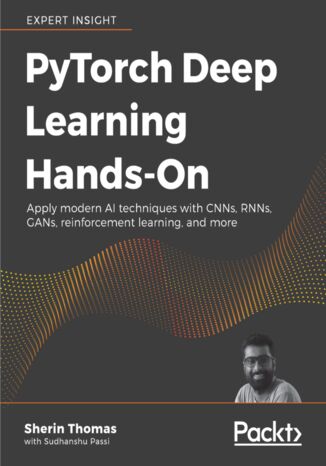
Sherin Thomas , Sudhanshu Passi , Xingyu...
PyTorch Deep Learning Hands-On is a book for engineers who want a fast-paced guide to doing deep learning work with PyTorch. It is not an academic textbook and does not try to teach deep learning principles. The book will help you most if you want to get your hands dirty and put PyTorch to work quickly.PyTorch Deep Learning Hands-On shows how to implement the major deep learning architectures in PyTorch. It covers neural networks, computer vision, CNNs, natural language processing (RNN), GANs, and reinforcement learning. You will also build deep learning workflows with the PyTorch framework, migrate models built in Python to highly efficient TorchScript, and deploy to production using the most sophisticated available tools.Each chapter focuses on a different area of deep learning. Chapters start with a refresher on how the model works, before sharing the code you need to implement it in PyTorch.This book is ideal if you want to rapidly add PyTorch to your deep learning toolset.
QlikView for Developers. Design and build scalable and maintainable BI solutions
Miguel Angel Garcia, Barry Harmsen
QlikView is one of the most flexible and powerful Business Intelligence platforms around. If you want to build data into your organization, build it around QlikView. Don't get caught in the gap between data and knowledge – find out how QlikView can help you unlock insights and data potential with ease. Whether you're new to QlikView or want to get up to speed with the features and functionality of QlikView, this book starts at a basic level and delves more deeply to demonstrate how to make QlikView work for you, and make it meet the needs of your organization. Using a real-world use-case to highlight the extensive impact of effective business analytics, this book might well be your silver bullet for success.A superb hands-on guide to get you started by exploring the fundamentals of QlikView before learning how to successfully implement it, technically and strategically. You'll learn valuable tips, tricks, and insightful information on loading different types of data into QlikView, and how to model it effectively.You will also learn how to write useful scripts for QlikView to handle potentially complex data transformations in a way that is simple and elegant. From ensuring consistency and clarity in your data models, to techniques for managing expressions using variables, this book makes sure that your QlikView projects are organized in a way that's most productive for you and key stakeholders.

Diane B Blackwood
This book is an effective step-by-step tutoring guide for financial analysis using Qlikview.It begins by teaching you the crucial concepts of Qlikview Finance to help you develop an effective understanding of financial data analysis and finance. The book then goes on to cover real-world, practical examples on the use of Qlikview for financial planning and analysis, expense management, risk management, and more. Moving on, topics such as Asset Management QlikView Dashboard and Retail Sales Analysis are covered in a strategic way. We then shift the focus to deal with the concepts of Inventory, Supply Chain, and Plant Coverage Dashboards. The book then reaches its conclusion by dealing with ways to share your QlikView insights. By the end of this book, you will have a good understanding of how to use Qlikview for numerous applications in finance.
Quantum Chemistry and Computing for the Curious. Illustrated with Python and Qiskit® code
Keeper Layne Sharkey, Alex Khan, Alain Chancé
Explore quantum chemical concepts and the postulates of quantum mechanics in a modern fashion, with the intent to see how chemistry and computing intertwine. Along the way you’ll relate these concepts to quantum information theory and computation. We build a framework of computational tools that lead you through traditional computational methods and straight to the forefront of exciting opportunities. These opportunities will rely on achieving next-generation accuracy by going further than the standard approximations such as beyond Born-Oppenheimer calculations.Discover how leveraging quantum chemistry and computing is a key enabler for overcoming major challenges in the broader chemical industry. The skills that you will learn can be utilized to solve new-age business needs that specifically hinge on quantum chemistry
Quantum Computing Algorithms. Discover how a little math goes a long way
Barry Burd
Navigate the quantum computing spectrum with this book, bridging the gap between abstract, math-heavy texts and math-avoidant beginner guides. Unlike intermediate-level books that often leave gaps in comprehension, this all-encompassing guide offers the missing links you need to truly understand the subject.Balancing intuition and rigor, this book empowers you to become a master of quantum algorithms. No longer confined to canned examples, you'll acquire the skills necessary to craft your own quantum code. Quantum Computing Algorithms is organized into four sections to build your expertise progressively.The first section lays the foundation with essential quantum concepts, ensuring that you grasp qubits, their representation, and their transformations. Moving to quantum algorithms, the second section focuses on pivotal algorithms — specifically, quantum key distribution and teleportation.The third section demonstrates the transformative power of algorithms that outpace classical computation and makes way for the fourth section, helping you to expand your horizons by exploring alternative quantum computing models.By the end of this book, quantum algorithms will cease to be mystifying as you make this knowledge your asset and enter a new era of computation, where you have the power to shape the code of reality.
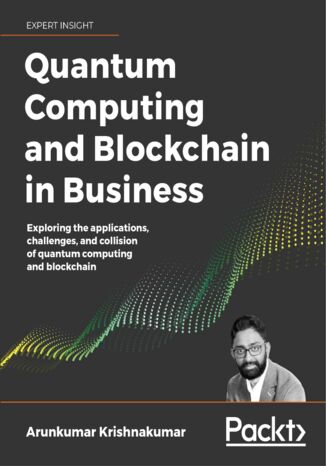
Arunkumar Krishnakumar
Are quantum computing and Blockchain on a collision course or will they be the most important trends of this decade to disrupt industries and life as we know it?Fintech veteran and venture capitalist Arunkumar Krishnakumar cuts through the hype to bring us a first-hand look into how quantum computing and Blockchain together are redefining industries, including fintech, healthcare, and research. Through a series of interviews with domain experts, he also explores these technologies’ potential to transform national and global governance and policies – from how elections are conducted and how smart cities can be designed and optimized for the environment, to what cyberwarfare enabled by quantum cryptography might look like. In doing so, he also highlights challenges that these technologies have to overcome to go mainstream.Quantum Computing and Blockchain in Business explores the potential changes that quantum computing and Blockchain might bring about in the real world. After expanding on the key concepts and techniques, such as applied cryptography, qubits, and digital annealing, that underpin quantum computing and Blockchain, the book dives into how major industries will be impacted by these technologies. Lastly, we consider how the two technologies may come together in a complimentary way.
Alex Khan
Amazon Braket is a cloud-based pay-per-use platform for executing quantum algorithms on cutting-edge quantum computers and simulators. It is ideal for developing robust apps with the latest quantum devices.With this book, you'll take a hands-on approach to learning how to take real-world problems and run them on quantum devices. You'll begin with an introduction to the Amazon Braket platform and learn about the devices currently available on the platform, their benefits, and their purpose. Then, you'll review key quantum concepts and algorithms critical to converting real-world problems into a quantum circuit or binary quadratic model based on the appropriate device and its capability. The book also covers various optimization use cases, along with an explanation of the code. Finally, you'll work with a framework using code examples that will help to solve your use cases with quantum and quantum-inspired technologies. Later chapters cover custom-built functions and include almost 200 figures and diagrams to visualize key concepts. You’ll be able to scan the capabilities provided by Amazon Braket and explore the functions to adapt them for specific use cases.By the end of this book, you’ll have the tools to integrate your current business apps and AWS data with Amazon Braket to solve constrained and multi-objective optimization problems.
Hassi Norlen
IBM Quantum Experience® is a leading platform for programming quantum computers and implementing quantum solutions directly on the cloud. This book will help you get up to speed with programming quantum computers and provide solutions to the most common problems and challenges.You’ll start with a high-level overview of IBM Quantum Experience® and Qiskit®, where you will perform the installation while writing some basic quantum programs. This introduction puts less emphasis on the theoretical framework and more emphasis on recent developments such as Shor’s algorithm and Grover’s algorithm. Next, you’ll delve into Qiskit®, a quantum information science toolkit, and its constituent packages such as Terra, Aer, Ignis, and Aqua. You’ll cover these packages in detail, exploring their benefits and use cases. Later, you’ll discover various quantum gates that Qiskit® offers and even deconstruct a quantum program with their help, before going on to compare Noisy Intermediate-Scale Quantum (NISQ) and Universal Fault-Tolerant quantum computing using simulators and actual hardware. Finally, you’ll explore quantum algorithms and understand how they differ from classical algorithms, along with learning how to use pre-packaged algorithms in Qiskit® Aqua.By the end of this quantum computing book, you’ll be able to build and execute your own quantum programs using IBM Quantum Experience® and Qiskit® with Python.