
Biznes IT
Czy myśleliście kiedyś, w jaki sposób rozpocząć swój biznes w branży IT? Może już prowadzicie własną firmę i Chcecie, aby zaistniała ona w sieci? W tej kategorii znajdziecie książki, w których zawarty jest know-how związany z wieloma rodzajami działalności prowadzonych poprzez internet, czy w inny sposób związanych z nowoczesnymi technologiami w biznesie.
Znajdziecie informacje o systemach zarządzania informacjami o Klientach - popularnych CRM'ach, o zarządzaniu projektami IT, wykorzystaniu potencjału popularnych teraz portali społecznościowych do promocji swojej działalności, czy też poradniki, które pomogą Wam rozwinąć umiejętności pozatechniczne - równie ważne dla Waszych przedsięwzięć.
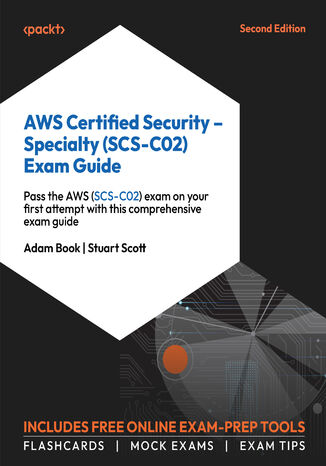
Adam Book, Stuart Scott
The AWS Certified Security – Specialty exam validates your expertise in advanced cloud security, a crucial skill set in today's cloud market. With the latest updates and revised study material, this second edition provides an excellent starting point for your exam preparation.You’ll learn the fundamentals of core services, which are essential prerequisites before delving into the six domains covered in the exam. The book addresses various security threats, vulnerabilities, and attacks, such as DDoS attacks, offering insights into effective mitigation strategies at different layers. You’ll learn different tools available in Amazon Web Services (AWS) to secure your Virtual Private Cloud and allow the correct traffic to travel securely to your workloads. As you progress, you’ll explore the intricacies of AWS EventBridge and IAM services. Additionally, you’ll get lifetime access to supplementary online resources, including mock exams with exam-like timers, detailed solutions, interactive flashcards, and invaluable exam tips, all accessible across various devices such as PCs, tablets, and smartphones.Ultimately, armed with the knowledge and skills acquired from this AWS security guide, you'll be well-prepared to pass the exam and design secure AWS solutions with confidence.
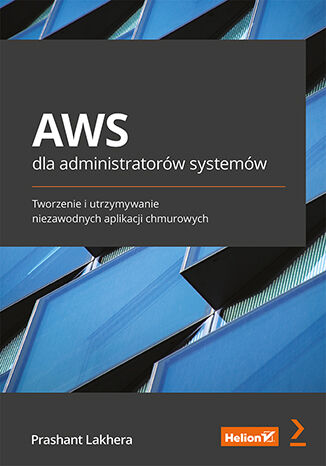
AWS dla administratorów systemów. Tworzenie i utrzymywanie niezawodnych aplikacji chmurowych
Prashant Lakhera
Amazon Web Services (AWS) zdobywa coraz większe uznanie. Platforma AWS udostępnia znakomite rozwiązania, w tym usługi obliczeniowe, magazyn danych, obsługę sieci i usług zarządzanych. Aplikacje korporacyjne wdrożone w chmurze AWS mogą być wyjątkowo odporne, skalowalne i niezawodne. Aby takie były, administrator systemu musi jednak zrozumieć koncepcje zaawansowanego zarządzania chmurą i nauczyć się wykorzystywać je w praktyce zarówno podczas wdrażania systemu, jak i zarządzania nim. W tej książce omówiono techniki wdrażania systemów na platformie AWS i zasady zarządzania nimi. Zaprezentowano podstawy korzystania z usługi Identity and Access Management oraz narzędzia sieciowe i monitorujące chmury AWS. Poruszono tematy Virtual Private Cloud, Elastic Compute Cloud, równoważenia obciążenia, automatycznego skalowania oraz baz danych usługi Relational Database Service. Dokładnie przedstawiono zasady wdrażania aplikacji i zarządzania danymi. Pokazano też, w jaki sposób zainicjować automatyczne tworzenie kopii zapasowych oraz jak śledzić i przechowywać pliki dzienników. W książce znalazły się również informacje na temat interfejsów API platformy AWS i sposobu ich użycia oraz automatyzacji infrastruktury z wykorzystaniem usługi CloudFormation, narzędzia Terraform oraz skryptów w języku Python z biblioteką Boto3. W książce między innymi: zasady bezpieczeństwa w systemach chmurowych tworzenie usług Amazon Elastic Compute Cloud (EC2) konfiguracja centrum danych w chmurze AWS za pomocą sieci VPC automatyczne skalowanie aplikacji praca z dziennikami scentralizowanymi CloudWatch wykonywanie kopii zapasowych danych AWS, czyli dostępność, odporność i niezawodność aplikacji!
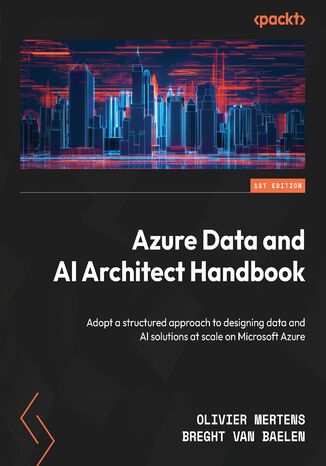
Olivier Mertens, Breght Van Baelen
With data’s growing importance in businesses, the need for cloud data and AI architects has never been higher. The Azure Data and AI Architect Handbook is designed to assist any data professional or academic looking to advance their cloud data platform designing skills. This book will help you understand all the individual components of an end-to-end data architecture and how to piece them together into a scalable and robust solution.You’ll begin by getting to grips with core data architecture design concepts and Azure Data & AI services, before exploring cloud landing zones and best practices for building up an enterprise-scale data platform from scratch. Next, you’ll take a deep dive into various data domains such as data engineering, business intelligence, data science, and data governance. As you advance, you’ll cover topics ranging from learning different methods of ingesting data into the cloud to designing the right data warehousing solution, managing large-scale data transformations, extracting valuable insights, and learning how to leverage cloud computing to drive advanced analytical workloads. Finally, you’ll discover how to add data governance, compliance, and security to solutions.By the end of this book, you’ll have gained the expertise needed to become a well-rounded Azure Data & AI architect.
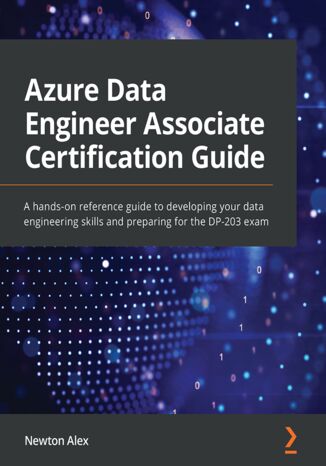
Newton Alex
Azure is one of the leading cloud providers in the world, providing numerous services for data hosting and data processing. Most of the companies today are either cloud-native or are migrating to the cloud much faster than ever. This has led to an explosion of data engineering jobs, with aspiring and experienced data engineers trying to outshine each other.Gaining the DP-203: Azure Data Engineer Associate certification is a sure-fire way of showing future employers that you have what it takes to become an Azure Data Engineer. This book will help you prepare for the DP-203 examination in a structured way, covering all the topics specified in the syllabus with detailed explanations and exam tips. The book starts by covering the fundamentals of Azure, and then takes the example of a hypothetical company and walks you through the various stages of building data engineering solutions. Throughout the chapters, you'll learn about the various Azure components involved in building the data systems and will explore them using a wide range of real-world use cases. Finally, you’ll work on sample questions and answers to familiarize yourself with the pattern of the exam.By the end of this Azure book, you'll have gained the confidence you need to pass the DP-203 exam with ease and land your dream job in data engineering.
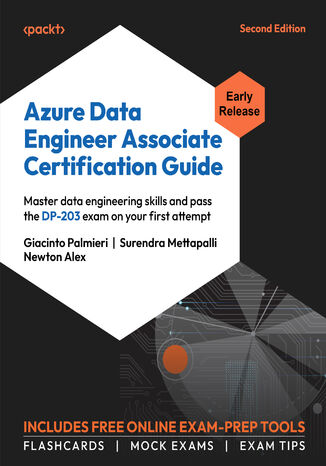
Giacinto Palmieri, Surendra Mettapalli, Newton Alex
One of the top global cloud providers, Azure offers extensive data hosting and processing services, driving widespread cloud adoption and creating a high demand for skilled data engineers. The Azure Data Engineer Associate (DP-203) certification is a vital credential, demonstrating your proficiency as an Azure data engineer to prospective employers. This comprehensive exam guide is designed for both beginners and seasoned professionals, aligned with the latest DP-203 certification exam, to help you pass the exam on your first try.The book provides a foundational understanding of IaaS, PaaS, and SaaS, starting with core concepts like virtual machines (VMs), VNETS, and App Services and progressing to advanced topics such as data storage, processing, and security. What sets this exam guide apart is its hands-on approach, seamlessly integrating theory with practice through real-world examples, practical exercises, and insights into Azure's evolving ecosystem. Additionally, you'll unlock lifetime access to supplementary practice material on an online platform, including mock exams, interactive flashcards, and exam tips, ensuring a comprehensive exam prep experience.By the end of this book, you’ll not only be ready to excel in the DP-203 exam, but also be equipped to tackle complex challenges as an Azure data engineer.
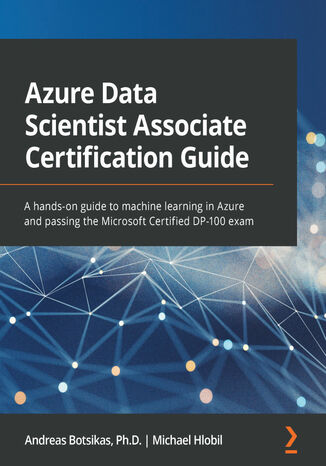
Andreas Botsikas , Michael Hlobil
The Azure Data Scientist Associate Certification Guide helps you acquire practical knowledge for machine learning experimentation on Azure. It covers everything you need to pass the DP-100 exam and become a certified Azure Data Scientist Associate.Starting with an introduction to data science, you'll learn the terminology that will be used throughout the book and then move on to the Azure Machine Learning (Azure ML) workspace. You'll discover the studio interface and manage various components, such as data stores and compute clusters.Next, the book focuses on no-code and low-code experimentation, and shows you how to use the Automated ML wizard to locate and deploy optimal models for your dataset. You'll also learn how to run end-to-end data science experiments using the designer provided in Azure ML Studio.You'll then explore the Azure ML Software Development Kit (SDK) for Python and advance to creating experiments and publishing models using code. The book also guides you in optimizing your model's hyperparameters using Hyperdrive before demonstrating how to use responsible AI tools to interpret and debug your models. Once you have a trained model, you'll learn to operationalize it for batch or real-time inferences and monitor it in production.By the end of this Azure certification study guide, you'll have gained the knowledge and the practical skills required to pass the DP-100 exam.
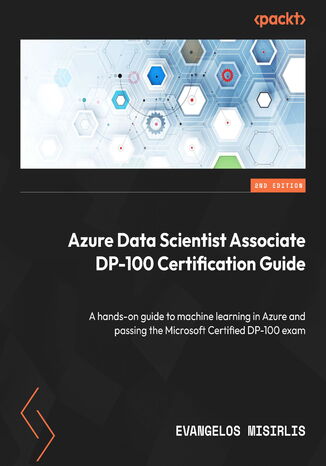
Evangelos Misirlis
The Azure Data Scientist Associate DP-100 Certification Guide teaches you how to run machine learning experiments on Azure. It includes everything you need to pass the DP-100 exam and become a certified Azure Data Scientist Associate.Starting with foundational concepts in data science, you'll learn how to configure and use the Azure Machine Learning (Azure ML) workspace via both studio and SDK interfaces. You'll progress through no-code and low-code experimentation using AutoML and the visual designer, and explore advanced Python SDK-based model training and deployment.This second edition also introduces you to the power of Generative AI with Prompt Flow, enabling you to build intelligent agents and operationalize them for production use. You’ll develop practical skills in hyperparameter tuning, model interpretation, and fairness analysis, and finally, deploy models as scalable endpoints with robust monitoring.Complete with hands-on exercises, mock exams, and expert tips, this guide offers everything you need for preparing to sit for the DP-100 exam and apply your learnings in real-world data science scenarios.
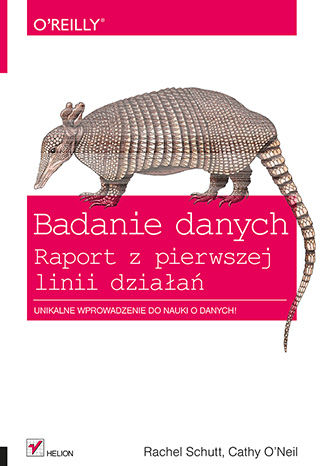
Badanie danych. Raport z pierwszej linii działań
Rachel Schutt, Cathy O'Neil
Unikalne wprowadzenie do nauki o danych! W dzisiejszych czasach najcenniejszym dobrem jest informacja. Ogromne ilości danych są przechowywane w przepastnych bazach danych, a kluczem do sukcesu jest ich umiejętna analiza i wyciąganie wniosków. To dynamicznie rozwijająca się dziedzina wiedzy, w której do tej pory brakowało solidnych podręczników, pozwalających na dogłębne poznanie tego obszaru. Na szczęście to się zmieniło! To unikalna książka, w której badacze z największych firm branży IT dzielą się skutecznymi technikami analizy danych. Z kolejnych rozdziałów dowiesz się, czym jest nauka o danych, model danych oraz test A/B. Ponadto zdobędziesz wiedzę na temat wnioskowania statystycznego, algorytmów, języka R oraz wizualizacji danych. Sięgnij po tę książkę, jeżeli chcesz się dowiedzieć, jak wykrywać oszustwa, korzystać z MapReduce oraz badać przyczynowość. To obowiązkowa pozycja na półce czytelników zainteresowanych badaniem danych. Wśród tematów poruszonych w książce odnajdziesz: Wnioskowanie statystyczne, eksploracyjną analizę danych i proces (metodologię) nauki o danych Algorytmy Filtry spamu, naiwny algorytm Bayesa i wstępną obróbkę danych Regresję logistyczną Modelowanie finansowe Mechanizmy rekomendacji i przyczynowość Wizualizowanie danych Sieci społecznościowe i dziennikarstwo danych Inżynierię danych, systemy MapReduce, Pregel i Hadoop Wyciągnij wartościowe wnioski z posiadanych informacji!