
Biznes IT
Cuantum Technologies LLC
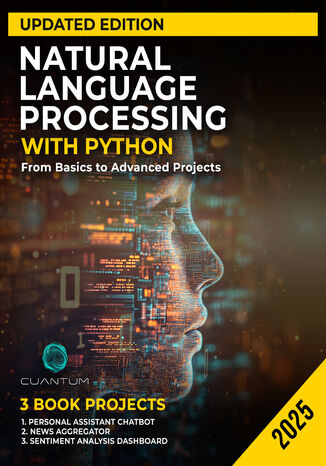
Embark on a comprehensive journey to master natural language processing (NLP) with Python. Begin with foundational concepts like text preprocessing, tokenization, and key Python libraries such as NLTK, spaCy, and TextBlob. Explore the challenges of text data and gain hands-on experience in cleaning, tokenizing, and building basic NLP pipelines. Early chapters provide practical exercises to solidify your understanding of essential techniques.Advance to sophisticated topics like feature engineering using Bag of Words, TF-IDF, and embeddings like Word2Vec and BERT. Delve into language modeling with RNNs, syntax parsing, and sentiment analysis, learning to apply these techniques in real-world scenarios. Chapters on topic modeling and text summarization equip you to extract insights from data, while transformer-based models like BERT take your skills to the next level. Each concept is paired with Python-based examples, ensuring practical mastery.The final chapters focus on real-world projects, such as developing chatbots, sentiment analysis dashboards, and news aggregators. These hands-on applications challenge you to design, train, and deploy robust NLP solutions. With its structured approach and practical focus, this book equips you to confidently tackle real-world NLP challenges and innovate in the field.
Nirant Kasliwal
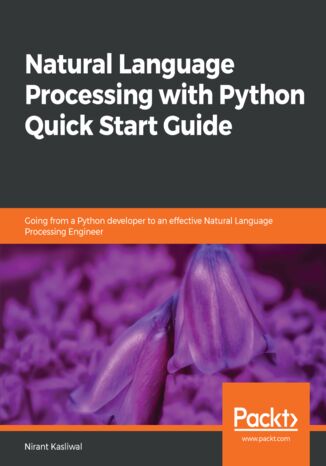
NLP in Python is among the most sought after skills among data scientists. With code and relevant case studies, this book will show how you can use industry-grade tools to implement NLP programs capable of learning from relevant data. We will explore many modern methods ranging from spaCy to word vectors that have reinvented NLP.The book takes you from the basics of NLP to building text processing applications. We start with an introduction to the basic vocabulary along with a work?ow for building NLP applications.We use industry-grade NLP tools for cleaning and pre-processing text, automatic question and answer generation using linguistics, text embedding, text classifier, and building a chatbot. With each project, you will learn a new concept of NLP. You will learn about entity recognition, part of speech tagging and dependency parsing for Q and A. We use text embedding for both clustering documents and making chatbots, and then build classifiers using scikit-learn.We conclude by deploying these models as REST APIs with Flask.By the end, you will be confident building NLP applications, and know exactly what to look for when approaching new challenges.
Thushan Ganegedara
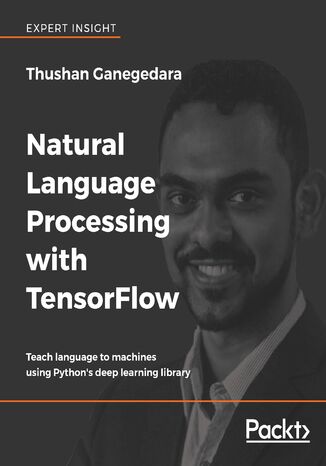
Natural language processing (NLP) supplies the majority of data available to deep learning applications, while TensorFlow is the most important deep learning framework currently available. Natural Language Processing with TensorFlow brings TensorFlow and NLP together to give you invaluable tools to work with the immense volume of unstructured data in today’s data streams, and apply these tools to specific NLP tasks.Thushan Ganegedara starts by giving you a grounding in NLP and TensorFlow basics. You'll then learn how to use Word2vec, including advanced extensions, to create word embeddings that turn sequences of words into vectors accessible to deep learning algorithms. Chapters on classical deep learning algorithms, like convolutional neural networks (CNN) and recurrent neural networks (RNN), demonstrate important NLP tasks as sentence classification and language generation. You will learn how to apply high-performance RNN models, like long short-term memory (LSTM) cells, to NLP tasks. You will also explore neural machine translation and implement a neural machine translator.After reading this book, you will gain an understanding of NLP and you'll have the skills to apply TensorFlow in deep learning NLP applications, and how to perform specific NLP tasks.
Thushan Ganegedara
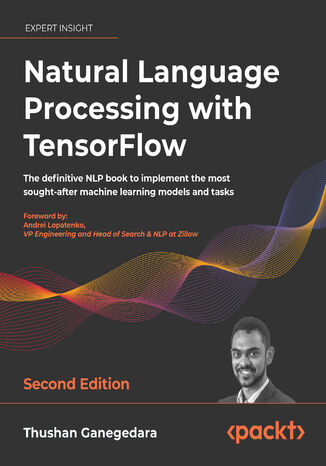
Learning how to solve natural language processing (NLP) problems is an important skill to master due to the explosive growth of data combined with the demand for machine learning solutions in production. Natural Language Processing with TensorFlow, Second Edition, will teach you how to solve common real-world NLP problems with a variety of deep learning model architectures.The book starts by getting readers familiar with NLP and the basics of TensorFlow. Then, it gradually teaches you different facets of TensorFlow 2.x. In the following chapters, you then learn how to generate powerful word vectors, classify text, generate new text, and generate image captions, among other exciting use-cases of real-world NLP.TensorFlow has evolved to be an ecosystem that supports a machine learning workflow through ingesting and transforming data, building models, monitoring, and productionization. We will then read text directly from files and perform the required transformations through a TensorFlow data pipeline. We will also see how to use a versatile visualization tool known as TensorBoard to visualize our models.By the end of this NLP book, you will be comfortable with using TensorFlow to build deep learning models with many different architectures, and efficiently ingest data using TensorFlow Additionally, you’ll be able to confidently use TensorFlow throughout your machine learning workflow.
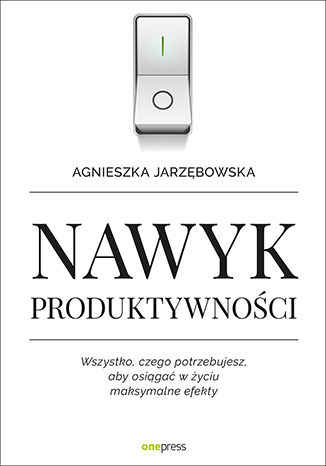
Nawyk produktywności. Wszystko, czego potrzebujesz, aby osiągać w życiu maksymalne efekty
Agnieszka Jarzębowska
Co masz zrobić jutro, zrób dziś. A jutro... zrealizuj kolejne zadanie z listy! Jak wiele razy składałeś deklaracje, że coś zmienisz w swoim życiu, że zaczniesz ćwiczyć, poszukasz innej posady, że będziesz częściej spędzać czas z rodziną, zamiast trwonić go w internecie lub przed telewizorem? Ile razy, siedząc w biurze, mimo że wiedziałeś, jakie masz priorytety, szukałeś zadań zastępczych, prostych i w gruncie rzeczy nieistotnych? Ile razy musiałeś przez to zabierać robotę do domu albo odsiadywać nadgodziny? Jeśli miałeś okazję doświadczyć którejś z wymienionych (albo podobnej) sytuacji, to jesteś osobą, do której adresowana jest ta książka - wiesz, ile stresu przysparza nadmiar zadań, gonitwa za dotrzymaniem terminów i chaotyczne próby uporania się ze wszystkim, co jest do zrobienia. Skąd się biorą Twoje problemy? Najprawdopodobniej ich źródło tkwi w złych nawykach: odkładaniu na później (prokrastynacji), braniu na siebie zbyt wielu zadań i obowiązków, działaniu bez celu i planu, rozpraszaniu się, niedosypianiu i braku przerw w czasie pracy. Na szczęście Twoje nawyki nie są Tobą - są tym, czego się w życiu nauczyłeś poprzez powtarzanie. I w ten sam sposób możesz nauczyć się innych, produktywnych nawyków, które pomogą Ci dokańczać rozpoczęte sprawy, realizować naprawdę ważne zadania i zbalansować wreszcie czas, jaki poświęcasz na pracę, z czasem przeznaczonym na odpoczynek. Produktywne nawyki, o których przeczytasz w tej książce, nie są trudne do opanowania. Może je łatwo wdrożyć każdy, pod warunkiem że będzie odpowiednio zdeterminowany i przede wszystkim konsekwentny w działaniu. Warto to zrobić już dziś, by stać się człowiekiem sukcesu albo po prostu tym, kim zawsze chciało się być.

Nawyk wytrwałości. Jak go wykształcić metodą małych kroków
Anna Kuraszyńska
Czy wciąż brakuje Ci wytrwałości, by osiągnąć to, czego pragniesz? Jeżeli tak - ta książka jest dla Ciebie. Dowiesz się z niej, jak małymi krokami zrealizować swoje cele: wyjść z nałogu osiągnąć idealne ciało zdobyć wymarzoną pracę stworzyć szczęśliwe związki z ludźmi Metoda małych kroków opisana w tej książce opiera się na założeniu, że Twój cel może być wielki, ale kroki prowadzące do niego powinny być małe i tak rozłożone w czasie, byś niemal nie odczuwał, że cokolwiek nowego dzieje się w Twoim życiu. W tym tkwi cały sekret. Pierwszy krok powinien być tak mały, że wręcz powinieneś odczuwać niedosyt działania. Na początku powinno być łatwo! Kolejne kroki powinny być równie małe. Jak wykształcić w sobie nawyk wytrwałości ? Oto 10 złotych zasad. Gdy wyznaczasz swoje cele, kieruj się miłością do świata i innych. Zapisuj cele i zadania w notesie lub kalendarzu. Rozbijaj cele na drobne elementy i rozkładaj je w czasie. Zaczynaj zawsze od łatwego zadania i powoli posuwaj się do przodu. Wyznaczaj czas na wykonanie określonych zadań. Koncentruj się tylko na jednym zadaniu. Wystrzegaj się robienia wyjątków. Stosuj techniki motywacyjne. Gdy nie chce ci się czegoś zrobić, wstań i to zrób. Naucz się dobrze żyć z odrzuceniem i problemami. Doceniaj się za robienie rzeczy małych, doceniaj się za robienie rzeczy małych, doceniaj się za robienie rzeczy małych. W tym tkwi sekret wielkich osiągnięć! Z pamiętnika autorki Anna Kuraszyńska ukończyła psychologię stosowaną na Uniwersytecie Jagiellońskim. W pracy zawodowej opiera się na nurcie behawioralno-poznawczym i humanistycznym. Propaguje strategię małych kroków, by pomóc ludziom podnieść jakość życia i wydobyć pełny potencjał.
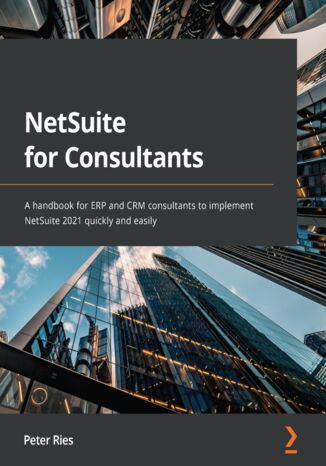
Peter Ries
NetSuite For Consultants takes a hands-on approach to help ERP and CRM consultants implement NetSuite quickly and efficiently, as well deepen their understanding of its implementation methodology.During the course of this book, you’ll get a clear picture of what NetSuite is, how it works, and how accounts, support, and updates work within its ecosystem.Understanding what a business needs is a critical first step toward completing any software product implementation, so you'll learn how to write business requirements by learning about the various departments, roles, and processes in the client's organization. Once you've developed a solid understanding of NetSuite and your client, you’ll be able to apply your knowledge to configure accounts and test everything with the users. You’ll also learn how to manage both functional and technical issues that arise post-implementation and handle them like a professional.By the end of this book, you'll have gained the necessary skills and knowledge to implement NetSuite for businesses and get things up and running in the shortest possible time.
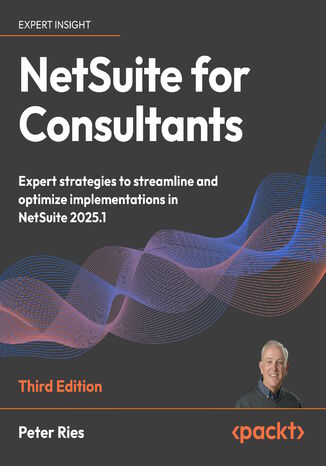
Peter Ries
NetSuite consultants face increasingly complex challenges in multi-currency configurations, financial automation, and third-party integrations that become maintenance nightmares. Add evolving client expectations and rapidly advancing platform capabilities, and many consultants find themselves struggling to deliver the transformative results their clients demand.This comprehensive guide provides the up-to-date roadmap you need to master NetSuite implementation and customization, turning these persistent challenges into competitive advantages.In this updated edition, author Peter Ries, an Oracle NetSuite Consulting Technical Director, expands on the latest advancements, including AI-enabled features, SuiteAnalytics, mobile apps, and new integration options. You'll gain access to proven consulting strategies, ERP optimization best practices, and practical guidance for configuring NetSuite to meet complex business requirements. Through real-world scenarios and actionable case studies, you’ll learn how to navigate common pitfalls and implement scalable solutions that drive long-term success.By the end of this book, you’ll be fully prepared to streamline NetSuite implementations and deliver high-impact consulting services confidently. It’s designed to maximize your career potential, no matter your level of experience.