Biznes IT
Czy myśleliście kiedyś, w jaki sposób rozpocząć swój biznes w branży IT? Może już prowadzicie własną firmę i Chcecie, aby zaistniała ona w sieci? W tej kategorii znajdziecie książki, w których zawarty jest know-how związany z wieloma rodzajami działalności prowadzonych poprzez internet, czy w inny sposób związanych z nowoczesnymi technologiami w biznesie.
Znajdziecie informacje o systemach zarządzania informacjami o Klientach - popularnych CRM'ach, o zarządzaniu projektami IT, wykorzystaniu potencjału popularnych teraz portali społecznościowych do promocji swojej działalności, czy też poradniki, które pomogą Wam rozwinąć umiejętności pozatechniczne - równie ważne dla Waszych przedsięwzięć.
70 sposobów na rozkochanie KLIENTA... w Twoim e-biznesie
Paweł Krzyworączka
Klient. Czyż nie jest to najpiękniejsze słowo na świecie? E-przedsiębiorco! Skoro prowadzisz swój biznes w sieci, to z pewnością wiesz, jakie są niezbędne składowe Twojego sukcesu: to świetny produkt, sprawny marketing, no i oczywiście dobrze napisane oprogramowanie, dzięki któremu klient będzie mógł sprawnie poruszać się po Twoim e-sklepie, od pierwszego wejrzenia aż po szczęśliwie sfinalizowaną transakcję. Czekaj, czekaj... Czy coś nam po drodze przypadkiem nie umknęło? Jakieś słowo... Ważne słowo. Użyliśmy go, wymieniając warunkowe powodzenia w e-biznesie. Wiem! To słowo to: KLIENT. Pisany dużą literą, a nawet samymi dużymi literami, ponieważ to właśnie on, Klient, stanowi prawdziwy klucz do Twojego szczęścia. Możesz mieć świetną ofertę, najnowocześniejsze, najskuteczniejsze narzędzia marketingowe, najbardziej intuicyjny sklep w sieci, ale to i tak nic, jeśli Twój poziom obsługi Klienta leży i kwiczy. Paweł Krzyworączka prowadzi swój internetowy biznes od roku 2008 i od tego czasu z prawdziwą pasją obserwuje dwustronne relacje między sprzedającymi i kupującymi, na przemian jako przedstawiciel jednej i drugiej strony. Na tej podstawie wciąż udoskonala obsługę Klienta we własnej firmie, starając się eliminować błędy, które zauważa u innych, ale także wdrażać pozytywne wzorce, jakich sam doświadczył. Chętnie porównuje relację kupujący-sprzedawca do związku miłosnego, zaznaczając przy tym, że to sprzedający musi się bardziej starać, bo to jemu o wiele bardziej zależy. A jak jest z Tobą? Zależy Ci na Twoim Kliencie, czy nie? Wciąż czujesz niedosyt i marzysz skrycie o tym, by zauroczyć, a następnie rozkochać Klienta w Twoim e-biznesie? A może chcesz, by miłość rozkwitła i przekształciła się w związek na całe życie? Jeśli tak, jeśli masz naprawdę poważne plany w stosunku do swoich Klientów, koniecznie sięgnij po książkę Pawła Krzyworączki! Paweł Krzyworączka — absolwent krakowskiej AGH i jej były pracownik ze stopniem naukowym doktora. Od 2008 roku e-przedsiębiorca, pasjonat nowych technologii oraz zagadnień z zakresu psychologii obsługi Klienta. Szeroko rozpowszechnione powiedzenie „nasz Klient, nasz Pan”, rozumie jako: „mój Klient, mój Przyjaciel”. Będąc właścicielem firmy Krzywy.pl, tworzy serwisy internetowe, kampanie e-marketingowe, prowadzi doradztwo, audyty i szkolenia z e-biznesu. Prowadzi bloga o e-biznesie (ebiznesy.pl), jest założycielem i administratorem prawdopodobnie największego polskiego forum e-biznesu (forum.ebiznesy.pl). Prowadzi kilka sklepów internetowych, m.in. tabletoid.pl. Jego życiowym i zawodowym mottem jest nieustanne dążenie do doskonałości. Także w obsłudze Klienta.
A Practical Guide to Quantum Computing. Hands-on approach to quantum computing with Qiskit
Elías F. Combarro, Samuel González-Castillo, Ismael Faro...
This book is an introduction, from scratch, to quantum computing and the most important and foundational quantum algorithms—ranging from humble protocols such as Deutsch’s algorithm to ones with far-reaching potential, such as Shor’s factoring algorithm—offering clear explanations and a hands-on approach with runnable code on simulators and real hardware. The book is self-contained and does not assume any previous experience in quantum computing. Starting with a single qubit, it scales to algorithms using superposition and entanglement.At every step, examples of applications are provided, including how to create quantum money that is impossible to forge, quantum cryptography that cannot be broken, and algorithms for searching and factoring that are much faster than those that regular, non-quantum computers can use. Code for each of these algorithms is provided (and explained in detail) using Qiskit 2.1.After reading this book, you will understand how quantum algorithms work, how to write your own quantum programs, and how to run them on quantum simulators and actual quantum computers. You will also be prepared to take the jump into quantum algorithms for optimization and artificial intelligence, like those presented in our previous book, A Practical Guide to Quantum Machine Learning and Quantum Optimization.
Keith D. Sutherland, Lawrence J. "Butch" Sheets
Many organizations struggle to find practical guidance that can help them to not only understand but also apply service management best practices. Packed with expert guidance and comprehensive coverage of the essential frameworks, methods, and techniques, this book will enable you to elevate your organization’s service management capability.You’ll start by exploring the fundamentals of service management and the role of a service provider. As you progress, you’ll get to grips with the different service management frameworks used by IT and enterprises. You'll use system thinking and design thinking approaches to learn to design, implement, and optimize services catering to diverse customer needs.This book will familiarize you with the essential process capabilities required for an efficient service management practice, followed by the elements key to its practical implementation, customized to the organization’s business needs in a sustainable and repeatable manner. You’ll also discover the critical success factors that will enhance your organization’s ability to successfully implement and sustain a service management practice.By the end of this handy guide, you’ll have a solid grasp of service management concepts, making this a valuable resource for on-the-job reference.
Keith D. Sutherland, Lawrence J. "Butch" Sheets
Many organizations struggle to find practical guidance that can help them to not only understand but also apply service management best practices. Packed with expert guidance and comprehensive coverage of the essential frameworks, methods, and techniques, this book will enable you to elevate your organization’s service management capability.You’ll start by exploring the fundamentals of service management and the role of a service provider. As you progress, you’ll get to grips with the different service management frameworks used by IT and enterprises. You'll use system thinking and design thinking approaches to learn to design, implement, and optimize services catering to diverse customer needs.This book will familiarize you with the essential process capabilities required for an efficient service management practice, followed by the elements key to its practical implementation, customized to the organization’s business needs in a sustainable and repeatable manner. You’ll also discover the critical success factors that will enhance your organization’s ability to successfully implement and sustain a service management practice.By the end of this handy guide, you’ll have a solid grasp of service management concepts, making this a valuable resource for on-the-job reference.
Maicon Melo Alves, Lúcia Maria de Assumpçao...
This book, written by an HPC expert with over 25 years of experience, guides you through enhancing model training performance using PyTorch. Here you’ll learn how model complexity impacts training time and discover performance tuning levels to expedite the process, as well as utilize PyTorch features, specialized libraries, and efficient data pipelines to optimize training on CPUs and accelerators. You’ll also reduce model complexity, adopt mixed precision, and harness the power of multicore systems and multi-GPU environments for distributed training. By the end, you'll be equipped with techniques and strategies to speed up training and focus on building stunning models.
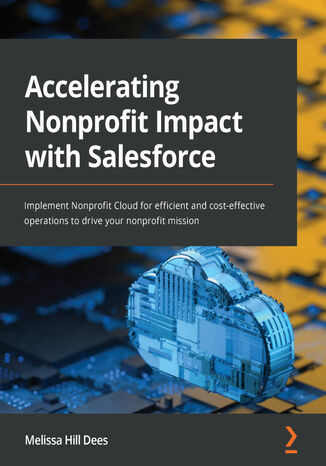
Melissa Hill Dees
Salesforce Nonprofit Cloud enables a 360-degree view of people related to your nonprofit to connect fundraising, program management, and grantmaking. With a single, unified view of every interaction with constituents, nonprofits can create strong relationships with the community and streamline internal processes.The book starts by covering the tools and features that make up Nonprofit Cloud, helping you understand their standard functionalities and how Nonprofit Success Pack's (NPSP) data architecture is critical to implementation. You’ll learn how the Nonprofit Cloud Program Management Module can connect your programs, automate case management, and track client progress. Next, you’ll explore the tools for creating a change management process to increase user adoption. Moving ahead, you’ll understand how to configure necessary permissions for NPSP administration and explore how declarative tools help better align the goals of a nonprofit organization. Toward the concluding chapters, you’ll cover customizations, deployment, custom reports, and dashboards for fundraising analytics, as well as best practices for data management to maintain its integrity.By the end of this Salesforce book, you’ll be able to build and configure the Nonprofit Cloud for a variety of use cases to achieve maximum social impact with the least amount of technical debt.
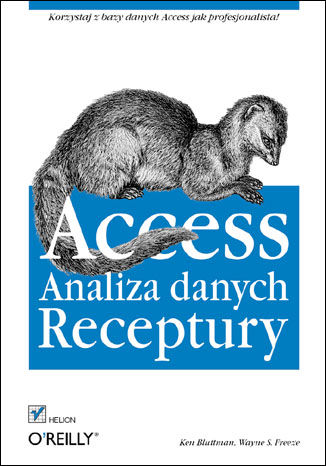
Access. Analiza danych. Receptury
Ken Bluttman, Wayne Freeze
Korzystaj z bazy danych Access jak profesjonalista! Jak stosować wskaźniki statystyczne do analizy danych biznesowych? Jak rozszerzać funkcjonalność zapytań SQL, stosując skrypty VBA? Jak przetwarzać dane i przenosić je między bazami Access? Access to znane już narzędzie służące do wszechstronnego przetwarzania i analizy danych. Posiada sporo ukrytych mechanizmów, pozwalających efektywnie wykonywać zadania, które początkowo mogą wydawać się skomplikowane. Książka przedstawia przykłady kwerend, metody przenoszenia danych pomiędzy bazami Access, obliczania wielu wskaźników finansowo-biznesowych i sporo innych zagadnień - wszystko pod kątem analizy i przetwarzania danych. Każda zaprezentowana receptura jest opatrzona kompletnym opisem rozwiązania problemu wraz ze szczegółowym omówieniem metody postępowania oraz analizą kodu. Access. Analiza danych. Receptury to uniwersalny podręcznik przeznaczony zarówno dla początkujących użytkowników bazy danych Access, jak i doświadczonych. Dzięki przejrzystemu językowi i mnogości poruszonych zagadnień każdy, niezależnie od stopnia zaawansowania, może poszerzyć swoją wiedzę. Zawiera mnóstwo ciekawych wskazówek i technik ułatwiających codzienną pracę z bazami danych, co czyni ją atrakcyjną nawet dla osób doskonale posługujących się bazą Access. Jest to także kompendium wiedzy niezbędnej każdemu, kto chce wyciągać ze zbiorów danych naprawdę cenne informacje. Tworzenie kwerend różnych typów Wstawianie, aktualizacja i usuwanie danych Przetwarzanie tekstu i liczb zapisanych w formie łańcucha znaków Zastosowanie tabel, modyfikacja zawartości systemu Windows, szyfrowanie danych Wykorzystanie obiektu FileSystemObject, przetwarzanie danych XML oraz XSLT, komunikacja z bazami SQL Rozwiązywanie problemów biznesowych Obliczanie wskaźników statystycznych Baza danych to fundament biznesu - zobacz, jak efektywnie nią zarządzać!
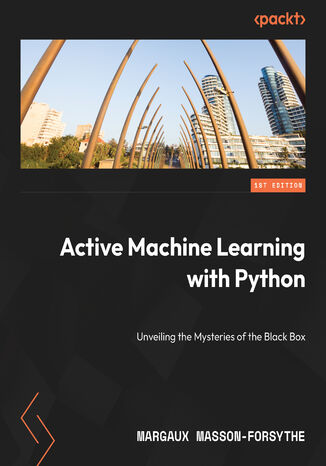
Margaux Masson-Forsythe
Building accurate machine learning models requires quality data—lots of it. However, for most teams, assembling massive datasets is time-consuming, expensive, or downright impossible. Led by Margaux Masson-Forsythe, a seasoned ML engineer and advocate for surgical data science and climate AI advancements, this hands-on guide to active machine learning demonstrates how to train robust models with just a fraction of the data using Python's powerful active learning tools.You’ll master the fundamental techniques of active learning, such as membership query synthesis, stream-based sampling, and pool-based sampling and gain insights for designing and implementing active learning algorithms with query strategy and Human-in-the-Loop frameworks. Exploring various active machine learning techniques, you’ll learn how to enhance the performance of computer vision models like image classification, object detection, and semantic segmentation and delve into a machine AL method for selecting the most informative frames for labeling large videos, addressing duplicated data. You’ll also assess the effectiveness and efficiency of active machine learning systems through performance evaluation.By the end of the book, you’ll be able to enhance your active learning projects by leveraging Python libraries, frameworks, and commonly used tools.
Rowel Atienza, Neeraj Verma, Valerio Maggio
Recent developments in deep learning, including Generative Adversarial Networks (GANs), Variational Autoencoders (VAEs), and Deep Reinforcement Learning (DRL) are creating impressive AI results in our news headlines - such as AlphaGo Zero beating world chess champions, and generative AI that can create art paintings that sell for over $400k because they are so human-like.Advanced Deep Learning with Keras is a comprehensive guide to the advanced deep learning techniques available today, so you can create your own cutting-edge AI. Using Keras as an open-source deep learning library, you'll find hands-on projects throughout that show you how to create more effective AI with the latest techniques.The journey begins with an overview of MLPs, CNNs, and RNNs, which are the building blocks for the more advanced techniques in the book. You’ll learn how to implement deep learning models with Keras and TensorFlow 1.x, and move forwards to advanced techniques, as you explore deep neural network architectures, including ResNet and DenseNet, and how to create autoencoders. You then learn all about GANs, and how they can open new levels of AI performance. Next, you’ll get up to speed with how VAEs are implemented, and you’ll see how GANs and VAEs have the generative power to synthesize data that can be extremely convincing to humans - a major stride forward for modern AI. To complete this set of advanced techniques, you'll learn how to implement DRL such as Deep Q-Learning and Policy Gradient Methods, which are critical to many modern results in AI.
Rowel Atienza, Neeraj Verma, Valerio Maggio
Recent developments in deep learning, including Generative Adversarial Networks (GANs), Variational Autoencoders (VAEs), and Deep Reinforcement Learning (DRL) are creating impressive AI results in our news headlines - such as AlphaGo Zero beating world chess champions, and generative AI that can create art paintings that sell for over $400k because they are so human-like.Advanced Deep Learning with Keras is a comprehensive guide to the advanced deep learning techniques available today, so you can create your own cutting-edge AI. Using Keras as an open-source deep learning library, you'll find hands-on projects throughout that show you how to create more effective AI with the latest techniques.The journey begins with an overview of MLPs, CNNs, and RNNs, which are the building blocks for the more advanced techniques in the book. You’ll learn how to implement deep learning models with Keras and TensorFlow 1.x, and move forwards to advanced techniques, as you explore deep neural network architectures, including ResNet and DenseNet, and how to create autoencoders. You then learn all about GANs, and how they can open new levels of AI performance. Next, you’ll get up to speed with how VAEs are implemented, and you’ll see how GANs and VAEs have the generative power to synthesize data that can be extremely convincing to humans - a major stride forward for modern AI. To complete this set of advanced techniques, you'll learn how to implement DRL such as Deep Q-Learning and Policy Gradient Methods, which are critical to many modern results in AI.