Gry
Scott H MacKenzie, Adam R Rendek
This book is for architects, architectural technicians, and construction professionals who are familiar with 2D CAD programs such as AutoCAD Lite, or have some exposure to a 3D BIM package such as Revit. No experience with ArchiCAD is required. If you want to learn the skills needed for architectural drawing production in the real world, then this book is for you.
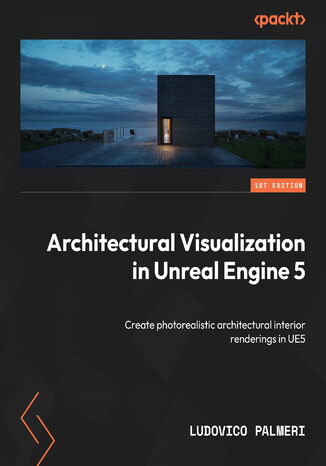
Ludovico Palmeri
If you excel at creating beautiful architectural renderings using traditional software but want to master real-time, interactive visualizations, this book will show you how the versatile Unreal Engine 5 enables such transformations effortlessly. While UE5 is widely popular, existing online training resources can be overwhelming and often lack a focus on Architectural visualization. This comprehensive guide is for both beginners and experienced users offering a clear, end-to-end approach to creating stunning visualizations from scratch as well as managing tight deadlines, striving for photorealism, and handling typical client revisions inherent to architectural visualization.The book starts with an introduction to UE5 and its capabilities, as well as the basic concepts and principles of architectural visualization. You'll then progress to essential topics such as setting up a project, modeling and texturing 3D assets, lighting and materials, and post-processing effects. Along the way, you'll find practical tips, best practices, and hands-on exercises to develop your skills by applying what you learn.By the end of this book, you'll have acquired the skills to confidently create high-quality architectural visualizations in UE5 and become proficient in building an architectural interior scene to produce professional still images.
Marco Secchi
Have you ever wondered how to create engaging gameplay experiences that involve formidable AI opponents, capable of challenging and pushing players to their limits? If the answer is yes, then get ready to enter the realm of AI creation with Unreal Engine 5.Within the pages of this book, written by a brilliant author and game development expert, you’ll find the secrets of Unreal Engine's cutting-edge AI framework. With this newfound knowledge, you’ll be able to create immersive and dynamic gaming experiences. This step-by-step guide will teach you the art of crafting intelligent and responsive virtual opponents that challenge and engage players on a whole new level. As you follow along with practical examples, the book will guide you through the creation of fully functional AI systems. You’ll be able to harness the power of behavior trees, NavMesh systems, and sensory perception models, breathing life into your virtual characters.By the end of this book, you’ll be equipped with the knowledge you need to unleash the full potential of AI in Unreal Engine. Get ready to revolutionize your gaming creations and captivate players with AI-driven wonders that push the boundaries of what's possible!*Email sign-up and proof of purchase required
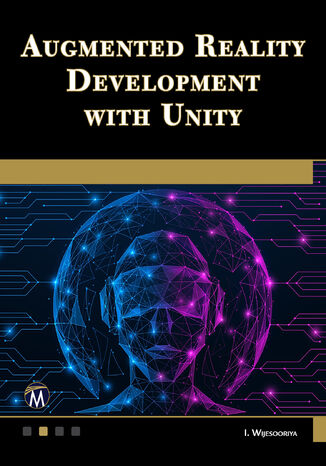
Mercury Learning and Information, Indika Wijesooriya
This book provides a comprehensive guide to developing augmented reality applications. Starting with an introduction to AR concepts, it explores key tools and platforms, emphasizing Unity as a core development tool. Readers will gain hands-on experience creating marker-based and marker-less AR apps using Vuforia, ARKit, and ARCore.The book takes a practical approach, covering the creation of custom components, C# programming for Unity, and building mobile AR apps. Advanced topics include world-scale AR with Niantic Lightship and optimization strategies for AR app performance. Each chapter builds skills progressively, ensuring a thorough understanding of the subject.By the end, readers will have the confidence and skills to design and develop innovative AR applications, understanding the best practices and challenges of AR app development.
Jonathan Linowes, Krystian Babilinski
Augmented Reality brings with it a set of challenges that are unseen and unheard of for traditional web and mobile developers. This book is your gateway to Augmented Reality development—not a theoretical showpiece for your bookshelf, but a handbook you will keep by your desk while coding and architecting your first AR app and for years to come.The book opens with an introduction to Augmented Reality, including markets, technologies, and development tools. You will begin by setting up your development machine for Android, iOS, and Windows development, learning the basics of using Unity and the Vuforia AR platform as well as the open source ARToolKit and Microsoft Mixed Reality Toolkit. You will also receive an introduction to Apple's ARKit and Google's ARCore! You will then focus on building AR applications, exploring a variety of recognition targeting methods. You will go through multiple complete projects illustrating key market sectors including business marketing, education, industrial training, and gaming. By the end of the book, you will have gained the necessary knowledge to make quality content appropriate for a range of AR devices, platforms, and intended uses.
Micheal Lanham
The heyday of location-based augmented reality games is upon us. They have been around for a few years, but the release of Pokémon Go was a gamechanger that catalyzed the market and led to a massive surge in demand. Now is the time for novice and experienced developers alike to turn their good ideas into augmented reality (AR) mobile games and meet this demand!If you are keen to develop virtual reality games with the latest Unity 5 toolkit, then this is the book for you. The genre of location-based AR games introduces a new platform and technical challenges, but this book will help simplify those challenges and show how to maximize your game audience.This book will take you on a journey through building a location-based AR game that addresses the core technical concepts: GIS fundamentals, mobile device GPS, mapping, map textures in Unity, mobile device camera, camera textures in Unity, accessing location-based services, and other useful Unity tips. The technical material also discusses what is necessary for further development to create a multiplayer version of the game. At the end, you will be presented with troubleshooting techniques in case you get into trouble and need a little help.
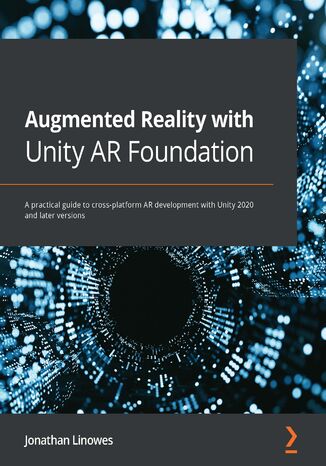
Jonathan Linowes
Augmented reality applications allow people to interact meaningfully with the real world through digitally enhanced content. The book starts by helping you set up for AR development, installing the Unity 3D game engine, required packages, and other tools to develop for Android (ARCore) and/or iOS (ARKit) mobile devices. Then we jump right into the building and running AR scenes, learning about AR Foundation components, other Unity features, C# coding, troubleshooting, and testing. We create a framework for building AR applications that manages user interaction modes, user interface panels, and AR onboarding graphics that you will save as a template for reuse in other projects in this book. Using this framework, you will build multiple projects, starting with a virtual photo gallery that lets you place your favorite framed photos on your real-world walls, and interactively edit these virtual objects. Other projects include an educational image tracking app for exploring the solar system, and a fun selfie app to put masks and accessories on your face. The book provides practical advice and best practices that will have you up and running quickly.By the end of this AR book, you will be able to build your own AR applications, engaging your users in new and innovative ways.
Stephen Walz, Tony Sabat
Autodesk Civil 3D 2025 Unleashed is a comprehensive guide that equips civil engineers and designers with advanced skills to unlock new levels of efficiency in their projects and careers. Divided into four parts, this book addresses different aspects of Civil 3D capabilities and extensions. Starting with elevating Civil 3D designs using Building Information Modeling (BIM) principles, you’ll develop a strong foundation in BIM and its integration into civil engineering projects. By focusing on design customization with Civil 3D extensions, this book will empower you to harness reality capture technologies, optimize grading designs, and explore content catalog customization. You'll delve into information management and automation with Civil 3D, covering property sets, Project Explorer, and workflow automation using tools like Dynamo for Civil 3D (D4C3D) and scripting. The book will also demonstrate how to prepare BIM designs within Civil 3D for a multitude of downstream uses. Finally, you’ll discover how to extend infrastructure designs beyond Civil 3D and integrate them into the BIM process with Navisworks and InfraWorks for better project collaboration and visualization. By the end of this book, you’ll be able to prepare and use BIM designs within Civil 3D and several other products for easier project creation and management.
Stephen Walz, Tony Sabat
With engineering projects getting bigger, deadlines getting tighter, and greater demands for precision, you need tools that do more and work smarter. Autodesk Civil 3D 2026 rises to the challenge, delivering powerful new capabilities for high-precision design modeling and streamlined collaboration. In this second edition, Stephen Walz and Tony Sabat, leaders in digital design and innovation in civil infrastructure, walk you through Civil 3D’s cutting-edge features, such as pressure layout improvements, dynamic corridor targeting, and performance enhancements for surface modeling and grading. It’s not just about learning new features; you’ll be able to integrate these new toolsets into real-world workflows, develop standards, and collaborate effectively within distributed teams. From surface development and intelligent utility design to smart document creation, this book explores practical and automated applications of tools and modeling techniques that you’ll use every day. Whether you work independently or are part of a large design team, you’ll walk away knowing how to configure, manage, and deliver projects with Civil 3D 2026 while improving your entire project pipeline.*Email sign-up and proof of purchase required
Autodesk Revit 2025 Architecture. Mastering Revit Techniques for Efficient Architectural Design
Mercury Learning and Information, Munir Hamad
This book is a complete guide to mastering Autodesk Revit 2025, starting with the basics and progressively covering advanced architectural design techniques. It begins by introducing the Revit interface, navigation tools, and essential concepts like CAD vs. BIM, ensuring a solid foundation for beginners.Readers will then learn to create and modify architectural elements, such as walls, doors, windows, and roofs while exploring detailed workflows for project setup, annotation, and documentation. Each chapter includes hands-on exercises and practical examples to reinforce learning and improve proficiency with Revit’s powerful tools.The final sections delve into advanced topics like creating families, managing work sets, and using project phasing and design options. By the end of the book, readers will have gained the expertise to use Revit effectively in real-world architectural projects, making it an essential resource for both novice and experienced users.
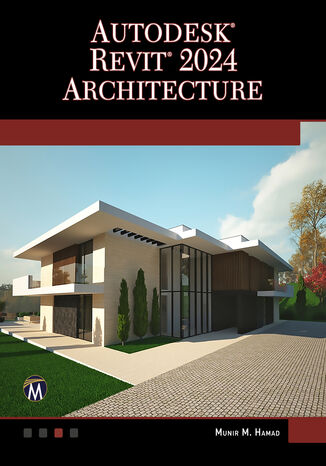
Autodesk(R) Revit(R) 2024 Architecture. Mastering Building Design with BIM
Mercury Learning and Information, Munir Hamad
This book covers all major techniques in Revit 2024 Architecture using both metric and imperial units. It details the myriad drawing and editing tools and includes over 50 mini-workshops that guide users from concept to plotting. By solving these workshops, readers will master Revit Architecture, covering all basic commands and functions. Companion files with templates and models are available for practical application.The course begins with an introduction to Revit 2024, followed by detailed chapters on drawing, modifying, project preparation, and wall construction. Subsequent chapters cover doors, windows, curtain walls, floors, roofs, components, and ceilings. Users will also learn about creating stairs, ramps, railings, views, annotations, legends, and visualization.Further, the book delves into schedules, project phasing, design options, topography, rooms, tagging, detailing, groups, file import/export, mass creation, and customizing elements. It concludes with chapters on creating and customizing families, and managing worksets and shared views, ensuring comprehensive knowledge and skills in Revit 2024 Architecture.
Become a Unity Shaders Guru. Create advanced game visuals using code and graphs in Unity 2022
Mina Pecheux
Do you really know all the ins-and-outs of Unity shaders? It’s time to step up your Unity game and dive into the new URP render pipeline, the Shader Graph tool, and advanced shading techniques to bring out the beauty of your 2D/3D game projects!Become a Unity Shaders Guru is here to help you transition from the built-in render pipeline to the SRP pipelines and learn the latest shading tools. With it, you’ll dive deeper into Unity shaders by understanding the essential concepts through practical examples. First, you’ll discover how to create a simple shading model in the Unity built-in render pipeline, and then in the Unity URP render pipeline and Shader Graph while learning about the practical applications of both. You’ll explore common game shader techniques, ranging from interior mapping to adding neon outlines on a sprite or simulating the wobble of a fish. You’ll also learn about alternative rendering techniques, like Ray Marching.By the end of this book, you’ll have learned to create a wide variety of 2D and 3D shaders with Unity’s URP pipeline (both in HLSL code and with the Shader Graph tool), and be well-versed with some optimization tricks to make your games friendly for low-tier devices as well.
Beginning C++ Game Programming. Learn C++ from scratch by building fun games - Third Edition
John Horton
Always dreamed of creating your own games? With the third edition of Beginning C++ Game Programming, you can turn that dream into reality! This beginner-friendly guide is updated and improved to include the latest features of VS 2022, SFML, and modern C++20 programming techniques. You'll get a fun introduction to game programming by building four fully playable games of increasing complexity. You'll build clones of popular games such as Timberman, Pong, a Zombie survival shooter, and an endless runner.The book starts by covering the basics of programming. You'll study key C++ topics, such as object-oriented programming (OOP) and C++ pointers and get acquainted with the Standard Template Library (STL). The book helps you learn about collision detection techniques and game physics by building a Pong game. As you build games, you'll also learn exciting game programming concepts such as vertex arrays, directional sound (spatialization), OpenGL programmable shaders, spawning objects, and much more. You’ll dive deep into game mechanics and implement input handling, levelling up a character, and simple enemy AI. Finally, you'll explore game design patterns to enhance your C++ game programming skills.By the end of the book, you'll have gained the knowledge you need to build your own games with exciting features from scratch.
Beginning C++ Game Programming. Learn to program with C++ by building fun games - Second Edition
John Horton

The second edition of Beginning C++ Game Programming is updated and improved to include the latest features of Visual Studio 2019, SFML, and modern C++ programming techniques. With this book, you’ll get a fun introduction to game programming by building five fully playable games of increasing complexity. You’ll learn to build clones of popular games such as Timberman, Pong, a Zombie survival shooter, a coop puzzle platformer and Space Invaders.The book starts by covering the basics of programming. You’ll study key C++ topics, such as object-oriented programming (OOP) and C++ pointers, and get acquainted with the Standard Template Library (STL). The book helps you learn about collision detection techniques and game physics by building a Pong game. As you build games, you’ll also learn exciting game programming concepts such as particle effects, directional sound (spatialization), OpenGL programmable shaders, spawning objects, and much more. Finally, you’ll explore game design patterns to enhance your C++ game programming skills.By the end of the book, you’ll have gained the knowledge you need to build your own games with exciting features from scratch.
Biblioteki cyfrowe: tworzenie, zarządzanie, odbiór
Barbara Maria Morawiec
Postaw na nowe technologie — sprawdź, jak powinna działać nowoczesna biblioteka! Od wielu lat zarówno poważne ośrodki naukowe, jak i media zajmujące się badaniami czytelnictwa w Polsce biją na alarm — jako społeczeństwo coraz mniej czytamy, a to niekorzystnie odbija się na ogólnym poziomie inteligencji i kultury. Ta zatrważająca tendencja ma pewnie wiele źródeł, ale jednym z najważniejszych jest zmiana nawyków czytelniczych i głębsze zanurzenie potencjalnych czytelników w świat cyfrowy. Nowoczesna biblioteka nie może więc pozostawać strukturą analogową. Wręcz przeciwnie, powinna udostępniać swoje zbiory, zwłaszcza te najcenniejsze, w postaci cyfrowej. Jeśli chcesz przekonać się, jak wygląda to w praktyce i jak wypada konfrontacja projektów architektów cyfrowych systemów bibliotecznych z oczekiwaniami użytkowników, ta książka Ci w tym pomoże. Znajdziesz tu informacje na temat funkcjonowania konkretnych bibliotek cyfrowych oraz tego, jak realizują one swoją podstawową funkcję udostępniania zbiorów. Zobaczysz, jak przebiega proces budowy takiej biblioteki, jacy interesariusze biorą udział w tym procesie i jak to wszystko wpływa na funkcjonalność biblioteki dla użytkownika. Fundamentalne znaczenie ma tu wskazanie różnych punktów widzenia, zderzenie koncepcji z potrzebami odbiorców, analiza zachowań i przepływu informacji. Każdy, kto chce zrozumieć kluczowe funkcje biblioteki cyfrowej i wykorzystać je w praktyce, powinien najpierw przeczytać tę książkę. W jakim celu jest tworzona biblioteka cyfrowa oraz jakie funkcje może ona pełnić? Jak przedstawia się organizacja pracy w zespołach bibliotek cyfrowych? Jak przebiega proces digitalizacji? Kim jest architekt biblioteki cyfrowej i jakie role pełni przy jej tworzeniu? Jakie kompetencje powinien mieć architekt biblioteki cyfrowej? Jak użytkownicy bibliotek cyfrowych oceniają te biblioteki? W jaki sposób użytkownicy korzystają z zasobów bibliotek cyfrowych? Jakie są potrzeby oraz zachowania informacyjne użytkownika biblioteki cyfrowej? Jakie problemy napotykają użytkownicy bibliotek cyfrowych podczas korzystania ze zbiorów? Kim jest użytkownik biblioteki cyfrowej? Stwórz bibliotekę cyfrową, z której każdy będzie chciał korzystać! Barbara Maria Morawiec — absolwentka UJ oraz UŚ na kierunku informacja naukowa i bibliotekoznawstwo. Redaktor naczelna serwisu Lustro Biblioteki (www.lustrobiblioteki.pl). Autorka książki Biblioblog w pigułce — poradnik dla bibliotekarzy, a także artykułów dotyczących blogosfery bibliotecznej, Biblioteki 2.0, bibliotek cyfrowych, e-booków itp. Prowadzi szkolenia dla bibliotekarzy z zakresu tworzenia i zarządzania blogami i serwisami bibliotecznymi, a także PR w bibliotece.