Aplikacje biurowe
Jak wykonać skomplikowane obliczenia w arkuszu kalkulacyjnym? Jak napisać i poprawnie sformatować urzędowe pismo w edytorze tekstu albo wykonać interesującą prezentację dla szefa? Tutaj znajdziecie odpowiedź.
Podręczniki w tym dziale pozwolą poznać tajniki najbardziej popularnych aplikacji biurowych jak pakiet MS Office czy Open Office, poczty elektronicznej jak Outlook, czy zagadnień języka programowania VBA oraz w pełni wykorzystać potencjał jaki te programy oferują. Nauczycie się jak aktywnie zarządzać budżetem w MS Project, tworzyć prezentację w PowerPoint slajd po slajdzie, oraz znajdziecie tu szereg wskazówek i porad jak usprawnić Waszą pracę z programami Excel czy Word.
Teaching with Google Classroom. To provide a step-by-step guide to setup and use Google Classroom
Michael Zhang
Google Classroom helps teachers bring their work online. According to Google Trends, it’s already bigger than Moodle after barely a year in the wild. This book is a complete start-to-finish guide for teachers using Google Classroom for the first time. It explains what Google Classroom is, what it can do, how to set it up, and how to use it to enhance student learning while making your life as a teacher easier. It shows you how to place resources and activities online, gather assignments, and develop group and individual activities. It’s not just a manual, you’ll also discover inspiring, easy ways to put Google Classroom to work for you and your class.
Bernd Nordhausen
Google Cloud has adopted Terraform as the standard Infrastructure as Code tool. This necessitates a solid understanding of Terraform for any cloud architect or engineer working on Google Cloud. Yet no specific resources are available that focus on how to use Terraform on Google Cloud.This is the first book that teaches Terraform specifically for Google Cloud. You will take a journey from the basic concepts through to deploying complex architectures using Terraform. Using extensive code examples, you will receive guidance on how to authenticate Terraform in Google Cloud. As you advance, you’ll get to grips with all the essential concepts of the Terraform language as applied to Google Cloud and deploy complete working architectures at the push of a button. Finally, you’ll also be able to improve your Terraform workflow using Google Cloud native and third-party tools.By the end of this Terraform book, you will have gained a thorough understanding of Terraform and how to use it on Google Cloud, and be able to develop effective Terraform code, build reusable code, and utilize public domain Terraform modules to deploy on Google Cloud faster and more securely.
The AI Value Playbook. How to make AI work in the real world
Lisa Weaver-Lambert
Business leaders are challenged by the speed of AI innovation and how to navigate disruption and uncertainty. This book is a crucial resource for those who want to understand how to leverage AI to drive business value, drawn from the firsthand experience of those who have been implementing this technology successfully. The AI Value Playbook focuses on questions frequently posed by leaders and boards. How can businesses adapt to these emerging technologies? How can they start building and deploying AI as a strategic asset to drive efficiency? What risks or threats need to be considered? How quickly can value be created? This book is a response to those demands. In a series of in-depth and wide-ranging conversations with practitioners, from CEOs leading new generative AI-based companies to Data Scientists and CFOs working in more traditional companies. Our experts share their hard-earned wisdom, talking candidly about their successes and failures, and what excites them about the future. These interviews offer unique insights for business leaders to apply to their own organizations. The book distils a value-driven playbook for how AI can be put to work today.
Chinmay Arankalle, Gareth Dwyer, Bas Geerdink, Kunal...
Social networking sites see an average of 350 million uploads daily - a quantity impossible for humans to scan and analyze. Only AI can do this job at the required speed, and to leverage an AI application at its full potential, you need an efficient and scalable data storage pipeline. The Artificial Intelligence Infrastructure Workshop will teach you how to build and manage one.The Artificial Intelligence Infrastructure Workshop begins taking you through some real-world applications of AI. You’ll explore the layers of a data lake and get to grips with security, scalability, and maintainability. With the help of hands-on exercises, you’ll learn how to define the requirements for AI applications in your organization. This AI book will show you how to select a database for your system and run common queries on databases such as MySQL, MongoDB, and Cassandra. You’ll also design your own AI trading system to get a feel of the pipeline-based architecture. As you learn to implement a deep Q-learning algorithm to play the CartPole game, you’ll gain hands-on experience with PyTorch. Finally, you’ll explore ways to run machine learning models in production as part of an AI application.By the end of the book, you’ll have learned how to build and deploy your own AI software at scale, using various tools, API frameworks, and serialization methods.
Sandielly Ortega Polanco, Gogula Aryalingam, Abu Bakar...
The Complete Power Interview Guide helps you excel in a Power BI interview, secure desired roles, and be ready with the knowledge and skills to ace your role from the first day. Whether you're beginning your career journey or transitioning into a data analytics role, this guide offers hands-on skills and interview questions you need to succeed as a BI or data analyst. This book also offers supplemental content for PowerBI certification exams like PL-300. The book will equip you with the knowledge and strategies to effectively navigate the competitive job market. From creating an outstanding online professional profile to optimizing your resume and building a compelling work portfolio, you'll learn how to establish a strong personal brand. The essentials of Power BI, including data preparation, data modeling, DAX programming, expert report development, and impactful storytelling, are covered in-depth through real-world examples and valuable tips.By the end of this book, you'll have the confidence to interview for Power BI roles, navigate technical assessments, answer behavioral questions, and tackle case studies. You’ll have gained applied knowledge and the competitive edge needed to succeed in the data analytics job market and stay ahead of industry trends for career advancement.
The DevOps 2.2 Toolkit. Self-Sufficient Docker Clusters
Viktor Farcic
Building on The DevOps 2.0 Toolkit and The DevOps 2.1 Toolkit: Docker Swarm, Viktor Farcic brings his latest exploration of the Docker technology as he records his journey to explore two new programs, self-adaptive and self-healing systems within Docker. The DevOps 2.2 Toolkit: Self-Sufficient Docker Clusters is the latest book in Viktor Farcic’s series that helps you build a full DevOps Toolkit. This book in the series looks at Docker, the tool designed to make it easier in the creation and running of applications using containers. In this latest entry, Viktor combines theory with a hands-on approach to guide you through the process of creating self-adaptive and self-healing systems. Within this book, Viktor will cover a wide-range of emerging topics, including what exactly self-adaptive and self-healing systems are, how to choose a solution for metrics storage and query, the creation of cluster-wide alerts and what a successful self-sufficient system blueprint looks like. Work with Viktor and dive into the creation of self-adaptive and self-healing systems within Docker.
James Bryant, Aloke Mukherjee
In today's rapidly evolving economic landscape, the combination of finance, analytics, and artificial intelligence (AI) heralds a new era of decision-making. Finance and data analytics along with AI can no longer be seen as separate disciplines and professionals have to be comfortable in both in order to be successful. This book combines finance concepts, visualizations through Power BI and the application of AI and ChatGPT to provide a more holistic perspective.After a brief introduction to finance and Power BI, you will begin with Tesla's data-driven financial tactics before moving to John Deere's AgTech strides, all through the lens of AI. Salesforce's adaptation to the AI revolution offers profound insights, while Moderna's navigation through the biotech frontier during the pandemic showcases the agility of AI-focused companies. Learn from Silicon Valley Bank's demise, and prepare for CrowdStrike's defensive maneuvers against cyber threats. With each chapter, you'll gain mastery over new investing ideas, Power BI tools, and integrate ChatGPT into your workflows.This book is an indispensable ally for anyone looking to thrive in the financial sector. By the end of this book, you'll be able to transform your approach to investing and trading by blending AI-driven analysis, data visualization, and real-world applications.
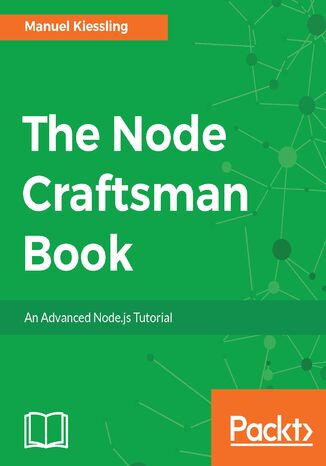
The Node Craftsman Book. An Advanced Node.js Tutorial
Manuel Kiessling
The Node Craftsman Book helps JavaScript programmers with basic Node.js knowledge to now thoroughly master Node.js and JavaScript. This book dives you deeper into the craft of software development with Node.js and JavaScript, incuding object-orientation, test-driven development, database handling, web frameworks, and much more.The Node Craftsman Book shows you how to work with Node.js and how to think deeply about how you build your Node projects. You'll master how to build a complete Node.js application across six crafting milestones, and you'll learn many specific skills to achieve that mastery. These skills include how to work with the Node Package Manager in depth, how to connect your Node applications to databases, and how to write unit tests and end-to-end tests for your code. You'll experience the full Node.js development picture, and learn how to craft and control your Node.js applications - right through to fully-fledged web applications using REST, and integration with Angular applications.
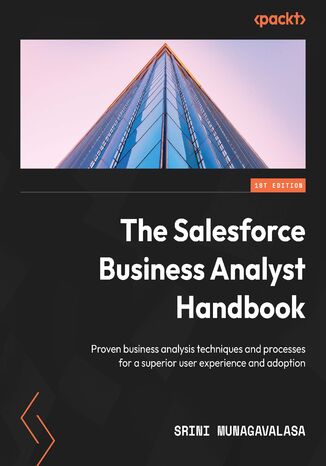
Srini Munagavalasa
Salesforce business analysis skills are in high demand, and there are scant resources to satisfy this demand. This practical guide for business analysts contains all the tools, techniques, and processes needed to create business value and improve user adoption.The Salesforce Business Analyst Handbook begins with the most crucial element of any business analysis activity: identifying business requirements. You’ll learn how to use tacit business analysis and Salesforce system analysis skills to rank and stack all requirements as well as get buy-in from stakeholders. Once you understand the requirements, you’ll work on transforming them into working software via prototyping, mockups, and wireframing. But what good is a product if the customer cannot use it? To help you achieve that, this book will discuss various testing strategies and show you how to tailor testing scenarios that align with business requirements documents. Toward the end, you’ll find out how to create easy-to-use training material for your customers and focus on post-production support – one of the most critical phases. Your customers will stay with you if you support them when they need it!By the end of this Salesforce book, you’ll be able to successfully navigate every phase of a project and confidently apply your new knowledge in your own Salesforce implementations.
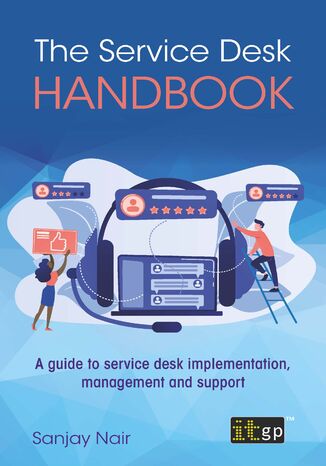
The Service Desk Handbook. A guide to service desk implementation, management and support
IT Governance Publishing, Sanjay Nair
This book provides practical insights into service desk management, focusing on building and optimizing a service desk to meet organizational needs. It starts with an understanding of the service desk's role, mission, and vision, laying the foundation for effective operations. It covers strategic planning for a well-structured service desk, focusing on staffing, SLAs, and using knowledge bases and self-service portals.The book discusses essential tools and technologies like telephony systems and ITSM tools, and how to configure them for efficiency. It emphasizes developing high-performance teams focused on respect, integrity, and teamwork, highlighting the importance of clear documentation, such as standard operating procedures and incident management, to ensure consistency in service delivery.Performance measurement is emphasized with strategies for tracking success using CSFs, KPIs, and customer satisfaction metrics. It explores both qualitative and quantitative evaluations to improve service desk performance.Finally, it examines emerging trends such as AI and chatbots, and their integration into service desk operations. The last chapters offer professional tips, techniques for root cause analysis, and provide a roadmap to optimize service desk operations for future success.
Patrick Haggerty
From data ingestion and storage, through data processing and data analytics, to application hosting and even machine learning, whatever your IT infrastructural need, there's a good chance that Google Cloud has a service that can help. But instant, self-serve access to a virtually limitless pool of IT resources has its drawbacks. More and more organizations are running into cost overruns, security problems, and simple why is this not working? headaches.This book has been written by one of Google’s top trainers as a tutorial on how to create your infrastructural foundation in Google Cloud the right way. By following Google’s ten-step checklist and Google’s security blueprint, you will learn how to set up your initial identity provider and create an organization. Further on, you will configure your users and groups, enable administrative access, and set up billing. Next, you will create a resource hierarchy, configure and control access, and enable a cloud network. Later chapters will guide you through configuring monitoring and logging, adding additional security measures, and enabling a support plan with Google.By the end of this book, you will have an understanding of what it takes to leverage Terraform for properly building a Google Cloud foundational layer that engenders security, flexibility, and extensibility from the ground up.
The Ultimate Zoom Cookbook. Over 100 recipes to enhance and engage communication with Zoom
Patrick Kelley
The last few years have completely changed the way we collaborate and communicate. Whether it’s internally with coworkers at a large enterprise or externally with prospective clients and customers, Zoom has created a new way to interact with people in real-time as well as asynchronously.This cookbook delves into all aspects of Zoom, moving beyond just meetings. You’ll get started by exploring key areas such as audio, video, chat, webinars, advanced reporting, and analytics. Next, you’ll progress from discovering simple Zoom video and audio calls to understanding features such as whiteboards, hardware integration, and phone capabilities. Gradually, you'll discover advanced techniques for effective content presentation, while configuring users and features from the admin portal. The last set of chapters cover advanced features on security and privacy as well as how to make the most of AI Companion to reach out to your audience with better content, clarity, and expertise.By the end of this Zoom book, you’ll be well-versed with the entire Zoom app and all the modalities available.
Bhaskar Chaudhary
Tkinter is the built-in GUI package that comes with standard Python distributions. It is a cross-platform package, which means you build once and deploy everywhere. It is simple to use and intuitive in nature, making it suitable for programmers and non-programmers alike. This book will help you master the art of GUI programming. It delivers the bigger picture of GUI programming by building real-world, productive, and fun applications such as a text editor, drum machine, game of chess, media player, drawing application, chat application, screen saver, port scanner, and many more. In every project, you will build on the skills acquired in the previous project and gain more expertise. You will learn to write multithreaded programs, network programs, database driven programs and more. You will also get to know the modern best practices involved in writing GUI apps. With its rich source of sample code, you can build upon the knowledge gained with this book and use it in your own projects in the discipline of your choice.
Denis Rothman
The transformer architecture has proved to be revolutionary in outperforming the classical RNN and CNN models in use today. With an apply-as-you-learn approach, Transformers for Natural Language Processing investigates in vast detail the deep learning for machine translations, speech-to-text, text-to-speech, language modeling, question answering, and many more NLP domains with transformers.The book takes you through NLP with Python and examines various eminent models and datasets within the transformer architecture created by pioneers such as Google, Facebook, Microsoft, OpenAI, and Hugging Face.The book trains you in three stages. The first stage introduces you to transformer architectures, starting with the original transformer, before moving on to RoBERTa, BERT, and DistilBERT models. You will discover training methods for smaller transformers that can outperform GPT-3 in some cases. In the second stage, you will apply transformers for Natural Language Understanding (NLU) and Natural Language Generation (NLG). Finally, the third stage will help you grasp advanced language understanding techniques such as optimizing social network datasets and fake news identification.By the end of this NLP book, you will understand transformers from a cognitive science perspective and be proficient in applying pretrained transformer models by tech giants to various datasets.
Troubleshooting System Center Configuration Manager
Peter Egerton, Gerry Hampson
Microsoft System Center Configuration Manager is the most popular enterprise client management solution in the world with some of the best features available. Troubleshooting this product, however, is not always as simple as you might want, not least getting to know the hundreds of log files and understanding how the various components work.The book starts with discussing the most commonly used tools for troubleshooting the variety of problems that can be seen in Configuration Manager. It then moves to providing a high level view of the available log files, their locations, what they relate to and what they typically contain. Next, we will look at how we can fully utilize and extend all the available information from the console monitoring pane through to the status messages and down into error logging with some further reaches into WMI, SQL, registry and the file structure. You will then learn what the common error codes mean, how to make sense of the less common ones and what they actually mean with respect to Configuration Manager. Further to this, you will pick up widely acknowledged best practices both from a proactive stance when carrying out your daily administrative tasks and also from a reactive position when the green lights start to turn red right down to a complete failure situation. By the end of the book, you will be competent enough to identify and diagnose the root causes of System Center Configuration Manager administration issues and resolving them.
Tworzenie makr w VBA dla Excela 2010/2013. Ćwiczenia
Mirosław Lewandowski
Sprostaj zadaniom na wszystkich stopniach zaawansowania! Zautomatyzuj operacje pożerające Twój czas dzięki rejestratorowi makr Zapoznaj się z przystępnym opisem elementów języka VBA Dowiedz się, co zrobić, by uzyskać określone efekty działań Kolejne wersje Excela, najpopularniejszej aplikacji biurowej, są coraz dokładniejsze i wygodniejsze. Jego prawdziwa siła tkwi jednak w języku VBA. Ten język programowania, przeznaczony do samodzielnego ustalania i modyfikowania zadań dla Excela, przydaje się wszędzie tam, gdzie nie wystarczają podstawowe formuły i funkcje. Jednocześnie jest na tyle nieskomplikowany, że posługiwać się nim mogą nie tylko programiści. W książce Mirosława Lewandowskiego znajdziesz wskazówki na temat tego, jak stworzyć makra zwykłe i niezwykłe i jak używać ich w codziennej pracy. W krótkim czasie uczynisz z Excela sprawne centrum zarządzania Twoimi zadaniami. Dzięki tej publikacji dowiesz się, jak projektować makra i jak włączać do nich zaawansowane operacje czy polecenia. Nauczysz się tworzyć interaktywne formularze, zrozumiesz, co to są stałe i zmienne, a także poznasz możliwości pętli. Twoje makra staną się odporne na błędy, a opisane tu dodatki niejednokrotnie ułatwią Ci pracę. Moc konkretnych przykładów pozwoli Ci poznać VBA w akcji! Bezpieczeństwo i rejestrowanie makr Uruchamianie zapisanych projektów i szybkie sortowanie danych Interakcja ze skoroszytem, zmienne i stałe Deklarowanie typów i określanie zasięgów zmiennych Pętle i formularze Dialog z użytkownikiem i obsługa błędów Makro a funkcja Przykłady z życia wzięte Słowo o Windows API Praca z wieloma skoroszytami Wstążka w Office i okno edytora VBA Skróty klawiaturowe używane w Excelu i edytorze VBA VBA - wszystko w Twoich rękach!
Luca Mezzalira
Mikrousługi stały się odpowiedzią na rosnącą złożoność aplikacji internetowych. Do niedawna pojęcie mikrousług dotyczyło wyłącznie backendu, jednak idea ta zainspirowała projektantów do budowania na podobnych zasadach architektury frontendu. Dzięki temu interfejs użytkownika można podzielić na osobne funkcjonalności zarządzane w odrębny sposób przez różne zespoły programistów. Mikrofrontendy zapewniają elastyczność i skalowalność aplikacji ― a to zalety doceniane przez najważniejszych dostawców oprogramowania na rynku. Ta książka jest praktycznym przewodnikiem dla programistów aplikacji internetowych, architektów oprogramowania, menedżerów technicznych i inżynierów. Wyjaśniono w niej, w jaki sposób stosować architekturę mikrousług do frontendu aplikacji. Pokazano najważniejsze zalety mikrofrontendów, takie jak elastyczność, skalowalność i swoboda w dobieraniu bibliotek i platform programistycznych. Omówiono też takie zagadnienia jak wzorce projektowe dla mikrofrontendów, zasady przeprowadzania migracji z frontendu monolitycznego do mikrofrontendów, a także praktyczne aspekty wdrażania architektury mikrofrontendowej w organizacji. Ciekawą kwestią jest również prezentacja dobrych praktyk, na przykład sprawdzonych strategii automatyzacji i wdrażania mikrofrontendów w środowisku produkcyjnym. Najważniejsze zagadnienia: czym się charakteryzują architektury frontendowe jak stosować ideę mikrousług podczas tworzenia frontendu cztery filary tworzenia architektury mikrofrontendowej zasady i najlepsze praktyki ustalania strategii automatyzacji wzorce integracji architektury mikrofrontendowej Mikrofrontendy: nowy wymiar niezawodności frontendu!
Jason Rivera
Współczesne firmy, coraz bardziej zależne od technologii i zmuszone do coraz szybszego tempa działania, znacząco zmieniają sposoby tworzenia własnych rozwiązań biznesowych. Wiele z nich rozwiązuje różne problemy za pomocą technologii low-code i no-code, jednak dostępnych jest znacznie więcej możliwości. W tym praktycznym przewodniku zaawansowani użytkownicy i programiści znajdą sposoby rozwiązywania codziennych problemów, poprzez tworzenie kompleksowych rozwiązań z wykorzystaniem platformy Microsoft Power Platform. Autor Jason Rivera, specjalista ds. architektury rozwiązań wykorzystujących platformy SharePoint i Microsoft 365, wyczerpująco opisuje, jak używać platformy Power Platform do tworzenia kompleksowych rozwiązań, spełniających taktyczne wymagania biznesowe. Po zapoznaniu się z kluczowymi komponentami platformy, m. in. z Power Apps, Power Automate i Power BI, będziesz umiał tworzyć aplikacje low-code i no-code, automatyzować powtarzalne procesy biznesowe i tworzyć interaktywne raporty na podstawie dostępnych danych. - Dowiesz się, jak przebiega współpraca między aplikacjami Microsoft Power Platform - Skorzystasz z AI w platformie Power Platform bez zaawansowanej znajomości technik uczenia maszynowego i AI - Utworzysz kompleksowe rozwiązania spełniające taktyczne potrzeby biznesowe, takie jak zbieranie danych, automatyzacja procesów i raportowanie - Zbudujesz rozwiązania oparte na AI, korzystając z technologii Power Virtual Agents i AI Builder "Jason dzieli się praktycznym doświadczeniem przedstawiając koncepcje w prosty sposób i pokazując wartość biznesową platformy. Książka zawiera instrukcje pozwalające na rozpoczęcie pracy w środowiskach testowych, a także opisuje, jak krok po kroku tworzyć działające rozwiązania. Dzięki temu czytelnik od razu zdobędzie praktyczne doświadczenie". -Liz McGlennen Konsultant ds. D365/Power Platform i dyrektor wykonawczy w firmie TechFluent
Jason Rivera
Współczesne firmy, coraz bardziej zależne od technologii i zmuszone do coraz szybszego tempa działania, znacząco zmieniają sposoby tworzenia własnych rozwiązań biznesowych. Wiele z nich rozwiązuje różne problemy za pomocą technologii low-code i no-code, jednak dostępnych jest znacznie więcej możliwości. W tym praktycznym przewodniku zaawansowani użytkownicy i programiści znajdą sposoby rozwiązywania codziennych problemów, poprzez tworzenie kompleksowych rozwiązań z wykorzystaniem platformy Microsoft Power Platform. Autor Jason Rivera, specjalista ds. architektury rozwiązań wykorzystujących platformy SharePoint i Microsoft 365, wyczerpująco opisuje, jak używać platformy Power Platform do tworzenia kompleksowych rozwiązań, spełniających taktyczne wymagania biznesowe. Po zapoznaniu się z kluczowymi komponentami platformy, m. in. z Power Apps, Power Automate i Power BI, będziesz umiał tworzyć aplikacje low-code i no-code, automatyzować powtarzalne procesy biznesowe i tworzyć interaktywne raporty na podstawie dostępnych danych. - Dowiesz się, jak przebiega współpraca między aplikacjami Microsoft Power Platform - Skorzystasz z AI w platformie Power Platform bez zaawansowanej znajomości technik uczenia maszynowego i AI - Utworzysz kompleksowe rozwiązania spełniające taktyczne potrzeby biznesowe, takie jak zbieranie danych, automatyzacja procesów i raportowanie - Zbudujesz rozwiązania oparte na AI, korzystając z technologii Power Virtual Agents i AI Builder "Jason dzieli się praktycznym doświadczeniem przedstawiając koncepcje w prosty sposób i pokazując wartość biznesową platformy. Książka zawiera instrukcje pozwalające na rozpoczęcie pracy w środowiskach testowych, a także opisuje, jak krok po kroku tworzyć działające rozwiązania. Dzięki temu czytelnik od razu zdobędzie praktyczne doświadczenie". -Liz McGlennen Konsultant ds. D365/Power Platform i dyrektor wykonawczy w firmie TechFluent
Dario Kondratiuk
Puppeteer is an open source web automation library created by Google to perform tasks such as end-to-end testing, performance monitoring, and task automation with ease. Using real-world use cases, this book will take you on a pragmatic journey, helping you to learn Puppeteer and implement best practices to take your automation code to the next level!Starting with an introduction to headless browsers, this book will take you through the foundations of browser automation, showing you how far you can get using Puppeteer to automate Google Chrome and Mozilla Firefox. You’ll then learn the basics of end-to-end testing and understand how to create reliable tests. You’ll also get to grips with finding elements using CSS selectors and XPath expressions. As you progress through the chapters, the focus shifts to more advanced browser automation topics such as executing JavaScript code inside the browser. You’ll learn various use cases of Puppeteer, such as mobile devices or network speed testing, gauging your site’s performance, and using Puppeteer as a web scraping tool.By the end of this UI testing book, you’ll have learned how to make the most of Puppeteer’s API and be able to apply it in your real-world projects.
Dario Kondratiuk
Puppeteer is an open source web automation library created by Google to perform tasks such as end-to-end testing, performance monitoring, and task automation with ease. Using real-world use cases, this book will take you on a pragmatic journey, helping you to learn Puppeteer and implement best practices to take your automation code to the next level!Starting with an introduction to headless browsers, this book will take you through the foundations of browser automation, showing you how far you can get using Puppeteer to automate Google Chrome and Mozilla Firefox. You’ll then learn the basics of end-to-end testing and understand how to create reliable tests. You’ll also get to grips with finding elements using CSS selectors and XPath expressions. As you progress through the chapters, the focus shifts to more advanced browser automation topics such as executing JavaScript code inside the browser. You’ll learn various use cases of Puppeteer, such as mobile devices or network speed testing, gauging your site’s performance, and using Puppeteer as a web scraping tool.By the end of this UI testing book, you’ll have learned how to make the most of Puppeteer’s API and be able to apply it in your real-world projects.
Arun Kumar Asokan
UiPath administration, support, maintenance, monitoring, and deployment activities are mandatory and more challenging than developing bots. This is a major issue for many firms that are looking to scale their RPA programs.This book will help in training new UiPath users/resources involved in administration and support tasks to address existing skill gaps in RPA market. The book starts with an introduction to the UiPath Platform. You'll learn how to set up UiPath Platform administration, support, monitoring, reporting, deployment, and maintenance. After that, you’ll cover advanced topics, such as, using the orchestrator API for support operations, security, and risk management. In addition to this, best practices for each of the topics will be covered.By the end of this book, you will have the knowledge you need to work on the support and monitoring of UiPath programs of any size.
Chris Dickinson
Competition within the gaming industry has become significantly fiercer in recent years with the adoption of game development frameworks such as Unity3D. Through its massive feature-set and ease-of-use, Unity helps put some of the best processing and rendering technology in the hands of hobbyists and professionals alike. This has led to an enormous explosion of talent, which has made it critical to ensure our games stand out from the crowd through a high level of quality. A good user experience is essential to create a solid product that our users will enjoy for many years to come.Nothing turns gamers away from a game faster than a poor user-experience. Input latency, slow rendering, broken physics, stutters, freezes, and crashes are among a gamer's worst nightmares and it's up to us as game developers to ensure this never happens. High performance does not need to be limited to games with the biggest teams and budgets.Initially, you will explore the major features of the Unity3D Engine from top to bottom, investigating a multitude of ways we can improve application performance starting with the detection and analysis of bottlenecks. You'll then gain an understanding of possible solutions and how to implement them. You will then learn everything you need to know about where performance bottlenecks can be found, why they happen, and how to work around them.This book gathers a massive wealth of knowledge together in one place, saving many hours of research and can be used as a quick reference to solve specific issues that arise during product development.
UX for Enterprise ChatGPT Solutions. A practical guide to designing enterprise-grade LLMs
Richard H. Miller, Jeff Johnson
Many enterprises grapple with new technology, often hopping on the bandwagon only to abandon it when challenges emerge. This book is your guide to seamlessly integrating ChatGPT into enterprise solutions with a UX-centered approach.UX for Enterprise ChatGPT Solutions empowers you to master effective use case design and adapt UX guidelines through an engaging learning experience. Discover how to prepare your content for success by tailoring interactions to match your audience’s voice, style, and tone using prompt-engineering and fine-tuning. For UX professionals, this book is the key to anchoring your expertise in this evolving field. Writers, researchers, product managers, and linguists will learn to make insightful design decisions. You’ll explore use cases like ChatGPT-powered chat and recommendation engines, while uncovering the AI magic behind the scenes. The book introduces a and feeding model, enabling you to leverage feedback and monitoring to iterate and refine any Large Language Model solution. Packed with hundreds of tips and tricks, this guide will help you build a continuous improvement cycle suited for AI solutions.By the end, you’ll know how to craft powerful, accurate, responsive, and brand-consistent generative AI experiences, revolutionizing your organization’s use of ChatGPT.
Mike Van Niekerk
Visual Basic for Applications (VBA) is a programming language developed by Microsoft to automate tasks in MS Office applications. This book will help you to focus on the essential aspects of your role by automating mundane tasks in Excel and other Office applications. With comprehensive coverage of VBA delivered in the form of practice problems and bite-sized recipes, this book will help you to hit the ground running.Unlike most books that assume prior programming experience, this book starts with the fundamentals and gradually progresses to solving bigger problems.You’ll start by becoming familiar with VBA so that you can start recording macros right away. With this foundation in place, you’ll advance to using the full capabilities of the language as you apply loops, functions, and custom dialog boxes to design your own automation programs. You'll also get to grips with embedded macros and other advanced tools to enhance productivity and explore topics relating to app performance and security. Throughout this VBA book, you’ll cover multiple practice projects in Excel, Word, and PowerPoint while exploring tips and best practices to hone your skills.By the end of this book, you’ll have developed the skills you need to use VBA to create your own programs that control MS Office applications.
Mike Van Niekerk
Visual Basic for Applications (VBA) is a programming language developed by Microsoft to automate tasks in MS Office applications. This book will help you to focus on the essential aspects of your role by automating mundane tasks in Excel and other Office applications. With comprehensive coverage of VBA delivered in the form of practice problems and bite-sized recipes, this book will help you to hit the ground running.Unlike most books that assume prior programming experience, this book starts with the fundamentals and gradually progresses to solving bigger problems.You’ll start by becoming familiar with VBA so that you can start recording macros right away. With this foundation in place, you’ll advance to using the full capabilities of the language as you apply loops, functions, and custom dialog boxes to design your own automation programs. You'll also get to grips with embedded macros and other advanced tools to enhance productivity and explore topics relating to app performance and security. Throughout this VBA book, you’ll cover multiple practice projects in Excel, Word, and PowerPoint while exploring tips and best practices to hone your skills.By the end of this book, you’ll have developed the skills you need to use VBA to create your own programs that control MS Office applications.