
Aplikacje biurowe
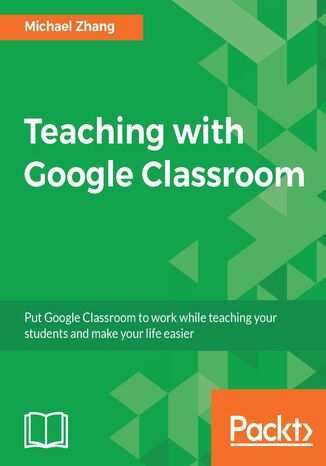
Teaching with Google Classroom. To provide a step-by-step guide to setup and use Google Classroom
Michael Zhang
Google Classroom helps teachers bring their work online. According to Google Trends, it’s already bigger than Moodle after barely a year in the wild. This book is a complete start-to-finish guide for teachers using Google Classroom for the first time. It explains what Google Classroom is, what it can do, how to set it up, and how to use it to enhance student learning while making your life as a teacher easier. It shows you how to place resources and activities online, gather assignments, and develop group and individual activities. It’s not just a manual, you’ll also discover inspiring, easy ways to put Google Classroom to work for you and your class.
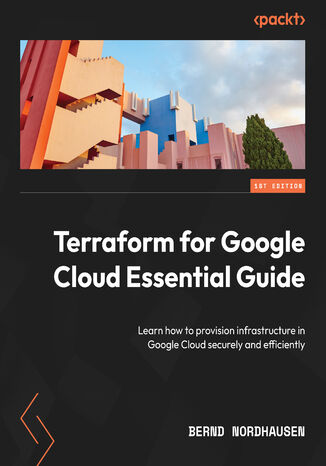
Bernd Nordhausen
Google Cloud has adopted Terraform as the standard Infrastructure as Code tool. This necessitates a solid understanding of Terraform for any cloud architect or engineer working on Google Cloud. Yet no specific resources are available that focus on how to use Terraform on Google Cloud.This is the first book that teaches Terraform specifically for Google Cloud. You will take a journey from the basic concepts through to deploying complex architectures using Terraform. Using extensive code examples, you will receive guidance on how to authenticate Terraform in Google Cloud. As you advance, you’ll get to grips with all the essential concepts of the Terraform language as applied to Google Cloud and deploy complete working architectures at the push of a button. Finally, you’ll also be able to improve your Terraform workflow using Google Cloud native and third-party tools.By the end of this Terraform book, you will have gained a thorough understanding of Terraform and how to use it on Google Cloud, and be able to develop effective Terraform code, build reusable code, and utilize public domain Terraform modules to deploy on Google Cloud faster and more securely.
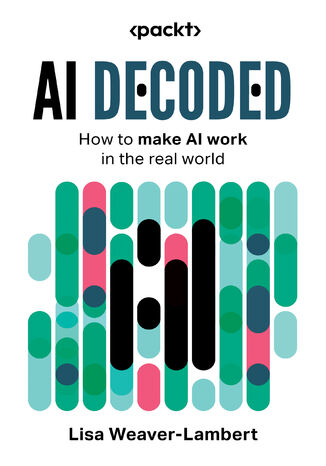
The AI Value Playbook. How to make AI work in the real world
Lisa Weaver-Lambert
Business leaders are challenged by the speed of AI innovation and how to navigate disruption and uncertainty. This book is a crucial resource for those who want to understand how to leverage AI to drive business value, drawn from the firsthand experience of those who have been implementing this technology successfully. The AI Value Playbook focuses on questions frequently posed by leaders and boards. How can businesses adapt to these emerging technologies? How can they start building and deploying AI as a strategic asset to drive efficiency? What risks or threats need to be considered? How quickly can value be created? This book is a response to those demands. In a series of in-depth and wide-ranging conversations with practitioners, from CEOs leading new generative AI-based companies to Data Scientists and CFOs working in more traditional companies. Our experts share their hard-earned wisdom, talking candidly about their successes and failures, and what excites them about the future. These interviews offer unique insights for business leaders to apply to their own organizations. The book distils a value-driven playbook for how AI can be put to work today.
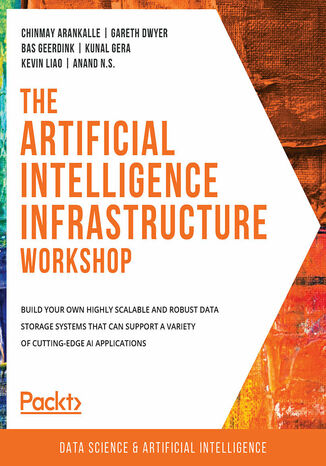
Chinmay Arankalle , Gareth Dwyer , Bas...
Social networking sites see an average of 350 million uploads daily - a quantity impossible for humans to scan and analyze. Only AI can do this job at the required speed, and to leverage an AI application at its full potential, you need an efficient and scalable data storage pipeline. The Artificial Intelligence Infrastructure Workshop will teach you how to build and manage one.The Artificial Intelligence Infrastructure Workshop begins taking you through some real-world applications of AI. You’ll explore the layers of a data lake and get to grips with security, scalability, and maintainability. With the help of hands-on exercises, you’ll learn how to define the requirements for AI applications in your organization. This AI book will show you how to select a database for your system and run common queries on databases such as MySQL, MongoDB, and Cassandra. You’ll also design your own AI trading system to get a feel of the pipeline-based architecture. As you learn to implement a deep Q-learning algorithm to play the CartPole game, you’ll gain hands-on experience with PyTorch. Finally, you’ll explore ways to run machine learning models in production as part of an AI application.By the end of the book, you’ll have learned how to build and deploy your own AI software at scale, using various tools, API frameworks, and serialization methods.
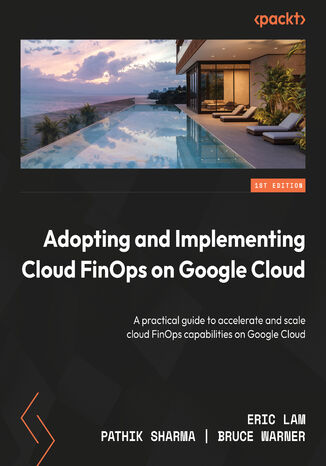
Eric Lam, Pathik Sharma, Bruce Warner
Google Cloud Platform offers significant scalability, but managing costs effectively is critical to realizing its value. The Cloud FinOps Playbook for Google Cloud is a practical guide to managing cloud spend and driving financial accountability on GCP.Written for cloud architects, FinOps professionals, and platform engineers, this book connects core FinOps principles to the GCP ecosystem. You'll start with the foundations of cloud economics and GCP's billing structure, then build skills in cost allocation, budget management, usage monitoring with BigQuery and Looker Studio, and savings identification using the Google Cloud FinOps Hub.The book also covers the dual role of AI in FinOps, that is, using AI for FinOps through agentic cost management, and applying FinOps for AI by establishing cost governance over AI workloads. You'll build automation for reporting and forecasting, implement quota guardrails, and drive financial accountability across engineering, finance, and operations teams.By the end of this book, you'll be equipped to build a mature, automated, and collaborative FinOps practice on Google Cloud.
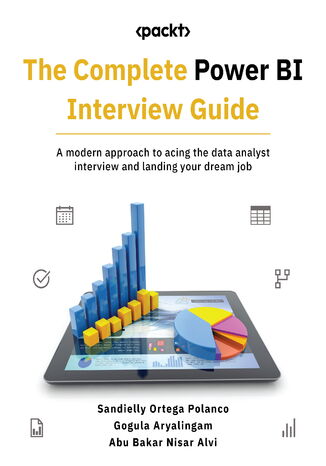
Sandielly Ortega Polanco, Gogula Aryalingam, Abu Bakar...
The Complete Power Interview Guide helps you excel in a Power BI interview, secure desired roles, and be ready with the knowledge and skills to ace your role from the first day. Whether you're beginning your career journey or transitioning into a data analytics role, this guide offers hands-on skills and interview questions you need to succeed as a BI or data analyst. This book also offers supplemental content for PowerBI certification exams like PL-300. The book will equip you with the knowledge and strategies to effectively navigate the competitive job market. From creating an outstanding online professional profile to optimizing your resume and building a compelling work portfolio, you'll learn how to establish a strong personal brand. The essentials of Power BI, including data preparation, data modeling, DAX programming, expert report development, and impactful storytelling, are covered in-depth through real-world examples and valuable tips.By the end of this book, you'll have the confidence to interview for Power BI roles, navigate technical assessments, answer behavioral questions, and tackle case studies. You’ll have gained applied knowledge and the competitive edge needed to succeed in the data analytics job market and stay ahead of industry trends for career advancement.
The DevOps 2.2 Toolkit. Self-Sufficient Docker Clusters
Viktor Farcic
Building on The DevOps 2.0 Toolkit and The DevOps 2.1 Toolkit: Docker Swarm, Viktor Farcic brings his latest exploration of the Docker technology as he records his journey to explore two new programs, self-adaptive and self-healing systems within Docker. The DevOps 2.2 Toolkit: Self-Sufficient Docker Clusters is the latest book in Viktor Farcic’s series that helps you build a full DevOps Toolkit. This book in the series looks at Docker, the tool designed to make it easier in the creation and running of applications using containers. In this latest entry, Viktor combines theory with a hands-on approach to guide you through the process of creating self-adaptive and self-healing systems. Within this book, Viktor will cover a wide-range of emerging topics, including what exactly self-adaptive and self-healing systems are, how to choose a solution for metrics storage and query, the creation of cluster-wide alerts and what a successful self-sufficient system blueprint looks like. Work with Viktor and dive into the creation of self-adaptive and self-healing systems within Docker.
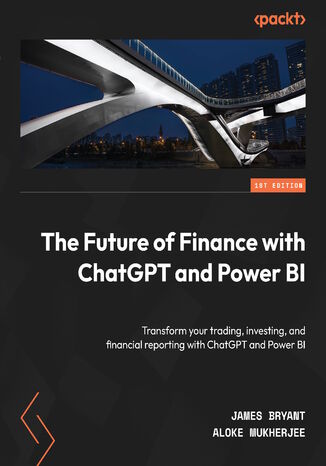
James Bryant, Aloke Mukherjee
In today's rapidly evolving economic landscape, the combination of finance, analytics, and artificial intelligence (AI) heralds a new era of decision-making. Finance and data analytics along with AI can no longer be seen as separate disciplines and professionals have to be comfortable in both in order to be successful. This book combines finance concepts, visualizations through Power BI and the application of AI and ChatGPT to provide a more holistic perspective.After a brief introduction to finance and Power BI, you will begin with Tesla's data-driven financial tactics before moving to John Deere's AgTech strides, all through the lens of AI. Salesforce's adaptation to the AI revolution offers profound insights, while Moderna's navigation through the biotech frontier during the pandemic showcases the agility of AI-focused companies. Learn from Silicon Valley Bank's demise, and prepare for CrowdStrike's defensive maneuvers against cyber threats. With each chapter, you'll gain mastery over new investing ideas, Power BI tools, and integrate ChatGPT into your workflows.This book is an indispensable ally for anyone looking to thrive in the financial sector. By the end of this book, you'll be able to transform your approach to investing and trading by blending AI-driven analysis, data visualization, and real-world applications.