
Aplikacje biurowe
Jak wykonać skomplikowane obliczenia w arkuszu kalkulacyjnym? Jak napisać i poprawnie sformatować urzędowe pismo w edytorze tekstu albo wykonać interesującą prezentację dla szefa? Tutaj znajdziecie odpowiedź.
Podręczniki w tym dziale pozwolą poznać tajniki najbardziej popularnych aplikacji biurowych jak pakiet MS Office czy Open Office, poczty elektronicznej jak Outlook, czy zagadnień języka programowania VBA oraz w pełni wykorzystać potencjał jaki te programy oferują. Nauczycie się jak aktywnie zarządzać budżetem w MS Project, tworzyć prezentację w PowerPoint slajd po slajdzie, oraz znajdziecie tu szereg wskazówek i porad jak usprawnić Waszą pracę z programami Excel czy Word.
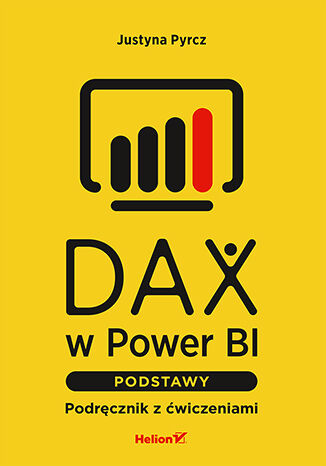
DAX w Power BI. Podstawy. Podręcznik z ćwiczeniami
Justyna Pyrcz
Poznaj język, za pomocą którego analitycy sprawiają, że dane są posłuszne, a raporty ciekawsze! Język DAX (ang. Data Analysis Expressions) został stworzony przez firmę Microsoft, by umożliwić wykonywanie efektywnych obliczeń na danych przechowywanych w wielu tabelach i przetwarzanych w Power BI, Excel Power Pivot czy SQL Server Analysis Services. Możliwości DAX-a są naprawdę ogromne, osoba, która go opanuje, zyska potężnego sprzymierzeńca w pracy z wielkimi zbiorami danych ukrytymi pod wyświetlanymi w raportach wykresami czy tabelami. Ten podręcznik wyjaśnia podstawy działania języka DAX i stosowania go w Power BI. Napisany przystępnym językiem, uczy obsługi prostych modeli danych i korzystania z szeregu podstawowych, choć nieoczywistych funkcji. Ich opanowanie pozwala zacząć samodzielnie tworzyć ciekawe analizy, a równocześnie oswoić się z DAX-em i modelem danych. Dzięki lekturze książki i wykonaniu zawartych w niej ćwiczeń dowiesz się między innymi: Czym jest model danych Do czego służą kolumny kalkulowane, miary i co to są konteksty wykonania Jak działają funkcje agregujące i iteracyjne Jak używać CALCULATE - najważniejszej funkcji języka DAX Do czego można użyć funkcji tablicowych Jak w prosty sposób tworzyć dynamiczne komunikaty
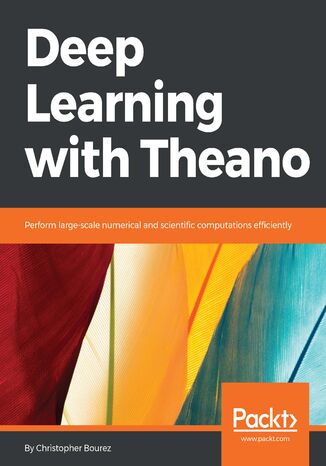
Deep Learning with Theano. Perform large-scale numerical and scientific computations efficiently
Christopher Bourez
This book offers a complete overview of Deep Learning with Theano, a Python-based library that makes optimizing numerical expressions and deep learning models easy on CPU or GPU.The book provides some practical code examples that help the beginner understand how easy it is to build complex neural networks, while more experimented data scientists will appreciate the reach of the book, addressing supervised and unsupervised learning, generative models, reinforcement learning in the fields of image recognition, natural language processing, or game strategy.The book also discusses image recognition tasks that range from simple digit recognition, image classification, object localization, image segmentation, to image captioning. Natural language processing examples include text generation, chatbots, machine translation, and question answering. The last example deals with generating random data that looks real and solving games such as in the Open-AI gym. At the end, this book sums up the best -performing nets for each task. While early research results were based on deep stacks of neural layers, in particular, convolutional layers, the book presents the principles that improved the efficiency of these architectures, in order to help the reader build new custom nets.
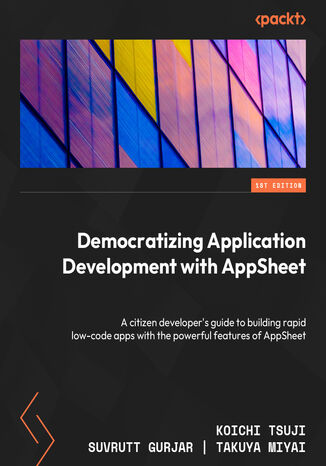
Koichi Tsuji, Suvrutt Gurjar, Takuya Miyai
Many citizen developers regularly use spreadsheets in their business and day-to-day jobs. With AppSheet, you can take your spreadsheets to the next level by enhancing their ease of use. The platform allows you to run your business efficiently and manage it in the field outside of an office or indoor environment. This book enables you to create your own simple or medium to complex hybrid apps for business or personal use.As a beginner to AppSheet, this book will show you how the AppSheet Editor works and how it is used to configure, test, and deploy an app and share it with others as users or co-authors. You’ll learn about widely used features such as how to use data sources, create app views and actions, construct expressions with AppSheet functions, and make your app secure through security and UX options. Next, you’ll create email/attachment templates and develop reports/documents based on templates, store in the cloud, and send files through emails. You’ll also understand how to integrate third-party services and monitor various usage statistics of your app. As you progress, you’ll explore various features with the help of sample apps that you create using the book.By the end of this book, you’ll have learned how to make the most of AppSheet to build powerful and efficient applications.
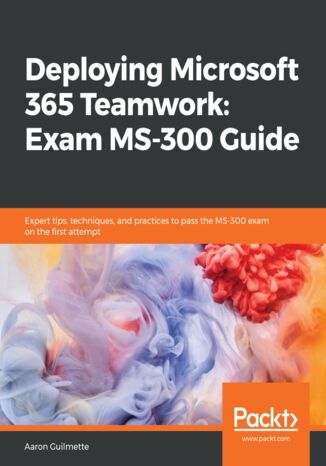
Aaron Guilmette
The Microsoft MS-300 exam is designed to test the knowledge and skills of administrators in deploying, configuring, and managing SharePoint Online, SharePoint Server, SharePoint Hybrid, OneDrive for Business, and Teams. This book offers up-to-date coverage of the important topics based on the MS-300 exam and features question answers and insider tips to help you prepare for certification.Written in a clear, succinct way, the book starts by helping you configure and manage SharePoint Online. You’ll then delve into OneDrive for Business, right from managing users and groups, through to monitoring sharing and security. Further chapters will guide you through working with Teams, with an emphasis on managing identity authentication, resolving issues with the service, and even observing usage patterns. Later, you’ll get up to speed with workload integrations, covering the Yammer business communications platform, before moving on to understand how to integrate Microsoft Stream with SharePoint, Teams, and Yammer. Finally, you’ll learn to develop data governance and user adoption strategies.By the end of this book, you'll be well-versed with SharePoint Online and have learned the essential techniques and concepts you need to know in order to pass the MS-300 certification exam.
Aaron Guilmette
The Microsoft MS-300 exam is designed to test the knowledge and skills of administrators in deploying, configuring, and managing SharePoint Online, SharePoint Server, SharePoint Hybrid, OneDrive for Business, and Teams. This book offers up-to-date coverage of the important topics based on the MS-300 exam and features question answers and insider tips to help you prepare for certification.Written in a clear, succinct way, the book starts by helping you configure and manage SharePoint Online. You’ll then delve into OneDrive for Business, right from managing users and groups, through to monitoring sharing and security. Further chapters will guide you through working with Teams, with an emphasis on managing identity authentication, resolving issues with the service, and even observing usage patterns. Later, you’ll get up to speed with workload integrations, covering the Yammer business communications platform, before moving on to understand how to integrate Microsoft Stream with SharePoint, Teams, and Yammer. Finally, you’ll learn to develop data governance and user adoption strategies.By the end of this book, you'll be well-versed with SharePoint Online and have learned the essential techniques and concepts you need to know in order to pass the MS-300 certification exam.
Subhajit Chatterjee, Swapneel Deshpande, Henry Been, Maik...
The AZ-400 Designing and Implementing Microsoft DevOps Solutions certification helps DevOps engineers and administrators get to grips with practices such as continuous integration and continuous delivery (CI/CD), containerization, and zero downtime deployments using Azure DevOps Services.This new edition is updated with advanced topics such as site reliability engineering (SRE), continuous improvement, and planning your cloud transformation journey. The book begins with the basics of CI/CD and automated deployments, and then moves ahead to show you how to apply configuration management and Infrastructure as Code (IaC) along with managing databases in DevOps scenarios. As you make progress, you’ll explore fitting security and compliance with DevOps and find out how to instrument applications and gather metrics to understand application usage and user behavior. This book will also help you implement a container build strategy and manage Azure Kubernetes Services. Lastly, you’ll discover quick tips and tricks to confidently apply effective DevOps practices and learn to create your own Azure DevOps organization.By the end of this DevOps book, you'll have gained the knowledge needed to ensure seamless application deployments and business continuity.
Paul Ivey, Alex Ivanov
With the prevalence of cloud technologies and DevOps ways of working, the industry demands developers who can build cloud solutions and monitor them throughout their life cycle. Becoming a Microsoft-certified Azure developer can differentiate developers from the competition, but with such a plethora of information available, it can be difficult to structure learning in an effective way to obtain certification.Through easy-to-understand explanations and exercises, this book will provide a more palatable learning experience than what you may expect from an exam preparation book. You’ll start off with a recap of some important cloud concepts, such as IaaS, PaaS, and SaaS. From there, you’ll learn about each relevant solution area, with use cases. The chapters also cover different implementation methodologies, both manual and programmatic – ranging from compute resources such as App Service and serverless applications to storage, database, security, monitoring solutions, and connecting to third-party services.By the end of this book, you'll have learned everything you need to pass the AZ-204 certification exam and have a handy, on-the-job reference guide.
Sten E Vesterli
With ADF, Oracle gives you the chance to use the powerful tool used by Oracle's own developers. Modern enterprise applications must be user-friendly, visually attractive, and fast performing. Oracle Fusion Applications are just that; but to get the desired output you need proven methods to use this powerful and flexible tool to achieve success in developing your enterprise applications.Developing Web Applications with Oracle ADF Essentials explains all you need to know in order to build good-looking, user-friendly applications on a completely free technology stack. It explains the highly productive, declarative development approach that will literally have your application running within a few hours, as well as how to use Java to add business logic.Developing Web Applications with Oracle ADF Essentials tells you how to develop and deploy web application applications based on the highly productive and free Oracle ADF Essentials framework. You will first learn how to build business services on top of database tables, and then how to easily build a web application using these services. You will see how to visually design the flow through your application with ADF task flows, and how to use Java programming to implement business logic. Using this book, you can start building and deploying advanced web applications on a robust, free platform quickly.Towards the end, you will be ready to build real-world ADF Essentials applications and will be able to consider yourself an ADF Essentials journeyman.
Priyanka Dive, Nagraj Gornalli
Salesforce is one of the top CRM tools used these days, and with its immense functionalities and features, it eases the functioning of an enterprise in various areas of sales, marketing, and finance, among others. Deploying Salesforce applications is a tricky event, and it can get quite taxing for admins and consultants. This book addresses all the problems that you might encounter while trying to deploy your applications and shows you how to resort to DevOps to take these challenges head on.Beginning with an overview of the development and delivery process of a Salesforce app, DevOps for Salesforce covers various types of sandboxing and helps you understand when to choose which type. You will then see how different it is to deploy with Salesforce as compared to deploying with another app. You will learn how to leverage a migration tool and automate deployment using the latest and most popular tools in the ecosystem. This book explores topics such as version control and DevOps techniques such as Continuous Integration, Continuous Delivery, and testing. Finally, the book will conclude by showing you how to track bugs in your application changes using monitoring tools and how to quantify your productivity and ROI.By the end of the book, you will have acquired skills to create, test, and effectively deploy your applications by leveraging the features of DevOps.