
Aplikacje biurowe
Bhaskar Chaudhary
Tkinter is the built-in GUI package that comes with standard Python distributions. It is a cross-platform package, which means you build once and deploy everywhere. It is simple to use and intuitive in nature, making it suitable for programmers and non-programmers alike. This book will help you master the art of GUI programming. It delivers the bigger picture of GUI programming by building real-world, productive, and fun applications such as a text editor, drum machine, game of chess, media player, drawing application, chat application, screen saver, port scanner, and many more. In every project, you will build on the skills acquired in the previous project and gain more expertise. You will learn to write multithreaded programs, network programs, database driven programs and more. You will also get to know the modern best practices involved in writing GUI apps. With its rich source of sample code, you can build upon the knowledge gained with this book and use it in your own projects in the discipline of your choice.
Denis Rothman
The transformer architecture has proved to be revolutionary in outperforming the classical RNN and CNN models in use today. With an apply-as-you-learn approach, Transformers for Natural Language Processing investigates in vast detail the deep learning for machine translations, speech-to-text, text-to-speech, language modeling, question answering, and many more NLP domains with transformers.The book takes you through NLP with Python and examines various eminent models and datasets within the transformer architecture created by pioneers such as Google, Facebook, Microsoft, OpenAI, and Hugging Face.The book trains you in three stages. The first stage introduces you to transformer architectures, starting with the original transformer, before moving on to RoBERTa, BERT, and DistilBERT models. You will discover training methods for smaller transformers that can outperform GPT-3 in some cases. In the second stage, you will apply transformers for Natural Language Understanding (NLU) and Natural Language Generation (NLG). Finally, the third stage will help you grasp advanced language understanding techniques such as optimizing social network datasets and fake news identification.By the end of this NLP book, you will understand transformers from a cognitive science perspective and be proficient in applying pretrained transformer models by tech giants to various datasets.
Troubleshooting System Center Configuration Manager
Peter Egerton, Gerry Hampson
Microsoft System Center Configuration Manager is the most popular enterprise client management solution in the world with some of the best features available. Troubleshooting this product, however, is not always as simple as you might want, not least getting to know the hundreds of log files and understanding how the various components work.The book starts with discussing the most commonly used tools for troubleshooting the variety of problems that can be seen in Configuration Manager. It then moves to providing a high level view of the available log files, their locations, what they relate to and what they typically contain. Next, we will look at how we can fully utilize and extend all the available information from the console monitoring pane through to the status messages and down into error logging with some further reaches into WMI, SQL, registry and the file structure. You will then learn what the common error codes mean, how to make sense of the less common ones and what they actually mean with respect to Configuration Manager. Further to this, you will pick up widely acknowledged best practices both from a proactive stance when carrying out your daily administrative tasks and also from a reactive position when the green lights start to turn red right down to a complete failure situation. By the end of the book, you will be competent enough to identify and diagnose the root causes of System Center Configuration Manager administration issues and resolving them.

Tworzenie makr w VBA dla Excela 2010/2013. Ćwiczenia
Mirosław Lewandowski
Sprostaj zadaniom na wszystkich stopniach zaawansowania! Zautomatyzuj operacje pożerające Twój czas dzięki rejestratorowi makr Zapoznaj się z przystępnym opisem elementów języka VBA Dowiedz się, co zrobić, by uzyskać określone efekty działań Kolejne wersje Excela, najpopularniejszej aplikacji biurowej, są coraz dokładniejsze i wygodniejsze. Jego prawdziwa siła tkwi jednak w języku VBA. Ten język programowania, przeznaczony do samodzielnego ustalania i modyfikowania zadań dla Excela, przydaje się wszędzie tam, gdzie nie wystarczają podstawowe formuły i funkcje. Jednocześnie jest na tyle nieskomplikowany, że posługiwać się nim mogą nie tylko programiści. W książce Mirosława Lewandowskiego znajdziesz wskazówki na temat tego, jak stworzyć makra zwykłe i niezwykłe i jak używać ich w codziennej pracy. W krótkim czasie uczynisz z Excela sprawne centrum zarządzania Twoimi zadaniami. Dzięki tej publikacji dowiesz się, jak projektować makra i jak włączać do nich zaawansowane operacje czy polecenia. Nauczysz się tworzyć interaktywne formularze, zrozumiesz, co to są stałe i zmienne, a także poznasz możliwości pętli. Twoje makra staną się odporne na błędy, a opisane tu dodatki niejednokrotnie ułatwią Ci pracę. Moc konkretnych przykładów pozwoli Ci poznać VBA w akcji! Bezpieczeństwo i rejestrowanie makr Uruchamianie zapisanych projektów i szybkie sortowanie danych Interakcja ze skoroszytem, zmienne i stałe Deklarowanie typów i określanie zasięgów zmiennych Pętle i formularze Dialog z użytkownikiem i obsługa błędów Makro a funkcja Przykłady z życia wzięte Słowo o Windows API Praca z wieloma skoroszytami Wstążka w Office i okno edytora VBA Skróty klawiaturowe używane w Excelu i edytorze VBA VBA - wszystko w Twoich rękach!
Luca Mezzalira
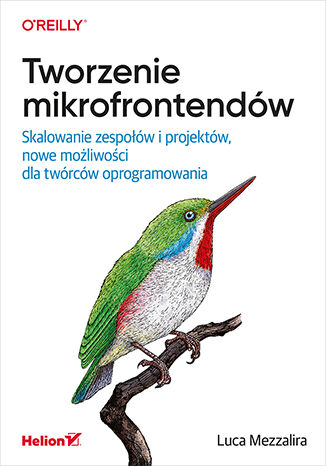
Mikrousługi stały się odpowiedzią na rosnącą złożoność aplikacji internetowych. Do niedawna pojęcie mikrousług dotyczyło wyłącznie backendu, jednak idea ta zainspirowała projektantów do budowania na podobnych zasadach architektury frontendu. Dzięki temu interfejs użytkownika można podzielić na osobne funkcjonalności zarządzane w odrębny sposób przez różne zespoły programistów. Mikrofrontendy zapewniają elastyczność i skalowalność aplikacji ― a to zalety doceniane przez najważniejszych dostawców oprogramowania na rynku. Ta książka jest praktycznym przewodnikiem dla programistów aplikacji internetowych, architektów oprogramowania, menedżerów technicznych i inżynierów. Wyjaśniono w niej, w jaki sposób stosować architekturę mikrousług do frontendu aplikacji. Pokazano najważniejsze zalety mikrofrontendów, takie jak elastyczność, skalowalność i swoboda w dobieraniu bibliotek i platform programistycznych. Omówiono też takie zagadnienia jak wzorce projektowe dla mikrofrontendów, zasady przeprowadzania migracji z frontendu monolitycznego do mikrofrontendów, a także praktyczne aspekty wdrażania architektury mikrofrontendowej w organizacji. Ciekawą kwestią jest również prezentacja dobrych praktyk, na przykład sprawdzonych strategii automatyzacji i wdrażania mikrofrontendów w środowisku produkcyjnym. Najważniejsze zagadnienia: czym się charakteryzują architektury frontendowe jak stosować ideę mikrousług podczas tworzenia frontendu cztery filary tworzenia architektury mikrofrontendowej zasady i najlepsze praktyki ustalania strategii automatyzacji wzorce integracji architektury mikrofrontendowej Mikrofrontendy: nowy wymiar niezawodności frontendu!

Jason Rivera
Współczesne firmy, coraz bardziej zależne od technologii i zmuszone do coraz szybszego tempa działania, znacząco zmieniają sposoby tworzenia własnych rozwiązań biznesowych. Wiele z nich rozwiązuje różne problemy za pomocą technologii low-code i no-code, jednak dostępnych jest znacznie więcej możliwości. W tym praktycznym przewodniku zaawansowani użytkownicy i programiści znajdą sposoby rozwiązywania codziennych problemów, poprzez tworzenie kompleksowych rozwiązań z wykorzystaniem platformy Microsoft Power Platform. Autor Jason Rivera, specjalista ds. architektury rozwiązań wykorzystujących platformy SharePoint i Microsoft 365, wyczerpująco opisuje, jak używać platformy Power Platform do tworzenia kompleksowych rozwiązań, spełniających taktyczne wymagania biznesowe. Po zapoznaniu się z kluczowymi komponentami platformy, m. in. z Power Apps, Power Automate i Power BI, będziesz umiał tworzyć aplikacje low-code i no-code, automatyzować powtarzalne procesy biznesowe i tworzyć interaktywne raporty na podstawie dostępnych danych. - Dowiesz się, jak przebiega współpraca między aplikacjami Microsoft Power Platform - Skorzystasz z AI w platformie Power Platform bez zaawansowanej znajomości technik uczenia maszynowego i AI - Utworzysz kompleksowe rozwiązania spełniające taktyczne potrzeby biznesowe, takie jak zbieranie danych, automatyzacja procesów i raportowanie - Zbudujesz rozwiązania oparte na AI, korzystając z technologii Power Virtual Agents i AI Builder "Jason dzieli się praktycznym doświadczeniem przedstawiając koncepcje w prosty sposób i pokazując wartość biznesową platformy. Książka zawiera instrukcje pozwalające na rozpoczęcie pracy w środowiskach testowych, a także opisuje, jak krok po kroku tworzyć działające rozwiązania. Dzięki temu czytelnik od razu zdobędzie praktyczne doświadczenie". -Liz McGlennen Konsultant ds. D365/Power Platform i dyrektor wykonawczy w firmie TechFluent
Jason Rivera
Współczesne firmy, coraz bardziej zależne od technologii i zmuszone do coraz szybszego tempa działania, znacząco zmieniają sposoby tworzenia własnych rozwiązań biznesowych. Wiele z nich rozwiązuje różne problemy za pomocą technologii low-code i no-code, jednak dostępnych jest znacznie więcej możliwości. W tym praktycznym przewodniku zaawansowani użytkownicy i programiści znajdą sposoby rozwiązywania codziennych problemów, poprzez tworzenie kompleksowych rozwiązań z wykorzystaniem platformy Microsoft Power Platform. Autor Jason Rivera, specjalista ds. architektury rozwiązań wykorzystujących platformy SharePoint i Microsoft 365, wyczerpująco opisuje, jak używać platformy Power Platform do tworzenia kompleksowych rozwiązań, spełniających taktyczne wymagania biznesowe. Po zapoznaniu się z kluczowymi komponentami platformy, m. in. z Power Apps, Power Automate i Power BI, będziesz umiał tworzyć aplikacje low-code i no-code, automatyzować powtarzalne procesy biznesowe i tworzyć interaktywne raporty na podstawie dostępnych danych. - Dowiesz się, jak przebiega współpraca między aplikacjami Microsoft Power Platform - Skorzystasz z AI w platformie Power Platform bez zaawansowanej znajomości technik uczenia maszynowego i AI - Utworzysz kompleksowe rozwiązania spełniające taktyczne potrzeby biznesowe, takie jak zbieranie danych, automatyzacja procesów i raportowanie - Zbudujesz rozwiązania oparte na AI, korzystając z technologii Power Virtual Agents i AI Builder "Jason dzieli się praktycznym doświadczeniem przedstawiając koncepcje w prosty sposób i pokazując wartość biznesową platformy. Książka zawiera instrukcje pozwalające na rozpoczęcie pracy w środowiskach testowych, a także opisuje, jak krok po kroku tworzyć działające rozwiązania. Dzięki temu czytelnik od razu zdobędzie praktyczne doświadczenie". -Liz McGlennen Konsultant ds. D365/Power Platform i dyrektor wykonawczy w firmie TechFluent
Dario Kondratiuk
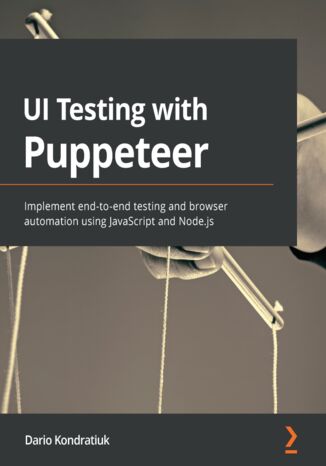
Puppeteer is an open source web automation library created by Google to perform tasks such as end-to-end testing, performance monitoring, and task automation with ease. Using real-world use cases, this book will take you on a pragmatic journey, helping you to learn Puppeteer and implement best practices to take your automation code to the next level!Starting with an introduction to headless browsers, this book will take you through the foundations of browser automation, showing you how far you can get using Puppeteer to automate Google Chrome and Mozilla Firefox. You’ll then learn the basics of end-to-end testing and understand how to create reliable tests. You’ll also get to grips with finding elements using CSS selectors and XPath expressions. As you progress through the chapters, the focus shifts to more advanced browser automation topics such as executing JavaScript code inside the browser. You’ll learn various use cases of Puppeteer, such as mobile devices or network speed testing, gauging your site’s performance, and using Puppeteer as a web scraping tool.By the end of this UI testing book, you’ll have learned how to make the most of Puppeteer’s API and be able to apply it in your real-world projects.
Dario Kondratiuk
Puppeteer is an open source web automation library created by Google to perform tasks such as end-to-end testing, performance monitoring, and task automation with ease. Using real-world use cases, this book will take you on a pragmatic journey, helping you to learn Puppeteer and implement best practices to take your automation code to the next level!Starting with an introduction to headless browsers, this book will take you through the foundations of browser automation, showing you how far you can get using Puppeteer to automate Google Chrome and Mozilla Firefox. You’ll then learn the basics of end-to-end testing and understand how to create reliable tests. You’ll also get to grips with finding elements using CSS selectors and XPath expressions. As you progress through the chapters, the focus shifts to more advanced browser automation topics such as executing JavaScript code inside the browser. You’ll learn various use cases of Puppeteer, such as mobile devices or network speed testing, gauging your site’s performance, and using Puppeteer as a web scraping tool.By the end of this UI testing book, you’ll have learned how to make the most of Puppeteer’s API and be able to apply it in your real-world projects.