
Hardware
Fedor G. Pikus
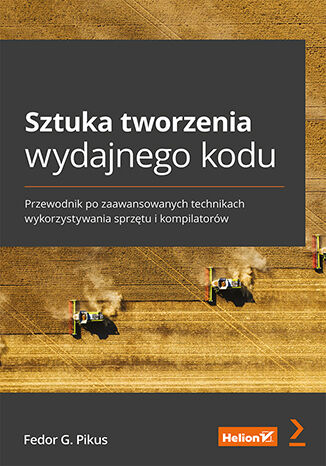
Jeszcze kilka lat temu, by zwiększyć szybkość działania programu, wystarczyło wymienić procesor. Dzisiejsze procesory nie są znacząco szybsze od poprzedników. Nowsze architektury zapewniają zaledwie niewielkie przyrosty wydajności istniejących już programów. Nie ma innego wyjścia: jeśli programista chce tworzyć efektywne oprogramowanie, musi wiedzieć, jak odpowiednio używać dostępnych zasobów obliczeniowych. Jest to trudna sztuka, wymagająca ciągłej gotowości do nauki. To książka przeznaczona dla doświadczonych programistów, którzy chcą sprawnie tworzyć efektywny kod. Omówiono w niej, jak korzystać z zasobów procesora i pamięci, unikać zbędnych obliczeń, mierzyć wydajność kodu i prawidłowo stosować współbieżność i wielowątkowość. Zaprezentowano również zagadnienia związane z optymalizacjami przeprowadzanymi przez kompilator, a także metody efektywniejszego korzystania z właściwości języka programowania (C++). Dokładnie wyjaśniono zasady projektowania oprogramowania pod kątem wydajności i aby ułatwić przyswajanie wiedzy, zamieszczono wiele przykładów, które będą przydatne w czasie samodzielnej nauki. Dzięki dogłębnemu zrozumieniu wiedzy ujętej w książce łatwiej będzie podejmować właściwe decyzje podczas projektowania nowego systemu lub modyfikowania już istniejącej architektury. Najciekawsze zagadnienia: korzystanie ze sprzętowych zasobów obliczeniowych uporządkowanie pamięci i należyte zorganizowanie danych wydajność operacji a współbieżny dostęp stosowanie technik programowania bez użycia blokady zwiększanie efektywności optymalizacji za pomocą kompilatora interfejsy API dla współbieżnych struktur danych i struktur o dużej wydajności Dobre decyzje projektowe to klucz do wydajności kodu!
Marcin Felczerek
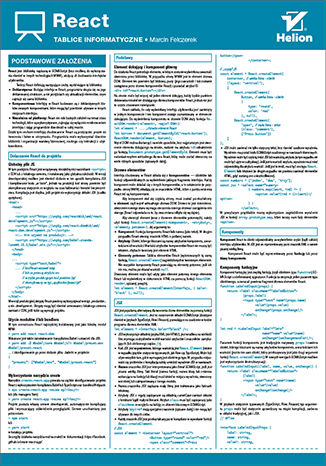
Zapomniałeś? Sięgnij po ściągę! React to zdobywająca coraz większą popularność biblioteka do budowania graficznych interfejsów użytkownika serwisów internetowych. Dzięki deklaratywności, modułowości i niezależności od jakiejkolwiek platformy stała się jedną z wiodących technologii w branży, a budowane za jej pomocą interfejsy są przejrzyste, elastyczne oraz łatwe do utworzenia i utrzymania. Tablice informatyczne. React to krótkie podsumowanie najważniejszych informacji na temat biblioteki. Niezależnie od tego, czy dopiero się jej uczysz, czy wykorzystujesz tę technologię już od pewnego czasu, pomogą Ci szybko znaleźć niezbędne wiadomości. Przejrzysty układ i skrótowa forma tablic sprawdzi się zarówno w codziennej pracy, jak i podczas nauki czy przygotowywania się do egzaminów. Podstawowe informacje Dołączanie Reacta do projektu Komponenty, stany i cykl życia Klucze, formularze, zdarzenia Wirtualny DOM, referencje, kontekst Architektura i biblioteki komponentów Tworzenie aplikacji mobilnych w React Native React? Z tablicami to nic strasznego!

Krzysztof Boruń
Autor opisuje przypadki konstruowanych w XX wieku sztucznych zwierząt. Pierwszy elektryczny pies Philidog został zaprezentowany na Międzynarodowej Wystawie w Paryżu w 1929 roku. Potrafił on "tropić" światło, czyli podążać za jego źródłem. To dość prosta umiejętność, jednak ostatnie opisane przez autora zwierzęta wykazują znacznie bardziej skomplikowane działania - przy ich budowie zastosowano techniki maszynowego modelowania zjawisk i procesów psychicznych.
Rick Barton
Data integration is a key component of an organization's technical strategy, yet historically the tools have been very expensive. Talend Open Studio is the world's leading open source data integration product and has played a huge part in making open source data integration a popular choice for businesses worldwide.This book is a welcome addition to the small but growing library of Talend Open Studio resources. From working with schemas to creating and validating test data, to scheduling your Talend code, you will get acquainted with the various Talend database handling techniques. Each recipe is designed to provide the key learning point in a short, simple and effective manner.This comprehensive guide provides practical exercises that cover all areas of the Talend development lifecycle including development, testing, debugging and deployment. The book delivers design patterns, hints, tips, and advice in a series of short and focused exercises that can be approached as a reference for more seasoned developers or as a series of useful learning tutorials for the beginner.The book covers the basics in terms of schema usage and mappings, along with dedicated sections that will allow you to get more from tMap, files, databases and XML.Geared towards the whole lifecycle, the Talend Open Studio Cookbook shows readers great ways to handle everyday tasks, and provides an insight into all areas of a development cycle including coding, testing, and debugging of code to provide start-to-finish coverage of the product.
Wojciech Kocjan, Piotr Beltowski
Tcl (Tool Command Language) is a very powerful and easy to learn dynamic programming language, suitable for a very wide range of uses. Tcl is regarded as one of the best-kept secrets in the software industry. This book gives you a hands-on experience on Tcl, helping you develop network-aware applications using this mature yet evolving language.This book shows you how to create network-aware applications with Tcl language. Packed with practical examples, the book not only takes you through the implementation of network protocols in Tcl, but also key aspects of Tcl programming.The book starts with the basic element of Tcl programming as we take a look at the syntax and fundamental commands of the language. To get us ready for network programming, we look at important Tcl features such as object-oriented programming, accessing files, packaging in TCL, event driven programming, and multithreaded applications. To create standalone single-file executable applications with Tcl we take a look at the Starpack technology, and ensure that we’ll be able to create robust applications with a thorough coverage of troubleshooting and debugging Tcl applications.The book is really about network programming, and it will not let you down with its deep coverage of these topics. Of course we look at protocols, but there are plenty of practical examples to keep things moving along. We start with the TCP and UDP protocols, and look at some other protocols to see examples of synchronizing time with other servers, querying user information and authenticating users over LDAP and performing DNS queries.The book explains Simple Network Management Protocol (SNMP), which is often used for monitoring and gathering information from various devices, such as routers, gateways, printers and many other types of equipment. We’ll also look at web programming in Tcl; processing the requests coming from the clients via the HTTP protocol and responding to these requests. You’ll be able to create a complete solution for creating a client-server application in Tcl.To round things off, you’ll see how to secure your networked applications, build public key infrastructure into your application and use Tcl’s safe interpreter feature to reduce risk of running code from unknown source.
Delbert A Wheeler
With Tcl/Tk, you can create full-featured cross-platform applications in a simple and easy-to-understand way without any expensive development package; the only tools required are a simple text editor and your imagination. This practical cookbook will help you to efficiently interact with editors, debuggers, and shell type interactive programs using Tcl/Tk 8. This cookbook will comprehensively guide you through practical implementation of Tcl/Tk 8.5 commands and tools.This book will take you through all the steps needed to become a productive programmer in Tcl/Tk 8. Right from guiding you through the basics to creating a stand-alone application, it provides complete explanation of all the steps along with handy tips and tricks.The book begins with an introduction to the Tcl shell, syntax, variables, and programming best practices in the language. It then explores procedures and the flow of events with control constructs followed by advanced error trapping and recovery. From Chapter 4, a detailed study of string expressions and handling enables you to handle various string functions and use lists to expand the string functionality. The book then discusses in-depth the Tcl Dictionary and how to utilize it to store and retrieve data. File operations and Tk GUI handling are covered extensively along with a developing a real-world address book application to practice the concepts learned.
Shubhangi Harsha, Sumit Kataria
The iPad is a great teaching tool. It is an amazing eReader for accessing textbooks and journals. It is also great for multimedia content like videos, audio, presentations, and 3D animations. Most importantly Apple's app ecosystem makes it very powerful. You can find apps for almost any teaching task in app store and use them instantly.You will start with simple tasks like creating presentations and visualizations. Soon you will be making interactive books and resources as well as teaching practical lessons such as music and art! Teaching with iPad How-to starts with the most basic task of planning your lessons. As you go through the book you will learn how to 'carry' your textbooks on Little Books, create your own resources and finally publish your courseware.Be it organizing your notes, creating charts and presentations, or just recording attendance, this book will help you do all these tasks very efficiently on your iPad. In this book, you will also learn to create and distribute timetables, create your own textbooks and make your classes interesting and full of information by using the iPad's 3D and subject-specific resources.You will learn to make your teaching job interesting and engaging for your students by using iPad as your teaching and organizing tool.
Manikandan Sambamurthy
This book helps you build a better understanding of test automation and aids in bridging the gap between testing and test automation.The book has been divided into three sections with the first section focusing on preparing you for testing and test automation fundamentals. By the end of this section, you’ll have an understanding of some common automation terms, definitions, and roles. The second section covers the practical implementation of test automation for mobile, web, API and performance. The third section will help you understand how test automation works with CI/CD, and explore the common issues and pitfalls when executing test automation.By the end of this book, you’ll have a better understanding of automation, addressing the common pain points and best practices around test automation.