
Hardware
Michael Badger
For system administrators, network engineers, and security analysts, it is essential to keep a track of network traffic.Zenoss Core is an enterprise-level systems and network monitoring solution that can be as complex as you need it to be. And while just about anyone can install it, turn it on, and monitor something, Zenoss Core has a complicated interface packed with features. The interface has been drastically improved over version 2, but it's still not the type of software you can use intuitively – in other words, a bit of guidance is in order.The role of this book is to serve as your Zenoss Core tour guide and save you hours, days, maybe weeks of time.This book will show you how to work with Zenoss and effectively adapt Zenoss for System and Network monitoring. Starting with the Zenoss basics, it requires no existing knowledge of systems management, and whether or not you can recite MIB trees and OIDs from memory is irrelevant. Advanced users will be able to identify ways in which they can customize the system to do more, while less advanced users will appreciate the ease of use Zenoss provides. The book contains step-by-step examples to demonstrate Zenoss Core's capabilities. The best approach to using this book is to sit down with Zenoss and apply the examples found in these pages to your system.The book covers the monitoring basics: adding devices, monitoring for availability and performance, processing events, and reviewing reports. It also dives into more advanced customizations, such as custom device reports, external event handling (for example, syslog server, zensendevent, and Windows Event Logs), custom monitoring templates using SNMP data sources, along with Nagios, and Cacti plugins. An example of a Nagios-style plugin is included and the book shows you where to get an example of a Cacti-compatible plugin for use as a command data source in monitoring templates. In Zenoss Core, ZenPacks are modules that add monitoring functionality. Using the Nagios plugin example, you will learn how to create, package, and distribute a ZenPack. You also learn how to explore Zenoss Core's data model using zendmd so that you can more effectively write event transformations and custom device reports.
Zephyr RTOS Cookbook. Build portable and scalable embedded systems through hands-on recipes
Dr. Roy Jamil, Dr. Ayoub Bourjilat
Adopting Zephyr RTOS can feel very different from working with bare-metal systems, traditional RTOSes, or embedded Linux. Instead of tightly coupled board-specific code, Zephyr follows a platform-oriented approach built around reusable components, standardized subsystems, and configuration-driven behavior. This shift can be unfamiliar at first, especially for developers moving to Zephyr for real-world products.Zephyr RTOS Cookbook is a recipe-led guide designed to help you make that transition with confidence. Rather than treating Zephyr as just a kernel, the book shows how to work with it as a complete platform. You’ll learn how to structure projects using West-managed, multi-repo workspaces, enable and customize system features with Kconfig, and describe hardware cleanly using DeviceTree to keep applications portable across boards.Each recipe focuses on a practical task you’ll encounter when building Zephyr-based systems, from integrating drivers and subsystems to reasoning about initialization order, device availability, and permissions at runtime. By the end of the book, you’ll be able to develop maintainable Zephyr applications, adapt them to different hardware configurations, and confidently scale your codebase across projects and teams.*Email sign-up and proof of purchase required
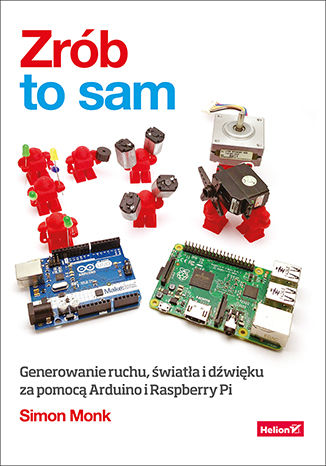
Zrób to sam. Generowanie ruchu, światła i dźwięku za pomocą Arduino i Raspberry Pi
Simon Monk
Elektronika jest dziedziną dla wymagających. Wydaje się bardzo skomplikowana, a przyswojenie sobie choćby samych jej podstaw wymaga nie lada wysiłku. Żyjąc w świecie zdominowanym przez elektronikę, warto jednak pokusić się o znajomość jej prawideł. Zwłaszcza że dzięki płytkom Arduino i Raspberry Pi rozpoczęcie nauki jest bardzo proste. Istnieje tylko jedno niebezpieczeństwo: te płytki niepostrzeżenie mogą rozbudzić niepohamowaną ciekawość i stać się prawdziwą pasją! Ta książka jest przewodnikiem po elektronice dla początkujących. Szczegółowe i praktyczne instrukcje przeprowadzą Cię krok po kroku przez wiele projektów, dzięki czemu mimochodem przyswoisz sobie podstawy elektroniki i równocześnie odkryjesz potencjał płytek Arduino i Raspberry Pi. Szybko nauczysz się sterować pracą diod LED, różnych silników, cewek, urządzeń zasilanych prądem przemiennym, grzejników, urządzeń chłodniczych, wyświetlaczy i generatorów dźwięku. Dowiesz się, jak możesz monitorować pracę tych urządzeń i kierować nimi poprzez internet. Dzięki tym popularnym platformom możesz nawet zaprojektować inteligentny dom z Twoim własnym systemem sterowania! W tej książce między innymi: Wiele wciągających projektów, od najprostszych po bardziej złożone Wyjaśnienia dotyczące zastosowań Arduino i Raspberry Pi oraz różnic między nimi Przystępnie podane podstawy elektroniki Wskazówki niezbędne przy samodzielnym tworzeniu systemów sterujących Inspiracje i pomysły związane z internetem rzeczy (IoT) Arduino i Raspberry Pi — steruj światłem, dźwiękiem, ruchem!