
Inne
KVM Virtualization Cookbook. Learn how to use KVM effectively in production
Konstantin Ivanov
Virtualization technologies such as KVM allow for better control over the available server resources, by deploying multiple virtual instances on the same physical host, or clusters of compute resources. With KVM it is possible to run various workloads in isolation with the hypervisor layer providing better tenant isolation and higher degree of security. This book will provide a deep dive into deploying KVM virtual machines using qemu and libvirt and will demonstrate practical examples on how to run, scale, monitor, migrate and backup such instances. You will also discover real production ready recipes on deploying KVM instances with OpenStack and how to programatically manage the life cycle of KVM virtual machines using Python. You will learn numerous tips and techniques which will help you deploy & plan the KVM infrastructure. Next, you will be introduced to the working of libvirt libraries and the iPython development environment. Finally, you will be able to tune your Linux kernel for high throughput and better performance. By the end of this book, you will gain all the knowledge needed to be an expert in working with the KVM virtualization infrastructure.
Micheal Lanham
Are you a mobile developer or web developer who wants to create immersive and cool Augmented Reality apps with the latest Google ARCore platform? If so, this book will help you jump right into developing with ARCore and will help you create a step by step AR app easily. This book will teach you how to implement the core features of ARCore starting from the fundamentals of 3D rendering to more advanced concepts such as lighting, shaders, Machine Learning, and others. We’ll begin with the basics of building a project on three platforms: web, Android, and Unity. Next, we’ll go through the ARCore concepts of motion tracking, environmental understanding, and light estimation. For each core concept, you’ll work on a practical project to use and extend the ARCore feature, from learning the basics of 3D rendering and lighting to exploring more advanced concepts. You’ll write custom shaders to light virtual objects in AR, then build a neural network to recognize the environment and explore even grander applications by using ARCore in mixed reality. At the end of the book, you’ll see how to implement motion tracking and environment learning, create animations and sounds, generate virtual characters, and simulate them on your screen.
Kaizhe Huang, Pranjal Jumde
Kubernetes is an open source orchestration platform for managing containerized applications. Despite widespread adoption of the technology, DevOps engineers might be unaware of the pitfalls of containerized environments. With this comprehensive book, you'll learn how to use the different security integrations available on the Kubernetes platform to safeguard your deployments in a variety of scenarios.Learn Kubernetes Security starts by taking you through the Kubernetes architecture and the networking model. You'll then learn about the Kubernetes threat model and get to grips with securing clusters. Throughout the book, you'll cover various security aspects such as authentication, authorization, image scanning, and resource monitoring. As you advance, you'll learn about securing cluster components (the kube-apiserver, CoreDNS, and kubelet) and pods (hardening image, security context, and PodSecurityPolicy). With the help of hands-on examples, you'll also learn how to use open source tools such as Anchore, Prometheus, OPA, and Falco to protect your deployments.By the end of this Kubernetes book, you'll have gained a solid understanding of container security and be able to protect your clusters from cyberattacks and mitigate cybersecurity threats.
Manoj Mahalingam Swaminathan
If you are a developer, tester, or a person in operations or Devops who wants to start practising CI, start using TeamCity or both, then this book is for you. Moreover, if you have thought about bringing CI into your team, if you are already using a CI tool and want to move to TeamCity, or if you are looking for ideal practises and techniques while implementing CI with TeamCity, this book will be useful.
Kingston Smiler. S, Shantanu Agrawal
CoreOS is an open source operating system developed upon the Linux kernel. The rise of CoreOS is directly related to the rise of Docker (a Linux container management system). It is a minimal operating system layer and takes a different approach to automating the deployment of containers. The major difference between CoreOS and other Linux distributions is that CoreOS was designed to deploy hundreds of servers. CoreOS immensely helps the users to create systems, which are easy to scale and manage, making life easier for all, be it developer, QA, or deployer.This book is all about setting up, deploying, and using CoreOS to manage clusters and clouds. It will help you understand what CoreOS is and its benefits as a cloud orchestration platform. First, we’ll show you how to set up a simple CoreOS instance with single node in the cluster and how to run a Docker container inside the CoreOS instance. Next, you’ll be introduced to Fleet and systemd, and will deploy and distribute Docker services across different nodes in cluster using Fleet. Later, you’ll be briefed about running services in a cluster with constraints, publishing the services already running on the cluster to new services, and making your services interact with each other. We conclude by teaching you about advanced container networking. By the end of the book, you will know the salient features of CoreOS and will be able to deploy, administrate, and secure a CoreOS environment.
Mikael Krief
In the implementation of DevOps processes, the choice of tools is crucial to the sustainability of projects and collaboration between developers and ops. This book presents the different patterns and tools for provisioning and configuring an infrastructure in the cloud, covering mostly open source tools with a large community contribution, such as Terraform, Ansible, and Packer, which are assets for automation.This DevOps book will show you how to containerize your applications with Docker and Kubernetes and walk you through the construction of DevOps pipelines in Jenkins as well as Azure pipelines before covering the tools and importance of testing. You'll find a complete chapter on DevOps practices and tooling for open source projects before getting to grips with security integration in DevOps using Inspec, Hashicorp Vault, and Azure Secure DevOps kit. You'll also learn about the reduction of downtime with blue-green deployment and feature flags techniques before finally covering common DevOps best practices for all your projects.By the end of this book, you'll have built a solid foundation in DevOps and developed the skills necessary to enhance a traditional software delivery process using modern software delivery tools and techniques.
Reza Toghraee
OpenDaylight is an open source, software-defined network controller based on standard protocols. It aims to accelerate the adoption of Software-Defined Networking (SDN) and create a solid foundation for Network Functions Virtualization (NFV).SDN is a vast subject; many network engineers find it difficult to get started with using and operating different SDN platforms. This book will give you a practical bridge from SDN theory to the practical, real-world use of SDN in datacenters and by cloud providers.The book will help you understand the features and use cases for SDN, NFV, and OpenDaylight.NFV uses virtualization concepts and techniques to create virtual classes for node functions. Used together, SDN and NFV can elevate the standards of your network architecture; generic hardware-saving costs and the advanced and abstracted software will give you the freedom to evolve your network in the future without having to invest more in costly equipment.By the end of this book, you will have learned how to design and deploy OpenDaylight networks and integrate them with physical network switches. You will also have mastered basic network programming over the SDN fabric.
Learning PowerCLI. A comprehensive guide on PowerCLI - Second Edition
Robert van den Nieuwendijk
VMware vSphere PowerCLI, a free extension to Microsoft Windows PowerShell, enables you to automate the management of a VMware vSphere or vCloud environment.This book will show you how to automate your tasks and make your job easier. Starting with an introduction to the basics of PowerCLI, the book will teach you how to manage your vSphere and vCloud infrastructure from the command line. To help you manage a vSphere host overall, you will learn how to manage vSphere ESXi hosts, host profiles, host services, host firewall, and deploy and upgrade ESXi hosts using Image Builder and Auto Deploy. The next chapter will not only teach you how to create datastore and datastore clusters, but you’ll also work with profile-driven and policy-based storage to manage your storage. To create a disaster recovery solution and retrieve information from vRealize Operations, you will learn how to use Site Recovery Manager and vRealize Operations respectively. Towards the end, you’ll see how to use the REST APIs from PowerShell to manage NSX and vRealize Automation and create patch baselines, scan hosts against the baselines for missing patches, and re-mediate hosts.By the end of the book, you will be capable of using the best tool to automate the management and configuration of VMware vSphere.
Prabath Siriwardena
If you are working with Java or Java EE projects and you want to take full advantage of Maven in designing, executing, and maintaining your build system for optimal developer productivity, then this book is ideal for you. You should be well versed with Maven and its basic functionality if you wish to get the most out of the book.
Ryan Mangan, Jim Moyle
Azure Virtual Desktop is a cloud desktop virtualization platform that securely delivers virtual desktops and remote apps. Mastering Azure Virtual Desktop will guide you through designing, implementing, configuring, and maintaining an Azure Virtual Desktop environment effectively. This book can also be used as an exam preparation guide to help you sit the Microsoft AZ-140 exam.You’ll start with an introduction to the essentials of Azure Virtual Desktop. Next, you’ll get to grips with planning an Azure Virtual Desktop architecture before learning how to implement an Azure Virtual Desktop environment. Moving ahead, you’ll learn how to manage and control access as well as configure security controls on your Azure Virtual Desktop environment. As you progress, you’ll understand how to manage user environments and configure MSIX app attach and other Azure Virtual Desktop features to enhance the user experience. You’ll also learn about the Azure Active Directory (AD) join and getting started feature. Finally, you’ll discover how to monitor and maintain an Azure Virtual Desktop environment to help you support your users and diagnose issues when they occur.By the end of this Microsoft Azure book, you’ll have covered all the essential topics you need to know to design and manage Azure Virtual Desktop and prepare for the AZ-140 exam.
Gigi Sayfan
The fourth edition of the bestseller Mastering Kubernetes includes the most recent tools and code to enable you to learn the latest features of Kubernetes 1.25. This book contains a thorough exploration of complex concepts and best practices to help you master the skills of designing and deploying large-scale distributed systems on Kubernetes clusters.You’ll learn how to run complex stateless and stateful microservices on Kubernetes, including advanced features such as horizontal pod autoscaling, rolling updates, resource quotas, and persistent storage backends. In addition, you’ll understand how to utilize serverless computing and service meshes.Further, two new chapters have been added. “Governing Kubernetes” covers the problem of policy management, how admission control addresses it, and how policy engines provide a powerful governance solution. “Running Kubernetes in Production” shows you what it takes to run Kubernetes at scale across multiple cloud providers, multiple geographical regions, and multiple clusters, and it also explains how to handle topics such as upgrades, capacity planning, dealing with cloud provider limits/quotas, and cost management.By the end of this Kubernetes book, you’ll have a strong understanding of, and hands-on experience with, a wide range of Kubernetes capabilities.
Mastering Kubernetes. Large scale container deployment and management
Gigi Sayfan
Kubernetes is an open source system to automate the deployment, scaling, and management of containerized applications. If you are running more than just a few containers or want automated management of your containers, you need Kubernetes.This book mainly focuses on the advanced management of Kubernetes clusters. It covers problems that arise when you start using container orchestration in production. We start by giving you an overview of the guiding principles in Kubernetes design and show you the best practises in the fields of security, high availability, and cluster federation. You will discover how to run complex stateful microservices on Kubernetes including advanced features as horizontal pod autoscaling, rolling updates, resource quotas, and persistent storage back ends. Using real-world use cases, we explain the options for network configuration and provides guidelines on how to set up, operate, and troubleshoot various Kubernetes networking plugins. Finally, we cover custom resource development and utilization in automation and maintenance workflows. By the end of this book, you’ll know everything you need to know to go from intermediate to advanced level.
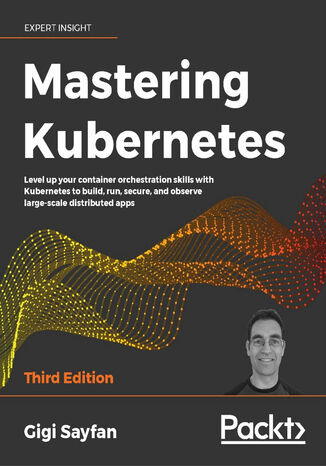
Gigi Sayfan
The third edition of Mastering Kubernetes is updated with the latest tools and code enabling you to learn Kubernetes 1.18’s latest features. This book primarily concentrates on diving deeply into complex concepts and Kubernetes best practices to help you master the skills of designing and deploying large clusters on various cloud platforms.The book trains you to run complex stateful microservices on Kubernetes including advanced features such as horizontal pod autoscaling, rolling updates, resource quotas, and persistent storage backend. With the two new chapters, you will gain expertise in serverless computing and utilizing service meshes.As you proceed through the chapters, you will explore different options for network configuration and learn to set up, operate, and troubleshoot Kubernetes networking plugins through real-world use cases. Furthermore, you will understand the mechanisms of custom resource development and its utilization in automation and maintenance workflows.By the end of this Kubernetes book, you will graduate from an intermediate to advanced Kubernetes professional.
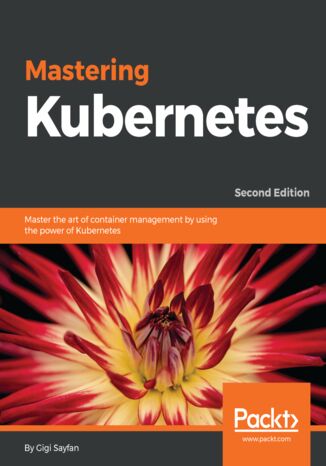
Gigi Sayfan
Kubernetes is an open source system that is used to automate the deployment, scaling, and management of containerized applications. If you are running more containers or want automated management of your containers, you need Kubernetes at your disposal. To put things into perspective, Mastering Kubernetes walks you through the advanced management of Kubernetes clusters.To start with, you will learn the fundamentals of both Kubernetes architecture and Kubernetes design in detail. You will discover how to run complex stateful microservices on Kubernetes including advanced features such as horizontal pod autoscaling, rolling updates, resource quotas, and persistent storage backend. Using real-world use cases, you will explore the options for network configuration, and understand how to set up, operate, and troubleshoot various Kubernetes networking plugins. In addition to this, you will get to grips with custom resource development and utilization in automation and maintenance workflows.To scale up your knowledge of Kubernetes, you will encounter some additional concepts based on the Kubernetes 1.10 release, such as Promethus, Role-based access control, API aggregation, and more. By the end of this book, you’ll know everything you need to graduate from intermediate to advanced level of understanding Kubernetes.
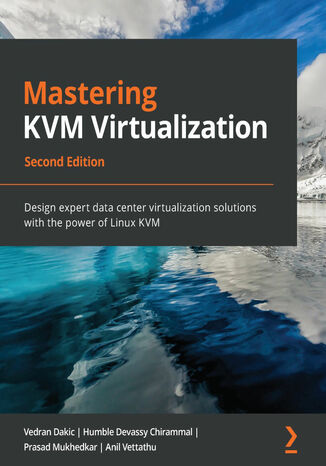
Vedran Dakic, Humble Devassy Chirammal, Prasad Mukhedkar,...
Kernel-based Virtual Machine (KVM) enables you to virtualize your data center by transforming your Linux operating system into a powerful hypervisor that allows you to manage multiple operating systems with minimal fuss. With this book, you'll gain insights into configuring, troubleshooting, and fixing bugs in KVM virtualization and related software.This second edition of Mastering KVM Virtualization is updated to cover the latest developments in the core KVM components - libvirt and QEMU. Starting with the basics of Linux virtualization, you'll explore VM lifecycle management and migration techniques. You’ll then learn how to use SPICE and VNC protocols while creating VMs and discover best practices for using snapshots. As you progress, you'll integrate third-party tools with Ansible for automation and orchestration. You’ll also learn to scale out and monitor your environments, and will cover oVirt, OpenStack, Eucalyptus, AWS, and ELK stack. Throughout the book, you’ll find out more about tools such as Cloud-Init and Cloudbase-Init. Finally, you'll be taken through the performance tuning and troubleshooting guidelines for KVM-based virtual machines and a hypervisor.By the end of this book, you'll be well-versed with KVM virtualization and the tools and technologies needed to build and manage diverse virtualization environments.
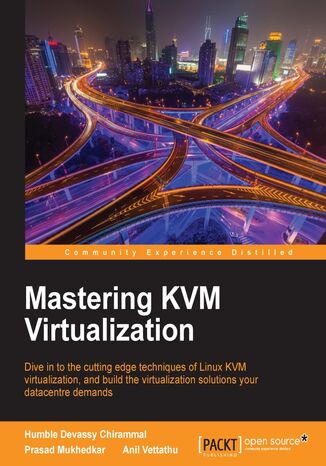
Humble Devassy Chirammal, Prasad Mukhedkar, Anil Vettathu
A robust datacenter is essential for any organization – but you don’t want to waste resources. With KVM you can virtualize your datacenter, transforming a Linux operating system into a powerful hypervisor that allows you to manage multiple OS with minimal fuss.This book doesn’t just show you how to virtualize with KVM – it shows you how to do it well. Written to make you an expert on KVM, you’ll learn to manage the three essential pillars of scalability, performance and security – as well as some useful integrations with cloud services such as OpenStack. From the fundamentals of setting up a standalone KVM virtualization platform, and the best tools to harness it effectively, including virt-manager, and kimchi-project, everything you do is built around making KVM work for you in the real-world, helping you to interact and customize it as you need it. With further guidance on performance optimization for Microsoft Windows and RHEL virtual machines, as well as proven strategies for backup and disaster recovery, you’ll can be confident that your virtualized data center is working for your organization – not hampering it. Finally, the book will empower you to unlock the full potential of cloud through KVM. Migrating your physical machines to the cloud can be challenging, but once you’ve mastered KVM, it’s a little easie.