
Kryptografia
Lorne Lantz, Daniel Cawrey
Blockchain, czyli łańcuch bloków, niefortunnie kojarzy się z kryptowalutami i przestępczością. Tymczasem potencjał tej technologii jest ogromny i zapewne wciąż nie znamy wszystkich możliwych jej zastosowań. Łańcuch bloków jest w istocie publicznym rejestrem, który może się stać ogólnoświatową, zdecentralizowaną księgą służącą do rejestrowania, inwentaryzacji i organizowania transferów wszelkiego rodzaju aktywów. Najwyższy więc czas, aby emocje i sensacyjno-kryminalne wyobrażenia dotyczące blockchaina zastąpić zrozumieniem tej technologii i aktualną wiedzą. Ta książka jest przeznaczona dla osób chcących zrozumieć działanie łańcucha bloków i rozważających praktyczne zastosowanie tej technologii. Skorzystają z niej i menedżerowie, i specjaliści IT. Omówiono tu ewolucję blockchaina i najróżniejsze sposoby jego użycia - przy czym to wyjaśnienie wychodzi daleko poza tematykę kryptowalut. Zaprezentowano też tematykę tworzenia inteligentnych kontraktów i zdecentralizowanych aplikacji z uwzględnieniem problemów wiążących się z tymi zastosowaniami łańcucha bloków. Nie zabrakło sprawdzonych informacji dotyczących naruszania prawa z wykorzystaniem łańcucha bloków, na przykład prania brudnych pieniędzy, hakowania giełd czy kradzieży. Dzięki temu przewodnikowi można łatwo zrozumieć, czym blockchain jest, a czym nie jest, do czego się nadaje i jakie modele biznesowe szczególnie mogą skorzystać na tej technologii. W książce między innymi: najważniejsze koncepcje dotyczące bitcoina i łańcucha bloków możliwości technologii blockchain skalowalność i rozwidlenia łańcucha bloków Ethereum i inne łańcuchy bloków możliwe sposoby zastosowania łańcucha bloków perspektywy technologii blockchain Łańcuch bloków: zostań mistrzem technologii jutra!
Blockchain Quick Reference. A guide to exploring decentralized blockchain application development
Brenn Hill, Samanyu Chopra, Paul Valencourt
Blockchain Quick Reference takes you through the electrifying world of blockchain technology and is designed for those who want to polish their existing knowledge regarding the various pillars of the blockchain ecosystem.This book is your go-to guide, teaching you how to apply principles and ideas for making your life and business better. You will cover the architecture, Initial Coin Offerings (ICOs), tokens, smart contracts, and terminologies of the blockchain technology, before studying how they work. All you need is a curious mind to get started with blockchain technology. Once you have grasped the basics, you will explore components of Ethereum, such as ether tokens, transactions, and smart contracts, in order to build simple Dapps. You will then move on to learning why Solidity is used specifically for Ethereum-based projects, followed by exploring different types of blockchain with easy-to-follow examples. All this will help you tackle challenges and problems. By the end of this book, you will not only have solved current and future problems relating to blockchain technology but will also be able to build efficient decentralized applications.
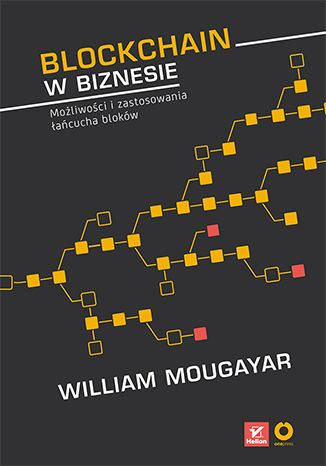
Blockchain w biznesie. Możliwości i zastosowania łańcucha bloków
William Mougayar, Vitalik Buterin
Internet całkowicie zmienił naszą cywilizację. Podobnym przełomem jest technologia blockchain (łańcuch bloków), która permanentnie rejestruje transakcje w taki sposób, że nie da się ich usunąć, lecz tylko można je sekwencyjnie aktualizować, tworząc w istocie niekończący się zapis historii. Ta pozornie prosta funkcjonalność ma ogromne implikacje, bo wymusza ewolucję sposobów zawierania transakcji, przechowywania danych i przenoszenia zasobów. Łańcuchy bloków są katalizatorami ogromnych zmian oddziałujących na sferę sprawowania władzy, zarządzanie własnością, styl życia, tradycyjne modele korporacyjne, społeczeństwo i instytucje globalne. Nie sposób dziś przewidzieć choćby części koncepcji i modeli biznesowych, które powstaną dzięki niej. Ta książka jest frapującym przewodnikiem, który jak żadna inna publikacja skłania do przemyśleń i oddania się pracy koncepcyjnej. Łańcuchy bloków pozwolą na bezkolizyjną wymianę wartości, jednak wymuszą nowe zdefiniowanie pojęć funkcji, relacji, władzy i zaufania. Dzięki tej książce zrozumiesz podstawy technologii blockchain, ale także dowiesz się, jak wiele nowych przestrzeni otworzy się do jej zastosowania. Przekonasz się, że już dziś należy postawić sobie kilka strategicznych pytań, aby za chwilę być gotowym na jeszcze ambitniejsze wyzwania, przekraczające dzisiejsze granice organizacyjne, regulacyjne i koncepcyjne. Z całą pewnością łańcuch bloków jest technologią bardziej skomplikowaną niż sieć WWW. Dzięki tej książce zrozumiesz jej znaczenie dla rozwoju cywilizacji. W tej książce między innymi: Wyjaśnienie koncepcji blockchain Łańcuch bloków jako nowa warstwa zaufania Możliwości łańcucha bloków i przeszkody w jego wdrażaniu Techniczne aspekty implementacji łańcucha bloków Decentralizacja sieci, przenikanie technologii i nowy kształt gospodarki Łańcuch bloków: otwórz się na całkowicie nowe koncepcje i modele biznesowe!
Nitin Gaur, Anthony O'Dowd, Petr Novotny, Luc...
Blockchain with Hyperledger Fabric - Second Edition is a refreshed and extended version of the successful book on practical Hyperledger Fabric blockchain development. This edition includes many new chapters, alongside comprehensive updates and additions to the existing ones. Entirely reworked for Hyperledger Fabric version 2, this edition will bring you right up to date with the latest in blockchain. Using a real-world Trade Finance and Logistics example, with working code available on GitHub, you’ll really understand both how and why Hyperledger Fabric can be used to maximum effect. This book is your comprehensive guide and reference to explore and build blockchain networks using Hyperledger Fabric version 2.This edition of the book begins by outlining the evolution of blockchain, including an overview of relevant blockchain technologies. Starting from first principles, you’ll learn how to design and operate a permissioned blockchain network based on Hyperledger Fabric version 2. You will learn how to configure the main architectural components of a permissioned blockchain network including Peers, Orderers, Certificate Authorities, Channels, and Policies. You’ll then learn how to design, develop, package, and deploy smart contracts, and how they are subsequently used by applications. This edition also contains chapters on DevOps, blockchain governance, and security, making this your go-to book for Hyperledger Fabric version 2.
Blockchain. Zaawansowane zastosowania łańcucha bloków. Wydanie II
Imran Bashir
Warto dobrze zrozumieć działanie łańcucha bloków. Ta nowatorska technologia intryguje badaczy, technologów i świat finansjery. Najlepiej jest znana z powiązań z bitcoinem i innymi kryptowalutami, jednak to rozwiązanie ma wielkie znaczenie również w finansach, administracji, multimediach i wielu innych branżach. Przejrzyste i kryptograficznie bezpieczne przechowywanie niemodyfikowalnego zapisu transakcji jest właściwością, która decyduje o wielkiej atrakcyjności łańcucha bloków. Bez wątpienia warto dobrze zaznajomić się z tą technologią i nauczyć się wykorzystywać ją w praktyce. Ta książka jest zaktualizowanym i uzupełnionym wydaniem świetnego przewodnika po świecie blockchaina; skorzysta z niej zarówno programista, jak i prezes konstruujący strategię swojej firmy. Znalazło się tu wyczerpujące omówienie technicznych podstaw łańcuchów bloków i systemów rozproszonych. Przedstawiono mechanizmy związane z kryptowalutami i pisaniem aplikacji wykonywanych w zdecentralizowanej maszynie wirtualnej w łańcuchu bloków Ethereum. Pokazano też inne rozwiązania z tego obszaru, w tym biznesowe platformy łańcuchów bloków rozwijanych w ramach projektu Hyperledger. Okazuje się, że technologia ta znakomicie uzupełnia internet rzeczy, a zwiększanie skalowalności łańcucha bloków daje nowe, fascynujące możliwości. W tej książce: podstawy przetwarzania rozproszonego, decentralizacja procesów i systemów wprowadzenie do kryptografii i sieci bitcoina techniczne zagadnienia związane z Ethereum i inteligentnymi kontraktami wprowadzenie do Web3 i do projektu Hyperledger informacje o zastosowaniu łańcucha bloków w różnych dziedzinach aktualne prognozy o przyszłości technologii łańcucha bloków Blockchain: w sieci węzłów rozproszonych nigdy nic nie zaginie!
Samuel Zhou
Enter the world of Decentralized Finance (DeFi) with Building Full Stack DeFi Applications. Understand how this blockchain-based financial technology, designed to manage crypto assets, runs independently without centralized financial institutions like banks and brokerages, eliminating the fees that banks and other financial companies charge for using their services. This book will show you how DeFi solutions are built with smart contracts running on blockchains and how they allow users to gain and earn crypto assets based on the trust of the smart contracts.This book uncovers the inner workings of DeFi by guiding you through the mathematical foundations and teaching you how to build real-world DeFi products with Solidity and JavaScript. As you progress through the chapters, you’ll learn how to implement smart contracts of liquidity pools to trade cryptocurrencies and implement staking, including farming features that allow users to earn. You’ll also find out how to create asset pools that allow users to lend and borrow cryptocurrencies and generate interest. Additionally, you’ll discover how to use Web3 libraries to build the frontend of DeFi products.By the end of this book, you’ll will be well acquainted with popular tools, libraries, and design patterns for implementing a full-stack DeFi application with Web3 and Solidity.
Mark McGinley
Ace the globally recognized CompTIA Security+ SY0-701 certification exam by validating your expertise in essential cybersecurity concepts and practices through rigorously designed practice tests. Covering all the concepts tested in the CompTIA Security+ SY0-701 exam, this exam guide will help you evaluate your proficiency across five core security domains: general security concepts, threats and vulnerabilities with mitigations, security architecture, security operations, and program management.More than just another study guide, this book is a strategic preparation tool that focuses on assessing your retention of the material and evaluating your exam readiness rather than teaching theory. Packed with hundreds of expertly crafted questions, it mirrors the actual exam’s difficulty level and offers more than knowledge—you’ll develop the confidence and strategic thinking needed to excel on test day. To address the gaps in your knowledge, each question is paired with descriptive answers and in-depth explanations, transforming potential mistakes into powerful learning moments.By the end of this book, you’ll be primed to approach the CompTIA Security+ SY0-701 exam with the skills and expertise needed to succeed.
Cyber Essentials. A guide to the Cyber Essentials and Cyber Essentials Plus certifications
IT Governance Publishing, Alan Calder
This book is a practical guide to achieving Cyber Essentials certification, a key step in protecting your organization from cyber threats. It starts with an overview of the Cyber Essentials scheme and explains why certification is crucial. The book covers common cyber attacks like ransomware, social engineering, and denial of service, helping you understand potential threats.It then explores essential technical controls needed for certification, such as firewalls, secure configurations, user access control, and malware protection. It also highlights best practices like managing security updates to keep systems secure. Each chapter offers actionable advice on implementing these controls, emphasizing their role in strengthening your cybersecurity framework.The book concludes with a detailed look at the Cyber Essentials certification process. It guides you through preparing for certification, completing the checklist, and undergoing the assessment. Additional resources and tips for Cyber Essentials Plus certification are included for those seeking further guidance.This comprehensive guide provides the knowledge and tools to secure your organization, achieve certification, and maintain strong cybersecurity resilience.
Cyber Resilience. A Comprehensive Guide to Understanding and Implementing Cybersecurity Principles
IT Governance Publishing, Alan Calder
In today’s rapidly evolving digital landscape, cybersecurity is essential for protecting organizations from cyber threats. This book provides a thorough guide to building cyber resilience, starting with an in-depth understanding of the ever-changing cyber threat landscape. It covers foundational principles such as risk management, security controls, and defense-in-depth strategies, giving readers the knowledge needed to secure digital systems effectively.The book then delves into actionable cybersecurity controls, offering insights on asset management, identity and access control, encryption, and incident response management. Each section includes practical tips for implementation, ensuring that readers can apply these strategies in real-world scenarios. The goal is to help organizations not only understand cybersecurity but also to establish robust security policies and protocols to prevent and mitigate potential risks.Finally, the book emphasizes the importance of continual improvement and monitoring to maintain a resilient cybersecurity framework. It highlights the need for regular audits, vulnerability scanning, and staff training to adapt to new threats. By the end, readers will be equipped to build and sustain a resilient cybersecurity strategy that ensures long-term protection and business continuity.
Lester Nichols, Corey Ball
The Cybersecurity Architect's Handbook, 2nd Edition builds on the foundational, career-development, and best-practices coverage that made the first edition an essential resource, while expanding its scope with a new section of applied, industry-specific architecture chapters.In this new edition, the book introduces dedicated deep dives into AI security architecture, financial services architecture patterns, healthcare security architecture, cloud-native security architecture, critical infrastructure protection, and Zero Trust Architecture implementation — each with scenario-based examples, lab exercises, and domain-specific design guidance. New to this edition is the strategic framework inspired by Sun Tzu's The Art of War, woven throughout every chapter to reinforce that cybersecurity architects are not merely technicians but strategists and tacticians operating on a digital battlefield. By the end of this book, you will have a complete roadmap from foundational knowledge to real-world application across today’s critical industries and technology environments. You will explore best practices and emerging threats, including quantum computing and AI-driven attacks, to design, build, and defend the modern enterprise.
Tim Rains, Jeff Jones
Designing a cybersecurity strategy that actually works is difficult when threats evolve faster than budgets, teams, and tools. This book helps security leaders cut through noise by focusing on how organizations are compromised, which strategies succeed, and how to measure outcomes.Written by Tim Rains, a former Global Chief Security Advisor at Microsoft and senior security leader at AWS and Fortune-scale enterprises, this edition expands on the previous editions with major updates and new chapters. You will learn how threat intelligence, attack-centric security, intrusion kill chains, and MITRE ATT&CK can help defenders design stronger strategies.New and expanded content covers ransomware, API security, “living off the land” attacks, resilience as a cybersecurity strategy, and the security of AI systems alongside practical guidance on using AI to improve security outcomes. This book takes a practical, evidence-based approach to cybersecurity strategy, helping you assess trade-offs, avoid costly missteps, and communicate clearly with executives and boards.By the end of this book, you’ll be able to evaluate cybersecurity strategies more effectively, improve enterprise defenses, and communicate security priorities clearly to executives and boards.
Shane Molinari, Jim Packer
In today's world full of online threats, the complexity of harmful software presents a significant challenge for detection and analysis. This insightful guide will teach you how to apply the principles of data science to online security, acting as both an educational resource and a practical manual for everyday use.Data Science for Malware Analysis starts by explaining the nuances of malware, from its lifecycle to its technological aspects before introducing you to the capabilities of data science in malware detection by leveraging machine learning, statistical analytics, and social network analysis. As you progress through the chapters, you’ll explore the analytical methods of reverse engineering, machine language, dynamic scrutiny, and behavioral assessments of malicious software. You’ll also develop an understanding of the evolving cybersecurity compliance landscape with regulations such as GDPR and CCPA, and gain insights into the global efforts in curbing cyber threats.By the end of this book, you’ll have a firm grasp on the modern malware lifecycle and how you can employ data science within cybersecurity to ward off new and evolving threats.
Digital Ethics in the Age of AI. Navigating the ethical frontier today and beyond
IT Governance Publishing, Dr. Julie E. Mehan
Digital Ethics in the Age of AI explores the profound ethical challenges posed by the rise of artificial intelligence and its integration into our daily lives. The book covers AI’s disruptive effects across various sectors, including misinformation, privacy, and job displacement, offering clear explanations and real-world examples. The author delves into the role of AI in spreading misinformation and disinformation, including the creation of deepfakes, and highlights the increasing risk of online disinhibition driven by AI-powered interactions. The book also addresses the cognitive biases embedded within AI systems and the growing concerns over privacy, data security, and surveillance in an age of ubiquitous AI technologies. Finally, the book explores the potential for AI-driven job displacement, particularly in the cognitive class, and the societal implications of such disruptions. It also covers intellectual property challenges in the age of AI and the complexities surrounding generative AI’s impact on privacy and digital ownership. Offering solutions for mitigating these risks, Digital Ethics in the Age of AI provides a roadmap for navigating the ethical and regulatory landscape of AI today and in the future.
Disaster Recovery and Business Continuity. A quick guide for organisations and business managers
IT Governance Publishing, Thejendra B.S
This book delves into disaster recovery (DR) and business continuity (BC), offering practical strategies for organizations to prepare for and manage disruptions. It starts by defining core concepts of DR and BC, highlighting their role in crisis management. Early chapters explore business impact analysis, data protection, and risk assessment, while examining common IT and non-IT disasters like data loss, cyberattacks, and communication failures.Later sections focus on specific disaster scenarios, such as virus attacks, software failures, and data center risks, offering prevention methods and recovery plans. It also addresses human factors in DR, covering IT staff and contractor management, and the risks tied to outsourcing and project failures.In addition to IT risks, the book explores non-IT disasters, including health crises, financial challenges, and natural events, with strategies for mitigation. The final chapters provide guidance on creating and testing contingency plans, featuring checklists and mock run procedures. This book empowers readers to design, implement, and maintain effective DR and BC plans for their organization’s needs.
Mercury Learning and Information, Alexander I. Kheyfits
This book offers a comprehensive guide to discrete mathematics and its applications to cryptography. It is designed for students and professionals in fields such as discrete mathematics and finite mathematics, with all necessary prerequisites clearly explained and illustrated. The text introduces key concepts in number theory, coding theory, and information theory, which are essential for understanding cryptography.Understanding discrete mathematics is crucial for anyone working in cryptography and related fields. The book begins with a survey of elementary functions and moves on to propositional algebra, set theory, and algebraic structures like groups, rings, and fields. It covers binary relations, combinatorics, and elements of number theory, which are fundamental to cryptographic methods.Readers will explore topics such as Boolean functions, hashing functions, cryptographic maps, combinatorial circuits, and graph theory. The book also delves into advanced areas like finite automata, game theory, and Turing machines. Through numerous examples, problems, and solutions, readers will gain a solid foundation in discrete mathematics and its cryptographic applications.
Docker Deep Dive. Zero to Docker in a single book - Third Edition
Nigel Poulton
Embark on a transformative journey into the world of Docker and containers with this expertly crafted course. Starting with a high-level overview, you'll gain a solid understanding of containers and the significance of Docker in modern software development. Delve into Docker's core components, exploring essential standards, projects, and the intricacies of the Docker Engine, ensuring a robust foundation.As you progress, practical hands-on modules will guide you through working with images and containers, containerizing applications, and managing multi-container setups using Docker Compose. You'll learn to deploy applications efficiently with Docker Swarm and Docker Stacks, enhancing your ability to manage and scale containerized applications. The course also introduces Docker's integration with WebAssembly, offering a glimpse into cutting-edge container technologies.Concluding with advanced topics, you'll master Docker networking, including overlay networks and persistent data management with volumes. Emphasis on Docker security ensures you can safeguard your applications and data effectively. By the end of this course, you'll possess the skills and knowledge to leverage Docker's full capabilities, from development to deployment, ensuring you remain at the forefront of container technology.
Manoj P R
Ethereum and Blockchain will change the way software is built for business transactions. Most industries have been looking to leverage these new technologies to gain efficiencies and create new business models and opportunities.The Ethereum Cookbook covers various solutions such as setting up Ethereum, writing smart contracts, and creating tokens, among others. You’ll learn about the security vulnerabilities, along with other protocols of Ethereum.Once you have understood the basics, you’ll move on to exploring various design decisions and tips to make your application scalable and secure. In addition to this, you’ll work with various Ethereum packages such as Truffle, Web3, and Ganache.By the end of this book, you’ll have comprehensively grasped the Ethereum principles and ecosystem.
Mayukh Mukhopadhyay
Ethereum is a public, blockchain-based distributed computing platform featuring smart contract functionality. This book is your one-stop guide to blockchain and Ethereum smart contract development. We start by introducing you to the basics of blockchain. You'll learn about hash functions, Merkle trees, forking, mining, and much more. Then you'll learn about Ethereum and smart contracts, and we'll cover Ethereum virtual machine (EVM) in detail. Next, you'll get acquainted with DApps and DAOs and see how they work. We'll also delve into the mechanisms of advanced smart contracts, taking a practical approach.You'll also learn how to develop your own cryptocurrency from scratch in order to understand the business behind ICO. Further on, you'll get to know the key concepts of the Solidity programming language, enabling you to build decentralized blockchain-based applications. We'll also look at enterprise use cases, where you'll build a decentralized microblogging site. At the end of this book, we discuss blockchain-as-a-service, the dark web marketplace, and various advanced topics so you can get well versed with the blockchain principles and ecosystem.
James Leyte-Vidal
Whether you’re looking to crack passwords as part of a thorough security audit or aiming to recover vital information, this book will equip you with the skills to accomplish your goals. Written by a cybersecurity expert with over fifteen years of experience in penetration testing, Ethical Password Cracking offers a thorough understanding of password protection and the correct approach to retrieving password-protected data.As you progress through the chapters, you first familiarize yourself with how credentials are stored, delving briefly into the math behind password cracking. Then, the book will take you through various tools and techniques to help you recover desired passwords before focusing on common cracking use cases, hash recovery, and cracking. Real-life examples will prompt you to explore brute-force versus dictionary-based approaches and teach you how to apply them to various types of credential storage.By the end of this book, you'll understand how passwords are protected and how to crack the most common credential types with ease.
EU General Data Protection Regulation (GDPR). An implementation and compliance guide
IT Governance Publishing, IT Governance Privacy Team
This book provides a thorough exploration of the EU General Data Protection Regulation (GDPR). It starts with the core principles of GDPR, explaining its purpose, key concepts, and how it impacts data controllers and processors. The book covers essential features like data subject rights, data processing principles, and privacy compliance frameworks. It also explores the role of the Data Protection Officer (DPO) and the importance of conducting data protection impact assessments (DPIAs).Focusing on practical implementation, the book highlights the need for robust information security measures to meet GDPR standards. It provides actionable advice on best practices, including managing data breaches, ensuring lawful consent, and processing subject access requests. The guide also addresses the complexities of international data transfers in line with GDPR requirements.Finally, the book outlines GDPR enforcement mechanisms, detailing the powers of supervisory authorities and the steps to demonstrate compliance. This resource offers organizations a comprehensive roadmap to align with GDPR, laying the groundwork for effective data protection and compliance.
Foundations of Blockchain. The pathway to cryptocurrencies and decentralized blockchain applications
Koshik Raj
Blockchain technology is a combination of three popular concepts: cryptography, peer-to-peer networking, and game theory. This book is for anyone who wants to dive into blockchain from first principles and learn how decentralized applications and cryptocurrencies really work.This book begins with an overview of blockchain technology, including key definitions, its purposes and characteristics, so you can assess the full potential of blockchain. All essential aspects of cryptography are then presented, as the backbone of blockchain. For readers who want to study the underlying algorithms of blockchain, you’ll see Python implementations throughout.You’ll then learn how blockchain architecture can create decentralized applications. You’ll see how blockchain achieves decentralization through peer-to-peer networking, and how a simple blockchain can be built in a P2P network. You’ll learn how these elements can implement a cryptocurrency such as Bitcoin, and the wider applications of blockchain work through smart contracts. Blockchain optimization techniques, and blockchain security strategies are then presented. To complete this foundation, we consider blockchain applications in the financial and non-financial sectors, and also analyze the future of blockchain. A study of blockchain use cases includes supply chains, payment systems, crowdfunding, and DAOs, which rounds out your foundation in blockchain technology.
David Álvarez Pérez, Ravikant Tiwari
Written by David Álvarez Pérez, a senior malware analyst at Gen Digital Inc., and Ravikant Tiwari, a senior security researcher at Microsoft, with expertise in malware and threat detection, this book is a complete guide to using Ghidra for examining malware, making patches, and customizing its features for your cybersecurity needs.This updated edition walks you through implementing Ghidra’s capabilities and automating reverse-engineering tasks with its plugins. You’ll learn how to set up an environment for practical malware analysis, use Ghidra in headless mode, and leverage Ghidra scripting to automate vulnerability detection in executable binaries. Advanced topics such as creating Ghidra plugins, adding new binary formats, analyzing processor modules, and contributing to the Ghidra project are thoroughly covered too.This edition also simplifies complex concepts such as remote and kernel debugging and binary diffing, and their practical uses, especially in malware analysis. From unpacking malware to analyzing modern ransomware, you’ll acquire the skills necessary for handling real-world cybersecurity challenges.By the end of this Ghidra book, you’ll be adept at avoiding potential vulnerabilities in code, extending Ghidra for advanced reverse-engineering, and applying your skills to strengthen your cybersecurity strategies.
Hacking and Security. The Comprehensive Guide to Penetration Testing and Cybersecurity
Rheinwerk Publishing, Inc, Michael Kofler, Klaus Gebeshuber,...
This book provides a comprehensive guide to cybersecurity, covering hacking techniques, tools, and defenses. It begins by introducing key concepts, distinguishing penetration testing from hacking, and explaining hacking tools and procedures. Early chapters focus on security fundamentals, such as attack vectors, intrusion detection, and forensic methods to secure IT systems.As the book progresses, readers explore topics like exploits, authentication, and the challenges of IPv6 security. It also examines the legal aspects of hacking, detailing laws on unauthorized access and negligent IT security. Readers are guided through installing and using Kali Linux for penetration testing, with practical examples of network scanning and exploiting vulnerabilities.Later sections cover a range of essential hacking tools, including Metasploit, OpenVAS, and Wireshark, with step-by-step instructions. The book also explores offline hacking methods, such as bypassing protections and resetting passwords, along with IT forensics techniques for analyzing digital traces and live data. Practical application is emphasized throughout, equipping readers with the skills needed to address real-world cybersecurity threats.
Harish Garg
Bitcoin is a cryptocurrency that’s changing the face of online payments. Hands-On Bitcoin Programming with Python teaches you to build software applications for mining and creating Bitcoins using Python.This book starts with the basics of both Bitcoin and blockchain and gives you an overview of these inherent concepts by showing you how to build Bitcoin-driven applications with Python. Packed with clear instructions and practical examples, you will learn to understand simple Python coding examples that work with this cryptocurrency.By the end of the book, you’ll be able to mine Bitcoins, accept Bitcoin payments on the app, and work with the basics of blockchain technology to create simply distributed ledgers.