
.NET - Programowanie
W podręcznikach z działu .NET znajdziecie szereg informacji koniecznych do gruntownego poznania platformy .Net, jej elementów oraz technik wykorzystywanych w codziennej pracy programistów. Znajdziecie tu książki opisujące ASP.NET - popularną technologię tworzenia interaktywnych stron WWW i dynamicznych aplikacji internetowych.
Poznacie najważniejsze klasy platformy .Net oraz informacje na temat zasad programowania obiektowego oraz stosowania wyrażeń regularnych, metadanych i refleksji. Przeczytacie o zaawansowanych technikach diagnostycznych a także poznacie tajniki konstruowania dokumentów XML. Od teraz zwroty typu programowanie współbieżne przy użyciu domen, wątków i procesów staną się jasne i zrozumiałe.
Mark J. Price
Real-World Web Development with .NET 9 equips you to build professional websites and services using proven technologies like ASP.NET Core MVC, Web API, and OData—trusted by organizations for delivering robust web applications.You’ll learn to design and build efficient web applications with ASP.NET Core MVC, creating well-structured, maintainable code that follows industry best practices. From there, you’ll focus on Web API, building RESTful services that are both secure and scalable. Along the way, you’ll also explore testing, authentication, and containerization for deployment, ensuring that your solutions are fully production ready.In the final part of the book, you will be introduced to Umbraco CMS, a popular content management system for .NET. By mastering this tool, you’ll learn how to empower users to manage website content independently.By the end of this book, you'll not only have a solid grasp of controller-based development but also the practical know-how to build dynamic, content-driven websites using a popular .NET CMS.
Matt Eland
Termin dług techniczny oznacza zbiór skrótów, niedociągnięć i potworków projektowych, które powstają w trakcie ewolucyjnego rozwoju programu. Jeśli się ich nie zlikwiduje, mogą dramatycznie spowolnić pracę nad programem. Rozwiązywanie tego typu problemów jest nazywane refaktoryzacją i każdy programista powinien umieć ją przeprowadzać. Dzięki tej przystępnej, świetnie napisanej książce dowiesz się, czym jest dług techniczny, co prowadzi do jego powstawania i w jaki sposób można go bezpiecznie zrefaktoryzować przy użyciu nowoczesnych narzędzi dostępnych w środowisku Visual Studio, a także najnowszych składników języka C# 12 i platformy .NET 8. Nauczysz się też korzystać z zaawansowanych testów jednostkowych tworzonych przy użyciu xUnit i takich bibliotek jak Moq, Snapper czy Scientist.NET. Dowiesz się, jak stosować zasady SOLID, aby tworzyć łatwy w utrzymaniu kod, poznasz również techniki programowania defensywnego, które można stosować w nowszych wersjach C#. Ponadto nauczysz się przeprowadzać analizy kodu i pisać własne analizatory Roslyn do wykrywania i rozwiązywania problemów typowych dla Twojego projektu. Najciekawsze zagadnienia: najważniejsze informacje o długu technicznym różne sposoby refaktoryzacji klas, metod i wierszy kodu efektywne testy jednostkowe zasady SOLID i tworzenie kodu łatwego w utrzymaniu korzystanie ze sztucznej inteligencji GitHub Copilot standardy kodowania w zwinnych zespołach
Andrzej Jarzyna, Samir Amzani, Mike Amundsen
Designing scalable, user-focused, and robust APIs that last isn’t just a technical challenge but a design imperative. Written by API leaders with over 30 years of combined experience in API strategy, governance, and community, this book is your comprehensive guide to API design, focusing on domain-driven, consumer-centric APIs that meet real user needs while remaining flexible and maintainable over time. It covers modern REST API design, tools like OpenAPI and JSON Schema, and the importance of a product-based approach. The chapters help you explore best practices, potential pitfalls, and anti-patterns, extending beyond the design phase.Starting with the “why” behind building an API, its intended users, and value, this book walks you through the API lifecycle, the role of contracts, and applying domain-driven design. You’ll develop a solid foundation in REST API design as you discover different styles, constraints, and more. Beyond design, the book covers testing techniques, API evolution, maintenance, and deprecation.By the end, you’ll not only know how to design great APIs but understand how to treat them as products, manage their lifecycle, and deliver real value by keeping your APIs relevant and reliable long after release.*Email sign-up and proof of purchase required
Roslyn Cookbook. Compiler as a Service, Code Analysis, Code Quality and more
Manish Vasani, Ovais Mehboob Ahmed Khan
Open-sourcing the C# and Visual Basic compilers is one of the most appreciated things by the .NET community, especially as it exposes rich code analysis APIs to analyze and edit code. If you want to use Roslyn API to write powerful extensions and contribute to the C# developer tool chain, then this book is for you. Additionally, if you are just a .NET developer and want to use this rich Roslyn-based functionality in Visual Studio to improve the code quality and maintenance of your code base, then this book is also for you.This book is divided into the following broad modules:1. Writing and consuming analyzers/fixers (Chapters 1 - 5): You will learn to write different categories of Roslyn analyzers and harness and configure analyzers in your C# projects to catch quality, security and performance issues. Moving ahead, you will learn how to improve code maintenance and readability by using code fixes and refactorings and also learn how to write them. 2. Using Roslyn-based agile development features (Chapters 6 and 7): You will learn how to improve developer productivity in Visual Studio by using features such as live unit testing, C# interactive and scripting.3. Contributing to the C# language and compiler tool chain (Chapters 8 - 10): You will see the power of open-sourcing the Roslyn compiler via the simple steps this book provides; thus, you will contribute a completely new C# language feature and implement it in the Roslyn compiler codebase. Finally, you will write simple command line tools based on the Roslyn service API to analyze and edit C# code.
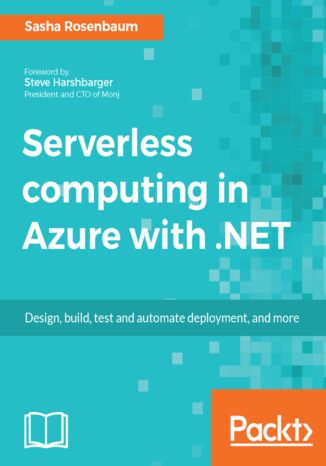
Serverless computing in Azure with .NET. Build, test, and automate deployment
Sasha Rosenbaum
Serverless architecture allows you to build and run applications and services without having to manage the infrastructure. Many companies have started adopting serverless architecture for their applications to save cost and improve scalability. This book will be your companion in designing Serverless architecture for your applications using the .NET runtime, with Microsoft Azure as the cloud service provider. You will begin by understanding the concepts of Serverless architecture, its advantages and disadvantages. You will then set up the Azure environment and build a basic application using a sample text sentiment evaluation function. From here, you will be shown how to run services in a Serverless environment. We will cover the integration with other Azure and 3rd party services such as Azure Service Bus, as well as configuring dependencies on NuGet libraries, among other topics. After this, you will learn about debugging and testing your Azure functions, and then automating deployment from source control. Securing your application and monitoring its health will follow from there, and then in the final part of the book, you will learn how to Design for High Availability, Disaster Recovery and Scale, as well as how to take advantage of the cloud pay-as-you-go model to design cost-effective services. We will finish off with explaining how azure functions scale up against AWS Lambda, Azure Web Jobs, and Azure Batch compare to other types of compute-on-demand services.Whether you’ve been working with Azure for a while, or you’re just getting started, by the end of the book you will have all the information you need to set up and deploy applications to the Azure Serverless Computing environment.
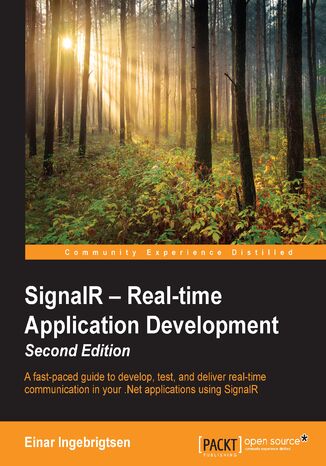
Einar Ingerbrigsten
With technology trends, demands on software have changed with more and more skilled users. Over the past few years, with services such as Facebook, Twitter and push notifications on smartphones, users are now getting used to being up to date with everything that happens all the time. With SignalR, the applications stay connected and will generate notifications when something happens either from the system or by other users thus giving new opportunities to enter into this new, exciting world of real-time application development.This is a step-by-step guide that follows a practical approach helping you as a developer getting to get started with SignalR by learning its fundamentals. It will help you through building real-time applications using the new methods and functions in the SignalR framework. Starting from getting persistent connections with the server, you will learn the basics of connecting a client to the server and how the messaging works. This will be followed by setting up a hub on the server and consuming it from a JavaScript client. Next you will be taught how you can group connections together to send messages. We will then go on to know how you can have state in the client to handle specific operations like connecting or disconnecting. Then, moving on you will learn how to secure your SignalR connections using OWIN and scaling SignalR across multiple servers. Next you will learn building a client for WPF and building a client using Xamarin that targets Windows Phone, iPhone and Android. Lastly, you will learn how to monitor the traffic in SignalR using Fiddler, Charles and hosting SignalR using OWIN.
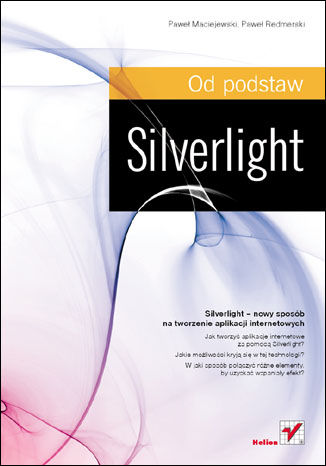
Paweł Maciejewski, Paweł Redmerski
Silverlight -- nowy sposób na tworzenie aplikacji internetowych Jak tworzyć aplikacje internetowe za pomocą Silverlight? Jakie możliwości kryją się w tej technologii? W jaki sposób połączyć różne elementy, by uzyskać wspaniały efekt? Technologia Silverlight, opracowana przez Microsoft, jest propozycją dla tych, którzy przymierzają się do projektowania aplikacji internetowych lub zajmują się tym już od jakiegoś czasu, a chcieliby poszerzyć spektrum swoich umiejętności. Do podstawowych zalet tej technologii należą prostota jej używania oraz ogromna elastyczność -- oprócz języka XAML, służącego do opisania interfejsu użytkownika, twórca aplikacji może posługiwać się dowolnym językiem programowania, dostępnym dla platformy .NET. Gotowe programy przygotowane w Silverlight są kompatybilne z większością przeglądarek, zainstalowanych na różnych platformach. Książka "Silverlight. Od podstaw" zawiera wszelkie informacje na temat najnowszej wersji tej technologii. Znajdziesz tu opis tego środowiska programistycznego, jego funkcjonalności oraz narzędzi, które musisz zainstalować, by móc sprawnie korzystać z Silverlight. Poznasz także zasady tworzenia nowych projektów i całą masę przykładów konkretnych rozwiązań. Wszystko to uzupełnione zostało licznymi zrzutami ekranu, ilustrującymi niemal każdy krok oraz efekty działania podanego kodu. Jeśli chcesz nauczyć się projektować aplikacje internetowe w Silverlight, nie znajdziesz lepszej książki! Zasady działania technologii Silverlight Silverlight a platforma .NET Programowanie w języku XAML Używanie kontrolek interfejsu Pozycjonowanie za pomocą kontenerów Wykorzystywanie grafiki Integracja z multimediami Obsługa zdarzeń Tworzenie animacji Stosowanie stylów i szablonów Otwórz się na nowe możliwości. Wypróbuj Silverlight!
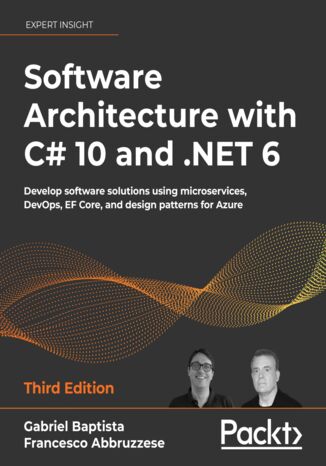
Gabriel Baptista, Francesco Abbruzzese
Software architecture is the practice of implementing structures and systems that streamline the software development process and improve the quality of an app. This fully revised and expanded third edition, featuring the latest features of .NET 6 and C# 10, enables you to acquire the key skills, knowledge, and best practices required to become an effective software architect.Software Architecture with C# 10 and .NET 6, Third Edition features new chapters that describe the importance of the software architect, microservices with ASP.NET Core, and analyzing the architectural aspects of the front-end in the applications, including the new approach of .NET MAUI. It also includes a new chapter focused on providing a short introduction to artificial intelligence and machine learning using ML.NET, and updated chapters on Azure Kubernetes Service, EF Core, and Blazor.You will begin by understanding how to transform user requirements into architectural needs and exploring the differences between functional and non-functional requirements. Next, you will explore how to choose a cloud solution for your infrastructure, taking into account the factors that will help you manage a cloud-based app successfully. Finally, you will analyze and implement software design patterns that will allow you to solve common development problems.By the end of this book, you will be able to build and deliver highly scalable enterprise-ready apps that meet your business requirements.