Inne
W kategorii Inne działu Hardware znajdziecie książki o tematyce wychodzącej poza składanie i konfigurowanie zwykłych komputerów. Zapoznacie się z działaniem komputera od poziomu "logiki cyfrowej", poprzez mikroarchitekturę i poziom maszynowy, aż do systemu operacyjnego.
Znajdziecie tutaj szereg zagadnień z zakresu programowania, głównie w assemblerze i C++, dzięki którym bezpośrednio z programu można odwoływać się do poszczególnych podzespołów komputera takich jak karta graficzna czy magistrala USB. Poznacie ciekawe sposoby wykorzystania rejestów systemowych oraz praktyczne zastosowania i programowanie układów mikoroprocesorowych PIC.
Andrew Zhu
Windows Workflow Foundation 4.0 (WF) is a significant part of .NET Framework 4.0. WF makes workflow technology available to every single programmer that uses the .NET Framework 4.0. It is easy to create long running and distributed programs using WF with the right knowledge. With this book, you will discover that working with workflows is easy.This book provides both step-by-step recipes and relevant background information. It covers all the important aspects of Windows Workflow Foundation 4.0. The best thing about this book is that all recipes are based on real-world experiences of Andrew Zhu. Andrew is a global WF and BizTalk technology support engineer for Microsoft. This book covers everything you need to know, when working with workflows. Get to grips with flow control activities, messaging, and transaction processes with easy to understand steps followed by explanations. You will quickly learn to use collection and custom WF activities and WF services.You will see recipes that illustrate integration of Windows Workflow with other applications such as WPF, ASP.NET, WCF service.Lastly, you will discover how easily you can customize W4 Designer with WF rule engine and others.
Debabrata Panda, Arvind Maheshwari, Debabrata Panda
Today's IT environment is very complex, encompassing a myriad of technologies and middleware platforms. Many organizations have large and heterogeneous middleware platforms that power their enterprise applications and it is often a real challenge for administrators to meet agreed service levels and minimize downtime. Oracle Enterprise Manager allows administrators to manage the complete lifecycle of an entire application infrastructure for middleware and SOA applications.This book will help you kick-start the setup of Oracle Enterprise Manager Grid Control and master all aspects of middleware management supported by Oracle Enterprise Manager.This book, written by senior members of the Oracle team serves as the only hands on guide to provisioning middleware and implementing proactive monitoring to maximize application performance and compliance using Oracle Enterprise Manager.The book starts with an introduction to the challenges faced by middleware administrators in their everyday life, and how Oracle Enterprise Manager helps solve those challenges. This book will help you manage your middleware infrastructure and applications effectively and efficiently using Oracle Enterprise Manager. By following the practical examples in this book you will learn to proactively monitor your production middleware applications running on Oracle Application Server, Oracle WebLogic Server, Oracle SOA suite (such as Oracle BPEL Process manager), Oracle Server Bus, and Oracle Coherence. You will also learn different aspects to proactive monitoring and alert notifications, service level and incident management, diagnostics for production applications, lifecycle automation using out-of-the-box deployment procedures, and patching mechanisms. This book also helps you to master best practices for managing your middleware and SOA applications for optimal service performance and reduced down time.
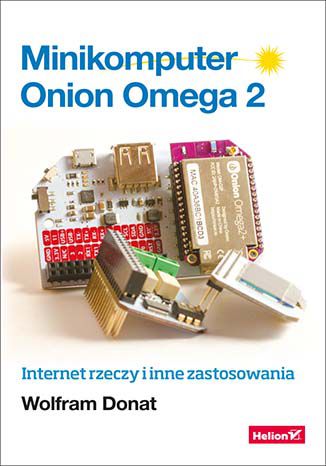
Minikomputer Onion Omega 2. Internet rzeczy i inne zastosowania
Wolfram Donat
Minikomputer Onion Omega 2 jest jedną z ciekawszych propozycji na rynku małych urządzeń jednopłytkowych (SBC). Został opracowany do zastosowań w internecie rzeczy. Działa pod kontrolą jednej z odmian Linuksa, systemu OpenWrt. Ma niewielkie rozmiary (43x26x10 mm), jego procesor MIPS pracuje z częstotliwością 580 MHz, może obsłużyć pamięć RAM do 256 MB i czytnik kart SD. Radzi sobie z kilkoma różnymi protokołami łączności, dzięki czemu bez trudu można go podłączyć do zwykłego komputera i komunikować się z nim za pomocą konsoli wyświetlanej w przeglądarce. Możliwości "cebuli" można łatwo rozszerzać za pomocą dostępnych płytek i modułów. To świetna propozycja dla każdego amatora elektroniki i robotyki! Ta książka jest wyjątkowo zwięzłym, a przy tym przystępnie napisanym i praktycznym podręcznikiem, dzięki któremu błyskawicznie uzyskasz wiedzę potrzebną do uruchomienia minikomputera Onion Omega 2 i rozpoczęcia pracy. Aby wykonać opisane tu projekty, potrzebujesz minikomputera Omega 2, modułu zasilającego, rozszerzenia przekaźnikowego i rozszerzenia z ekranem OLED. Przyda się też podstawowa znajomość Linuksa i Pythona. Dzięki książce w krótkim czasie poszerzysz horyzonty, zdobędziesz kilka nowych umiejętności, nauczysz się pracy z komponentami sprzętowymi - i będziesz gotów, by w pełni samodzielnie przygotować i wykonać kolejne projekty z zastosowaniem tego świetnego minikomputera. Najważniejsze zagadnienia: montaż i konfiguracja minikomputera konsola Onion Omegi zastosowanie Pythona własne projekty: "Tweetująca cebula" i "Światłolub" Onion Omega 2: pasjonująca droga do internetu rzeczy!
Modern Data Architecture on AWS. A Practical Guide for Building Next-Gen Data Platforms on AWS
Behram Irani
Many IT leaders and professionals are adept at extracting data from a particular type of database and deriving value from it. However, designing and implementing an enterprise-wide holistic data platform with purpose-built data services, all seamlessly working in tandem with the least amount of manual intervention, still poses a challenge.This book will help you explore end-to-end solutions to common data, analytics, and AI/ML use cases by leveraging AWS services. The chapters systematically take you through all the building blocks of a modern data platform, including data lakes, data warehouses, data ingestion patterns, data consumption patterns, data governance, and AI/ML patterns. Using real-world use cases, each chapter highlights the features and functionalities of numerous AWS services to enable you to create a scalable, flexible, performant, and cost-effective modern data platform.By the end of this book, you’ll be equipped with all the necessary architectural patterns and be able to apply this knowledge to efficiently build a modern data platform for your organization using AWS services.
ModSecurity 2.5. Prevent web application hacking with this easy to use guide
Magnus Mischel, Brian Rectanus
With more than 67% of web servers running Apache and web-based attacks becoming more and more prevalent, web security has become a critical area for web site managers. Most existing tools work on the TCP/IP level, failing to use the specifics of the HTTP protocol in their operation. Mod_security is a module running on Apache, which will help you overcome the security threats prevalent in the online world.A complete guide to using ModSecurity, this book will show you how to secure your web application and server, and does so by using real-world examples of attacks currently in use. It will help you learn about SQL injection, cross-site scripting attacks, cross-site request forgeries, null byte attacks, and many more so that you know how attackers operate.Using clear, step-by-step instructions this book starts by teaching you how to install and set up ModSecurity, before diving into the rule language with examples. It assumes no prior knowledge of ModSecurity, so as long as you are familiar with basic Linux administration, you can start to learn right away.Real-life case studies are used to illustrate the dangers on the Web today ñ you will for example learn how the recent worm that hit Twitter works, and how you could have used ModSecurity to stop it in its tracks. The mechanisms behind these and other attacks are described in detail, and you will learn everything you need to know to make sure your server and web application remain unscathed on the increasingly dangerous web. Have you ever wondered how attackers figure out the exact web server version running on a system? They use a technique called HTTP fingerprinting, and you will learn about this in depth and how to defend against it by flying your web server under a false flag.The last part of the book shows you how to really lock down a web application by implementing a positive security model that only allows through requests that conform to a specific, pre-approved model, and denying anything that is even the slightest bit out of line.
MODx Web Development. Build dynamic websites with MODx PHP application framework and CMS
Antano Solar John, Ryan Thrash
MODx is a content management system and PHP web application framework rolled into one. With the ease of a CMS and the extendibility of a framework, MODx allows you to develop professional-looking, intricate websites with its easy-to-use interface and flexible architecture. MODx provides reusable code fragments called snippets, most of which are so generic that, without any modification, they can serve multiple functionalities. The generic nature of the snippets makes it possible to get the perfect customization that is so hard in other CMS.This book will get web developers up-and-running with MODx. With step-by-step examples and illustrative screenshots, you will be guided through installation, configuration, and customization. By the end of the book, you will have created a powerful, dynamic website by using the individual elements of MODx, without the need for programming know-how.Starting with a walk-through of how to install MODx, you will quickly learn how to develop your site without having to use any programming language. Logical, step-by-step instructions will show you how to create your own unique site by adding and editing documents using the inbuilt TinyMCE editor. You will change the look and feel of your site by creating your own templates using HTML, CSS, and widgets. By following the example of a blog site, you will learn how to extend your templates to allow rich user interactions through comments, posts, and forms. The book teaches a few code snippets such as Ditto and Wayfinder in detail. These powerful and flexible snippets will enable you to add multiple functionalities to your site. The book will also introduce you to many more snippets that will help you build some of the commonly required web functionalities such as forums and image galleries. You will manage your users with authentication and authorization and make your site user-friendly with user groups, forums, and the use of PHx notations to embed logic in templates.Through following this easy-to-use, step-by-step guide you will, by the end of the book, have a fully functional, feature-rich MODx site with professional-looking, dynamic web pages that are totally customizable.
Michael Churchward, Jonathan Moore
Moodle gives you the power to create and customize feature-rich plug-ins. If you can write Moodle plug-ins, you can make it do just about anything. From making the site easier to administer, to new features, to completely changing the way it looks; plug-ins are the method Moodle offers to customize and extend its functionality. This book will show you how to build all sorts of Moodle plug-ins: admin plug-ins, Blocks, Activities, Grading components, Reports, Fliters that change the way your site works and looks. You will develop standard Moodle plug-ins such as Activities, Filters, and Blocks by creating functioning code that you can execute in your own Moodle installation. Writing modular plug-ins for Moodle will be a large focus of this book.This book will take you inside Moodle and provide you with the ability to develop code the “Moodle way”.This book will expose you to all of the core code functions in Moodle, in a progressive, understandable way. You will learn what libraries are available, what the API calls are, how it is structured and how it can be expanded beyond the plug-in system.You will begin by getting an understanding of the basic architecture that Moodle uses to operate in. Next you will build your first plug-in; a block. You will carry on building other Moodle plug-ins, gaining knowledge of the “Moodle way” of coding, before plunging deeper into the API and inner libraries. Lastly, you will learn how to integrate Moodle with other systems using a variety of methods.When you have completed, you will have a solid understanding of Moodle programming and knowledge of how to extend its functionality in whatever way you want.
Paul Taylor, Moodle Trust
Educators use the Moodle web application to create effective online learning sites. Creating such learning environments that suit Design and Technology subjects requires understanding and implementation of both basic and advanced Moodle features.This book takes a detailed look at Moodle features with examples of how to fully support the Design and Technology curricula using Moodle. It will guide you to incorporate specific modules and blocks to enhance learning as well as allow detailed tracking of performance by using formative and summative assessment tools with ease.We start with setting up a very basic Moodle course for Design and Technology, and then set up some basic resources and some interactive material. You will customize your own courses and create a course for each of the key areas of the DT subjects and add material to them. We will create some basic reporting and assessment tools and enhance the look of the course. We will use Moodle's detailed and sophisticated gradebook to assess your student s ' learning progress in activities from an assignment to an offline activity. Then we will support students in designing a product or trying a new recipe in food technology in market research to find out exactly what the public wants in relation to their product, by designing a questionnaire. We will allow product design or resistant material students use the HTML features of the questionnaire module to incorporate images into the questions to make it clearer to respondents what it is they are trying to make and sell.We will allow students in construction to gather and organize their research material in a great deal of detail and also allow them to better understand their target market and the materials used in their construction through detailed questioning. We will allow food technology students to discuss and receive constructive feedback on food products that contribute to health issues that will enable them to make informed decisions and therefore better quality products. Then we explore several components within Moodle's core functionality and some third-party sources to display the progress of the student's work and development. We then have an overview of the different design portfolios available. Finally we look at additional ways to enhance the teaching and learning of D ' T with Moodle using third-party modules and add-ons.