
Programowanie w chmurze
Chmura to styl obliczeń, w którym dynamicznie skalowalne zasoby IT są dostarczane zewnętrznym użytkownikom w postaci usług na żądanie za pomocą technologii internetowych. Kluczowym elementem tej definicji jest dostarczanie usług "na żądanie". Chmura, oprócz dostępności usług we właściwym miejscu i czasie, zapewnia ekonomiczną efektywność rozwiązania, konsolidację zasobów, bezpieczeństwo informacji i wreszcie oszczędność energii.
Robust Cloud integration with Azure. Unleash the power of serverless integration with Azure
Mahindra Morar, Abhishek Kumar, Martin Abbott, Gyanendra...
Any software developers, architects, and technical managers lookng to learn about Azure IaaS essentials need look no further. This book is ideal for Microsoft Enterprise developers, DevOps or any IT professionals looking to connect cloud-based and on-premises systems with Azure.
Johan Yu
Built on the Salesforce App Cloud, the new Lightning Experience combines the new Lightning Design System, Lightning App Builder, and Lightning Components to enable anyone to quickly and easily create modern enterprise apps.The book will start with a gentle introduction to the basics of Salesforce reports and dashboards. It will also explain how to access reports in depth. Then you will learn how to create and manage reports, to use Schedule Report, and create advanced report configurations. The next section talks about dashboards and will enable you to understand and compare various types of dashboard component and how you can benefit the most from each of them. Then we move on to advanced topics and explain tips and tricks related to reports and dashboards, including reporting snapshots, report parameters, and collaboration.Finally, we will discuss how to access dashboards and reports from the Salesforce1 mobile app.
Kerry Townsend
Salesforce Sales Cloud is a system rich in functionality, addressing many sales business challenges such as sales productivity, forecast visibility, and sales enablement. However, unlocking the full value of the system and getting maximum returns pose a challenge, especially if you’re new to the technology.This implementation handbook goes beyond mere configuration to ensure a successful implementation journey. From laying the groundwork for your project to engaging stakeholders with sales-specific business insights, this book equips you with the knowledge you need to plan and execute.As you progress, you’ll learn how to design a robust data model to support the sales and lead generation process, followed by crafting an intuitive user experience to drive productivity. You’ll then explore crucial post-building aspects such as testing, training, and releasing functionality. Finally, you’ll discover how the solutions’ capability can be expanded by adding and integrating other tools to address typical sales use cases.By the end of this book, you’ll have grasped how to leverage Sales Cloud to solve sales challenges and have gained the confidence to design and implement solutions successfully with the help of real-world use cases.
SAP on Azure Implementation Guide. Move your business data to the cloud
Nick Morgan, Bartosz Jarkowski
Cloud technologies have now reached a level where even the most critical business systems can run on them. For most organizations SAP is the key business system. If SAP is unavailable for any reason then potentially your business stops. Because of this, it is understandable that you will be concerned whether such a critical system can run in the public cloud. However, the days when you truly ran your IT system on-premises have long since gone. Most organizations have been getting rid of their own data centers and increasingly moving to co-location facilities. In this context the public cloud is nothing more than an additional virtual data center connected to your existing network.There are typically two main reasons why you may consider migrating SAP to Azure: You need to replace the infrastructure that is currently running SAP, or you want to migrate SAP to a new database. Depending on your goal SAP offers different migration paths. You can decide either to migrate the current workload to Azure as-is, or to combine it with changing the database and execute both activities as a single step. SAP on Azure Implementation Guide covers the main migration options to lead you through migrating your SAP data to Azure simply and successfully.
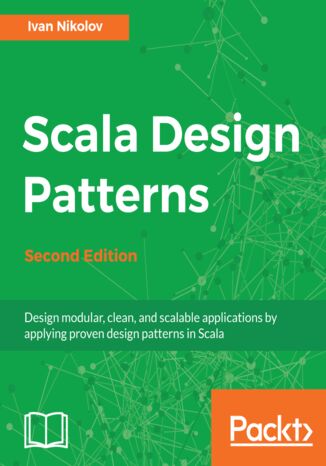
Ivan Nikolov
Design patterns make developers’ lives easier by helping them write great software that is easy to maintain, runs efficiently, and is valuable to the company or people concerned. You’ll learn about the various features of Scala and will be able to apply well-known, industry-proven design patterns in your work. The book starts off by focusing on some of the most interesting and latest features of Scala while using practical real-world examples. We will be learning about IDE’s and Aspect Oriented Programming. We will be looking into different components in Scala. We will also cover the popular Gang of Four design patterns and show you how to incorporate functional patterns effectively. The book ends with a practical example that demonstrates how the presented material can be combined in real-life applications. You’ll learn the necessary concepts to build enterprise-grade applications. By the end of this book, you’ll have enough knowledge and understanding to quickly assess problems and come up with elegant solutions.
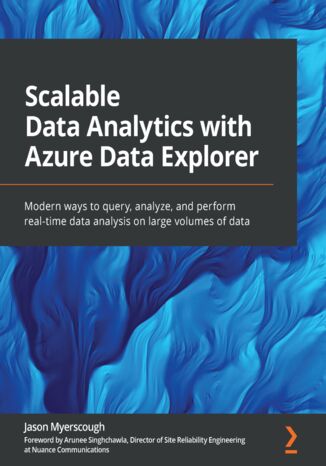
Jason Myerscough
Azure Data Explorer (ADX) enables developers and data scientists to make data-driven business decisions. This book will help you rapidly explore and query your data at scale and secure your ADX clusters.The book begins by introducing you to ADX, its architecture, core features, and benefits. You'll learn how to securely deploy ADX instances and navigate through the ADX Web UI, cover data ingestion, and discover how to query and visualize your data using the powerful Kusto Query Language (KQL). Next, you'll get to grips with KQL operators and functions to efficiently query and explore your data, as well as perform time series analysis and search for anomalies and trends in your data. As you progress through the chapters, you'll explore advanced ADX topics, including deploying your ADX instances using Infrastructure as Code (IaC). The book also shows you how to manage your cluster performance and monthly ADX costs by handling cluster scaling and data retention periods. Finally, you'll understand how to secure your ADX environment by restricting access with best practices for improving your KQL query performance.By the end of this Azure book, you'll be able to securely deploy your own ADX instance, ingest data from multiple sources, rapidly query your data, and produce reports with KQL and Power BI.
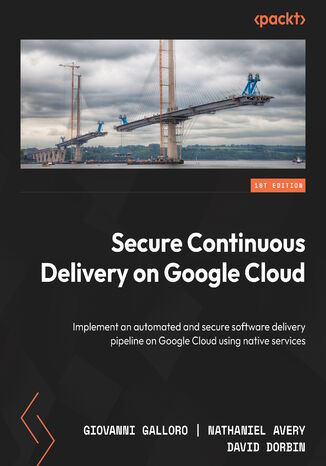
Giovanni Galloro, David Dorbin, Richard Seroter, Nathaniel...
Continuous delivery, a cornerstone of modern software engineering, facilitates quick and secure software delivery using a robust toolkit encompassing automated builds, testing, source code management, artifact storage, and deployment. Whether you integrate tools from different providers or use a set of managed services from a single cloud provider, the goal is to streamline setup, integration, and management. This book focuses on continuous delivery on Google Cloud.Starting with an introduction to continuous delivery and secure software supply chain concepts, this book uses hands-on exercises to demonstrate how to continuously test your application with Skaffold and Cloud Code, leverage AI-assisted code generation with Cloud Code and Cloud Workstations, and automate your continuous integration with Cloud Build. You’ll see how to store and scan your software artifacts on Artifact Registry, orchestrate deployments with Cloud Deploy, and release your software on GKE and Cloud Run, configured to admit only trusted code. Using an example application, you’ll implement tools for creating an end-to-end delivery pipeline using Google Cloud services.By the end of this book, you’ll be able to build a secure software delivery pipeline from development to production using Google Cloud managed services and best practices.
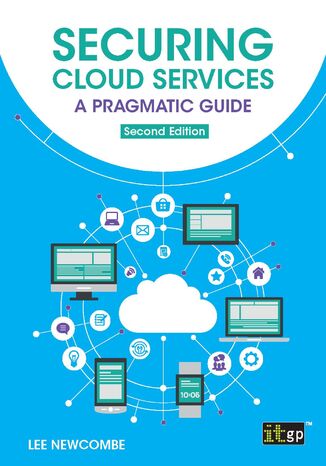
IT Governance Publishing, Lee Newcombe
Cloud computing plays a critical role in modern business, but with it comes a host of security challenges. This book explores the intricacies of securing cloud services, starting with foundational concepts of cloud computing and moving into specific service and deployment models. It provides insights into balancing security benefits with potential risks such as availability issues, shadow IT, and information leakage. The book goes on to focus on security threats, from hackers and insiders to government entities, while offering strategies to mitigate these risks. The practical approach continues with a deep dive into security architecture, providing a structured model to secure cloud environments across IaaS, PaaS, SaaS, and more. Further, it examines the regulatory landscape, including compliance requirements, privacy concerns, and data protection laws that impact cloud service security. Finally, the book concludes with projections about the future of cloud security and emerging challenges. Readers will gain not only the theoretical foundations but also real-world insights that they can apply to strengthen their cloud service security.