
Inne
Noritaka Sekiyama, Albert Quiroga, Tomohiro Tanaka, Subramanya...
Building a modern data platform is no longer just about moving data. Organizations must scale reliably, control costs, enforce governance, and accelerate analytics. This book shows you how to design and operate production-grade data platforms using AWS Glue and related AWS analytics services.You will begin with core data management concepts before moving into ingestion from diverse sources, data preparation strategies, metadata management, security controls, and cross-account data sharing. Learn how to design efficient data layouts, orchestrate pipelines, implement CI CD practices, and manage the full lifecycle of data integration workloads.This updated edition expands coverage of open table formats such as Apache Hudi, Delta Lake, and Apache Iceberg, along with performance tuning, observability, cost optimization, and real-world troubleshooting. You will also explore integrations with machine learning and generative AI workflows powered by Glue and SageMaker.Written by AWS engineers and architects with deep hands-on experience in large-scale enterprise data lakes, this guide blends architecture principles with real-world implementation insight.By the end of this book, you will be able to design, deploy, monitor, and optimize scalable serverless ETL pipelines and governed data platforms on AWS.
Debu Panda, Phil Bates, Bhanu Pittampally, Sumeet...
Amazon Redshift Serverless enables organizations to run petabyte-scale cloud data warehouses quickly and in a cost-effective way, enabling data science professionals to efficiently deploy cloud data warehouses and leverage easy-to-use tools to train models and run predictions. This practical guide will help developers and data professionals working with Amazon Redshift data warehouses to put their SQL knowledge to work for training and deploying machine learning models.The book begins by helping you to explore the inner workings of Redshift Serverless as well as the foundations of data analytics and types of data machine learning. With the help of step-by-step explanations of essential concepts and practical examples, you’ll then learn to build your own classification and regression models. As you advance, you’ll find out how to deploy various types of machine learning projects using familiar SQL code, before delving into Redshift ML. In the concluding chapters, you’ll discover best practices for implementing serverless architecture with Redshift.By the end of this book, you’ll be able to configure and deploy Amazon Redshift Serverless, train and deploy machine learning models using Amazon Redshift ML, and run inference queries at scale.
Siatka danych. Nowoczesna koncepcja samoobsługowej infrastruktury danych
Zhamak Dehghani
Dostęp do danych jest warunkiem rozwoju niejednej organizacji. Aby w pełni skorzystać z ich potencjału i uzyskać dzięki nim konkretną wartość, konieczne jest odpowiednie zarządzanie danymi. Obecnie stosowane rozwiązania w tym zakresie nie nadążają już za złożonością dzisiejszych organizacji, rozprzestrzenianiem się źródeł danych i rosnącymi aspiracjami inżynierów, którzy rozwijają techniki sztucznej inteligencji i analizy danych. Odpowiedzią na te potrzeby może być siatka danych (Data Mesh), jednak praktyczna implementacja tej koncepcji wymaga istotnej zmiany myślenia. Ta książka szczegółowo wyjaśnia paradygmat siatki danych, a przy tym koncentruje się na jego praktycznym zastosowaniu. Zgodnie z tym nowatorskim podejściem dane należy traktować jako produkt, a dziedziny - jako główne zagadnienie. Poza wyjaśnieniem paradygmatu opisano tu zasady projektowania wysokopoziomowej architektury komponentów siatki danych, a także przedstawiono wskazówki i porady dotyczące ewolucyjnej realizacji siatki danych w organizacji. Tematyka ta została potraktowana wszechstronnie: omówiono kwestie technologiczne, organizacyjne, jak również socjologiczne i kulturowe. Dzięki temu jest to cenna lektura zarówno dla architektów i inżynierów, jak i dla badaczy, analityków danych, wreszcie dla liderów i kierowników zespołów. W książce: wyczerpujące wprowadzenie do paradygmatu siatki danych siatka danych i jej komponenty projektowanie architektury siatki danych opracowywanie i realizacja strategii siatki danych zdecentralizowany model własności danych przejście z hurtowni i jezior danych do rozproszonej siatki danych Siatka danych: kolejny etap rozwoju technologii big data!
Anindita Mahapatra
Delta helps you generate reliable insights at scale and simplifies architecture around data pipelines, allowing you to focus primarily on refining the use cases being worked on. This is especially important when you consider that existing architecture is frequently reused for new use cases.In this book, you’ll learn about the principles of distributed computing, data modeling techniques, and big data design patterns and templates that help solve end-to-end data flow problems for common scenarios and are reusable across use cases and industry verticals. You’ll also learn how to recover from errors and the best practices around handling structured, semi-structured, and unstructured data using Delta. After that, you’ll get to grips with features such as ACID transactions on big data, disciplined schema evolution, time travel to help rewind a dataset to a different time or version, and unified batch and streaming capabilities that will help you build agile and robust data products.By the end of this Delta book, you’ll be able to use Delta as the foundational block for creating analytics-ready data that fuels all AI/BI use cases.
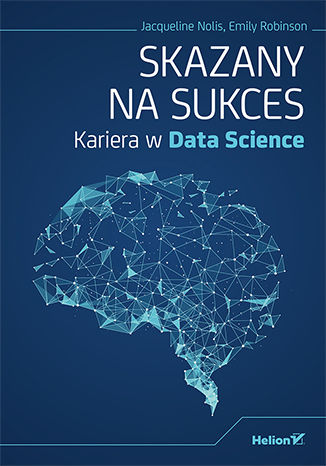
Skazany na sukces. Kariera w Data Science
Jacqueline Nolis, Emily Robinson
Nauka o danych, zwana danologią, zyskuje na znaczeniu. Dane dla gospodarki są tym, czym dotąd były węgiel, stal i ropa naftowa. Umiejętność korzystania z wiedzy zawartej w danych decyduje o efektywności prowadzenia działalności gospodarczej i determinuje rozwój nowych modeli, rozwiązań i relacji gospodarczych. Już teraz specjaliści danolodzy są rozchwytywani na rynku pracy. Aby jednak w pełni i do końca wykorzystać pojawiające się możliwości, trzeba wiedzieć, w jaki sposób podejść do trudnego zagadnienia, jakim jest budowanie ścieżki kariery i podążanie nią w odpowiednim dla siebie tempie. To praktyczny przewodnik, dzięki któremu łatwiej zdobędziesz pierwszą pracę związaną z badaniem danych, szybciej staniesz się cenionym specjalistą i w miarę rozwoju zawodowego będziesz coraz trafniej wychwytywać pojawiające się możliwości awansu i zmiany pracy na atrakcyjniejszą. Dowiesz się, jak zdobyć podstawowe umiejętności i jak faktycznie wyglądają konkretne stanowiska pracy. Opisano tu również, jak pomyślnie przejść przez proces rekrutacji i zaaklimatyzować się w nowych warunkach. Nie zabrakło cennych wskazówek dotyczących awansowania na stanowiska kierownicze. Jako danolog prędko się przekonasz, że zawarta tutaj wiedza nietechniczna jest bardzo potrzebna do osiągnięcia sukcesu na polu badania danych. Dzięki tej książce dowiesz się, jak: tworzyć świetne portfolio projektów z zakresu badania danych wyszukiwać, oceniać i negocjować oferty z klasą zmieniać miejsca pracy wybierać i skutecznie realizować scenariusze kariery poradzili sobie inni wybitni analitycy danych! Danologia: nauka, pasja i sposób na życie!
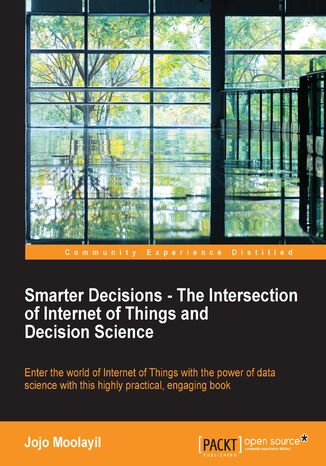
Jojo Moolayil
With an increasing number of devices getting connected to the Internet, massive amounts of data are being generated that can be used for analysis. This book helps you to understand Internet of Things in depth and decision science, and solve business use cases. With IoT, the frequency and impact of the problem is huge. Addressing a problem with such a huge impact requires a very structured approach. The entire journey of addressing the problem by defining it, designing the solution, and executing it using decision science is articulated in this book through engaging and easy-to-understand business use cases. You will get a detailed understanding of IoT, decision science, and the art of solving a business problem in IoT through decision science. By the end of this book, you’ll have an understanding of the complex aspects of decision making in IoT and will be able to take that knowledge with you onto whatever project calls for it
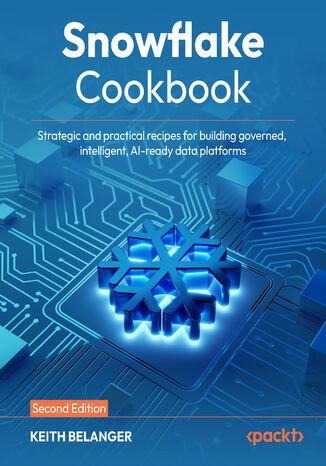
Keith Belanger
Snowflake Cookbook, Second Edition is your guide to building modern enterprise data platforms in the Snowflake AI Data Cloud. Readers learn by doing standalone recipes that solve real tasks while also explaining when and why to use each pattern. This edition reflects Snowflake’s evolution into a unified platform for data, AI, and applications, emphasizing governance, intelligent design, and production grade operations. You’ll create AI-ready solutions, align security and access with roles and policies, and enable trusted sharing across domains. Recipes cover data loading, transformations, tasks and streams automation, secure staging, object tagging and masking, lineage and observability fundamentals, replication and failover, and techniques for resilience with cloning and Time Travel. You’ll also see how to connect to analytics and AI ecosystems to turn data into intelligence and action. Written by a veteran Data professional and multi-year Snowflake Data Superhero, this edition blends practical execution with architectural judgment. By the end, you’ll be ready to design governed, scalable, AI-enabled platforms that deliver reliable outcomes in the Snowflake AI Data Cloud.
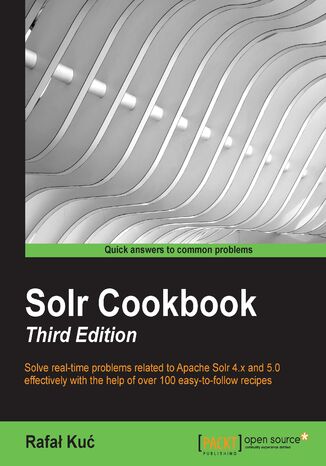
Rafal Kuc
This book is for intermediate Solr Developers who are willing to learn and implement Pro-level practices, techniques, and solutions. This edition will specifically appeal to developers who wish to quickly get to grips with the changes and new features of Apache Solr 5.
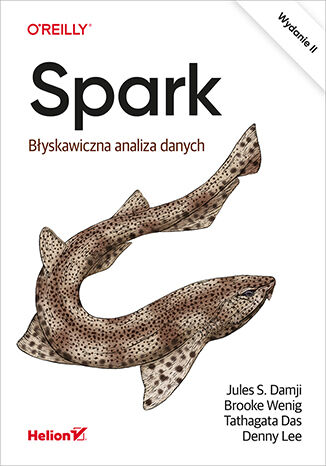
Spark. Błyskawiczna analiza danych. Wydanie II
Jules S. Damji, Brooke Wenig, Tathagata Das,...
Apache Spark jest oprogramowaniem open source, przeznaczonym do klastrowego przetwarzania danych dostarczanych w różnych formatach. Pozwala na uzyskanie niespotykanej wydajności, umożliwia też pracę w trybie wsadowym i strumieniowym. Framework ten jest również świetnie przygotowany do uruchamiania złożonych aplikacji, włączając w to algorytmy uczenia maszynowego czy analizy predykcyjnej. To wszystko sprawia, że Apache Spark stanowi znakomity wybór dla programistów zajmujących się big data, a także eksploracją i analizą danych. To książka przeznaczona dla inżynierów danych i programistów, którzy chcą za pomocą Sparka przeprowadzać skomplikowane analizy danych i korzystać z algorytmów uczenia maszynowego, nawet jeśli te dane pochodzą z różnych źródeł. Wyjaśniono tu, jak dzięki Apache Spark można odczytywać i ujednolicać duże zbiory informacji, aby powstawały niezawodne jeziora danych, w jaki sposób wykonuje się interaktywne zapytania SQL, a także jak tworzy się potoki przy użyciu MLlib i wdraża modele za pomocą biblioteki MLflow. Omówiono również współdziałanie aplikacji Sparka z jego rozproszonymi komponentami i tryby jej wdrażania w poszczególnych środowiskach. W książce: API strukturalne dla Pythona, SQL, Scali i Javy operacje Sparka i silnika SQL konfiguracje Sparka i interfejs Spark UI nawiązywanie połączeń ze źródłami danych: JSON, Parquet, CSV, Avro, ORC, Hive, S3 i Kafka operacje analityczne na danych wsadowych i strumieniowanych niezawodne potoki danych i potoki uczenia maszynowego Spark: twórz skalowalne i niezawodne aplikacje big data!
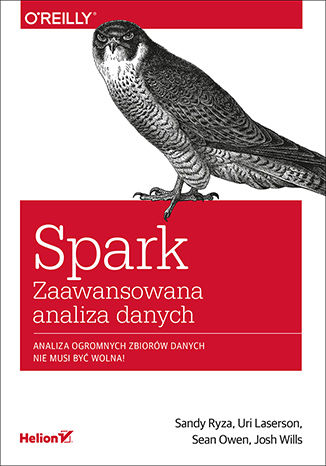
Spark. Zaawansowana analiza danych
Sandy Ryza, Uri Laserson, Sean Owen, Josh...
Analiza ogromnych zbiorów danych nie musi być wolna! Apache Spark to darmowy, zaawansowany szkielet i silnik pozwalający na szybkie przetwarzanie oraz analizę ogromnych zbiorów danych. Prace nad tym projektem rozpoczęły się w 2009 roku, a już rok później Spark został udostępniony użytkownikom. Jeżeli potrzebujesz najwyższej wydajności w przetwarzaniu informacji, jeżeli chcesz uzyskiwać odpowiedź na trudne pytania niemalże w czasie rzeczywistym, Spark może być odpowiedzią na Twoje oczekiwania. Sięgnij po tę książkę i przekonaj się, czy tak jest w rzeczywistości. Autor porusza tu zaawansowane kwestie związane z analizą statystyczną danych, wykrywaniem anomalii oraz analizą obrazów. Jednak zanim przejdziesz do tych tematów, zapoznasz się z podstawami — wprowadzeniem do analizy danych za pomocą języka Scala oraz Apache Spark. Nauczysz się też przeprowadzać analizę semantyczną i zobaczysz, jak w praktyce przeprowadzić analizę sieci współwystępowań za pomocą biblioteki GraphX. Na koniec dowiesz się, jak przetwarzać dane geoprzestrzenne i genomiczne, a także oszacujesz ryzyko metodą symulacji Monte Carlo. Książka ta pozwoli Ci na wykorzystanie potencjału Apache Spark i zaprzęgnięcie go do najtrudniejszych zadań! Przykłady prezetnowane w książce obejmują: Rekomendowanie muzyki i dane Audioscrobbler Prognozowanie zalesienia za pomocą drzewa decyzyjnego Wykrywanie anomalii w ruchu sieciowym metodą grupowania według k-średnich Wikipedia i ukryta analiza semantyczna Analiza sieci współwystępowań za pomocą biblioteki GraphX Geoprzestrzenna i temporalna analiza tras nowojorskich taksówek Szacowanie ryzyka finansowego metodą symulacji Monte Carlo Analiza danych genomicznych i projekt BDG Analiza danych neuroobrazowych za pomocą pakietów PySpark i Thunder Poznaj potencjał i wydajność Apache Spark!
Splunk Best Practices. Operational intelligent made simpler
Travis Marlette, Chris Ladd
This book will give you an edge over others through insights that will help you in day-to-day instances. When you're working with data from various sources in Splunk and performing analysis on this data, it can be a bit tricky. With this book, you will learn the best practices of working with Splunk.You'll learn about tools and techniques that will ease your life with Splunk, and will ultimately save you time. In some cases, it will adjust your thinking of what Splunk is, and what it can and cannot do.To start with, you'll get to know the best practices to get data into Splunk, analyze data, and package apps for distribution. Next, you'll discover the best practices in logging, operations, knowledge management, searching, and reporting. To finish off, we will teach you how to troubleshoot Splunk searches, as well as deployment, testing, and development with Splunk.
Splunk: Enterprise Operational Intelligence Delivered. Machine data made accessible
Paul R. Johnson, Betsy Page Sigman, Derek...
Splunk is an extremely powerful tool for searching, exploring, and visualizing data of all types. Splunk is becoming increasingly popular, as more and more businesses, both large and small, discover its ease and usefulness. Analysts, managers, students, and others can quickly learn how to use the data from their systems, networks, web traffic, and social media to make attractive and informative reports. This course will teach everything right from installing and configuring Splunk.The first module is for anyone who wants to manage data with Splunk. You’ll start with very basics of Splunk— installing Splunk— before then moving on to searching machine data with Splunk. You will gather data from different sources, isolate them by indexes, classify them into source types, and tag them with the essential fields.With more than 70 recipes on hand in the second module that demonstrate all of Splunk’s features, not only will you find quick solutions to common problems, but you’ll also learn a wide range of strategies and uncover new ideas that will make you rethink what operational intelligence means to you and your organization.Dive deep into Splunk to find the most efficient solution to your data problems in the third module. Create the robust Splunk solutions you need to make informed decisions in big data machine analytics. From visualizations to enterprise integration, this well-organized high level guide has everything you need for Splunk mastery.This learning path combines some of the best that Packt has to offer into one complete, curated package. It includes content from the following Packt products:• Splunk Essentials - Second Edition• Splunk Operational Intelligence Cookbook - Second Edition• Advanced Splunk
Josh Diakun, Jose E. Hernandez, Derek Mock,...
Splunk makes it easy for you to take control of your data, and with Splunk Operational Cookbook, you can be confident that you are taking advantage of the Big Data revolution and driving your business with the cutting edge of operational intelligence and business analytics. With more than 70 recipes that demonstrate all of Splunk’s features, not only will you find quick solutions to common problems, but you’ll also learn a wide range of strategies and uncover new ideas that will make you rethink what operational intelligence means to you and your organization.You’ll discover recipes on data processing, searching and reporting, dashboards, and visualizations to make data shareable, communicable, and most importantly meaningful. You’ll also find step-by-step demonstrations that walk you through building an operational intelligence application containing vital features essential to understanding data and to help you successfully integrate a data-driven way of thinking in your organization.Throughout the book, you’ll dive deeper into Splunk, explore data models and pivots to extend your intelligence capabilities, and perform advanced searching to explore your data in even more sophisticated ways. Splunk is changing the business landscape, so make sure you’re taking advantage of it.
Jun Shan, Haibin Li, Matt Goldwasser, Upom...
SQL remains one of the most essential tools for modern data analysis and mastering it can set you apart in a competitive data landscape. This book helps you go beyond basic query writing to develop a deep, practical understanding of how SQL powers real-world decision-making. SQL for Data Analytics, Fourth Edition, is for anyone who wants to go beyond basic SQL syntax and confidently analyze real-world data. Whether you're trying to make sense of production data for the first time or upgrading your analytics toolkit, this book gives you the skills to turn data into actionable outcomes. You'll start by creating and managing structured databases before advancing to data retrieval, transformation, and summarization. From there, you’ll take on more complex tasks such as window functions, statistical operations, and analyzing geospatial, time-series, and text data. With hands-on exercises, case studies, and detailed guidance throughout, this book prepares you to apply SQL in everyday business contexts, whether you're cleaning data, building dashboards, or presenting findings to stakeholders. By the end, you'll have a powerful SQL toolkit that translates directly to the work analysts do every day. *Email sign-up and proof of purchase required
SQL for Data Analytics. Harness the power of SQL to extract insights from data - Third Edition
Jun Shan, Matt Goldwasser, Upom Malik, Benjamin...
Every day, businesses operate around the clock, and a huge amount of data is generated at a rapid pace. This book helps you analyze this data and identify key patterns and behaviors that can help you and your business understand your customers at a deep, fundamental level.SQL for Data Analytics, Third Edition is a great way to get started with data analysis, showing how to effectively sort and process information from raw data, even without any prior experience.You will begin by learning how to form hypotheses and generate descriptive statistics that can provide key insights into your existing data. As you progress, you will learn how to write SQL queries to aggregate, calculate, and combine SQL data from sources outside of your current dataset. You will also discover how to work with advanced data types, like JSON. By exploring advanced techniques, such as geospatial analysis and text analysis, you will be able to understand your business at a deeper level. Finally, the book lets you in on the secret to getting information faster and more effectively by using advanced techniques like profiling and automation.By the end of this book, you will be proficient in the efficient application of SQL techniques in everyday business scenarios and looking at data with the critical eye of analytics professional.
SQL Pocket Primer. A Comprehensive Guide to SQL and MySQL for Data Professionals
Mercury Learning and Information, Oswald Campesato
As part of the best-selling Pocket Primer series, this book is designed for data scientists and machine learning engineers seeking to deepen their SQL knowledge using MySQL as the primary RDBMS. It features Python-based code samples for accessing data from MySQL tables in Pandas data frames and Java-based samples for data access in MySQL, along with handling XML and JSON documents.The book also introduces NoSQL, with an overview of MongoDB, and SQLite, an open-source RDBMS for mobile devices. The final section covers diverse topics like normalization, schemas, database optimization, and performance. This comprehensive approach ensures a well-rounded understanding of SQL and related technologies, enhancing data manipulation and database management skills.Numerous code samples and listings throughout the book support the various topics covered. Companion files with source code and figures are available from the publisher, making this an essential resource for advancing your SQL proficiency and database management expertise.