
Inne
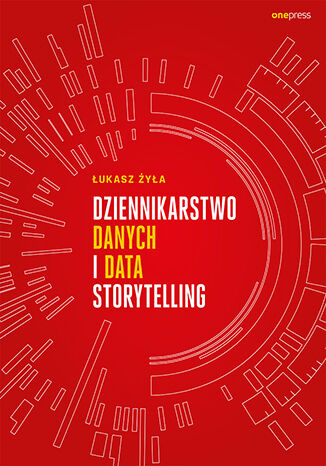
Dziennikarstwo danych i data storytelling
Łukasz Żyła
Bez danych jesteś jedynie kolejną osobą z opinią... Dziennikarstwo danych przeżywa dziś prawdziwy rozkwit. Dzieje się tak dlatego, że nasze życie w dużej mierze przeniosło się do internetu, a internet to... dane. Megabajty, gigabajty, terabajty danych. Misją współczesnego dziennikarza jest przedstawiać je społeczeństwu rzetelnie, a równocześnie pięknie, czyli w sposób zrozumiały, łatwy do przyswojenia. Nim się jednak owe dane pięknie zestawi, trzeba je znaleźć. Gdzie szukać? Jak je zdobyć? W jaki sposób opowiedzieć dane? Na takie pytania autor odpowiada w tej książce. Nie przeczytasz w niej o "ładnych wykresach", bo wbrew pozorom to nie one są esencją dziennikarstwa danych i data storytellingu. Dowiesz się natomiast, gdzie biją źródła potrzebnych Ci informacji, jak je przetwarzać i analizować. Znajdziesz tu także wskazówki, w jaki sposób tworzyć dobre wizualizacje za pomocą prostych aplikacji dostępnych za darmo w internecie i jak kreować angażujące odbiorców data stories. Na koniec wejdziesz na wyższy poziom - nauczysz się prezentować dane z wykorzystaniem kodu programistycznego. Kto? Co? Jak? Gdzie? Kiedy? ― odpowiedzi na te podstawowe pytania musi znaleźć każdy dziennikarz, który chce rzetelnie wykonać swoją pracę. Jednocześnie przy zalewie informacji, danych ze źródeł, których weryfikacja jest równie czasochłonna, każdy wykonujący ten piękny zawód coraz bardziej przypomina mitycznego Syzyfa. Przebicie się przez gigabajty informacji, przetworzenie ich i stworzenie materiału, który tłumaczy odbiorcy rzeczywistość, jest dziś działaniem obarczonym ogromnym wysiłkiem i jeszcze większym ryzykiem. Kaskadowy spadek zaufania do instytucji publicznych i prywatnych, z jakim mamy do czynienia od lat, oddziałuje także na media, z jednej strony wystawiane na szereg nacisków biznesowych, politycznych i społecznych, z drugiej ― borykające się z ciągłymi problemami finansowymi. Co warto wiedzieć, dobre dziennikarstwo, jakościowe dziennikarstwo to coś, co wymaga swobodnego poruszania się autorów w przestrzeni internetu i danych, a także poznania podstaw funkcjonowania w tej przestrzeni. Dlatego, jeżeli chcemy mieć przynajmniej cień nadziei na dobrze wykonaną pracę, warto sięgnąć po książkę Łukasza Żyły. W zawodzie zawsze mi powtarzano, że tej profesji człowiek uczy się tylko w praktyce i na pewno nie na studiach. Nadal tak jest, choć czasy, w których media dosłownie pączkują na każdym kroku i angażują coraz młodszych adeptów dziennikarstwa, wymagają, by sięgnąć po informacyjną pigułę, swoisty wykrywacz min, dzięki czemu te pierwsze kroki wspomniany początkujący dziennikarz będzie mógł stawiać względnie bezpiecznie. Dziennikarstwo danych i data storytelling to także pozycja dla osób doświadczonych w tym zawodzie. Powód jest oczywisty, technologia zmieniła dziennikarstwo i w pędzie żywiołu, którym ono jest, łatwo popaść w bezpieczną i przez to złudną rutynę, a wtedy jesteśmy o krok od poważnego błędu. Dzięki książce Łukasza Żyły łatwiejsze do ominięcia będą cyfrowe rafy, którymi sieć jest usłana. Bartosz Kurek, były dziennikarz Polsatu, obecnie menedżer ds. public affairs w Philip Morris Co wy tam tak naprawdę robicie? ― to częste pytanie, kiedy mówię, że pracuję w dziale danych „Wyborczej”. Niektórzy ze znawstwem odpowiadają: „Aaa, czyli robicie analizy wyników sprzedaży gazety?”. Inni zmieniają temat, spodziewając się, że zarzucę ich nudnymi opowieściami o uzupełnianiu tabelek liczbami. Co ciekawe, pytanie o to, jak dokładnie wygląda nasza praca, zadają również dziennikarze. Teraz, zamiast wchodzić w szczegóły, będę mógł zacząć odpowiedź od słów: „Jest taka książka, warto przeczytać…”, bo Łukasz w bardzo przystępny sposób tłumaczy, czym to się je. I myślę, że niezależnie od tego, jaką działką dziennikarstwa się zajmujecie, znajdziecie w niej coś dla siebie. Części dotyczące współpracy z urzędnikami, dostępu do informacji czy opowiadania historii powinien przyswoić każdy, kto będzie pracował w zawodzie. Po te o opracowywaniu danych sięgną ambitniejsi, a może po prostu bardziej przewidujący, bo pisać potrafi wielu, ale zdolność pisania połączona z umiejętnością analizowania, programowania lub wizualizowania robi z dziennikarza człowieka do zadań specjalnych. Kiedy czytałem tę książkę, wiele razy żałowałem, że czegoś takiego nie było, kiedy ja zaczynałem przygodę z danymi. Dzięki niej widzę, ile jeszcze powinienem się w tej dziedzinie nauczyć. Dominik Uhlig, szef BIQdata.pl ― działu danych „Gazety Wyborczej”
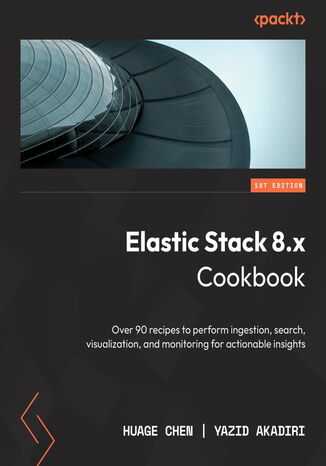
Huage Chen, Yazid Akadiri, Shay Banon
Learn how to make the most of the Elastic Stack (ELK Stack) products—including Elasticsearch, Kibana, Elastic Agent, and Logstash—to take data reliably and securely from any source, in any format, and then search, analyze, and visualize it in real-time. This cookbook takes a practical approach to unlocking the full potential of Elastic Stack through detailed recipes step by step.Starting with installing and ingesting data using Elastic Agent and Beats, this book guides you through data transformation and enrichment with various Elastic components and explores the latest advancements in search applications, including semantic search and Generative AI. You'll then visualize and explore your data and create dashboards using Kibana. As you progress, you'll advance your skills with machine learning for data science, get to grips with natural language processing, and discover the power of vector search. The book covers Elastic Observability use cases for log, infrastructure, and synthetics monitoring, along with essential strategies for securing the Elastic Stack. Finally, you'll gain expertise in Elastic Stack operations to effectively monitor and manage your system.
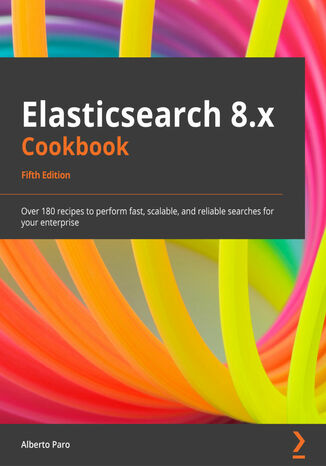
Alberto Paro
Elasticsearch is a Lucene-based distributed search engine at the heart of the Elastic Stack that allows you to index and search unstructured content with petabytes of data. With this updated fifth edition, you'll cover comprehensive recipes relating to what's new in Elasticsearch 8.x and see how to create and run complex queries and analytics.The recipes will guide you through performing index mapping, aggregation, working with queries, and scripting using Elasticsearch. You'll focus on numerous solutions and quick techniques for performing both common and uncommon tasks such as deploying Elasticsearch nodes, using the ingest module, working with X-Pack, and creating different visualizations. As you advance, you'll learn how to manage various clusters, restore data, and install Kibana to monitor a cluster and extend it using a variety of plugins. Furthermore, you'll understand how to integrate your Java, Scala, Python, and big data applications such as Apache Spark and Pig with Elasticsearch and create efficient data applications powered by enhanced functionalities and custom plugins.By the end of this Elasticsearch cookbook, you'll have gained in-depth knowledge of implementing the Elasticsearch architecture and be able to manage, search, and store data efficiently and effectively using Elasticsearch.
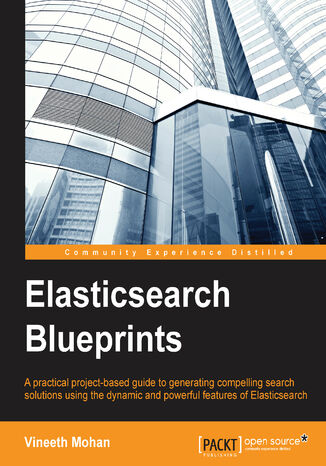
Vineeth Mohan
If you are a data enthusiast and would like to explore and specialize on search technologies based on Elasticsearch, this is the right book for you. A compelling case-to-case mapping of features and implementation of Elasticsearch to solve many real-world use cases makes this book the right choice to start and specialize on Elasticsearch.
Alberto Paro
If you are a developer who implements ElasticSearch in your web applications and want to sharpen your understanding of the core elements and applications, this is the book for you. It is assumed that you’ve got working knowledge of JSON and, if you want to extend ElasticSearch, of Java and related technologies.

Bill Jelen
Zawiera omówienie tabel dynamicznych, Power Query i funkcji Copilot Dowiedz się, jak używać tabel i wykresów przestawnych w programie Microsoft Excel do tworzenia solidnych, dynamicznych raportów w ciągu kilku minut: zyskaj pełną kontrolę nad swoimi danymi i biznesem! Nawet jeśli nigdy wcześniej nie tworzyłeś tabel przestawnych, ta książka pomoże ci wykorzystać ich elastyczność i moc analityczną. Zawiera też omówienie nowych funkcji tablicowych oraz funkcji Copilot, rozszerzających możliwości analityczne. Czerpiąc z ponad 30 lat doświadczeń w pracy z programem Excel, MVP Bill Jelen ("MrExcel") udostępnia praktyczne "recipes" rozwiązywania rzeczywistych problemów biznesowych, wskazuje sposoby unikania pomyłek oraz zaawansowane wskazówki i sztuczki, których nie znajdziesz nigdzie indziej. Dzięki tej książce Czytelnik będzie umiał: - Stosować proste i skuteczne sposoby tworzenia, dostosowywania, modyfikowania i kontrolowania tabel przestawnych. - Używać funkcji Copilot i Analyze Data do tworzenia tabel przestawnych - Przekształcać wielkie zbiory danych w czytelne raporty. - Wyróżniać klientów, produkty lub regiony o najwyższych przychodach. - Tworzyć potężne raporty krzyżowe za pomocą Power Query i dynamicznych funkcji tablicowych. - Używać funkcji PIVOTBY i GROUPBY do tworzenia raportów nie wymagających odświeżania. - Tworzyć tabele przestawne zawierające dane geograficzne. - Tworzyć i udostępniać nowoczesne dynamiczne pulpity. - Ulepszać wyniki analiz w locie, przeciągając i upuszczając pola. - Budować dynamiczne samoobsługowe systemy raportujące. - Udostępniać tabele przestawne współpracownikom. - Łączyć dane, korzystając z możliwości technologii Power Pivot. - Generować tabele przestawne za pomocą VBA w wersji klasycznej lub za pomocą języka Typescript w Excel Online. - Wykorzystać funkcję GetPivotData do tworzenia lepiej wyglądających raportów. - Anulować przestawienie danych źródłowych w celu ułatwienia pracy z nimi. O tej książce - Dla każdego, kto chce w krótszym czasie osiągnąć więcej przy użyciu Microsoft Excel - Dla profesjonalistów biznesu i finansów, przedsiębiorców, naukowców, studentów i wszystkich tych, którzy potrzebują wydajnie analizować dane i zarządzać nimi O autorach Bill Jelen ma tytuł Excel MVP, jest autorem 69 książek i gospodarzem witryny MrExcel.com. Był komentatorem ESPN podczas World Excel Championships, miał ponad 80 gościnnych wystąpień w programie telewizyjnym Call for Help oraz wyróżnionym gościem roku programu radiowego Computer America. Pisze felietony dla pisma Strategic Finance. Wyprodukował ponad 2600 odcinków podcastu wideo Learn Excel from MrExcel.
Soheil Bakhshi, Christian Wade
This book is a comprehensive guide to understanding the ins and outs of data modeling and how to create full-fledged data models using Power BI confidently.In this new, fully updated edition, you'll learn how to connect data from multiple sources, understand data, define and manage relationships between data, and shape data models to gain deep and detailed insights about your organization. As you advance through the chapters, the book will demonstrate how to prepare efficient data models in the Power Query Editor and use simpler DAX code with new data modeling features. You'll explore how to use the various data modeling and navigation techniques and perform custom calculations using the modeling features with the help of real-world examples. Finally, you'll learn how to use some new and advanced modeling features to enhance your data models to carry out a wide variety of complex tasks. Additionally, you'll learn valuable best practices and explore common data modeling complications and the solutions to supercharge the process of creating a data model in Power BI and build better-performing data models.By the end of this Power BI book, you'll have gained the skills you need to structure data coming from multiple sources in different ways to create optimized data models that support high-performing reports and data analytics.
Extreme DAX. Take your Power BI and Fabric analytics skills to the next level - Second Edition
Michiel Rozema, Madzy Stikkelorum, Henk Vlootman, Jeroen...
This book helps experienced analysts unlock the full potential of DAX in Power BI and Microsoft Fabric to build scalable, production-ready analytics solutions.You’ll begin by strengthening your understanding of semantic models, data modeling, and evaluation context—the foundation of reliable analytics. Instead of isolated examples, the book uses real-world scenarios such as inventory analysis, benchmarking, and data security to show how advanced DAX calculations are applied in practice.As you progress, you’ll master advanced techniques including context transition, table functions, calculation groups, field parameters, and custom calendars. You’ll also explore analytical methods such as regression and goal-seeking to generate deeper insights from your data.With step-by-step guidance and practical PBIX examples, you’ll learn how to design efficient models, avoid common pitfalls, and implement reusable calculations. By the end, you’ll be able to create advanced DAX measures and high-performance Power BI solutions for complex analytical requirements.
F# 4.0 Design Patterns. Solve complex problems with functional thinking
Gene Belitski
Following design patterns is a well-known approach to writing better programs that captures and reuses high-level abstractions that are common in many applications. This book will encourage you to develop an idiomatic F# coding skillset by fully embracing the functional-first F# paradigm. It will also help you harness this powerful instrument to write succinct, bug-free, and cross-platform code.F# 4.0 Design Patterns will start off by helping you develop a functional way of thinking. We will show you how beneficial the functional-first paradigm is and how to use it to get the optimum results. The book will help you acquire the practical knowledge of the main functional design patterns, the relationship of which with the traditional Gang of Four set is not straightforward.We will take you through pattern matching, immutable data types, and sequences in F#. We will also uncover advanced functional patterns, look at polymorphic functions, typical data crunching techniques, adjusting code through augmentation, and generalization. Lastly, we will take a look at the advanced techniques to equip you with everything you need to write flawless code.
Raúl Estrada
SMACK is an open source full stack for big data architecture. It is a combination of Spark, Mesos, Akka, Cassandra, and Kafka. This stack is the newest technique developers have begun to use to tackle critical real-time analytics for big data. This highly practical guide will teach you how to integrate these technologies to create a highly efficient data analysis system for fast data processing.We’ll start off with an introduction to SMACK and show you when to use it. First you’ll get to grips with functional thinking and problem solving using Scala. Next you’ll come to understand the Akka architecture. Then you’ll get to know how to improve the data structure architecture and optimize resources using Apache Spark. Moving forward, you’ll learn how to perform linear scalability in databases with Apache Cassandra. You’ll grasp the high throughput distributed messaging systems using Apache Kafka. We’ll show you how to build a cheap but effective cluster infrastructure with Apache Mesos. Finally, you will deep dive into the different aspect of SMACK using a few case studies. By the end of the book, you will be able to integrate all the components of the SMACK stack and use them together to achieve highly effective and fast data processing.
Feature Store for Machine Learning. Curate, discover, share and serve ML features at scale
Jayanth Kumar M J
Feature store is one of the storage layers in machine learning (ML) operations, where data scientists and ML engineers can store transformed and curated features for ML models. This makes them available for model training, inference (batch and online), and reuse in other ML pipelines. Knowing how to utilize feature stores to their fullest potential can save you a lot of time and effort, and this book will teach you everything you need to know to get started.Feature Store for Machine Learning is for data scientists who want to learn how to use feature stores to share and reuse each other's work and expertise. You’ll be able to implement practices that help in eliminating reprocessing of data, providing model-reproducible capabilities, and reducing duplication of work, thus improving the time to production of the ML model. While this ML book offers some theoretical groundwork for developers who are just getting to grips with feature stores, there's plenty of practical know-how for those ready to put their knowledge to work. With a hands-on approach to implementation and associated methodologies, you'll get up and running in no time.By the end of this book, you’ll have understood why feature stores are essential and how to use them in your ML projects, both on your local system and on the cloud.
Greg Rafferty
Forecasting Time Series Data with Prophet will help you to implement Prophet's cutting-edge forecasting techniques to model future data with high accuracy using only a few lines of code. This second edition has been fully revised with every update to the Prophet package since the first edition was published two years ago. An entirely new chapter is also included, diving into the mathematical equations behind Prophet's models. Additionally, the book contains new sections on forecasting during shocks such as COVID, creating custom trend modes from scratch, and a discussion of recent developments in the open-source forecasting community.You'll cover advanced features such as visualizing forecasts, adding holidays and trend changepoints, and handling outliers. You'll use the Fourier series to model seasonality, learn how to choose between an additive and multiplicative model, and understand when to modify each model parameter. Later, you'll see how to optimize more complicated models with hyperparameter tuning and by adding additional regressors to the model. Finally, you'll learn how to run diagnostics to evaluate the performance of your models in production.By the end of this book, you'll be able to take a raw time series dataset and build advanced and accurate forecasting models with concise, understandable, and repeatable code.
Bhanu Birani
Analytics help you to understand the way your users are interacting with your mobile application. Flurry provides you with a strong analytics tool to keep track of your application and to analyze your application data without much hassle. It provides an SDK for almost all platforms to gather data from all platforms of mobile and web applications. The enormous amount of data Flurry handles directly translates into unique, powerful insights into your applications.Getting Started with Flurry Analytics is a practical, hands-on guide to instantly getting started with Flurry analytics using step-by-step exercises. You will take advantage of the real power of Flurry analytics and provides you with an example-based learning approach to help you master it quickly and efficiently.This book starts by discussing how to set up and integrate Flurry analytics and ends by making you aware of how to track your application using Parse. You will also learn about tracking your application data using Flurry analytics to strengthen your strategies and to improve the application monetization process. You will also learn about configuration and implementation of Flurry analytics and how to make the application track all the necessary details to empower management decisions.
Google Analytics od podstaw. Analiza wpływu biznesowego i wyznaczanie trendów
Mark Edmondson
Google Analytics 4 wyznacza nowe zasady marketingu cyfrowego: obecnie chodzi nie tyle o raportowanie zdarzeń z przeszłości, ile o aktywację danych przez łączenie danych online i offline ze wszystkich strumieni, aby zapewnić kompleksowe informacje marketingowe. Taka analityka cyfrowa umożliwia szybsze podejmowanie decyzji. Umiejętność korzystania z GA4 staje się więc nieodzowna. Oto zwięzły i praktyczny przewodnik po usłudze GA4 i jej integracji z chmurą. Szczególnie skorzystają z niego analitycy danych, biznesu i marketingu. Opisano tu wszystkie istotne kwestie dotyczące tego nowego, potężnego modelu analitycznego. Szczególną uwagę poświęcono bardziej zaawansowanym funkcjonalnościom GA4. Zaprezentowano architekturę GA4, strategie danych, a także informacje dotyczące pozyskiwania, przechowywania i modelowania danych. W książce znalazło się również omówienie typowych przypadków użycia dla aktywacji danych i instrukcji przydatnych podczas implementacji tych przypadków. Co istotne, poszczególne zagadnienia zostały zilustrowane praktycznymi przykładami kodu. Ta książka pomaga nie tylko zrozumieć dane, ale także wygenerować przewagę konkurencyjną! Melinda Schiera, strateg do spraw analityki Najciekawsze zagadnienia: integracja Google Cloud z GA4 przeprowadzanie integracji GA4 przechwytywanie danych GA4 i realizacja przypadków użycia projektowanie przepływów danych dostosowywanie przypadków użycia do potrzeb biznesowych Przygotuj się na cyfrowy marketing przyszłości!
Gary Hutson, Matt Jackson
Graphs have become increasingly integral to powering the products and services we use in our daily lives, driving social media, online shopping recommendations, and even fraud detection. With this book, you’ll see how a good graph data model can help enhance efficiency and unlock hidden insights through complex network analysis.Graph Data Modeling in Python will guide you through designing, implementing, and harnessing a variety of graph data models using the popular open source Python libraries NetworkX and igraph. Following practical use cases and examples, you’ll find out how to design optimal graph models capable of supporting a wide range of queries and features. Moreover, you’ll seamlessly transition from traditional relational databases and tabular data to the dynamic world of graph data structures that allow powerful, path-based analyses. As well as learning how to manage a persistent graph database using Neo4j, you’ll also get to grips with adapting your network model to evolving data requirements.By the end of this book, you’ll be able to transform tabular data into powerful graph data models. In essence, you’ll build your knowledge from beginner to advanced-level practitioner in no time.
Hadoop: Data Processing and Modelling. Data Processing and Modelling
Sandeep Karanth, Gerald Turkington, Tanmay Deshpande
As Marc Andreessen has said “Data is eating the world,” which can be witnessed today being the age of Big Data, businesses are producing data in huge volumes every day and this rise in tide of data need to be organized and analyzed in a more secured way. With proper and effective use of Hadoop, you can build new-improved models, and based on that you will be able to make the right decisions.The first module, Hadoop beginners Guide will walk you through on understanding Hadoop with very detailed instructions and how to go about using it. Commands are explained using sections called “What just happened” for more clarity and understanding. The second module, Hadoop Real World Solutions Cookbook, 2nd edition, is an essential tutorial to effectively implement a big data warehouse in your business, where you get detailed practices on the latest technologies such as YARN and Spark.Big data has become a key basis of competition and the new waves of productivity growth. Hence, once you get familiar with the basics and implement the end-to-end big data use cases, you will start exploring the third module, Mastering Hadoop. So, now the question is if you need to broaden your Hadoop skill set to the next level after you nail the basics and the advance concepts, then this course is indispensable. When you finish this course, you will be able to tackle the real-world scenarios and become a big data expert using the tools and the knowledge based on the various step-by-step tutorials and recipes.