
Inne
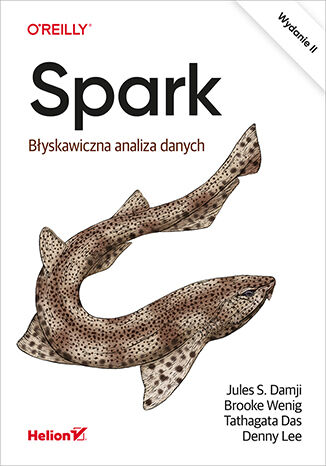
Spark. Błyskawiczna analiza danych. Wydanie II
Jules S. Damji, Brooke Wenig, Tathagata Das,...
Apache Spark jest oprogramowaniem open source, przeznaczonym do klastrowego przetwarzania danych dostarczanych w różnych formatach. Pozwala na uzyskanie niespotykanej wydajności, umożliwia też pracę w trybie wsadowym i strumieniowym. Framework ten jest również świetnie przygotowany do uruchamiania złożonych aplikacji, włączając w to algorytmy uczenia maszynowego czy analizy predykcyjnej. To wszystko sprawia, że Apache Spark stanowi znakomity wybór dla programistów zajmujących się big data, a także eksploracją i analizą danych. To książka przeznaczona dla inżynierów danych i programistów, którzy chcą za pomocą Sparka przeprowadzać skomplikowane analizy danych i korzystać z algorytmów uczenia maszynowego, nawet jeśli te dane pochodzą z różnych źródeł. Wyjaśniono tu, jak dzięki Apache Spark można odczytywać i ujednolicać duże zbiory informacji, aby powstawały niezawodne jeziora danych, w jaki sposób wykonuje się interaktywne zapytania SQL, a także jak tworzy się potoki przy użyciu MLlib i wdraża modele za pomocą biblioteki MLflow. Omówiono również współdziałanie aplikacji Sparka z jego rozproszonymi komponentami i tryby jej wdrażania w poszczególnych środowiskach. W książce: API strukturalne dla Pythona, SQL, Scali i Javy operacje Sparka i silnika SQL konfiguracje Sparka i interfejs Spark UI nawiązywanie połączeń ze źródłami danych: JSON, Parquet, CSV, Avro, ORC, Hive, S3 i Kafka operacje analityczne na danych wsadowych i strumieniowanych niezawodne potoki danych i potoki uczenia maszynowego Spark: twórz skalowalne i niezawodne aplikacje big data!
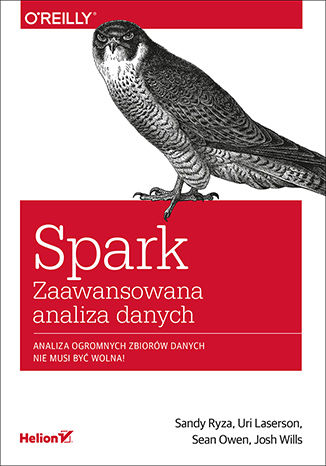
Spark. Zaawansowana analiza danych
Sandy Ryza, Uri Laserson, Sean Owen, Josh...
Analiza ogromnych zbiorów danych nie musi być wolna! Apache Spark to darmowy, zaawansowany szkielet i silnik pozwalający na szybkie przetwarzanie oraz analizę ogromnych zbiorów danych. Prace nad tym projektem rozpoczęły się w 2009 roku, a już rok później Spark został udostępniony użytkownikom. Jeżeli potrzebujesz najwyższej wydajności w przetwarzaniu informacji, jeżeli chcesz uzyskiwać odpowiedź na trudne pytania niemalże w czasie rzeczywistym, Spark może być odpowiedzią na Twoje oczekiwania. Sięgnij po tę książkę i przekonaj się, czy tak jest w rzeczywistości. Autor porusza tu zaawansowane kwestie związane z analizą statystyczną danych, wykrywaniem anomalii oraz analizą obrazów. Jednak zanim przejdziesz do tych tematów, zapoznasz się z podstawami — wprowadzeniem do analizy danych za pomocą języka Scala oraz Apache Spark. Nauczysz się też przeprowadzać analizę semantyczną i zobaczysz, jak w praktyce przeprowadzić analizę sieci współwystępowań za pomocą biblioteki GraphX. Na koniec dowiesz się, jak przetwarzać dane geoprzestrzenne i genomiczne, a także oszacujesz ryzyko metodą symulacji Monte Carlo. Książka ta pozwoli Ci na wykorzystanie potencjału Apache Spark i zaprzęgnięcie go do najtrudniejszych zadań! Przykłady prezetnowane w książce obejmują: Rekomendowanie muzyki i dane Audioscrobbler Prognozowanie zalesienia za pomocą drzewa decyzyjnego Wykrywanie anomalii w ruchu sieciowym metodą grupowania według k-średnich Wikipedia i ukryta analiza semantyczna Analiza sieci współwystępowań za pomocą biblioteki GraphX Geoprzestrzenna i temporalna analiza tras nowojorskich taksówek Szacowanie ryzyka finansowego metodą symulacji Monte Carlo Analiza danych genomicznych i projekt BDG Analiza danych neuroobrazowych za pomocą pakietów PySpark i Thunder Poznaj potencjał i wydajność Apache Spark!
Splunk Best Practices. Operational intelligent made simpler
Travis Marlette, Chris Ladd
This book will give you an edge over others through insights that will help you in day-to-day instances. When you're working with data from various sources in Splunk and performing analysis on this data, it can be a bit tricky. With this book, you will learn the best practices of working with Splunk.You'll learn about tools and techniques that will ease your life with Splunk, and will ultimately save you time. In some cases, it will adjust your thinking of what Splunk is, and what it can and cannot do.To start with, you'll get to know the best practices to get data into Splunk, analyze data, and package apps for distribution. Next, you'll discover the best practices in logging, operations, knowledge management, searching, and reporting. To finish off, we will teach you how to troubleshoot Splunk searches, as well as deployment, testing, and development with Splunk.
Splunk: Enterprise Operational Intelligence Delivered. Machine data made accessible
Paul R. Johnson, Betsy Page Sigman, Derek...
Splunk is an extremely powerful tool for searching, exploring, and visualizing data of all types. Splunk is becoming increasingly popular, as more and more businesses, both large and small, discover its ease and usefulness. Analysts, managers, students, and others can quickly learn how to use the data from their systems, networks, web traffic, and social media to make attractive and informative reports. This course will teach everything right from installing and configuring Splunk.The first module is for anyone who wants to manage data with Splunk. You’ll start with very basics of Splunk— installing Splunk— before then moving on to searching machine data with Splunk. You will gather data from different sources, isolate them by indexes, classify them into source types, and tag them with the essential fields.With more than 70 recipes on hand in the second module that demonstrate all of Splunk’s features, not only will you find quick solutions to common problems, but you’ll also learn a wide range of strategies and uncover new ideas that will make you rethink what operational intelligence means to you and your organization.Dive deep into Splunk to find the most efficient solution to your data problems in the third module. Create the robust Splunk solutions you need to make informed decisions in big data machine analytics. From visualizations to enterprise integration, this well-organized high level guide has everything you need for Splunk mastery.This learning path combines some of the best that Packt has to offer into one complete, curated package. It includes content from the following Packt products:• Splunk Essentials - Second Edition• Splunk Operational Intelligence Cookbook - Second Edition• Advanced Splunk
Josh Diakun, Jose E. Hernandez, Derek Mock,...
Splunk makes it easy for you to take control of your data, and with Splunk Operational Cookbook, you can be confident that you are taking advantage of the Big Data revolution and driving your business with the cutting edge of operational intelligence and business analytics. With more than 70 recipes that demonstrate all of Splunk’s features, not only will you find quick solutions to common problems, but you’ll also learn a wide range of strategies and uncover new ideas that will make you rethink what operational intelligence means to you and your organization.You’ll discover recipes on data processing, searching and reporting, dashboards, and visualizations to make data shareable, communicable, and most importantly meaningful. You’ll also find step-by-step demonstrations that walk you through building an operational intelligence application containing vital features essential to understanding data and to help you successfully integrate a data-driven way of thinking in your organization.Throughout the book, you’ll dive deeper into Splunk, explore data models and pivots to extend your intelligence capabilities, and perform advanced searching to explore your data in even more sophisticated ways. Splunk is changing the business landscape, so make sure you’re taking advantage of it.
Jun Shan, Haibin Li, Matt Goldwasser, Upom...
SQL remains one of the most essential tools for modern data analysis and mastering it can set you apart in a competitive data landscape. This book helps you go beyond basic query writing to develop a deep, practical understanding of how SQL powers real-world decision-making. SQL for Data Analytics, Fourth Edition, is for anyone who wants to go beyond basic SQL syntax and confidently analyze real-world data. Whether you're trying to make sense of production data for the first time or upgrading your analytics toolkit, this book gives you the skills to turn data into actionable outcomes. You'll start by creating and managing structured databases before advancing to data retrieval, transformation, and summarization. From there, you’ll take on more complex tasks such as window functions, statistical operations, and analyzing geospatial, time-series, and text data. With hands-on exercises, case studies, and detailed guidance throughout, this book prepares you to apply SQL in everyday business contexts, whether you're cleaning data, building dashboards, or presenting findings to stakeholders. By the end, you'll have a powerful SQL toolkit that translates directly to the work analysts do every day. *Email sign-up and proof of purchase required
SQL for Data Analytics. Harness the power of SQL to extract insights from data - Third Edition
Jun Shan, Matt Goldwasser, Upom Malik, Benjamin...
Every day, businesses operate around the clock, and a huge amount of data is generated at a rapid pace. This book helps you analyze this data and identify key patterns and behaviors that can help you and your business understand your customers at a deep, fundamental level.SQL for Data Analytics, Third Edition is a great way to get started with data analysis, showing how to effectively sort and process information from raw data, even without any prior experience.You will begin by learning how to form hypotheses and generate descriptive statistics that can provide key insights into your existing data. As you progress, you will learn how to write SQL queries to aggregate, calculate, and combine SQL data from sources outside of your current dataset. You will also discover how to work with advanced data types, like JSON. By exploring advanced techniques, such as geospatial analysis and text analysis, you will be able to understand your business at a deeper level. Finally, the book lets you in on the secret to getting information faster and more effectively by using advanced techniques like profiling and automation.By the end of this book, you will be proficient in the efficient application of SQL techniques in everyday business scenarios and looking at data with the critical eye of analytics professional.
SQL Pocket Primer. A Comprehensive Guide to SQL and MySQL for Data Professionals
Mercury Learning and Information, Oswald Campesato
As part of the best-selling Pocket Primer series, this book is designed for data scientists and machine learning engineers seeking to deepen their SQL knowledge using MySQL as the primary RDBMS. It features Python-based code samples for accessing data from MySQL tables in Pandas data frames and Java-based samples for data access in MySQL, along with handling XML and JSON documents.The book also introduces NoSQL, with an overview of MongoDB, and SQLite, an open-source RDBMS for mobile devices. The final section covers diverse topics like normalization, schemas, database optimization, and performance. This comprehensive approach ensures a well-rounded understanding of SQL and related technologies, enhancing data manipulation and database management skills.Numerous code samples and listings throughout the book support the various topics covered. Companion files with source code and figures are available from the publisher, making this an essential resource for advancing your SQL proficiency and database management expertise.